What Is A Mortgagee: Complete Guide For Homebuyers
Unlock the meaning of mortgagee and its vital role in securing your home loan journey with clarity and confidence.

A mortgagee refers to the lender or financial institution that provides a mortgage loan to a homebuyer, holding legal rights to the property until the loan is fully repaid. This entity, often a bank or credit union, assumes the role of securing its investment through the property title while the borrower makes payments over time.
Defining the Mortgagee in Home Financing
In the realm of real estate transactions, understanding key players is crucial for navigating home purchases successfully. The mortgagee stands as the financial backbone, extending funds for property acquisition in exchange for regular repayments plus interest. Unlike traditional loans, this arrangement ties the loan directly to the real estate asset, giving the mortgagee a claim on it if repayment falters.
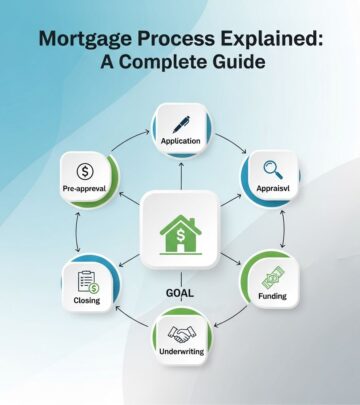
Typically, mortgagees include established banks, credit unions, or mortgage companies vetted for reliability. Their involvement begins early in the buyer’s journey, often during preapproval stages, and extends through closing and beyond. This position ensures they verify borrower eligibility rigorously, protecting both parties in the agreement.
Mortgagee vs. Mortgagor: Core Differences Explained
Distinguishing between mortgagee and mortgagor clarifies ownership dynamics. The mortgagor is the borrower—the individual or entity purchasing the home—who pledges the property as collateral. Conversely, the mortgagee supplies the capital and holds a lien until the debt clears.
| Aspect | Mortgagee (Lender) | Mortgagor (Borrower) |
|---|---|---|
| Role | Provides loan funds | Receives funds to buy home |
| Rights | Lien on property; foreclosure option | Occupancy and equity buildup |
| Obligations | Disburse funds; process application | Timely payments; maintain property |
| Risk | Default leads to property claim | Lose home if unable to pay |
This table highlights how responsibilities align inversely, fostering a balanced yet protected lending framework.
The Mortgagee’s Role Across the Loan Lifecycle
Mortgagees guide borrowers from initial inquiry to final ownership transfer, enforcing standards at each phase.
Preapproval and Application Phase
Prospective buyers approach the mortgagee for preapproval, submitting financial details like income proofs, tax returns, and credit history. The mortgagee assesses affordability using metrics such as debt-to-income (DTI) ratio—ideally under 43%—and credit scores above 620 for conventional loans. Documents often include two years of W-2s, recent pay stubs, and bank statements.
- Gather personal info: SSN, address history, employment details.
- Provide asset verification: Two months of statements from all accounts.
- Undergo credit pull to confirm eligibility.
Preapproval letters from the mortgagee strengthen offers, signaling seller commitment.
Underwriting: The Mortgagee’s Scrutiny
Underwriting represents the mortgagee’s deepest evaluation, focusing on the three C’s: credit, capacity, and collateral. Credit examines payment history and scores; capacity reviews income against debts via DTI; collateral involves property appraisal to ensure value matches loan amount.
This step, lasting 40-50 days typically, may yield approvals, denials, or conditional clearances requiring items like homeowners insurance proof. Mortgagees verify employment, assets, and order appraisals—often costing upfront fees.
Processing and Conditions Clearance
Loan processors, acting for the mortgagee, validate submissions: employment calls, bank reviews, and credit deep dives. Any underwriting flags prompt additional docs, such as updated pay stubs or lien details. Responsiveness accelerates progress toward closing.
Rights and Protections Afforded to the Mortgagee
Mortgagees safeguard interests through legal mechanisms. They retain a lien, enabling foreclosure if defaults persist—typically after 120 days of missed payments. This process recovers funds via property sale, with borrowers liable for shortfalls.
Additional protections include private mortgage insurance (PMI) for down payments under 20%, covering lender losses. Rate locks preserve quoted terms during processing, while escrow accounts manage taxes and insurance. These ensure mortgagee stability amid borrower risks.
Obligations of the Mortgagee to Borrowers
Beyond protections, mortgagees must deliver transparency and compliance. Federal laws mandate Loan Estimates within three days of application, detailing rates, fees, and payments. Closing Disclosures, provided three days pre-closing, outline final terms.
They facilitate appraisals, title searches, and insurance verifications, coordinating with third parties. Fair lending practices prohibit discrimination, ensuring equitable access.
Impact of Mortgagee Selection on Your Home Purchase
Choosing the right mortgagee influences costs, speed, and service. Compare APRs—including fees—for true cost; seek low origination points to reduce rates. Digital platforms from reputable mortgagees streamline uploads via portals.
First-time buyers benefit from those offering education resources, like glossaries on principal, interest, and PMI. Local branches aid in-person support, while national firms provide competitive rates.
Navigating Challenges with Your Mortgagee
Delays arise from incomplete docs or appraisal issues; proactive communication mitigates them. If denied, mortgagees explain reasons—often credit or DTI—allowing improvements for reapplication. Post-closing, servicing may transfer, but terms remain intact.
FAQs: Common Mortgagee Questions
What documents does a mortgagee need for approval?
Expect pay stubs, tax returns, bank statements, and ID proofs.
How long does the mortgagee take to underwrite?
Usually 40-50 days, varying by complexity.
Can the mortgagee foreclose immediately on missed payments?
No, processes allow 120+ days with notices.
What is a rate lock with the mortgagee?
A commitment fixing your rate for 30-60 days during processing.
Does the mortgagee require homeowners insurance?
Yes, proof is mandatory before closing.
Preparing Financially for Mortgagee Interactions
Build credit early, aiming for 700+ scores for optimal terms. Save for 3-20% down payments plus 2-5% closing costs. Budget monthly payments covering principal, interest, taxes, and insurance (PITI). Tools like affordability calculators from mortgagees aid planning.
Avoid new debt pre-application to preserve DTI. Research loan types—fixed vs. adjustable—suited to your stability.
Future Trends in Mortgagee Practices
Digital underwriting accelerates approvals using AI for doc analysis. Eco-focused mortgagees offer green incentives for energy-efficient homes. Expect streamlined closings via e-signatures, reducing timelines.
Regulatory shifts emphasize transparency, with enhanced disclosures on total costs. Buyers should monitor these for advantageous terms.
References
- The Mortgage Loan Process Explained — 1st Advantage. 2023. https://www.1stadvantage.org/blog/the-mortgage-loan-process-explained/
- Your 10-Step Guide to the Mortgage Loan Process — Bank of America. 2024. https://www.bankofamerica.com/mortgage/learn/guide-to-the-mortgage-loan-process/
- Mortgage Underwriting Process — U.S. Bank. 2025. https://www.usbank.com/home-loans/mortgage/first-time-home-buyers/mortgage-underwriting-process.html
- The Mortgage Loan Process in 10 Steps — Navy Federal Credit Union. 2024. https://www.navyfederal.org/loans-cards/mortgage/mortgage-basics/mortgage-process.html
- The Mortgage Process: A 10-Step Guide — LendingTree. 2025. https://www.lendingtree.com/home/mortgage/mortgage-process/
- What Is The Mortgage Underwriting Process? — Bankrate. 2025. https://www.bankrate.com/mortgages/steps-in-underwriting-process/
- Your Step-by-Step Mortgage Guide — Freddie Mac. 2023-01-01. https://sf.freddiemac.com/docs/pdf/update/step_by_step_mortgage_guide_english.pdf
Similar Articles








Read full bio of Sneha Tete