Home Equity Loan: 6 Steps To Apply And What To Expect
Understand how home equity loans work, their pros and cons, and how to decide if this type of borrowing is right for your financial needs.

A home equity loan is a type of second mortgage that lets you borrow a lump sum of money by using the equity in your home as collateral. Equity is the difference between what your home is worth and what you still owe on your primary mortgage. Because the loan is secured by your property, home equity loans typically offer lower interest rates than many other forms of consumer credit, but they also carry the risk of foreclosure if you cannot repay.
How Does a Home Equity Loan Work?
Home equity loans are considered secured debt, meaning they are backed by an asset—in this case, your home. The lender places a lien on your property, and you receive your approved funds as a single lump sum at closing. You then repay the loan over a fixed term, often between 5 and 30 years, with regular monthly payments of principal and interest.
Because the loan is separate from your original mortgage, a home equity loan is commonly referred to as a second mortgage. You will have two monthly payments: one for your primary mortgage and another for the home equity loan.
Key Features of a Home Equity Loan
- Lump-sum funding: You receive all the money at once at closing.
- Fixed interest rate: The rate is locked in when you take the loan, so it does not change over the life of the loan.
- Predictable monthly payments: Your payment amount stays the same each month, which makes budgeting easier.
- Set repayment term: Typically a multi-year term with a clear payoff date.
- Secured by your home: Your home serves as collateral; if you default, the lender may foreclose.
Home Equity vs. Home Equity Loan
Home equity is the value of your ownership stake in your home: the current market value minus any mortgage balances. A home equity loan is a way to convert some of that equity into borrowed cash, which must be repaid with interest.
For example, if your home is worth $400,000 and you owe $260,000 on your mortgage, you have $140,000 in equity. A lender might allow you to borrow a portion of that equity, often up to about 80–85% of your home’s value minus your existing mortgage balance, subject to credit and underwriting rules. Exact limits vary by lender and by regulatory guidance.
Home Equity Loan vs. HELOC
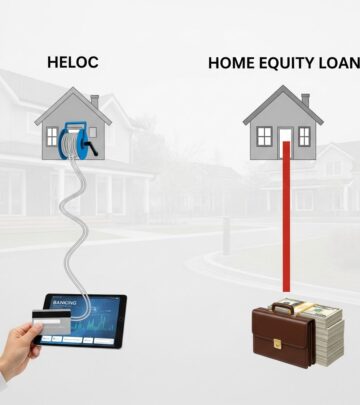
Homeowners often compare a home equity loan to a home equity line of credit (HELOC). Both use your home as collateral, but the way you access and repay the funds differs.
| Feature | Home Equity Loan | HELOC |
|---|---|---|
| Type of credit | Installment loan (second mortgage) | Revolving line of credit |
| How funds are received | Lump sum at closing | Draw as needed up to a set limit |
| Interest rate | Usually fixed | Usually variable |
| Payment structure | Fixed monthly principal and interest | Interest-only during draw in many cases, then principal and interest in repayment period |
| Best for | Single, known-cost projects (e.g., renovation with a firm budget) | Ongoing or unpredictable expenses over time |
| Risk to home | Home can be at risk of foreclosure if you default | Home can be at risk of foreclosure if you default |
Common Uses for a Home Equity Loan
Because home equity loans often have lower interest rates than unsecured debt like credit cards or personal loans, many borrowers use them to fund larger, longer-term goals.
Debt Consolidation
One frequent use is debt consolidation. You can use a home equity loan to pay off high-interest credit card balances or other loans and then make a single monthly payment on the new loan. This strategy can:
- Lower your overall interest rate compared with typical credit card rates.
- Simplify repayment with one fixed monthly payment.
- Provide a clear payoff date.
However, you are turning unsecured debt into secured debt. If you miss payments on the home equity loan, you risk your home, whereas missed credit card payments do not directly lead to foreclosure.
Home Improvements and Renovations
Home equity loans are commonly used to pay for home improvements, such as kitchen remodels, roof replacements, or energy-efficiency upgrades. These projects may increase your home’s value and potentially help you build equity over time.
Because you typically know the cost of a renovation project upfront, a lump-sum home equity loan can be a suitable match. In some cases, if the funds are used to “buy, build, or substantially improve” your home, the interest may be tax-deductible, subject to IRS rules and your individual situation. A qualified tax professional should be consulted for personalized advice.
Education and Major Life Expenses
Borrowers also use home equity loans to cover college tuition, weddings, or other significant life events. While the interest rate might be lower than some private loans or credit card options, it is important to compare costs, terms, and protections. For example, federal student loans may offer income-driven repayment and forgiveness programs that home equity loans do not provide.
Medical Bills and Emergency Costs
When facing large medical expenses or other emergencies not fully covered by insurance, some homeowners turn to home equity loans as a lower-rate option. This can help spread the cost over several years, but it increases your total debt and puts your home at risk if you cannot keep up with the payments.
Pros and Cons of Home Equity Loans
Home equity loans can be a useful financial tool, but they are not appropriate for every situation. Understanding the advantages and disadvantages can help you make a more informed decision.
Advantages
- Lower interest rates than many unsecured loans: Because the loan is secured by your home, lenders typically charge less interest than on personal loans or credit cards.
- Fixed interest rate: Your rate is locked at closing, protecting you from future rate hikes and providing cost certainty.
- Predictable monthly payments: Fixed payments over a set term make budgeting more straightforward.
- Access to larger loan amounts: Depending on your equity, you may be able to borrow tens or even hundreds of thousands of dollars.
- Potential tax benefits: In some cases, interest may be deductible when the loan is used to improve the home securing the loan, subject to tax law and individual circumstances.
- Flexible use of funds: Funds can typically be used for a variety of purposes, including renovations, consolidation, tuition, or medical bills.
Disadvantages and Risks
- Risk of foreclosure: If you fail to make required payments, the lender may foreclose, and you could lose your home.
- Closing costs and fees: Home equity loans often involve upfront costs such as appraisal fees, origination charges, and other closing expenses, similar to a first mortgage.
- Increased total debt: Taking a home equity loan reduces your equity and increases your overall debt load.
- Negative equity risk: If home values decline, you could owe more on your combined mortgage and home equity loan than your home is worth.
- Eligibility requirements: Lenders generally require sufficient equity, stable income, and adequate credit, so not all homeowners qualify.
- Not ideal for everyday spending: Using long-term, home-secured debt for short-lived purchases can create a cycle of borrowing and repayment that undermines long-term financial stability.
Eligibility Requirements
While criteria vary by lender, several common eligibility factors determine whether you may qualify for a home equity loan.
- Available equity: Lenders usually require you to retain a minimum amount of equity—often around 15–20% of your home’s value—after the new loan and existing mortgage are considered.
- Credit profile: A history of on-time payments, reasonable existing debt, and a credit score within the lender’s guidelines improves your chances of approval and of receiving a favorable rate.
- Income and employment: Lenders look for reliable income and may calculate a maximum debt-to-income (DTI) ratio to ensure you can handle the new payment.
- Property value and condition: An appraisal or other valuation helps the lender confirm your home’s current market value and available equity.
Costs and Fees to Expect
A home equity loan can involve various fees, some paid at closing and others potentially rolled into the loan amount, depending on the lender.
- Appraisal or valuation fee: To estimate your home’s market value.
- Origination or application fees: Charged by some lenders to process and underwrite your loan.
- Title search and recording fees: To verify ownership and record the new lien.
- Closing or attorney fees: Depending on local practices and regulations.
These costs can add significantly to the overall expense of borrowing, so it is important to factor them into any comparison with other credit options.
Is a Home Equity Loan a Good Idea for You?
Whether a home equity loan is appropriate depends on your financial situation, goals, and risk tolerance. Government agencies and consumer advocates emphasize careful evaluation before borrowing against your home.
A home equity loan may be more suitable when:
- You have a specific, large expense with a known cost (for example, a renovation or medical procedure).
- You qualify for a significantly lower interest rate than your existing unsecured debts.
- You are confident you can handle the extra monthly payment over the full term.
- You have a stable income and a solid emergency fund.
It may be less appropriate when:
- You are struggling to cover everyday expenses or relying on credit to make ends meet.
- Your income is uncertain or variable, making fixed payments difficult.
- You anticipate moving or selling your home in the near future.
- You are uncomfortable placing your home at additional risk.
How to Apply for a Home Equity Loan
The application process for a home equity loan shares many steps with a traditional mortgage. Government consumer resources recommend comparing offers from multiple lenders and reviewing terms carefully.
Typical Steps
- Review your finances: Check your credit reports, estimate your home’s value, and calculate your existing debts.
- Determine how much you need: Borrow only what is necessary for your specific goal.
- Shop around: Request quotes from several reputable lenders and compare interest rates, terms, fees, and conditions.
- Submit an application: Provide income documentation, information about your property, and details about your debts.
- Underwriting and appraisal: The lender evaluates your creditworthiness and may order an appraisal to confirm your home’s value.
- Closing: If approved, you sign the loan documents, pay any closing costs, and receive your funds.
Frequently Asked Questions (FAQs)
Q: Is a home equity loan the same as a refinance?
A: No. A home equity loan is a second mortgage added on top of your existing mortgage, while a cash-out refinance replaces your current mortgage with a new, larger loan and gives you the difference in cash.
Q: Can I lose my home if I default on a home equity loan?
A: Yes. Because your home secures the loan, the lender can begin foreclosure proceedings if you fail to make required payments, which can severely damage your credit and lead to loss of the property.
Q: How much can I borrow with a home equity loan?
A: Lenders commonly cap the total of your primary mortgage plus home equity loan at a percentage of your home’s value, often around 80–85%, though limits and rules vary by lender and jurisdiction.
Q: Are home equity loan interest payments tax-deductible?
A: In many cases, interest is only deductible if the loan is used to buy, build, or substantially improve the home securing the loan and if you itemize deductions; you should confirm details with a qualified tax professional and review IRS guidance.
Q: How is a home equity loan different from a HELOC?
A: A home equity loan provides a lump sum with a fixed interest rate and set monthly payments, while a HELOC offers a revolving credit line you can draw on as needed, usually at a variable rate.
References
- Home Equity Loans and Home Equity Lines of Credit — Federal Trade Commission. 2023-05-01. https://consumer.ftc.gov/articles/home-equity-loans-and-home-equity-lines-credit
- What is a Home Equity Loan & How Does it Work? — Equifax. 2023-04-10. https://www.equifax.com/personal/education/loans/articles/-/learn/what-is-a-home-equity-loan/
- Pros and Cons of Home Equity Loans — Experian. 2023-02-15. https://www.experian.com/blogs/ask-experian/pros-and-cons-home-equity-loan/
- Home Equity Loan Pros and Cons: A Homeowner Guide — Bankrate. 2024-01-05. https://www.bankrate.com/home-equity/pros-cons-home-equity-loan/
- Home Equity Loans: Pros and Cons — Rocket Mortgage. 2024-03-20. https://www.rocketmortgage.com/learn/pros-and-cons-of-home-equity-loan
- What You Should Know About Home Equity Lines of Credit (HELOC) — Consumer Financial Protection Bureau. 2022-06-01. https://files.consumerfinance.gov/f/documents/cfpb_heloc-brochure_print.pdf
- What You Can Use a Home Equity Loan for (and What to Avoid!) — Navy Federal Credit Union. 2023-09-12. https://www.navyfederal.org/makingcents/home-ownership/home-equity-uses.html
Similar Articles








Read full bio of Sneha Tete