What Is a Good Credit Utilization Ratio?
Discover the ideal credit utilization ratio to boost your credit score, secure better loan terms, and achieve financial stability.
Your
credit utilization ratio
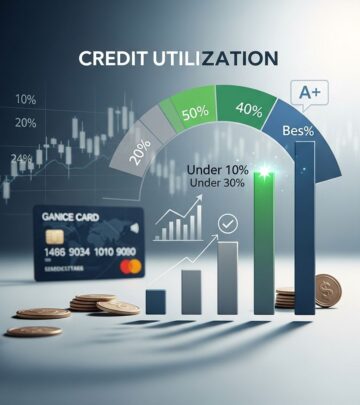
is a pivotal factor in determining your credit score, accounting for approximately 30% of your FICO score. A good credit utilization ratio is generally considered to beunder 30%
, with the highest credit scores often reflecting ratios in thesingle digits
(less than 10%). This metric measures the percentage of your available revolving credit that you’re currently using, signaling to lenders how responsibly you manage debt.Maintaining a low ratio demonstrates financial discipline, reducing perceived risk and improving your chances for favorable loan terms, lower interest rates, and higher credit limits. High utilization, conversely, can signal overextension, potentially harming your score and loan eligibility.
What Is Credit Utilization?
Credit utilization, also known as the credit utilization ratio, is the ratio of your current revolving credit balances to your total available credit limits, expressed as a percentage. It applies exclusively to
revolving credit accounts
like credit cards and lines of credit, not installment loans such as mortgages, auto loans, or student loans.Lenders use this ratio to assess your credit risk. A low ratio indicates you’re not maxing out credit, portraying you as a low-risk borrower who manages finances well. For instance, if you have $10,000 in total credit limits and $2,000 in balances, your utilization is 20%—a healthy level.
Responsible management of this ratio can lead to improved credit scores, better loan approvals, and lower borrowing costs over time.
How Is Credit Utilization Calculated?
Calculating your credit utilization ratio is straightforward: divide your total revolving credit balances by your total available credit limits, then multiply by 100 to get the percentage.
Formula: (Total Balances / Total Credit Limits) × 100 = Credit Utilization Ratio
Here’s an example:
| Card | Balance | Credit Limit |
|---|---|---|
| Card A | $500 | $2,000 |
| Card B | $1,000 | $5,000 |
| Card C | $300 | $3,000 |
| Total | $1,800 | $10,000 |
Ratio: ($1,800 / $10,000) × 100 =
18%
. This is excellent, as it’s well below 30%.Credit bureaus calculate both
overall utilization
(across all accounts) andper-account utilization
. While overall is more important, keeping individual cards under 30% is ideal. Balances reported to bureaus (Experian, Equifax, TransUnion) at statement closing dates determine your ratio, so timing payments matters.A
good credit utilization ratio
is30% or lower
, but aiming for10% or less
aligns with top-tier credit scores (e.g., 800+ FICO). Data shows individuals with the best scores average single-digit utilization.- Excellent: 0-9% – Maximizes score potential.
- Good: 10-29% – Safe range for most borrowers.
- Fair: 30-49% – May impact scores negatively.
- Poor: 50%+ – Signals high risk, hurts approvals.
Even at 30%, utilization is weighted heavily (30% of FICO), so lower is always better for score stability and lender confidence.
How Does Credit Utilization Affect Your Credit Score?
Credit utilization is the
second-most important FICO factor
after payment history (35%), comprising30%
of your score. VantageScore weights it at 20%. High utilization can drop scores rapidly, as it suggests reliance on credit and potential default risk.Key impacts:
- Score Fluctuations: Balances change monthly, causing score volatility. Pay down debt for quick boosts.
- Lender Perception: Low ratios show control; high ones indicate overextension.
- Positive Effects: Low utilization improves scores, aiding loan approvals and rate negotiations.
Unlike payment history, utilization offers fast improvement opportunities, often within a month.
What Is Overall Credit Utilization vs. Individual Credit Utilization?
**Overall utilization** aggregates all revolving accounts: total balances divided by total limits. It’s the primary score influencer.
**Individual (per-account) utilization** is per card. While less weighted, high usage on one card (e.g., 90%) can harm scores even if overall is low.
| Metric | Formula | Importance |
|---|---|---|
| Overall | Total Balances / Total Limits | High (primary factor) |
| Individual | Balance per Card / Limit per Card | Moderate (secondary) |
Strategy: Spread usage and keep both low.
How to Lower Your Credit Utilization Ratio
Lowering utilization boosts scores quickly. Effective strategies include:
- Pay Down Balances: Target high-utilization cards first.
- Make Multiple Payments: Pay mid-cycle to lower reported balances.
- Request Limit Increases: Boosts denominator if approved.
- Avoid Closing Old Cards: Preserves available credit.
- Open New Accounts Sparingly: Hard inquiries and low history hurt.
Example: Paying $1,000 on a $2,000 balance with $5,000 limit drops utilization from 40% to 20%. Monitor via free credit reports weekly.
Credit Utilization vs. Credit Utilization Rate: What’s the Difference?
**Credit utilization** and
credit utilization rate/ratio
are interchangeable terms for the same percentage metric. ‘Rate’ emphasizes the percentage format. Both guide the same best practices: keep under 30%, ideally single digits.Does Credit Utilization Include Installment Loans?
No, credit utilization
excludes installment loans
(e.g., personal loans, mortgages). It focuses solely on revolving credit. Installment loans influence scores via amounts owed (30% FICO) but not utilization ratios.Does Credit Utilization Affect Personal Loan Interest Rates?
Yes, indirectly. Low utilization elevates scores, leading to
lower interest rates
on personal loans (often 6-36% APR). High utilization risks higher rates or denials. For example, excellent credit (low utilization) qualifies for prime rates.Frequently Asked Questions
Is 0% credit utilization good?
Yes, 0% is excellent and can maximize scores, but some activity shows responsible use. Avoid long-term 0% if seeking new credit.
Does paying off credit cards help credit utilization?
Absolutely—paying balances directly lowers ratios, often boosting scores in 30 days.
What happens if credit utilization is over 30%?
Scores drop, approvals harden, rates rise. Aim to reduce via payments.
Can I improve utilization without paying debt?
Yes, via limit increases or balance transfers, but paying debt is most effective.
How often is utilization reported?
Monthly at statement close; pay before to minimize reported balances.
This comprehensive guide empowers you to master credit utilization for superior financial outcomes.
References
- Understanding Credit Utilization and Its Impact on Your Financial Health — Eastrise. 2024. https://www.eastrise.com/blog/understanding-credit-utilization-and-its-impact-on-your-financial-health/
- Understanding Credit Utilization: Maximizing Your Score — Legacy Credit Union. 2024. https://www.legacycreditunion.com/learn/understanding-credit-utilization-maximizing-your-score-2
- Credit utilization ratio: What you need to know — Capital One. 2024-09-19. https://www.capitalone.com/learn-grow/money-management/credit-utilization-and-credit-score/
- Why Your Credit Utilization Ratio Matters — Heartland Zone Credit Union. 2024. https://advice.hzcu.org/credit-and-debt/credit/article/why-your-credit-utilization-ratio-matters
- Why Your Credit Utilization Ratio Matters — First Mutual Holding. 2024. https://www.firstmutualholding.com/resources/why-your-credit-utilization-ratio-matters/
- What’s a Credit Utilization Ratio and Why Is It Important? — Navy Federal Credit Union. 2024. https://www.navyfederal.org/makingcents/credit-debt/whats-a-credit-utilization-ratio.html
- What Is a Credit Utilization Rate? — Experian. 2024. https://www.experian.com/blogs/ask-experian/credit-education/score-basics/credit-utilization-rate/
Similar Articles








Read full bio of medha deb