Fixed Annuity Guide: Benefits, Risks, And Top Rates
Discover fixed annuities: guaranteed income, tax-deferred growth, and low-risk retirement savings for conservative investors.

A
fixed annuity
is an insurance contract designed to provide investors with a guaranteed stream of income, typically during retirement. Backed by the issuing insurance company, it promises a fixed interest rate and minimum payouts, shielding savers from market fluctuations.Unlike variable or indexed annuities, fixed annuities prioritize stability over high growth potential. During the accumulation phase, premiums earn a declared interest rate tax-deferred. In the payout phase, funds convert to regular payments, offering predictability for budgeting essentials like housing and healthcare.
Highlights
- Guaranteed minimum interest rate and principal protection from market downturns.
- Tax-deferred growth allows compound interest to build without annual taxes.
- Stable monthly income supplements Social Security or pensions.
- Low risk, but limited liquidity and inflation protection.
- Suitable for conservative investors nearing or in retirement.
How Does a Fixed Annuity Work?
Fixed annuities operate in two phases: accumulation and payout. In the
accumulation phase
, you contribute a lump sum or series of payments (premiums). The insurer invests conservatively, crediting a guaranteed minimum interest rate—often higher than CDs or savings accounts.The
payout phase
(or annuitization) begins when you elect income, either immediately (immediate annuity) or deferred. Payments can be for a fixed period, lifetime, or joint lives. For example, a single life option guarantees income for your lifetime, while joint life covers you and a spouse.Interest rates are declared upfront or reset periodically, but never below the contract minimum. Growth compounds tax-free until withdrawals, taxed as ordinary income.
Pros of a Fixed Annuity
Fixed annuities appeal to risk-averse individuals due to their built-in safeguards. Key advantages include:
- Principal protection: Premiums are safe from market losses; the insurer assumes investment risk.
- Guaranteed minimum interest rate: Provides predictable growth, often 3-6% depending on market conditions.
- Tax-deferred earnings: No taxes on growth until withdrawal, enhancing compounding.
- Reliable retirement income: Fixed payouts aid budgeting and longevity risk mitigation.
- Simplicity and no market exposure: Easy to understand, ideal alongside riskier assets.
- Beneficiary options: Death benefits pass full value to heirs, bypassing probate.
These features make fixed annuities a low-stress complement to 401(k)s or IRAs, especially in volatile markets.
Cons of a Fixed Annuity
Despite guarantees, fixed annuities have limitations that may deter aggressive investors:
- Limited liquidity: Early withdrawals before age 59½ incur IRS penalties (10%) plus surrender charges (up to 10% in early years).
- Lower growth potential: Capped returns miss stock market gains.
- Inflation risk: Fixed rates may lag rising costs, eroding purchasing power.
- Taxation on earnings: Withdrawals taxed as ordinary income, potentially at higher rates than capital gains.
- Payout termination: Certain options end at death, leaving nothing for heirs unless riders added.
- Higher fees: More expensive than CDs due to insurance guarantees.
| Pros | Cons |
|---|---|
| Guaranteed principal & interest | Early withdrawal penalties |
| Tax-deferred growth | Limited upside potential |
| Predictable income | Inflation vulnerability |
| No market risk | Taxed as ordinary income |
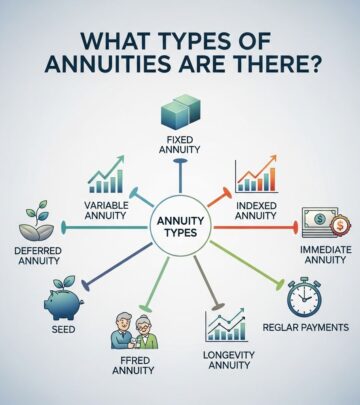
Types of Fixed Annuities
Fixed annuities vary by timing and structure:
- Deferred Fixed Annuity: Accumulates value over years before payouts. Ideal for long-term savings.
- Immediate Fixed Annuity: Starts payments within a year of purchase. Suited for instant income needs.
- Traditional Fixed: Locked rate with possible periodic resets above minimum.
- Multi-Year Guaranteed Annuity (MYGA): Fixed rate for 3-10 years, like a CD alternative.
Optional riders (e.g., inflation adjustment, death benefit enhancement) add protection but increase costs.
Fixed Annuity Rates
Rates fluctuate with bond yields and insurer pricing. As of recent data, top rates exceed 5-6% for 5-7 year terms, surpassing many savings products. Always compare declared rates, minimum guarantees, and surrender periods.
For instance, a $100,000 premium at 5% over 10 years could grow to about $162,889 tax-deferred before fees.
Who Should Consider a Fixed Annuity?
Fixed annuities suit:
- Risk-averse retirees prioritizing stability over growth.
- Those bridging to Social Security or pensions (e.g., Susan, 64, using it for 3 years).
- Investors diversifying portfolios with low-volatility assets.
- Individuals in high tax brackets benefiting from deferral.
- People with 5+ years until needing income.
Avoid if you need liquidity, expect high inflation, or seek stock-like returns.
Why Consider a Fixed Annuity?
In low-interest eras, fixed annuities lock in yields above bank rates. They hedge longevity risk—outliving savings—affecting 1 in 4 retirees. Tax deferral boosts effective returns by 1-2% annually via compounding.
For pre-retirees, longer accumulation maximizes growth. Post-retirement, they ensure essentials coverage amid market uncertainty.
Frequently Asked Questions (FAQs)
What is the difference between a fixed annuity and a variable annuity?
Fixed annuities guarantee principal and rates; variable ones tie to market performance, risking losses but offering higher potential gains.
Are fixed annuities safe?
Yes, backed by insurer claims-paying ability and state guaranty associations (up to $250,000+ per contract).
Can I lose money in a fixed annuity?
No principal loss from markets, but early withdrawals or fees could reduce value.
How are fixed annuities taxed?
Growth is tax-deferred; withdrawals are ordinary income. LIFO taxation applies.
What are typical surrender periods?
5-10 years; penalties decline over time.
Do fixed annuities protect against inflation?
Not inherently; optional riders can help.
What’s the minimum investment?
Often $5,000-$10,000, lower than many alternatives.
References
- Are Fixed Annuities A Good Investment? 10 Pros & Cons To Help … — Thrivent. 2024. https://www.thrivent.com/insights/annuities/fixed-annuities-pros-and-cons
- What is a Fixed Annuity & Who Should Get One? – Equifax — Equifax. 2024. https://www.equifax.com/personal/education/personal-finance/articles/-/learn/what-is-a-fixed-annuity/
- Understanding Fixed Annuities: Pros and Cons – Mercer Advisors — Mercer Advisors. 2024. https://www.merceradvisors.com/insights/retirement/understanding-fixed-annuities-pros-and-cons/
- What is a Fixed Annuity? – Nationwide — Nationwide. 2024. https://www.nationwide.com/lc/resources/investing-and-retirement/articles/what-is-a-fixed-annuity
- Fixed Annuities – Low-Risk Product, Guaranteed Returns — Annuity.org. 2024. https://www.annuity.org/annuities/types/fixed/
- Annuities: Fixed and Variable, Retirement Benefits & Uses | TIAA — TIAA. 2024. https://www.tiaa.org/public/retire/financial-products/annuities
- Consumer’s Guide to Understanding Annuities — Wisconsin Office of the Commissioner of Insurance (.gov). 2023-01-01. https://oci.wi.gov/Documents/Consumers/PI-214.pdf
Similar Articles








Read full bio of Sneha Tete