FICO Score: 5 Key Factors That Determine Your Credit
Understand FICO scores: how they're calculated, ranges, factors affecting them, and tips to improve your creditworthiness for better loan terms.

A
FICO score
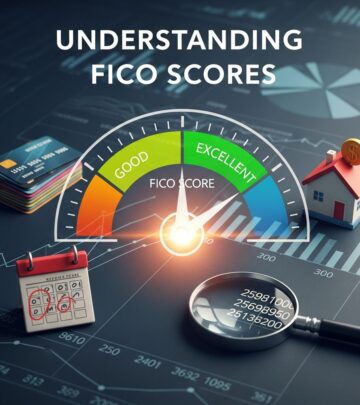
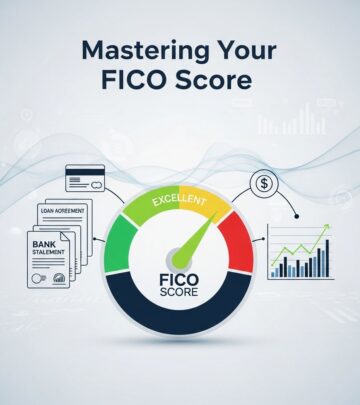
is a three-digit number ranging from 300 to 850 that represents your creditworthiness, helping lenders predict the likelihood of you repaying borrowed money on time. Developed by Fair Isaac Corporation (FICO), this score is derived from data in your credit reports from Equifax, Experian, and TransUnion, and it’s used in nearly 90% of lending decisions across the U.S..Understanding your FICO score is crucial because it directly influences loan approvals, interest rates, credit card offers, and even non-lending decisions like apartment rentals or insurance premiums. Higher scores signal lower risk to lenders, unlocking better terms, while lower scores can lead to denials or higher costs.
History of the FICO Score
The FICO score was introduced in 1989 by FICO as the first standardized credit scoring model, revolutionizing lending by providing an objective measure of credit risk. Before FICO, decisions relied on subjective manual reviews, leading to inconsistencies. Today, it’s the gold standard, powering decisions for mortgages, auto loans, credit cards, and personal loans.
FICO continually refines its algorithms using vast datasets from millions of credit reports, ensuring scores reflect current economic patterns while considering both positive and negative credit behaviors. The Federal Trade Commission (FTC) notes that such scores estimate repayment probability based on historical patterns.
How Is a FICO Score Calculated?
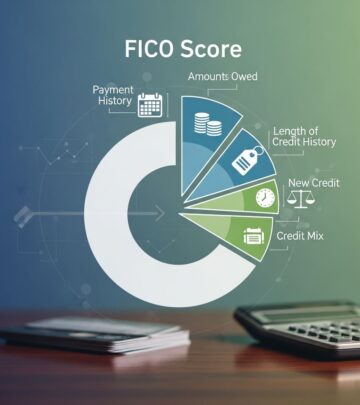
FICO scores are computed using a proprietary algorithm that analyzes five key categories of credit data from your reports. These categories are weighted differently, with their relative importance varying slightly based on your individual profile. Here’s the standard breakdown:
- Payment history (35%): The most influential factor, evaluating if you’ve paid bills on time. Late payments, defaults, bankruptcies, or collections severely lower your score.
- Amounts owed (30%): Also known as credit utilization, this measures balances against credit limits. Keeping utilization under 30% is ideal; high ratios suggest over-reliance on credit.
- Length of credit history (15%): Considers the age of your oldest account, average account age, and age of newest accounts. Longer histories generally boost scores.
- New credit (10%): Tracks recent inquiries and new accounts. Too many hard inquiries or new credit can signal risk.
- Credit mix (10%): Assesses variety of credit types (e.g., revolving credit cards, installment loans like mortgages). A healthy mix shows you can handle different debts.
The algorithm compares your data against patterns from hundreds of thousands of past reports to predict future behavior. Scores update frequently as credit reports change.
What Are the Different Types of FICO Scores?
Beyond the base FICO Score (300-850), FICO offers industry-specific versions optimized for particular lending types. These predict default risk tailored to the loan category:
- Base FICO Score: General-purpose for any credit, used broadly by lenders.
- FICO Auto Score (250-900): For auto loans, emphasizing auto payment history and utilization.
- FICO Bankcard Score (250-900): For credit cards, focusing on revolving debt patterns.
- FICO Score 8/9/10: Updated base versions; Score 10 is the latest, with enhanced prediction for modern behaviors like gig economy payments.
Lenders select the version best suited to their product, so your base score might differ from an industry-specific one.
What Is a Good FICO Score?
A “good” FICO score varies by lender, but generally, scores above 670 indicate solid creditworthiness, qualifying you for favorable rates. Higher scores mean lower risk, better terms, and more options. The table below outlines standard FICO score ranges and their implications:
| FICO Score Range | Rating | Description | Lender Perception |
|---|---|---|---|
| <580 | Poor | Well below U.S. average; high default risk | High rates or denials; limited options |
| 580-669 | Fair | Below average; moderate risk | Approval possible but with higher costs |
| 670-739 | Good | Near or above average | Competitive rates and terms |
| 740-799 | Very Good | Above average; low risk | Best available rates |
| 800+ | Exceptional | Well above average; elite credit | Top-tier offers, lowest rates |
U.S. averages hover around 714, with exceptional scores held by about 20% of consumers.
What Factors Affect Your FICO Score?
Beyond the five categories, specific behaviors impact your score positively or negatively:
- Positive factors: On-time payments, low utilization (<30%), long credit history, limited inquiries, diverse credit types.
- Negative factors: Late payments (60+ days hurt most), high balances, short history, multiple new accounts, collections.
Non-credit factors like income aren’t considered; only credit report data matters.
How to Improve Your FICO Score
Boosting your score requires consistent habits. Key strategies include:
- Pay all bills on time—set autopay.
- Reduce credit utilization by paying down balances.
- Keep old accounts open to build history.
- Limit new credit applications.
- Dispute errors on your credit reports via AnnualCreditReport.com.
Improvements can appear in 1-3 months, but major changes take 6-12 months.
Where to Get Your FICO Score
Access free or paid scores from:
- myFICO.com (official, multiple bureau scores).
- Free services like Credit Karma (VantageScore, not FICO).
- Banks/credit cards (often free monthly FICO).
- Credit bureaus: Equifax, Experian, TransUnion.
Monitor regularly to track progress.
Frequently Asked Questions (FAQs)
What is the average FICO score in the U.S.?
Around 714, with variations by age and region.
How often does my FICO score update?
As often as your credit report changes, typically monthly.
Does checking my own FICO score hurt it?
No, soft inquiries don’t affect scores.
Can I have a good FICO score with no credit history?
No, you need accounts to generate a score; consider secured cards.
How long do late payments stay on my report?
Up to 7 years, but impact fades over time.
References
- What Is a FICO Score & Why Is It Important? — California Credit Union. 2024. https://www.ccu.com/learn/banking-basics/what-is-a-fico-score/
- How are FICO Scores Calculated? — myFICO. 2025-01-01. https://www.myfico.com/credit-education/whats-in-your-credit-score
- What is a FICO Score and why is it important? — myFICO. 2025-01-01. https://www.myfico.com/credit-education/what-is-a-fico-score
- What Is a Good Credit Score? — Experian. 2024. https://www.experian.com/blogs/ask-experian/credit-education/score-basics/what-is-a-good-credit-score/
- FAQs About FICO Scores in the US — FICO. 2024. https://www.ficoscore.com/faqs-about-fico-scores-us
- Understanding Your FICO Score — Horizon Farm Credit / myFICO. 2023. https://www.horizonfc.com/sites/default/files/documents/Credit%20Bureau%20Reporting/myFICO_UYFS_Booklet.pdf
- Credit Scores — Federal Trade Commission. 2025-01-10. https://consumer.ftc.gov/credit-scores
Similar Articles








Read full bio of Sneha Tete