What Is a Decent Credit Score to Buy a Car?
Discover the ideal credit score range for securing favorable auto loan rates and terms when buying a car.

Securing a car loan with favorable terms largely depends on your credit score, which lenders use to assess your risk as a borrower. A
decent credit score
for buying a car typically falls in the prime range of 661-780, qualifying you for competitive interest rates on new and used vehicles. Scores in this range often result in average APRs around 6-10% for new cars and 9-14% for used ones, significantly lower than subprime rates exceeding 13%.Higher scores, especially super prime (781+), unlock the best rates under 6% for new cars, but even near-prime scores (601-660) can secure decent financing if paired with a solid down payment and income. This guide breaks down credit score tiers, their impact on auto loans, improvement strategies, and key considerations for car buyers.
Credit Score Ranges for Auto Loans
Credit scores for auto financing are commonly evaluated using FICO Auto Score (250-900 range) or VantageScore, focusing on your history with vehicle loans and overall creditworthiness. Lenders categorize scores into tiers that directly influence approval odds and rates:
- Super Prime (781-850): Lowest risk; best rates (e.g., 4.88-5.18% new car APR).
- Prime (661-780): Strong credit; good rates (6.51-6.70% new, 9.06-9.65% used). This is widely considered a ‘decent’ threshold for traditional loans.
- Near Prime/Nonprime (601-660): Moderate risk; higher rates (9.77-9.83% new).
- Subprime (501-600): Elevated risk; rates climb to 13-19%.
- Deep Subprime (300-500): Highest risk; rates over 15-21% with stricter terms.
About two-thirds of new car loans go to prime or super prime borrowers, per Experian data. Lenders may also use auto-specific models that weigh past car loan behavior more heavily.
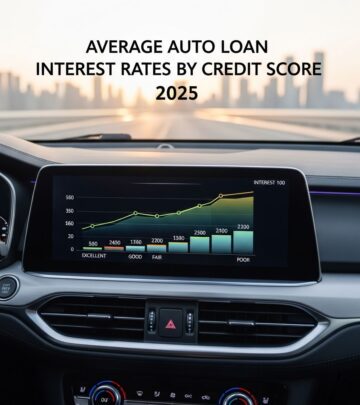
Average Auto Loan Interest Rates by Credit Score
Your credit score profoundly affects monthly payments and total loan costs. Below are 2025 averages from Q1-Q3 data for a typical $30,000 new car or $20,000 used car loan over 60-72 months.
| Credit Score Range | New Car APR | New Car Monthly Payment | Used Car APR | Used Car Monthly Payment |
|---|---|---|---|---|
| Super Prime (781+) | 4.88-5.18% | $727 | 6.82-7.43% | $523 |
| Prime (661-780) | 6.51-6.70% | $753 | 9.06-9.65% | $510 |
| Near Prime (601-660) | 9.77-9.83% | $784 | 13.74-14.11% | $527 |
| Subprime (501-600) | 13.22-13.34% | $762 | 18.99-19.00% | $533 |
| Deep Subprime (300-500) | 15.81-15.85% | $736 | 21.58-21.60% | $532 |
Source: Bankrate Q3 2025 and Experian Q1 2025 data using VantageScore 4.0. A prime score can save thousands; for example, on a $30,000 loan, the APR difference between prime (6.5%) and subprime (13%) adds over $4,000 in interest over 60 months.
How Credit Scores Impact Car Financing
Beyond rates, your score determines:
- Approval Likelihood: Scores above 661 qualify for most traditional loans; below 600 often require subprime lenders or larger down payments.
- Loan Terms: Better scores mean longer repayment periods (up to 84 months) and higher loan amounts.
- Down Payment Requirements: Excellent credit may need just 10%, while subprime could demand 20-30%.
- Other Factors: Lenders review debt-to-income (DTI) ratio (ideally under 36%), income stability, and payment history alongside scores. A perfect payment history can offset a slightly lower score.
Dealerships and banks use tiered systems; a strong down payment can bump you into a better tier. Note: Loan denials don’t harm your score—only inquiries do.
What Is Considered a ‘Good’ or ‘Decent’ Credit Score for Cars?
A
decent score
(661+) gets you prime rates without excessive costs, whilegood/excellent
(740+) is ideal for the lowest APRs. FICO considers 670-739 ‘good’ generally, but auto lenders prioritize 661+ for competitive offers. Even with fair credit, shopping multiple lenders and pre-qualifying (soft inquiry) helps. Subprime borrowers face averages 2-3x higher rates, emphasizing the value of improvement.How to Improve Your Credit Score Before Buying a Car
Raising your score by 20-50 points in 3-6 months is feasible:
- Pay Bills on Time: Payment history is 35% of FICO; set autopay.
- Reduce Credit Utilization: Keep under 30% (30% of score); pay down balances.
- Dispute Errors: Review free weekly reports at AnnualCreditReport.com.
- Avoid New Inquiries: Limit applications; use pre-approvals.
- Build Positive History: Use secured cards or become an authorized user.
Paying off existing debts lowers DTI, boosting eligibility. Tools like Experian Boost add utility payments to your score instantly.
Additional Factors Lenders Consider Besides Credit Score
Credit is key (35-40% weight), but:
- Income & Employment: Stable job with $40K+ annual income preferred.
- DTI Ratio: Total debt payments <36% of gross income.
- Down Payment & Vehicle: Newer cars with 10-20% down improve terms.
- Co-signer: Helps subprime borrowers with thin files.
Auto-specific scores emphasize car loan history.
Frequently Asked Questions (FAQs)
What’s the minimum credit score to buy a car?
A: No strict minimum, but 661+ is needed for traditional loans; subprime options exist down to 300 with high rates.
Is 700 a good credit score for a car loan?
A: Yes, 700 falls in prime range, yielding rates around 6-9%.
Can I get a car loan with bad credit?
A: Yes, via subprime lenders, but expect 15%+ APRs and larger down payments.
Does paying off a car loan hurt your credit score?
A: It may cause a slight temporary dip by shortening credit history, but long-term benefits outweigh.
What credit score do auto lenders use?
A: Primarily FICO Auto Score or VantageScore; confirm with lender.
This comprehensive overview equips you to navigate car financing confidently. A prime score not only saves money but expands options—start improving today for your next purchase.
References
- Average auto loan interest rates by credit score in 2025 — Bankrate. 2025. https://www.bankrate.com/loans/auto-loans/average-car-loan-interest-rates-by-credit-score/
- Average Car Loan Interest Rates by Credit Score — Experian. 2025-01. https://www.experian.com/blogs/ask-experian/average-car-loan-interest-rates-by-credit-score/
- Average Car Loan Interest Rates by Credit Score — NerdWallet. 2025. https://www.nerdwallet.com/auto-loans/learn/average-car-loan-interest-rates-by-credit-score
- How Your Credit Score Affects Auto Loan Interest Rates — Consumer Reports. 2025. https://www.consumerreports.org/money/car-financing/how-your-credit-score-affects-auto-loan-interest-rates-a9997593057/
- What Credit Score Do You Need To Buy A Car? — Bankrate. 2025. https://www.bankrate.com/loans/auto-loans/what-credit-score-do-you-need-to-buy-a-car/
Similar Articles








Read full bio of medha deb