Credit Report: Essential Guide To Read, Fix, And Improve
Unlock the secrets of your credit report: Learn what it contains, why it matters, and how to access and improve it for better financial health.
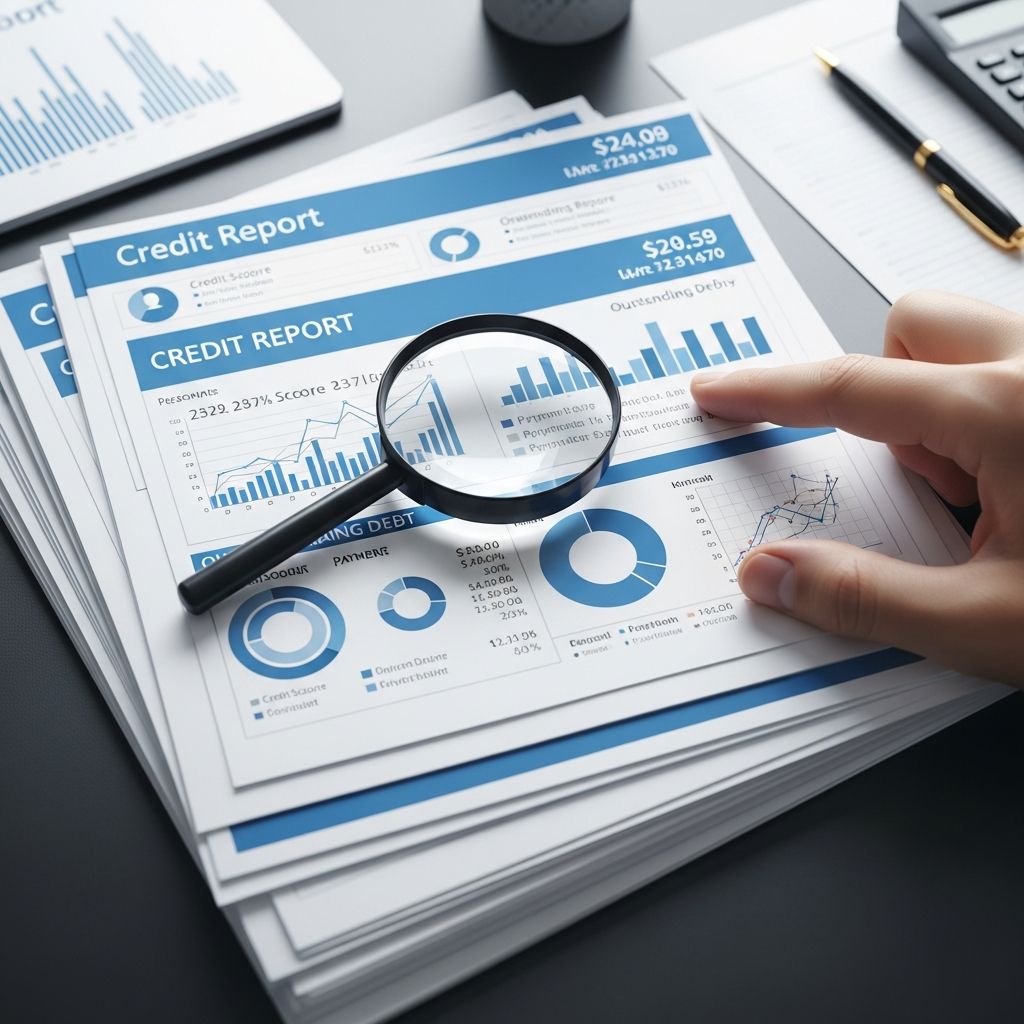
A credit report is a comprehensive record of an individual’s credit history, compiled by credit bureaus from data provided by lenders, creditors, and public sources. It serves as a financial snapshot that lenders use to evaluate creditworthiness for loans, credit cards, and other services.
The Critical Role of Credit Reports in Everyday Finance
Credit reports influence major life decisions, from securing mortgages to obtaining insurance rates. Lenders analyze this data to predict repayment likelihood, often translating into approval or denial of applications, along with interest rates. A positive report can unlock lower rates and better terms, while inaccuracies or negatives may lead to higher costs or rejections.
Understanding your credit report empowers proactive management. Regularly reviewing it helps spot errors, track progress, and build a stronger financial profile over time.
Main Components of a Credit Report
Credit reports from the three major bureaus—Experian, Equifax, and TransUnion—follow a similar structure despite formatting differences. Key sections include identifying details, account summaries, public records, collections, and inquiries.
Personal Identifying Information
This foundational section verifies your identity with details like full name, current and past addresses, date of birth, Social Security number, and employment history. Lenders use this to match records accurately, and it’s not factored into credit scores.
- Name and aliases: Includes variations or former names reported by creditors.
- Addresses: Up to several recent and historical ones for location tracking.
- SSN and DOB: Core identifiers; discrepancies here warrant immediate correction.
- Phone numbers and emails: Sometimes listed if provided to lenders.
Review this section first for inaccuracies, as errors can link your file to someone else’s.
Credit Account History
The heart of your report, this lists all accounts like credit cards, mortgages, auto loans, and installment debts. Each entry details the creditor, account number (often masked), type (revolving or installment), responsibility (individual, joint, or authorized user), open date, last update, balance, credit limit, payment history, and status.
Payment history is pivotal, showing on-time payments, delinquencies, or high balances. Terms like ‘past due’ indicate overdue amounts at reporting time.
| Account Detail | Description | Example |
|---|---|---|
| Account Type | Revolving (credit cards) vs. Installment (loans) | Visa Credit Card |
| Balance | Current owed amount | $1,250 |
| Payment History | 30/60/90+ days late notations | Current / On Time |
| Status | Open, Closed, Charged Off | Open |
High credit or balance shows peak usage, helping assess utilization ratios key to scores.
Public Records and Collections
Public records cover serious financial events like bankruptcies, civil judgments, and tax liens (though some liens are less common now). Collections list unpaid debts sent to agencies, noting the original creditor and amount.
These negatively impact scores but age off reports: Chapter 7 bankruptcies after 10 years, Chapter 13 after 7, collections after 7 years from delinquency. Verify for accuracy, as outdated or invalid items must be removed.
Credit Inquiries
Inquiries track who accessed your report. Hard inquiries occur when you apply for credit and may slightly ding scores temporarily. Soft inquiries, like pre-approvals, don’t affect scores and are visible only to you.
Reports list inquirer name, date, and type, typically for two years. Multiple hard pulls in shopping periods (e.g., mortgages) are often treated as one.
Credit Reports vs. Credit Scores: Key Differences
A credit report is the raw data file, while a credit score (e.g., FICO, 300-850 range) is a numerical summary predicting repayment based on that data. Scores weigh payment history (35%), amounts owed (30%), length of history (15%), new credit (10%), and mix (10%).
You have multiple scores from different models and bureaus; lenders choose based on product type. Free weekly reports via AnnualCreditReport.com don’t include scores—those come from services like myFICO.
How to Obtain Your Free Credit Reports
By law, you’re entitled to one free report yearly from each bureau via AnnualCreditReport.com, the only FTC-authorized site. Weekly access is available post-COVID.
- Visit AnnualCreditReport.com or call 1-877-322-8228.
- Provide ID verification.
- Request all three or one at a time.
- Review online, PDF, or mail.
Additional free reports qualify if denied credit, on public assistance, or unemployed. Monitor via apps, but verify sources.
Spotting and Fixing Errors on Your Report
One in five reports has errors impacting scores. Common issues: wrong accounts, outdated info, ID mix-ups, or duplicate listings.
Steps to Dispute:
- Identify errors with specifics.
- Dispute online, mail, or phone via bureau sites (30-day investigation).
- Include evidence like statements.
- Follow up; results mailed.
Bureaus must investigate free; incorrect items are deleted. Notify furnishers too.
Improving Your Credit Report Over Time
Positive habits build strong reports:
- Pay bills on time consistently.
- Keep utilization under 30%.
- Limit new applications.
- Address collections via pay-for-delete if possible.
- Build history with secured cards if thin file.
Effects aren’t instant—payment lates linger 7 years, but diligence raises scores.
Protecting Your Credit Report from Fraud
Identity theft can ravage reports. Place fraud alerts (initial: 1 year; extended: 7 years) requiring ID verification for new accounts. Credit freezes block access entirely, free at each bureau.
Monitor for unauthorized inquiries or accounts. Report to FTC at IdentityTheft.gov.
Frequently Asked Questions (FAQs)
How often can I check my credit report?
Weekly for free from each bureau via AnnualCreditReport.com.
Do inquiries hurt my credit score?
Hard inquiries may drop scores 5-10 points temporarily; soft ones don’t.
What’s the difference between credit bureaus?
Experian, Equifax, TransUnion compile independently; reports may vary slightly.
Can I remove accurate negative info?
No, but it ages off naturally (e.g., 7 years for most negatives).
Is my credit report the same as my credit score?
No—report is data; score is a calculation from it.
Long-Term Strategies for Credit Excellence
Beyond basics, diversify accounts (mix of revolving/installment), maintain long history by keeping old cards open (low/no fee), and use tools like budgeting apps tied to reports. For renters or gig workers, note tenant screening pulls similar data.
Financial literacy grows: Young adults start with secured cards; rebuilders negotiate goodwill removals. Track via VantageScore or FICO monitors.
In 2026, digital wallets and BNPL services increasingly report, expanding ‘credit’ definition. Stay informed via official sites.
References
- How To Read Your Credit Report — First Neighbor Bank. N/A. https://firstneighbor.com/download/Credit-Reports_How-to-Read-Your-Credit-Report.pdf
- A Guide to What’s in Your Credit Report — myFICO. N/A. https://www.myfico.com/credit-education/whats-in-my-credit-report
- Understanding Your Credit — Federal Trade Commission (FTC). N/A. https://consumer.ftc.gov/articles/understanding-your-credit
- Credit Reports and Scores Key Terms — Consumer Financial Protection Bureau (CFPB). N/A. https://www.consumerfinance.gov/consumer-tools/credit-reports-and-scores/answers/key-terms/
- Understanding Your Experian Credit Report — Experian. N/A. https://www.experian.com/blogs/ask-experian/credit-education/report-basics/understanding-your-experian-credit-report/
- Learn About Your Credit Report — USAGov. N/A. https://www.usa.gov/credit-reports
- Credit Reports — FDIC. N/A. https://www.fdic.gov/consumer-resource-center/credit-reports
Similar Articles








Read full bio of medha deb