Brokerage Checking Account: Complete Guide For Investors
Discover brokerage checking accounts: hybrid solutions blending everyday banking with seamless investment access and growth potential.

A
brokerage checking account
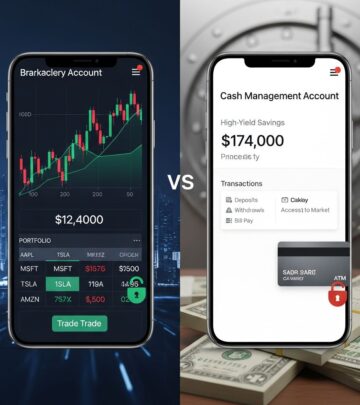
is a hybrid financial product offered by brokerage firms that combines the functionality of a traditional checking account with direct access to investment opportunities. Unlike standard bank checking accounts focused solely on daily transactions, these accounts—often called cash management accounts or investment checking accounts—allow users to write checks, use debit cards, access ATMs, and simultaneously buy or sell securities without needing separate transfers between accounts.This integration streamlines money management for investors, enabling seamless movement of funds from cash balances to investments like stocks, bonds, ETFs, or mutual funds. Brokerages such as Fidelity, Charles Schwab, and SoFi provide these accounts, typically sweeping uninvested cash into FDIC-insured partner banks for protection up to $250,000 per depositor, per bank, with some offering expanded coverage through multiple institutions.
How Does a Brokerage Checking Account Work?
Brokerage checking accounts function by holding your cash in a core position, often a money market fund or swept to FDIC-insured banks, while linking directly to your brokerage platform. When you deposit funds, they become available for spending via checks, debit cards, or bill pay, and for trading securities in real-time without settlement delays common in traditional bank-to-brokerage transfers.
For example, active traders can sell stocks and immediately use proceeds for bills, or deposit a paycheck and purchase shares the same day. Key operational aspects include:
- Cash Sweeps: Uninvested cash is automatically moved to interest-bearing accounts or funds, potentially earning higher yields than standard checking.
- Trading Integration: Buy/sell securities directly; no need for ACATS (Automated Customer Account Transfer Service) between banks and brokerages.
- Access Tools: Debit/ATM cards, mobile apps, online bill pay, and sometimes wire transfers or peer-to-peer payments.
Account opening is straightforward online, requiring personal details, ID verification, and sometimes a minimum deposit, though many have none.
Key Features of Brokerage Checking Accounts
These accounts mirror traditional checking but add investment-focused perks. Core features include debit/ATM access, check-writing, and bill pay, often with enhancements like no foreign transaction fees or ATM reimbursements worldwide.
| Feature | Description | Common Perks |
|---|---|---|
| Debit/ATM Card | Visa/Mastercard for purchases and cash withdrawals | Unlimited ATM fee refunds, no foreign fees |
| Checks | Free checks or digital alternatives | Free shipping, unlimited issuance |
| Bill Pay | Online scheduling and payments | Free, electronic processing |
| Interest Earnings | APY on uninvested cash | Competitive rates, often higher than banks |
| Mobile Banking | Apps for transfers, trading, budgeting | Real-time alerts, portfolio tracking |
Security features like two-factor authentication, fraud monitoring, and SIPC protection for securities (up to $500,000) complement FDIC for cash.
Benefits of a Brokerage Checking Account
**Brokerage checking accounts** excel for those blending spending and investing, offering convenience and growth potential absent in bank accounts.
- Seamless Integration: Move money instantly between cash and investments, ideal for frequent traders—no waiting for ACH transfers.
- Higher Yields: Many pay competitive APYs on cash balances, outpacing traditional checking’s near-zero rates.
- Fee Advantages: No monthly fees, free checks, ATM reimbursements (often unlimited), and no minimum balances.
- Expanded FDIC Coverage: Partner banks provide multi-bank sweeps for coverage beyond $250,000.
- All-in-One Management: Track spending, savings, and portfolio in one dashboard, simplifying finances.
For active investors, this setup reduces friction, potentially boosting returns by enabling quicker market access.
Drawbacks of Brokerage Checking Accounts
Despite advantages, these accounts aren’t ideal for everyone. Key cons include:
- No Physical Branches: Fully online; no in-person service for disputes or cash deposits.
- Lower Savings APYs: Interest checking may lag top online banks’ high-yield savings.
- Cash Sweep Variability: FDIC opt-in required; unsegregated funds risk delays in brokerage failure (though SIPC covers).
- Limited Transaction Types: Some restrict cash deposits or have trading settlement rules affecting immediate spending.
- Tax Implications: Interest and gains are taxable annually, unlike retirement accounts.
Best for digital-savvy users comfortable without branches.
Brokerage Checking Account vs. Traditional Checking Account
Compare via this table:
| Aspect | Brokerage Checking | Traditional Checking |
|---|---|---|
| Provider | Brokerage firms (e.g., Schwab, Fidelity) | Banks/credit unions |
| Investment Access | Direct trading | None; transfers needed |
| Fees | Often $0; ATM reimbursements | Possible monthly fees |
| Branches/ATMs | Online + partner ATMs | Physical branches |
| Insurance | FDIC via sweeps + SIPC | FDIC up to $250K |
| Interest | Competitive APY possible | Low or none |
Brokerage suits investors; traditional fits branch-preferring non-investors.
Brokerage Checking vs. Other Account Types
- Vs. Money Market Accounts: Both earn interest with limited checks/ATM, but brokerage adds full checking and trading.
- Vs. High-Yield Savings: Savings restrict transactions; brokerage offers unlimited checking-like access.
- Vs. Standard Brokerage: Adds spending tools; standard lacks debit/checks.
Best Brokerage Checking Accounts
Top options (as of recent data):
- Fidelity Cash Management: Unlimited ATM rebates, no fees, 0.01%+ APY, FDIC sweeps.
- Charles Schwab Investor Checking: No fees, global ATM refunds, linked to brokerage.
- SoFi Checking & Savings: High APY, early direct deposit, investing integration.
Select based on trading needs and perks.
Frequently Asked Questions (FAQs)
Q: Is a brokerage checking account FDIC insured?
A: Yes, typically via sweeps to partner banks up to $250,000 per bank; some offer more via multiple banks. Confirm opt-in.
Q: Can I use a brokerage checking account for daily spending?
A: Absolutely—debit cards, checks, bill pay work like traditional checking.
Q: Do brokerage checking accounts earn interest?
A: Many do, often at higher rates than banks, on uninvested cash.
Q: Are there fees for brokerage checking accounts?
A: Usually none for maintenance, but check trading commissions separately.
Q: Who should get a brokerage checking account?
A: Active investors seeking integration; not ideal for branch-dependent users.
Q: How do I open one?
A: Online via brokerage site; provide ID, SSN, fund via transfer.
Brokerage checking accounts revolutionize banking for investors by merging liquidity with opportunity. Evaluate based on your habits.
References
- What Are Brokerage Checking Accounts? — SoFi. 2024. https://www.sofi.com/learn/content/what-are-brokerage-checking-accounts/
- The pros and cons of brokerage checking accounts — Bankrate. 2024-10-15. https://www.bankrate.com/banking/checking/pros-cons-of-brokerage-checking-accounts/
- Brokerage Accounts | Definition, Types & Uses — Study.com. 2023. https://study.com/academy/lesson/brokerage-accounts-types-characteristics.html
- Should You Use a Brokerage Checking Account? — Experian. 2024. https://www.experian.com/blogs/ask-experian/should-you-use-brokerage-checking-account/
- What is a Brokerage Account — Charles Schwab. 2025-01-01. https://www.schwab.com/brokerage/what-is-a-brokerage-account
- Brokerage Accounts: What They Are, Benefits, & Services — TIAA. 2024. https://www.tiaa.org/public/invest/financial-products/brokerage-accounts
- What is a brokerage account? — Fidelity Investments. 2024. https://www.fidelity.com/learning-center/smart-money/what-is-a-brokerage-account
Similar Articles








Read full bio of medha deb