Bank Account: 4 Types, Features, And How To Choose
Discover the fundamentals of bank accounts, from basic checking to high-yield savings options, and how they secure your financial future.

A bank account is a secure financial repository provided by banks or credit unions where individuals deposit money, manage transactions, and grow savings. These accounts form the backbone of personal finance, offering protection through federal insurance and tools for daily spending or long-term planning.
Why Bank Accounts Matter in Modern Finance
In today’s digital economy, bank accounts enable seamless direct deposits, bill payments, and transfers. They protect funds up to $250,000 via FDIC for banks or NCUA for credit unions, shielding against institutional failure. Without one, managing money relies on cash, which carries risks of loss or theft.
Accounts also build credit history when linked to debit use or overdraft protection. They provide interest earnings on balances, helping combat inflation. For newcomers to banking, starting with a basic account introduces financial discipline and access to apps for budgeting.
Primary Categories of Bank Accounts
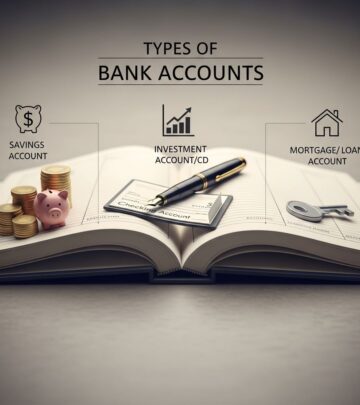
Bank accounts fall into four core types, each tailored to specific needs: frequent transactions, steady saving, balanced access with returns, or locked-in growth. Understanding these helps align choices with lifestyle and objectives.
Checking Accounts: Your Daily Transaction Hub
Checking accounts prioritize accessibility for routine expenses like groceries, utilities, and payroll. Users deposit paychecks via direct deposit using routing and account numbers, then withdraw via debit cards, checks, ATMs, or apps.
These accounts rarely pay significant interest but offer unlimited transactions. Fees may apply for overdrafts, low balances, or non-network ATMs, though many waive them with minimum deposits or activity. Ideal for active spenders, they serve as a financial command center.
- Key Features: Debit cards, check-writing, online bill pay, mobile deposits.
- Pros: High liquidity, no withdrawal limits, fraud protection.
- Cons: Low/no interest, potential fees.
Savings Accounts: Building Your Financial Safety Net
Savings accounts encourage accumulation by limiting withdrawals—often to six per month federally—to promote growth. They pay interest, compounding over time, making them suitable for emergency funds or short-term goals like vacations.
High-yield variants from online banks offer superior rates, sometimes 10x traditional ones. Access occurs via ATM cards or transfers, with automatic sweeps from checking for overdraft coverage. Minimum balances vary, but many have none.
- Key Features: Interest earnings, transfer options, goal trackers in apps.
- Pros: FDIC-insured growth, low-risk saving.
- Cons: Transaction caps, variable rates.
Money Market Accounts: Hybrid Flexibility and Returns
Money market accounts (MMAs) blend checking convenience with savings yields. They provide debit cards or checks but cap transactions at six monthly, like savings. Higher minimum balances unlock tiered interest rates, rewarding larger deposits.
MMAs invest in low-risk securities for competitive APYs, often exceeding standard savings. They’re perfect for mid-term parking of funds with occasional access needs. Rates fluctuate with markets, and early withdrawal penalties may apply.
| Account Type | Min. Balance | Interest Rate | Transactions/Month |
|---|---|---|---|
| MMA | Higher ($1,000+) | Medium-High | 6 |
| Savings | Low/None | Low-Medium | 6 |
| Checking | Low | Negligible | Unlimited |
Certificates of Deposit: Locked Savings for Maximum Yield
Certificates of deposit (CDs) require committing funds for fixed terms (3 months to 5 years) in exchange for elevated interest rates. Early withdrawals incur penalties, ensuring discipline for goals like home down payments.
CD ladders—staggered maturities—provide liquidity while capturing rates. No-fee brokered CDs from marketplaces diversify options. They’re low-risk, fixed-return vehicles outperforming savings during high-rate periods.
Comparing Bank Account Options Side-by-Side
Selecting the right mix depends on liquidity needs, risk tolerance, and goals. Most hold checking for operations and savings/CDs for growth.
| Feature | Checking | Savings | MMA | CD |
|---|---|---|---|---|
| Liquidity | High | Medium | Medium | Low |
| Interest | Low | Medium | High | Highest |
| Best For | Spending | Emergencies | Balanced access | Long-term |
| Insurance | Yes | Yes | Yes | Yes |
Linking accounts streamlines transfers; many banks offer bonuses for bundles.
How to Open and Manage Your First Bank Account
Opening requires ID (driver’s license, SSN), address proof, and minimum deposit. Online processes take minutes; compare fees, rates via FDIC’s tool. Choose banks with branches/apps suiting your habits.
- Assess needs: Daily use? Savings goals?
- Research institutions: Rates, fees, perks.
- Gather docs: ID, SSN.
- Apply online/in-branch.
- Fund and activate: Direct deposit setup.
Maintenance tips: Monitor via apps, avoid fees with balances/direct deposits, review statements monthly for fraud.
Advanced Strategies: Beyond Basic Accounts
Combine types: Checking + high-yield savings for liquidity/growth. CD ladders mitigate rate drops. IRAs extend tax-advantaged saving, though distinct from deposit accounts.
Online-only banks cut overhead for better yields. Credit unions offer member perks like lower fees. For businesses, separate accounts prevent commingling.
Common Pitfalls and How to Avoid Them
- Fees: Opt for no-fee accounts with qualifiers.
- Low Rates: Shop high-yield options annually.
- Overdrafts: Enable alerts, link savings.
- Inactivity: Maintain minimum activity.
Frequently Asked Questions (FAQs)
What is the difference between a checking and savings account?
Checking supports unlimited transactions for spending; savings limits them to encourage growth with interest.
Are all bank accounts FDIC insured?
Yes, up to $250,000 per depositor per bank for checking, savings, MMAs, CDs.
Can I have multiple bank accounts?
Absolutely—many use checking at one bank, high-yield savings elsewhere for optimization.
What is a high-yield savings account?
A savings variant with superior interest, often online, ideal for parking cash.
How do I choose the best account for me?
Match to goals: spending (checking), saving (savings/CD), balance (MMA).
Bank accounts empower financial control. Start simple, evolve with needs for stability and growth.
References
- 5 Different Types of Bank Accounts Explained — Raisin. 2023. https://www.raisin.com/en-us/banking/bank-account-types/
- The Most Common Types of Bank Accounts — Affinity Federal Credit Union. 2024-01-15. https://www.affinityfcu.com/financial-wellbeing/blog/personal-banking/the-most-common-types-of-bank-accounts
- Understanding Different Types of Bank Accounts | Beginners Guide — YouTube (Educational Video). 2023-05-10. https://www.youtube.com/watch?v=O4-MtfawzAY
- Understanding the Four Types of Bank Accounts — Mid Penn Bank. 2024. https://midpennbank.com/understanding-the-four-types-of-banking-accounts/
- Understanding the Different Types of Bank Accounts — PNC Bank. 2025-02-01. https://www.pnc.com/insights/personal-finance/spend/types-of-bank-accounts.html
Similar Articles








Read full bio of Sneha Tete