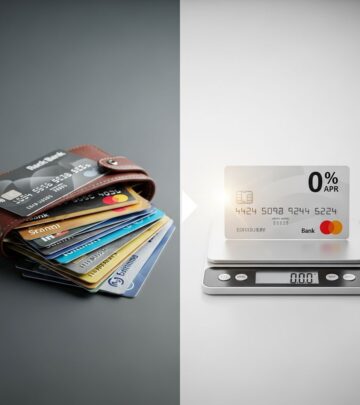
Balance Transfer Guide: How It Works And When To Use One
Learn how balance transfers work, their benefits, fees, and strategies to pay off credit card debt faster with lower interest rates.

A
balance transfer
is a financial strategy where you move existing credit card debt from a high-interest card to a new card offering a lower interest rate, often a 0% introductory APR. This allows more of your payments to reduce the principal rather than interest, accelerating debt payoff.How Does a Balance Transfer Work?
Balance transfers relocate debt to a card with favorable terms, typically adding the transferred amount plus a fee to your new card’s balance. The new issuer pays off the old account directly, simplifying payments into one. For example, transferring $5,000 from a 15% APR card to a 0% intro APR card can save hundreds in interest if paid off during the promo period.
Steps to Complete a Balance Transfer
Follow these steps to execute a balance transfer effectively:
- Compare offers: Research cards with long 0% APR periods (12-21 months) and low fees (3-5%). Check eligibility based on credit score.
- Apply for the card: Provide personal details like name, address, income, and SSN. Request transfer during application if possible.
- Initiate the transfer: Use online banking, app, or phone; supply old account number, balance, and issuer details.
- Wait for processing: Transfers take 5-14 days or longer. Continue minimum payments on old cards to avoid fees.
- Verify and pay down: Confirm transfer posts correctly, then aggressively pay the balance before promo ends.
Balance Transfer Fees
Expect a
balance transfer fee
of 3-5% of the amount moved, e.g., $150-$250 on $5,000. This upfront cost is often offset by interest savings. Some cards waive fees for the first 60-120 days or offer lower rates.| Transfer Amount | 3% Fee | 5% Fee |
|---|---|---|
| $1,000 | $30 | $50 |
| $5,000 | $150 | $250 |
| $10,000 | $300 | $500 |
Calculate savings: On $5,000 at 15% APR vs. 0% intro, you save ~$265 over a year, exceeding a 5% fee.
Pros and Cons of Balance Transfers
Pros
- Interest savings: 0% APR periods (up to 21 months) let payments reduce principal directly.
- Debt consolidation: Combine multiple balances into one payment, simplifying management.
- Build credit: On-time payments improve payment history and credit utilization if limit is high.
- Payoff acceleration: No interest means faster debt elimination with same payments.
Cons
- Fees: 3-5% upfront cost adds to balance.
- Post-promo rates: Variable APRs (15-25%+) apply after intro, potentially higher than original.
- Credit impact: Hard inquiry lowers score temporarily; high utilization hurts if not paid down.
- Restrictions: Can’t transfer from same issuer; limits apply; new purchases may accrue interest immediately.
Is a Balance Transfer Right for You?
Ideal if you have
good/excellent credit
(670+ FICO), can pay off during intro period, and discipline to avoid new charges. Not suitable for minimum-only payers, as fees and post-promo rates worsen debt. Use calculators to project savings.Balance Transfer Credit Cards: Key Features
Top cards offer 0% intro APR on transfers for 12-21 months, rewards, no annual fees. Examples include cards from issuers like Chase, Citi, with fees 3-5%. Ensure transfer window (often 60-120 days) aligns.
- Longer intro periods maximize savings.
- Low/no fees reduce costs.
- High limits accommodate large balances.
Tips for Successful Balance Transfers
- Transfer soon after approval to qualify for promo APR.
- Avoid new purchases; many cards charge purchases at high APR while transfers are 0%.
- Create a payoff plan: Divide balance by promo months for target payments.
- Track post-transfer: Verify old balance zeroed; watch statements.
- Consider multiple transfers if debt exceeds one limit, but minimize inquiries.
Common Mistakes to Avoid
- Ignoring fees: Factor into total cost.
- Missing payments: Late fees negate savings; promo may end.
- Carrying balance post-promo: High rates accrue retroactively on some cards—no, but interest skyrockets.
- Transferring to same issuer: Often prohibited.
- Not shopping rates: Compare multiple offers.
Alternatives to Balance Transfers
- Debt consolidation loan: Fixed-rate personal loan at lower APR.
- 0% purchase cards: For new spending, not transfers.
- Credit counseling: Nonprofit DMPs negotiate lower rates.
- Debt settlement: For severe hardship, but credit damage.
Frequently Asked Questions (FAQs)
Q: How long does a balance transfer take?
A: Typically 5-14 days, up to 2+ weeks. Continue old card payments until confirmed.
Q: Can I transfer a balance from one card to another from the same issuer?
A: Generally no, due to issuer policies.
Q: What happens if I don’t pay off the balance before the promo period ends?
A: Regular APR (often high) applies to remaining balance.
Q: Does a balance transfer affect my credit score?
A: Temporary dip from inquiry and utilization; improves with on-time payments.
Q: Can I balance transfer non-credit card debt?
A: Usually credit cards only; some allow loans, check terms.
Final Thoughts on Maximizing Savings
Balance transfers are powerful for disciplined users with solid credit. Pair with a strict budget to eliminate debt before promo ends, saving thousands in interest. Always read terms for fees, timelines, and post-promo rates.
References
- What Is a Balance Transfer? Should I Do One? — NerdWallet. 2024-01-15. https://www.nerdwallet.com/credit-cards/learn/what-is-a-balance-transfer
- What Is a Balance Transfer Credit Card? — Capital One. 2024-05-20. https://www.capitalone.com/learn-grow/money-management/how-to-do-a-balance-transfer/
- What is a Balance Transfer & How Does it Work? — Bank of America Better Money Habits. 2024-03-10. https://bettermoneyhabits.bankofamerica.com/en/debt/how-do-balance-transfers-work
- When does a Credit Card Balance Transfer Make Sense? — Fifth Third Bank. 2024-02-28. https://www.53.com/content/fifth-third/en/financial-insights/personal/credit-cards/when-does-a-credit-card-balance-transfer-make-sense.html
- How to Do a Credit Card Balance Transfer — American Express. 2024-06-05. https://www.americanexpress.com/en-us/credit-cards/credit-intel/how-to-transfer-credit-card-balance/
- What Is a Balance Transfer and Is it Worth it? — Experian. 2024-04-12. https://www.experian.com/blogs/ask-experian/what-is-a-balance-transfer-and-how-does-it-work/
Similar Articles








Read full bio of medha deb