What Is a 360 Review? Definition and Best Practices
Master 360-degree reviews: comprehensive feedback from all directions for employee development.
What Is a 360 Review?
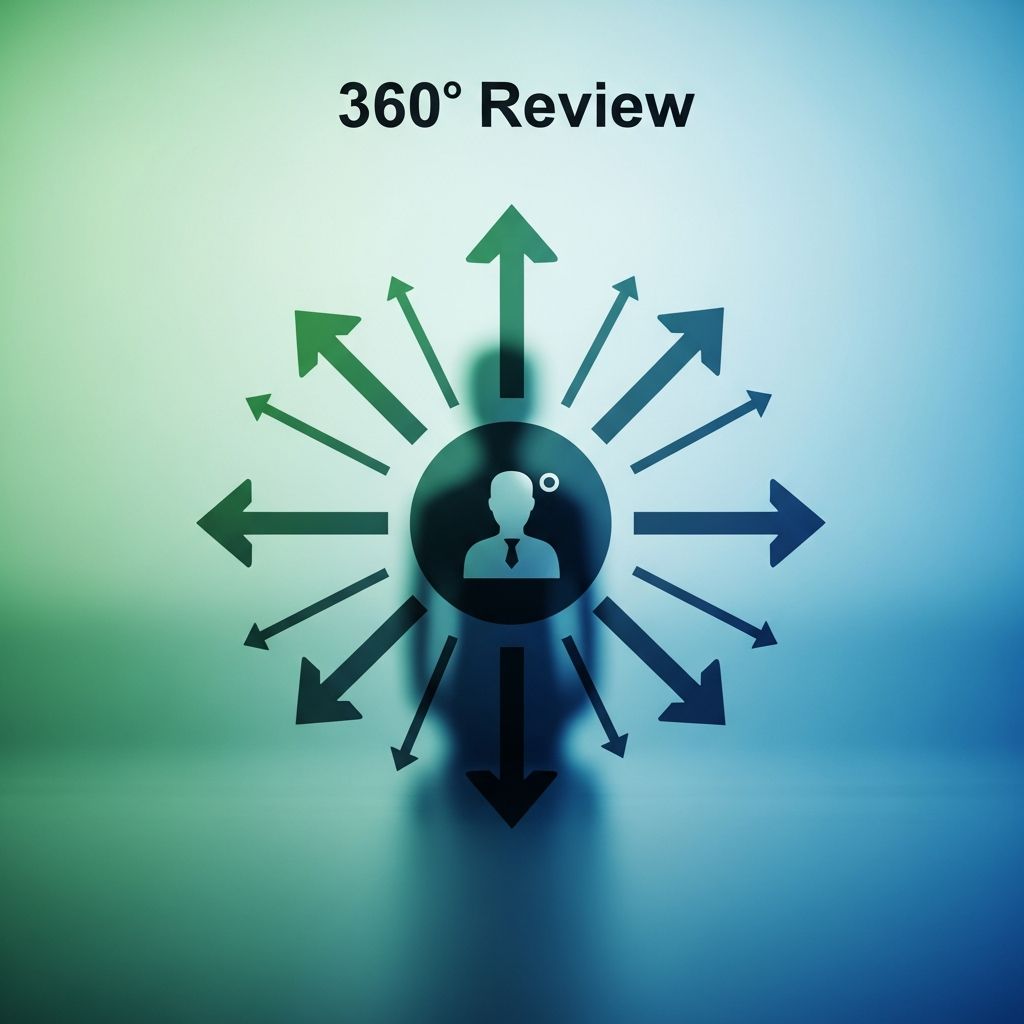
A 360-degree review, also known as multi-rater feedback or multi-source assessment, is a performance evaluation method that gathers comprehensive feedback about an employee from multiple perspectives within and sometimes outside the organization. Unlike traditional top-down performance reviews conducted solely by managers, a 360 review collects input from the employee being evaluated, their direct manager or supervisor, peers and colleagues, direct reports or subordinates, and occasionally external stakeholders such as clients or customers.
This holistic approach to performance evaluation provides a well-rounded view of an employee’s strengths, weaknesses, and development opportunities. The 360 review process aims to foster collaboration and open communication across all organizational levels by integrating diverse perspectives that offer valuable insights into how an employee is perceived and the impact they have on those around them.
Key Characteristics of 360 Reviews
Understanding the fundamental characteristics of 360 reviews helps organizations implement them effectively:
- Multi-Source Feedback: Feedback comes from various sources including managers, peers, subordinates, and sometimes external collaborators
- Anonymous Participation: Raters typically provide confidential, anonymous evaluations to encourage honest feedback
- Self-Evaluation Component: The employee completes a self-assessment questionnaire alongside external raters
- Comprehensive Assessment: Reviews evaluate multiple competencies, behaviors, and skills relevant to the employee’s role
- Developmental Focus: The primary goal is employee growth and development rather than punitive evaluation
- Structured Process: The review follows a systematic methodology with defined objectives, participants, and timelines
How 360 Reviews Differ from Traditional Performance Reviews
Traditional performance reviews rely primarily on downward feedback from managers to employees, while some organizations also incorporate upward feedback from subordinates to managers. However, 360 reviews represent a significant departure from this model by incorporating feedback from all directions. The traditional approach may miss valuable perspectives from peers who interact with the employee daily or from direct reports who experience the employee’s leadership style firsthand.
It is important to clarify that 360-degree review assessments are not performance reviews themselves. They are not designed to replace an employee’s annual performance review or ongoing one-on-one performance feedback sessions, which include a manager’s feedback about job expectations and job-specific skills. Instead, 360 assessments serve as a coaching and developmental tool that provides broader perspectives to help managers deliver more comprehensive performance reviews and support employee development initiatives.
The 360 Review Process: Step-by-Step Implementation
Implementing an effective 360 review program requires careful planning and execution. Organizations should follow a structured process to ensure meaningful results and positive outcomes:
Step 1: Define Clear Objectives and Purpose
Before launching a 360 review program, organizations must clearly outline the goals and objectives. Leaders should determine what specific information they hope to gather and how the feedback will be used. Will the 360 review focus on developmental purposes, performance appraisal, or both? Different organizations may use 360 reviews differently—some emphasize developmental coaching while others use them to measure employee performance and contribution to organizational growth. Defining key competencies, behaviors, and goals relevant to the employee’s role and organizational objectives ensures the review process remains focused and meaningful.
Step 2: Select Appropriate Participants and Raters
Determining who will participate in the review process is crucial for obtaining valuable perspectives. Typically, organizations select 8-12 raters for each employee being evaluated. Participants usually include the employee’s direct manager, three to five peers or colleagues, two to three direct reports if applicable, and sometimes upper management or external stakeholders. The selection process should ensure that raters have sufficient interaction with the employee to provide informed feedback about their performance and behavior.
Step 3: Design Comprehensive Review Instruments
Creating an effective questionnaire is essential for gathering quality feedback. The assessment should include a mix of open-ended and closed-ended questions measured on a rating scale. Questions should be relevant, unbiased, and aligned with organizational values and the defined objectives. Common categories assessed in 360 evaluations include teamwork, interpersonal skills, communication effectiveness, alignment with company vision and mission, leadership ability, and technical competence.
Step 4: Communicate the Process Clearly
Transparent communication about the 360 review process is vital for gaining buy-in and participation. HR managers and leaders should explain the purpose of the review, how it will be conducted, who will be involved, how results will be communicated, and how feedback will be used. This communication reduces anxiety and helps employees understand that the review is a developmental tool rather than a punitive measure.
Step 5: Facilitate Training for Key Players
Before initiating 360 assessments, organizations should provide adequate training for all involved parties. This includes training for raters on how to provide constructive, growth-oriented feedback; training for managers on how to interpret and discuss results; and guidance for employees on how to receive and act on feedback. Proper training ensures participants understand expectations and contributes to the effectiveness of the entire process.
Step 6: Conduct the Assessment and Analysis
During the assessment phase, all participants complete their questionnaires through an online platform or survey tool. The employee completes a self-evaluation while raters provide their anonymous feedback. Modern platforms leverage artificial intelligence to summarize review data and even build out next steps based on feedback, streamlining the analysis process.
Step 7: Interpret Results and Provide Feedback
After collecting all responses, managers and HR professionals analyze the results to identify patterns, trends, and key insights. The focus should be on understanding the employee’s strengths, areas for development, and potential blind spots—areas where the employee’s self-perception differs significantly from others’ perceptions. During feedback meetings, managers should maintain a development-focused approach, reinforcing existing strengths while discussing growth opportunities.
Step 8: Create and Monitor Development Plans
The essence of the 360 review process lies in creating actionable development plans based on the feedback received. Employees should work with their managers to develop SMART goals (Specific, Measurable, Achievable, Relevant, and Time-bound) for each identified area of improvement. Development plans should outline specific steps, milestones, resources needed, and support mechanisms such as training programs, mentorship, coaching, or access to specific tools. Progress should be monitored regularly, and ongoing support should be provided to ensure success.
Benefits of 360 Reviews
Organizations that implement 360 review programs effectively experience numerous advantages:
- Increased Self-Awareness: Employees gain deeper insights into how their actions and behaviors are perceived by different groups, identifying blind spots they may not have recognized independently
- Comprehensive Performance View: The multi-faceted perspective reveals strengths and weaknesses that might be missed in traditional reviews
- Enhanced Employee Development: The holistic feedback enables more targeted and effective development plans tailored to actual performance gaps
- Improved Organizational Communication: The process fosters open dialogue and collaboration across hierarchical levels
- Better Leadership Development: For managers and leaders, 360 reviews provide critical insights into their leadership style and impact on teams
- Stronger Organizational Culture: Regular feedback and development focus contribute to a more positive workplace culture
- Improved Performance Outcomes: When effectively implemented, 360 reviews contribute to measurable improvements in individual and organizational performance
Challenges and Considerations
While 360 reviews offer significant benefits, organizations should be aware of potential challenges:
- Time and Resource Intensity: Implementing a comprehensive 360 review program requires substantial time, effort, and financial investment
- Anonymity Concerns: While anonymity encourages honest feedback, it can also lead to unfair criticism without accountability
- Feedback Quality Variability: The quality of feedback depends on raters’ ability to provide constructive, specific, and objective comments
- Cultural Sensitivity: Different cultures may process and perceive 360-degree feedback differently, and approaches acceptable in one culture may not work in others
- Implementation Resistance: Employees may resist the process if they perceive it as threatening or if trust is lacking in the organization
- Analysis Complexity: Synthesizing feedback from multiple sources and reconciling conflicting perspectives can be challenging
- Risk of Misuse: If not properly implemented, 360 reviews can be used punitively rather than developmentally, damaging organizational trust
Best Practices for Effective 360 Reviews
To maximize the effectiveness of 360 reviews, organizations should adhere to these best practices:
Maintain Focus on Development
The primary purpose of 360 reviews should be employee development and growth. Managers and reviewees should schedule feedback meetings with development at the top of mind, reinforcing strengths while discussing areas for improvement. Modern 360 reviews are about growing together and focusing on the future rather than dwelling on past mistakes.
Provide Specific and Balanced Feedback
Raters should provide specific examples of behavior or performance to illustrate their points rather than making general statements. A balanced approach that acknowledges both strengths and improvement areas maintains perspective and prevents the feedback from feeling overly critical. Comments should focus on observable behaviors rather than judgments about personality traits.
Ensure Transparency and Clear Communication
Decide in advance how results will be communicated. Will the employee receive results first, or will their direct supervisor? Providing clear guidelines ensures consistency and prevents misunderstandings. Transparency about the process, its purpose, and how results will be used builds trust and encourages genuine participation.
Align with Organizational Strategy
360 reviews should be aligned with the company’s overall strategy, goals, and initiatives. Measuring and reporting progress in achieving these broader objectives ensures that the review process contributes to organizational success.
Encourage Real-Time Feedback Culture
Organizations should teach people across the organization to provide constructive, growth-oriented feedback in real time and in alignment with organizational structure. Capturing feedback at the right time and place increases its effectiveness in developing employees and prevents issues from accumulating until the formal review period.
Consider Cultural Context
When implementing 360 reviews in diverse or international organizations, leaders should recognize that different cultures may process feedback differently. Adapt the approach to align with cultural norms while maintaining the core principles of the process.
Implementation Timeline and Planning
A typical 360 review cycle involves several phases spread across multiple months. Organizations should allocate time for defining objectives, selecting raters, designing questionnaires, communicating the process, conducting training, administering the assessment, analyzing results, providing feedback, and creating development plans. Planning the entire timeline upfront ensures smooth execution and allows stakeholders to prepare adequately.
Technology and Tools for 360 Reviews
Modern technology platforms have made implementing 360 reviews more efficient and accessible. Specialized software allows organizations to manage the entire process from participant selection through feedback collection and analysis. Many platforms offer features such as anonymous feedback collection, automated data aggregation, AI-powered summarization, and integration with development planning tools. Selecting appropriate technology aligned with organizational needs and budget is important for successful implementation.
Frequently Asked Questions
Q: Are 360 reviews the same as annual performance reviews?
A: No. 360 reviews are not designed to replace annual performance reviews. They are developmental tools that provide broader perspectives to help managers deliver more comprehensive performance reviews. Performance reviews typically focus on job-specific performance against defined expectations, while 360 reviews assess broader competencies and provide multi-source feedback.
Q: How many people should participate as raters in a 360 review?
A: Typically, 8-12 individuals complete the anonymous evaluation for each employee. This number provides sufficient diverse perspectives while remaining manageable. The exact number may vary based on the employee’s role and organizational structure.
Q: How often should organizations conduct 360 reviews?
A: The frequency depends on organizational objectives and resources. Some organizations conduct annual 360 reviews, while others implement them biennially or focus on specific groups such as leaders or high-potential employees. The key is maintaining consistency and allowing sufficient time between reviews for development to occur.
Q: What should happen if 360 feedback is conflicting or inconsistent?
A: Conflicting feedback is not uncommon and can actually provide valuable insights. Managers should help employees understand why different raters may perceive them differently. This might reveal blind spots or indicate that the employee adapts their behavior based on context. The focus should be on understanding the patterns and identifying genuine areas for development.
Q: Can 360 reviews be used for compensation or promotion decisions?
A: While 360 reviews can inform compensation and promotion decisions by providing comprehensive performance data, they should primarily be used for developmental purposes. Using them primarily for high-stakes decisions may undermine the developmental focus and discourage honest feedback from raters.
References
- A 360-degree review involves self-evaluations and performance assessments — Leapsome. 2025. https://www.leapsome.com/playbooks/how-to-run-360-performance-review
- What is a 360-Review? — Mitratech. 2025. https://mitratech.com/resource-hub/blog/what-is-a-360-review/
- 360 Degree Evaluation: A Quick Guide — SafetyCulture. 2025. https://safetyculture.com/topics/how-to-conduct-an-effective-performance-appraisal/360-degree-evaluation
- The 360 Degree Review Process Explained in 6 Steps — AIHR. 2025. https://www.aihr.com/blog/360-review-process/
- 360-degree feedback — Wikipedia. 2025. https://en.wikipedia.org/wiki/360-degree_feedback
- An 8-Step 360 Degree Feedback Process Timeline — Explorance. 2025. https://www.explorance.com/blog/8-step-360-degree-feedback-process-timeline
- The Benefits and Drawbacks of 360 Reviews — Betterworks. 2025. https://www.betterworks.com/magazine/360-reviews-managers-can-leverage-real-results/
Similar Articles








Read full bio of medha deb