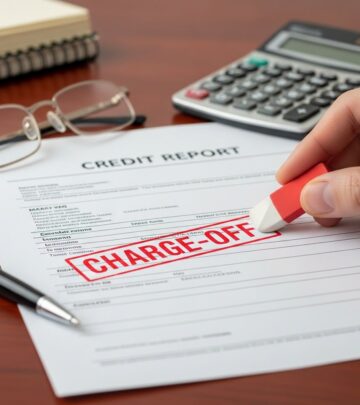
What Happens When Your Credit Card Debt Is Charged Off
Discover the full impact of a credit card charge-off on your finances, credit score, and options for recovery and debt resolution.
A credit card charge-off is a serious milestone in debt delinquency, typically occurring after 180 days of non-payment when the issuer deems the balance uncollectible and removes it from their books as a loss. This accounting action does not erase your obligation to pay; instead, it often triggers aggressive collection efforts, severe credit damage, and potential legal consequences. Understanding this process is crucial for anyone falling behind on payments to mitigate long-term harm.
What Does Charged Off Mean?
When your credit card account is charged off, the lender writes it off as a bad debt, closing the account and ceasing new charges. This usually happens between 120 and 180 days past due, with 180 days being standard for credit cards. The creditor shifts the outstanding balance from an asset to a loss on their financial statements for tax and accounting purposes.
Importantly, a charge-off does not forgive the debt. You remain legally responsible for repayment. The issuer may continue internal collections briefly or sell the debt to a third-party agency at a fraction of its value, passing pursuit to aggressive collectors.
- Timeline: Delinquency starts at 30 days; charge-off at 120-180 days.
- Account Status: Closed immediately; balance shows as charged off on credit reports.
- Your Obligation: Debt persists; payments go to original creditor or buyer.
The Charge-Off Process Step by Step
The journey to charge-off unfolds predictably:
- Initial Delinquency (30-90 Days): Missed minimum payments trigger late fees, penalty APRs, and reports to credit bureaus as ’30 days late.’ Collection calls and letters begin.
- Extended Delinquency (90-120 Days): Account moves to ‘seriously delinquent.’ Creditor intensifies contact; hardship programs may be offered.
- Charge-Off (120-180 Days): Lender declares loss, reports ‘charge-off’ to Equifax, Experian, TransUnion. Balance may zero out if sold, but notation remains.
- Post-Charge-Off: Debt sold/transferred; new collection account appears. Aggressive pursuit ensues.
Creditors notify you before charge-off via statements and calls, but many borrowers only realize severity upon credit report review.
How a Charge-Off Affects Your Credit Score
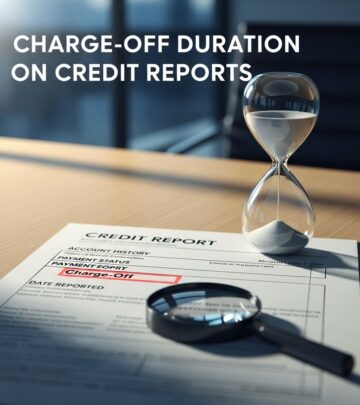
A charge-off devastates your credit profile, often dropping scores by 100+ points. It signals maximum risk to lenders, lingering 7 years from the charge-off date under FCRA rules.
| Factor | Impact |
|---|---|
| Payment History (35% of FICO) | Severely negative; worst delinquency mark. |
| Amounts Owed (30%) | High utilization pre-charge-off; zero balance post-sale hurts if not managed. |
| New Collections | Double hit if sold (original + agency). |
| Duration | 7 years; impact fades over time. |
Paid charge-offs hurt less than unpaid ones in models like FICO 8/9 or VantageScore, but remain derogatory. Multiple charge-offs compound damage.
Your Debt Doesn’t Disappear: Collections After Charge-Off
Post-charge-off, expect relentless pursuit:
- Original Creditor: May collect briefly or sell debt.
- Debt Buyer/Agency: Purchases for 4-10 cents/dollar; seeks full amount plus fees. Calls, letters, emails intensify.
- Credit Report: Shows as ‘charged off collection’; validation notice required within 5 days of contact.
Debt appears twice if transferred without sale, amplifying score harm.
Legal Consequences of Ignoring a Charged-Off Debt
Collectors can sue for unpaid balances, especially over $1,000. Outcomes include:
- Judgments: Court orders payment; liens on property.
- Wage Garnishment: Up to 25% of disposable income (state limits vary).
- Bank Levies: Seizure of accounts.
- Statute of Limitations: 3-10 years for credit card debt; suing restarts clock.
Defend lawsuits vigorously; many are winnable via validation failures or expired SOL. Bankruptcy (Ch. 7/13) discharges eligible debts but tanks credit further.
Options for Paying Off Charged-Off Debt
You can resolve charge-offs several ways:
- Full Payment: To original creditor (pre-sale) or agency. Reported as ‘paid charge-off.’
- Settlement: Negotiate 30-50% lump sum (e.g., $6,000 on $10,000 debt). Shows ‘settled.’
- Payment Plan: Installments; get written agreement.
- Pay-for-Delete: Rare; agency removes trade line for payment (not guaranteed).
- Hardship/Refinance: Pre-charge-off options like reduced rates.
Get everything in writing; verify updates on reports post-payment.
Can You Remove a Charge-Off from Your Credit Report?
Charge-offs auto-delete after 7 years. Removal options:
- Dispute Errors: Free via bureaus if inaccurate.
- Goodwill Letter: Request deletion for one-time fix (low success).
- Settlement Perk: Negotiate removal (uncommon).
Paid status improves perception but doesn’t erase history. Focus on rebuilding.
Steps to Recover After a Charge-Off
Rebound strategically:
- Pull Free Reports: AnnualCreditReport.com; dispute errors.
- Negotiate Debts: Settle aggressively.
- Secure Secured Cards: Rebuild with deposits.
- Budget Ruthlessly: Track via apps; cut expenses.
- Counseling: NFCC agencies for plans.
Scores recover to 700+ in 2-4 years with perfect behavior.
How to Avoid a Charge-Off in the First Place
Prevention is ideal:
- Contact issuer early for hardship.
- Balance transfer to 0% APR.
- Consolidate via loans.
- Prioritize minimum payments.
Hardship programs offer pauses, reductions.
Frequently Asked Questions (FAQs)
Does a charge-off mean the debt is forgiven?
No, you still owe it; charge-off is accounting only.
How long does a charge-off stay on my credit report?
7 years from charge-off date.
Should I pay a charged-off account?
Yes, to stop collections/lawsuits; paid looks better.
Can they garnish wages for charged-off credit card debt?
Yes, after judgment.
What’s the difference between charge-off and collections?
| Charge-Off | Collections |
|---|---|
| Creditor writes off as loss. | Agency pursues/sues. |
| Balance zeroed if sold. | New account appears. |
References
- What is a Charge-Off? | Equifax® — Equifax. 2023. https://www.equifax.com/personal/education/credit/report/articles/-/learn/charge-offs-faq/
- A Guide to Charge-Offs — SoFi. 2024. https://www.sofi.com/learn/content/credit-card-charge-off/
- What Is a Charge-Off? — Experian. 2024. https://www.experian.com/blogs/ask-experian/what-is-a-charge-off/
- What Happens When a Credit Card Is Charged Off? — Credit One Bank. 2023. https://www.creditonebank.com/articles/what-happens-when-a-credit-card-is-charged-off
- How serious is a credit card charge-off? Here’s what borrowers should know — CBS News. 2024-05-15. https://www.cbsnews.com/news/how-serious-is-a-credit-card-charge-off-what-borrowers-should-know/
- Understanding charge-offs and how to manage them efficiently — LoanPro. 2024. https://loanpro.io/glossary/charge-offs
Similar Articles








Read full bio of medha deb