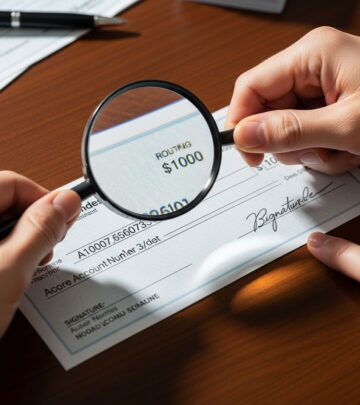
What Really Happens When a Check Bounces?
Understand what a bounced check means, the fees and damage it can cause, and practical steps to fix it and prevent it in the future.
A bounced check can be stressful, embarrassing, and expensive, but it is also something you can resolve with the right information and prompt action. Understanding what a bounced check is, what happens when one occurs, and how to prevent it will protect your money and your financial reputation.
This guide walks through how bounced checks work, what it means for both the person writing the check and the person receiving it, the fees and consequences involved, and simple, practical steps to fix the problem and avoid it in the future.
What Is a Bounced Check?
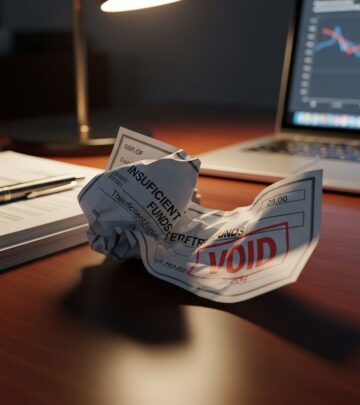
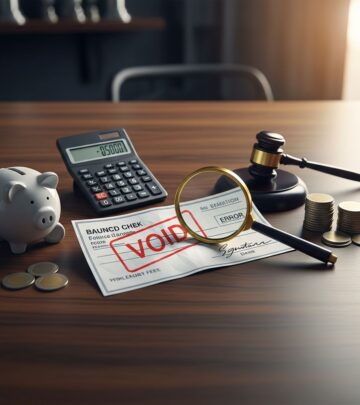
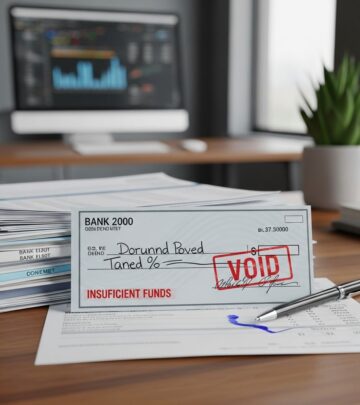
A check bounces when your bank refuses to pay it because there is not enough money in the account to cover the amount written on the check. Banks typically mark these items as NSF (non-sufficient funds) or “returned unpaid.”
In many cases, the bank will:
- Reject the check and send it back to the payee’s bank.
- Charge the check writer an NSF fee.
- Possibly charge the check recipient a returned item fee as well.
Some banks may instead allow the payment to go through even without enough funds, causing the account to go negative and triggering an overdraft fee rather than an NSF fee.
Common Reasons Checks Bounce
Even careful people can accidentally bounce a check. Typical reasons include:
- Insufficient funds in the account when the check is presented for payment.
- Forgetting about pending payments like automatic withdrawals or debit card transactions that haven’t fully cleared yet.
- Misunderstanding holds on deposited funds, assuming money is available before it actually clears.
- Mistakes in recordkeeping, such as not updating a check register or budgeting app.
- Delays in deposits reaching the account (e.g., mailed checks, employer errors).
- Closed or frozen accounts, where the bank will return any checks unpaid.
Because of electronic processing and mobile deposits, checks may clear faster than people expect, leaving less time between writing a check and money leaving the account.
What Happens When Your Check Bounces?
When a check you wrote bounces, several things can happen relatively quickly:
1. The Bank Returns the Check Unpaid
Your bank will refuse the transaction and send the check back to the person or business you tried to pay. The transaction is essentially reversed, and the payee does not receive the money.
2. You May Be Charged NSF or Overdraft Fees
Banks commonly charge a non-sufficient funds (NSF) fee when a check is returned for lack of funds. Many U.S. banks historically charged around $30–$35 per NSF item, although recent regulatory and competitive changes have led some banks to reduce or eliminate these fees.
If your bank allows the check to clear and your account balance goes negative, you may be charged an overdraft fee instead. Overdraft fees have also often been around $30–$35 per transaction, though some banks now offer low or no-fee overdraft programs.
3. The Recipient May Charge You Fees or Penalties
The person or company you tried to pay may also face a fee from their bank for depositing a check that is returned unpaid. They may pass this cost on to you or charge a separate returned check fee, especially for rent, utilities, or other bills.
Some businesses and landlords include returned-check penalties in their contracts, which can add to the total cost of a bounced check.
4. Your Account History and Relationship With the Bank Can Be Affected
Repeated bounced checks can make you look like a higher-risk customer and may lead your bank to:
- Limit your ability to write checks.
- Remove overdraft or courtesy payment privileges.
- Eventually close your account for misuse or excessive overdrafts.
If a bank closes your account for these reasons, it may report you to a consumer reporting agency that tracks checking account abuse, which can make opening new accounts more difficult.
5. In Extreme Cases, There May Be Legal Consequences
When a check bounces because of a genuine mistake and you promptly make it right, it is usually treated as a civil matter. However, if someone writes checks knowing they do not have and will not have the funds, or with fraudulent intent, state laws may allow for fines or criminal charges.
The details vary by state, and there are often minimum thresholds and specific intent requirements. If you are facing threats of legal action over a bounced check, it is wise to speak with a legal professional or a consumer law clinic.
What Happens If Someone Else’s Check to You Bounces?
Bounced checks do not only affect the person who wrote them. If you deposit a check that bounces, you may also face problems:
- Your bank will reverse the deposit, removing the credited amount from your account balance.
- You may be charged a returned item fee because the check you deposited could not be collected.
- If you already spent the money, your account could go negative, potentially triggering overdraft fees of your own.
This can be particularly painful if the check was for a large amount, such as rent payments, freelance income, or reimbursement from a friend.
How to Respond When a Check You Received Bounces
If you receive an NSF notice on a check deposited into your account:
- Contact the person who wrote the check immediately and let them know it was returned.
- Ask for an alternative payment method, such as cash, a cashier’s check, or an electronic transfer.
- Request that they also cover any fee your bank charged you for the returned item.
If the check writer refuses to pay or ignores you, and the amount is significant, you may consider sending a written demand letter and, in some cases, pursuing small claims court—though this should usually be a last resort.
NSF Fees vs. Overdraft Fees: What’s the Difference?
| Feature | NSF Fee | Overdraft Fee |
|---|---|---|
| What triggers it? | Transaction is rejected due to insufficient funds. | Bank allows transaction to go through, making balance negative. |
| Does the payment go through? | No, the check or payment is returned unpaid. | Yes, merchant or payee still gets paid. |
| Impact on your account | No payment made, but fee is charged and payee may still expect payment. | Payment is made, but you owe the bank the negative balance plus fee. |
| Typical fee amount | Historically around $30–$35 per item, though some banks have reduced or eliminated these fees. | Also historically around $30–$35 per item, but many banks are lowering these as well. |
How to Fix a Bounced Check Quickly
If you find out a check you wrote has bounced, acting quickly can limit the financial damage and preserve your relationships.
1. Confirm the Details With Your Bank
Log in to your online banking or call your bank’s customer service to find out:
- Exactly which check bounced and for what amount.
- Whether the check was returned or paid into overdraft.
- What fees have been charged so far.
- Whether more attempts to process the check will be made automatically.
Ask your bank if any other payments are pending that could trigger additional fees, and whether they can offer a one-time fee refund as a courtesy, especially if this is your first offense.
2. Contact the Payee Immediately
Reaching out to the person or business you tried to pay demonstrates responsibility and good faith. Be honest and brief:
- Explain that the check was returned for insufficient funds.
- Apologize and acknowledge any inconvenience.
- Offer a clear plan to repay the amount as soon as possible.
- Ask if they incurred any additional fees and whether they can share proof of those charges.
Many businesses have standard procedures for bounced checks, so reaching out early may help you negotiate or avoid additional penalties.
3. Make the Payment Using a Secure Alternative
To resolve the debt, consider:
- Paying with a cashier’s check or money order, which does not rely on your checking account balance.
- Using an electronic transfer, such as an ACH payment or person-to-person payment through your bank, once you know the money is available.
- Paying in cash and getting a written receipt for your records.
Avoid writing another personal check for the same bill until you are certain your account has sufficient cleared funds.
4. Stabilize Your Account Balance
After paying the amount owed, take steps to bring your bank account back to a healthy position:
- Deposit enough money to cover any negative balance and new upcoming bills.
- Pause nonessential spending temporarily.
- Review your recent transactions to understand what led to the shortfall.
Consider setting up account alerts for low balances or large withdrawals to avoid surprises in the future.
How to Avoid Bounced Checks in the Future
You can significantly reduce the risk of bouncing a check by combining good money habits with simple tools your bank may offer.
1. Track Your Balance Accurately
- Keep a running record of your transactions, whether in a check register, spreadsheet, or budgeting app.
- Remember that some checks and card transactions may not appear as pending right away.
- Always keep a personal cushion (for example, $50–$200) that you pretend is not available to spend.
Financial literacy resources emphasize the importance of active monitoring of your accounts as a core money skill.
2. Build a Small Buffer or Emergency Fund
Having even a modest emergency fund can prevent bounced checks when unexpected expenses or timing issues arise. Experts commonly suggest starting with at least $500–$1,000 in accessible savings and then building toward 3–6 months of essential expenses over time.
3. Use Overdraft Protection Carefully
Many banks offer overdraft protection, where your checking account is linked to a savings account, credit card, or line of credit. If a check or payment exceeds your balance, the bank transfers funds from the linked account instead of returning the item.
Before enrolling, compare:
- Transfer fees or interest charges.
- Limits on how much can be covered.
- Whether it is cheaper than standard overdraft or NSF fees.
Using overdraft protection as a regular tool rather than an occasional backup can still lead to high costs and hide underlying budget problems.
4. Schedule Payments Strategically
- Try to schedule major payments like rent or loans after your main paycheck clears, not before.
- If your income is irregular, avoid writing large checks until the money is safely in your account.
- Where possible, use automatic payments with clear due dates so you know exactly when money will leave your account.
5. Improve Overall Financial Literacy
Improving your broader money skills—budgeting, saving, and managing debt—reduces the chances of emergencies that push your account into the red. Organizations focused on financial education emphasize that understanding how banking fees work and how to manage cash flow is key to financial stability.
Frequently Asked Questions (FAQs)
Q: Will a bounced check affect my credit score?
A bounced check by itself usually does not show up directly on your credit report because checking account activity is not routinely reported to credit bureaus. However, if the unpaid amount is sent to collections or results in a court judgment, that could be reported and hurt your credit score.
Q: Can my bank close my account for bounced checks?
Yes. If you repeatedly overdraw your account or have multiple bounced checks, your bank may decide to close your account for misuse or risk management reasons. This may also be reported to a checking-account reporting agency, which can make it harder to open new accounts elsewhere.
Q: How long does a bank keep trying to process a bounced check?
Banks and merchants may attempt to re-present a bounced check one or more times, but practices vary. Some merchants will submit it again after a few days, while others will stop after the first return and seek payment from you directly. Ask your bank if another attempt is scheduled so you do not incur repeated fees.
Q: Is writing a bad check a crime?
Accidentally bouncing a check is usually treated as a civil matter that involves fees and repayment. However, intentionally writing checks from an account you know cannot cover them, particularly for large amounts or in repeated schemes, may violate state laws against check fraud or theft. If you are concerned about potential legal exposure, consult an attorney or legal aid service.
Q: What should I do if a check someone gave me bounces?
Contact the person who wrote the check as soon as you receive notice from your bank. Ask for repayment using a secure method like cash, a cashier’s check, or an electronic transfer, and request reimbursement for any fees your bank charged you. If they refuse to pay and the amount is significant, consider getting advice from a legal clinic or small-claims court resource in your state.
References
- Overdraft and Nonsufficient Funds (NSF) Fees — Consumer Financial Protection Bureau. 2023-10-11. https://www.consumerfinance.gov/about-us/blog/overdraft-and-nonsufficient-funds-nsf-fees/
- Bank Accounts and Services — Federal Deposit Insurance Corporation (FDIC). 2023-06-30. https://www.fdic.gov/resources/consumers/money-smart/banking/index.html
- Understanding Overdraft Protection — Office of the Comptroller of the Currency (OCC). 2022-09-01. https://www.occ.gov/topics/consumers-and-communities/consumer-protection/overdraft-protection.html
- 7 Financial Literacy Basics We All Need To Know — Clever Girl Finance. 2022-05-10. https://www.clevergirlfinance.com/financial-literacy-basics/
- Clever Girl Finance Awarded Status as an NFEC Distinguished Personal Finance Content — PR Newswire/National Financial Educators Council. 2024-03-14. https://www.prnewswire.com/news-releases/clever-girl-finance-awarded-status-as-an-nfec-distinguished-personal-finance-content-302043963.html
Similar Articles








Read full bio of medha deb