What Happens If You Overpay Your Credit Card?
Understand credit card overpayments, negative balances, and your rights to refunds.
Accidentally overpaying your credit card can be a source of confusion and concern for many cardholders. Whether you’ve set up automatic payments and made an additional manual payment, miscalculated your balance, or received an unexpected refund from a merchant, overpaying happens more often than you might think. The good news is that this mistake won’t damage your credit score or result in penalties, and there are clear options for retrieving your money.
Understanding how credit card overpayments work, what happens to your account, and your rights as a consumer can help you navigate this situation with confidence. Federal law protects your interests and requires credit card issuers to handle overpayments responsibly.
Understanding Credit Card Overpayments
A credit card overpayment occurs when you pay more than the total amount owed on your account during a billing cycle. For example, if your credit card statement shows a balance of $500, but you submit a payment of $750, you’ve overpaid by $250.
This situation can happen for several reasons, and understanding the common scenarios helps you avoid overpayments in the future:
Common Reasons for Credit Card Overpayments
Double payments: One of the most frequent causes of credit card overpayments is making both an automatic payment and a manual payment in the same billing cycle. This often occurs when cardholders forget they’ve enrolled in automatic bill pay and then manually pay their balance to ensure it’s covered. Many people set up autopay for peace of mind but then make an additional payment out of habit or caution, not realizing their automatic payment will still process.
Typing errors: When paying your credit card online or over the phone, it’s easy to accidentally enter an extra digit or mistype the amount you intend to pay. A simple keystroke mistake can result in paying significantly more than your actual balance, especially if you’re paying a large amount.
Merchant refunds: If you’ve paid your credit card bill and subsequently receive a refund from a merchant for a returned item or cancelled service, that credit gets applied to your account. If you calculated your payment before receiving this refund, you’ll end up with an overpayment. This scenario is particularly common during busy shopping seasons when returns are frequent.
Rewards redemption: Many credit card programs allow you to redeem points or cash back as a statement credit that reduces your balance. If you pay your full balance without accounting for a pending rewards redemption, the statement credit will subsequently create an overpayment.
Paying the wrong card: For individuals managing multiple credit cards, it’s possible to accidentally pay one card’s balance from another card’s payment system. This can result in one card being significantly overpaid while another remains unpaid.
How Negative Balances Work
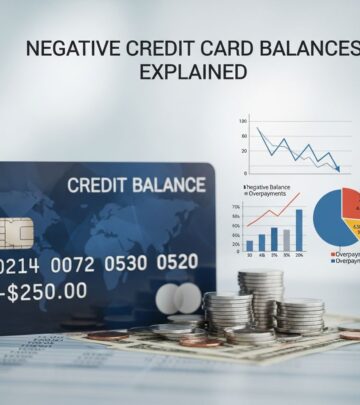
When you overpay your credit card, your account reflects what’s called a negative balance. This is simply the reverse of a normal balance—instead of owing the credit card issuer money, the issuer owes you money.
Using our earlier example, if you owe $500 but pay $750, your account will show a negative balance of -$250. This negative balance represents credit that belongs to you. According to federal law, this amount must be handled in one of two ways: applied to future purchases or refunded to you.
It’s important to note that a negative balance does not negatively impact your credit score. Credit bureaus typically report negative balances as zero balances, so your credit utilization ratio—an important factor in credit scoring—isn’t adversely affected. In fact, some cardholders have found that overpaying can temporarily lower their credit utilization when the negative balance is converted to available credit.
Your Options for Handling Overpayments
When you realize you’ve overpaid your credit card, you have several options for accessing or using that money. Understanding these options helps you make the best choice for your financial situation.
Using the Credit Toward Future Purchases
The most straightforward approach is to let your credit card issuer automatically apply the overpayment as a statement credit to your account. This credit will be applied to any new purchases you make on that card. Essentially, you’re pre-paying for future spending with money you’ve already sent to the issuer.
This option is beneficial if you regularly use the credit card and want to reduce the cash outlay required for upcoming purchases. It’s also hassle-free since no action is required on your part—the issuer handles everything automatically. However, this approach only works well if you continue using the card; if you’ve paid off your balance and won’t be making new purchases, this method leaves your money tied up with the issuer.
Requesting a Refund
You have the legal right to request a refund of your overpayment. Under the Fair Credit Billing Act (FCBA), if you overpay your credit card by more than $1, you can request a refund, and the issuer must provide one within seven business days of receiving your request. The refund can be issued via check, money order, direct deposit to your bank account, or another agreed-upon method.
This option is preferable if you need the money back in your bank account, whether for unexpected expenses or to avoid keeping funds with the credit card issuer. Many people find it more convenient and reassuring to have the money directly accessible in their checking or savings account rather than held as a statement credit.
Automatic Refunds After Six Months
If you don’t request a refund and the overpayment remains on your account for more than six months, your credit card issuer is required by federal law to make a “good faith” effort to return your money. This automatic refund can be sent via check, money order, or deposit to your account. While this provision protects you from losing money indefinitely, it’s better to request a refund proactively rather than wait six months.
Large Overpayments and Fraud Concerns
While overpayments are generally handled smoothly, unusually large overpayments may trigger fraud detection systems at your credit card issuer. If the overpayment is significantly larger than your typical payment pattern or balance, the issuer might flag the transaction as potentially fraudulent activity.
In such cases, you may receive a notification about the unusual activity or be asked to verify the payment and confirm your identity. This is actually a positive security measure designed to protect your account from unauthorized access. If you’re contacted about a large overpayment you made intentionally, simply contact your issuer using the number on the back of your card to confirm the transaction. Explain that the overpayment was made in error, and they’ll process your request accordingly.
Impact on Your Credit Score
One of the most important things to understand about credit card overpayments is that they do not negatively impact your credit score. Your credit report will reflect the negative balance, but credit bureaus typically report this as a zero balance for scoring purposes. This means your credit utilization ratio—the amount of available credit you’re using—isn’t harmed by an overpayment.
In fact, because an overpayment can reduce the reported balance on your account, it might actually have a slight positive effect on your credit utilization ratio if it results in available credit. However, don’t intentionally overpay your credit card as a credit-building strategy; there are better ways to build and maintain good credit, such as making on-time payments and keeping your credit utilization low on regular purchases.
Preventing Credit Card Overpayments
While overpayments aren’t harmful, preventing them in the first place saves you the hassle of dealing with negative balances and processing refunds. Consider these strategies:
Review Your Automatic Payments
Before making a manual payment, always check whether you have automatic bill pay enabled on that card. Review your account settings to confirm when autopay is scheduled and for how much. If you’re unsure, contact your issuer or log into your account online to verify.
Account for Recent Transactions
When calculating how much to pay, account for any pending transactions that may not yet appear on your statement. This includes refunds you’re expecting from merchants, rewards redemptions, or new purchases you know are coming. Give yourself a few days between paying and any expected credits to avoid overpaying.
Round Down Your Payments
Instead of paying your exact statement balance, consider paying slightly less (such as rounding down to the nearest ten dollars) to create a small buffer against accidentally overpaying. This is particularly helpful if you regularly round up or make mental math errors when calculating payments.
Use Online Payment Tools Carefully
When paying online, double-check the amount you’ve entered before confirming the payment. Look at the number twice, even if it seems tedious. A moment of verification can prevent the inconvenience of an overpayment.
What About Going Over Your Credit Limit?
It’s important to distinguish between overpaying your credit card bill and exceeding your credit limit. These are two different situations with very different consequences. Going over your credit limit—charging more than your available credit allows—can result in serious consequences, including declined transactions, card cancellation, reduced credit limits, and negative impacts to your credit score. If your issuer does allow you to exceed your credit limit, you may face over-limit fees.
Overpaying your bill, by contrast, is paying more than you owe, which creates a credit in your favor. This is the opposite situation and poses no problems for your account or credit.
Frequently Asked Questions
Is it bad to overpay your credit card?
No, overpaying your credit card is not bad. You won’t face any penalties, and it won’t damage your credit score. The only downside is that the money is temporarily unavailable to you. However, since you can request a refund at any time or use the credit toward future purchases, it’s an easily reversible situation.
Will overpaying my credit card improve my credit score?
While overpaying won’t hurt your score, it won’t significantly improve it either. Your credit score is primarily built on payment history, credit utilization, length of credit history, credit mix, and new credit inquiries. Regular on-time payments and maintaining low credit utilization on your regular purchases are more effective credit-building strategies than overpaying.
How long does it take to get a refund for an overpayment?
According to the Fair Credit Billing Act, you must receive your refund within seven business days of requesting it. If you don’t request a refund, the issuer must make a good faith effort to return the overpayment after six months if it remains on your account.
Can I lose money if I overpay my credit card?
No, you cannot lose money from an overpayment. Federal law requires your issuer to either apply the overpayment as a statement credit or refund it to you. Your money is protected, and you’re entitled to access it in one form or another.
What happens if I have multiple credit cards and overpay one?
Each credit card account is separate and independent. If you overpay one card, that overpayment only affects that specific card’s account. The negative balance will appear on that card, and you can request a refund or let the issuer apply it to future purchases on that card. Your other credit cards are unaffected.
Should I contact my issuer about an overpayment?
If the overpayment is small (a few dollars), you don’t necessarily need to contact your issuer—you can simply use the credit toward future purchases. However, if it’s a significant amount, particularly if it exceeds $100, it may be worth contacting your issuer to request a refund, especially if you won’t be using the card again soon.
References
- What Happens If You Overpay Your Credit Card? — NerdWallet. 2024. https://www.nerdwallet.com/credit-cards/learn/what-happens-if-you-overpay-your-credit-card
- What Happens if You Overpay Your Credit Card? — Experian. 2024. https://www.experian.com/blogs/ask-experian/what-happens-if-you-overpay-your-credit-card/
- What Happens If You Overpay Your Credit Card? And What Do You Do? — SoFi. 2024. https://www.sofi.com/learn/content/overpaying-your-credit-card/
- What Happens if I Overpay my Credit Card? — Chase. 2024. https://www.chase.com/personal/credit-cards/education/basics/overpay-credit-card
- What Is a Negative Balance on a Credit Card? — Capital One. 2024. https://www.capitalone.com/learn-grow/money-management/overpay-credit-card/
- Fair Credit Billing Act — Federal Trade Commission. https://www.ftc.gov/
Similar Articles








Read full bio of medha deb