What Happens If You Don’t Buy Homeowners Insurance?
Discover the financial risks and consequences of skipping homeowners insurance coverage.
Home insurance costs have reached unprecedented levels, with rates climbing steadily year after year. Many homeowners are feeling the financial squeeze and considering whether they can afford to maintain coverage. However, skipping homeowners insurance altogether could prove to be a far costlier decision in the long run. Understanding what happens when you don’t have proper coverage is essential for protecting your most valuable asset.
Why More Homeowners Are Skipping Coverage
The decision to go without homeowners insurance has become increasingly common. According to industry data, homeowners insurance coverage has declined significantly in recent years. While 95% of homeowners maintained coverage just a few years ago, that figure has dropped to 88%, representing millions of Americans going “bare” — industry jargon for operating without homeowners insurance. Rising insurance costs are the primary culprit behind this trend, with rates expected to continue climbing due to climate change impacts and general inflationary pressures.
Low-income homeowners are particularly vulnerable to this coverage gap. Research shows that 15% of homeowners earning less than $50,000 annually skip insurance altogether, compared to just 3% of those earning $150,000 or more. Additionally, uninsured rates are disproportionately high among Black and Hispanic homeowners, at 11% and 14% respectively. For many families struggling financially, the monthly or annual insurance premium feels like an impossible expense to maintain.
Is Homeowners Insurance Legally Required?
Understanding the Legal Requirements
Technically, homeowners insurance is not legally mandated anywhere in the United States. This might seem to suggest that homeowners have complete freedom to go uninsured. However, the reality is far more complex. The vast majority of Americans with mortgages face a different requirement altogether — their lenders demand it.
Almost all mortgage lenders require homebuyers to maintain active homeowners insurance coverage as a condition of the loan. This requirement exists because lenders have a vested financial interest in the property. If your home burns down or suffers catastrophic damage, the lender’s collateral vanishes. To protect their investment, lenders make insurance mandatory. Some lenders incorporate insurance premiums directly into monthly mortgage payments, while others require annual proof of active coverage.
The only homeowners truly exempt from this requirement are those who own their homes outright — either because they paid off their mortgage or purchased the property with cash. However, experts universally advise against going without coverage even when it’s legally optional. As insurance industry experts note, going bare “spells financial ruin for most homeowners.”
What Happens When You Skip Homeowners Insurance
Forced-Placed Insurance Coverage
If you have a mortgage and your lender requires homeowners insurance but you fail to maintain coverage, the mortgage company can take matters into their own hands. According to the Consumer Financial Protection Bureau, lenders can purchase an insurance policy on your behalf through what’s known as “force-placed” mortgage insurance.
This forced coverage comes with significant drawbacks. The premiums are substantially higher than what you would pay for standard homeowners insurance purchased directly from an insurer. Additionally, and critically, a force-placed policy protects only the lender’s interests — not yours. If your home is destroyed or damaged, the insurance payout goes to the mortgage company, not to you. This leaves you responsible for repairs and rebuilding while still owing the full mortgage balance.
Financial Devastation from Natural Disasters
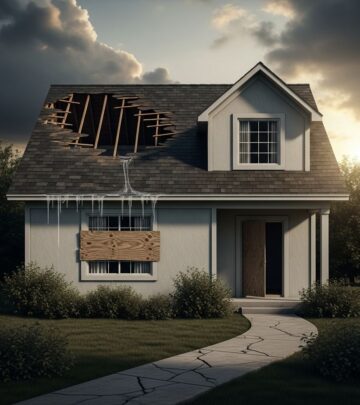
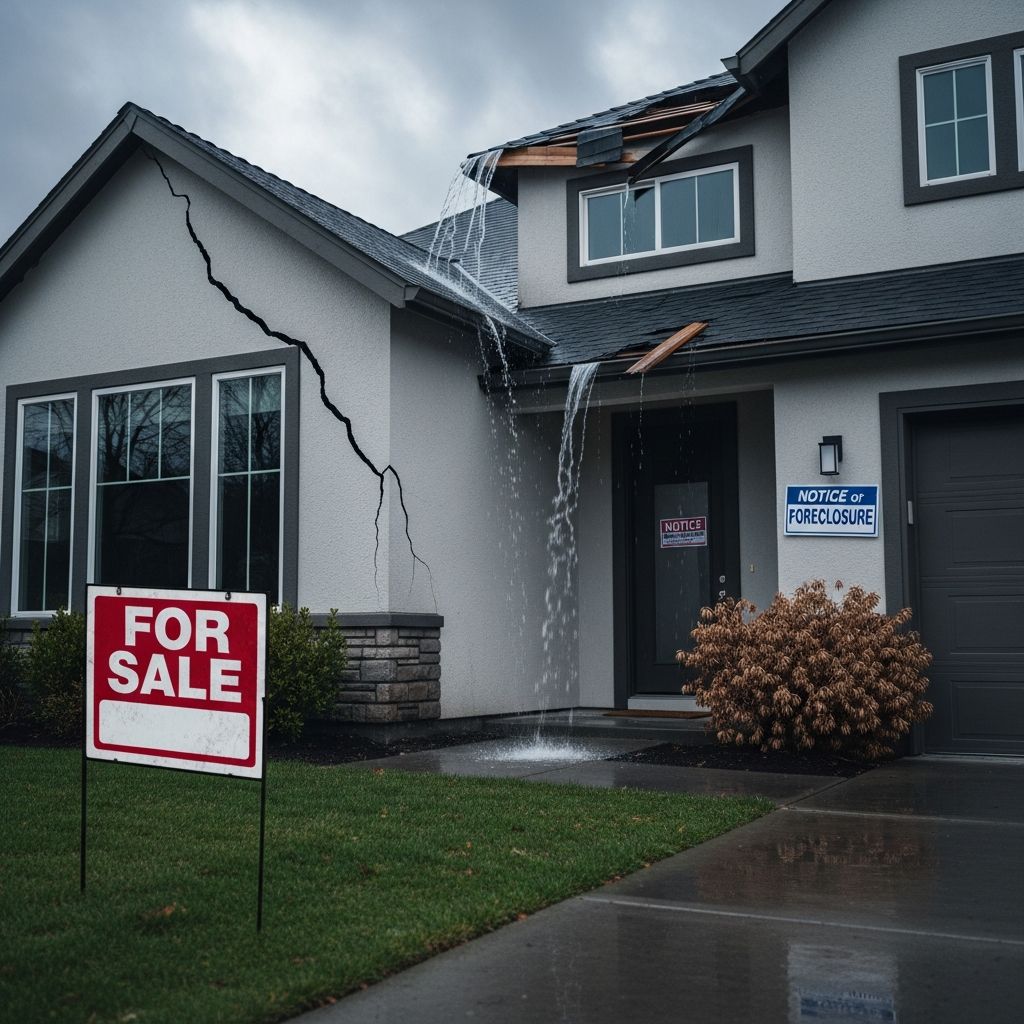
Perhaps the most obvious but most catastrophic consequence of skipping homeowners insurance is facing disaster without financial protection. If your home is damaged by a tornado, hurricane, wildfire, severe storm, or other natural disaster, and you have no insurance, you are entirely responsible for covering repair and rebuilding costs.
For most homeowners, this represents an impossible financial burden. A roof replacement can cost $15,000 to $30,000. Foundation repairs might run $10,000 to $50,000. Rebuilding an entire home can easily exceed $200,000 to $500,000 or more depending on size and location. Without insurance, families face three grim options: go into substantial debt through loans and credit, live in unsafe and inadequate housing with unrepaired damage, or become homeless.
FEMA assistance grants can provide some relief, but they’re only available after officially declared disasters and typically cover only a fraction of total losses. Research from the Insurance Information Institute makes this stark reality clear: “Weather does not discriminate by income. Logic would suggest that only a small proportion of low-income homeowners could withstand the total loss of their home from an unforeseen weather event without insurance coverage.”
Liability and Personal Property Loss
Beyond natural disasters, homeowners insurance provides crucial liability protection. This coverage helps protect you financially if someone is injured on your property and files a lawsuit against you. Without this protection, you could be personally liable for medical bills, legal fees, and damages.
Similarly, homeowners insurance covers personal property loss. If a thief steals your expensive electronics, jewelry, or other valuables, your insurance helps cover the replacement cost. Without this coverage, you absorb the entire loss yourself. When combined, the liability and personal property protections in homeowners insurance represent significant financial safety nets that uninsured homeowners simply don’t have.
The Growing Crisis of Uninsured Homeowners
National Statistics and Trends
The number of uninsured homeowners has reached alarming levels. More than 6 million homeowners currently lack insurance coverage, representing approximately 7.4% of all homeowners nationally. This translates to $1.6 trillion worth of residential property left completely unprotected against catastrophic losses.
The trend shows no signs of slowing. In 2019, approximately 6.5% of homeowners lacked coverage. That figure has climbed to 7.4%, and industry analysts forecast further increases as insurance premiums continue rising and insurance companies withdraw from high-risk states. According to recent surveys, roughly 1 in 5 Americans say they would skip insurance if it were optional, suggesting the uninsured rate could climb even higher.
Disparities Among Different Populations
The uninsured rate is not evenly distributed across the population. Significant disparities exist based on income level, race, and ethnicity. Low-income households face the greatest challenge affording coverage, with 15% of homeowners earning less than $50,000 annually lacking insurance. In contrast, only 3% of homeowners earning $150,000 or more go uninsured.
Racial and ethnic disparities are equally concerning. Black homeowners have an uninsured rate of 11%, while Hispanic homeowners face an 14% uninsured rate — both substantially higher than the national average. These disparities reflect systemic inequalities in income, wealth accumulation, and access to affordable insurance products.
Rising Insurance Costs and Market Challenges
Why Premiums Keep Climbing
Understanding why homeowners are skipping insurance requires understanding why costs have become so prohibitive. Home insurance rates have experienced double-digit increases, with further increases expected. Climate change plays a significant role, as increased frequency and severity of storms, wildfires, hurricanes, and other weather events make insurers nervous about their claims exposure.
Additionally, people continue migrating to disaster-prone areas — coastal regions vulnerable to hurricanes, areas subject to wildfires, and flood-risk zones. This increases the concentration of insured properties in high-risk locations, driving up rates. General inflationary pressures affecting the broader economy also contribute to rising premiums.
Insurance Companies Pulling Out of Markets
Adding to the crisis, some insurance companies are simply abandoning high-risk markets entirely. In states like Florida, Louisiana, and California, insurers have reduced their market presence or stopped accepting new policyholders altogether. This leaves residents in these areas scrambling to find replacement coverage through remaining insurers or state-assigned risk pools, both of which typically offer less favorable rates.
Frequently Asked Questions About Homeowners Insurance Coverage
Q: If I own my home outright, do I really need homeowners insurance?
A: While homeowners insurance is not legally required if you own your home outright, it is strongly recommended by all insurance experts. Without it, you face catastrophic financial risk from disasters, liability lawsuits, or theft. Most financial advisors consider it an essential protection regardless of legal requirements.
Q: What exactly is force-placed insurance?
A: Force-placed insurance is a policy purchased by your mortgage lender on your behalf when you fail to maintain required homeowners insurance. It protects only the lender’s interests, is significantly more expensive than standard insurance, and does not protect you if your home is damaged or destroyed.
Q: How much could I lose without homeowners insurance?
A: The potential loss is enormous. A major disaster could result in hundreds of thousands of dollars in uninsured losses. Most families cannot absorb such losses and face bankruptcy, homelessness, or having to live in unsafe housing conditions.
Q: Does FEMA assistance replace homeowners insurance?
A: FEMA assistance is only available after officially declared disasters and typically covers only a fraction of total losses. It is never a reliable substitute for homeowners insurance.
Q: Why are uninsured rates higher among certain populations?
A: Income levels are the primary factor. Lower-income homeowners struggle more to afford rising premiums. Additionally, systemic inequalities in wealth and income contribute to disparities in insurance rates among different racial and ethnic groups.
What Homeowners Insurance Actually Covers
Standard Coverage Protections
Standard homeowners insurance provides protection against several major perils including fire, theft, wind damage, and hail. It covers both the structure of your home and your personal belongings inside it. Most policies include liability protection if someone is injured on your property and sues you.
However, it’s important to note that homeowners insurance does not cover everything. Flood damage, for example, requires a separate flood insurance policy. Earthquake damage, pest infestations, government action, and certain types of water damage are typically excluded from standard policies.
Taking Action to Protect Your Home
Why Skipping Insurance Is Not Worth the Risk
While homeowners insurance premiums have increased significantly, the cost of going uninsured is simply too high. The financial protection provided by insurance is essential for protecting against catastrophic losses. No amount saved in premiums is worth risking complete financial ruin from a single disaster.
If you’re struggling with insurance costs, explore alternatives such as increasing your deductible, bundling policies, improving home security features, or shopping around for better rates. Many insurers offer discounts for various protective measures and household characteristics. Going uninsured, however, should never be considered a viable cost-saving strategy.
References
- What Happens If You Don’t Buy Homeowners Insurance? — Money Magazine. 2023-10. https://money.com/home-insurance-what-happens-no-coverage/
- As Home Insurance Costs Soar, 6 Million Owners Skip Coverage — Consumer Federation of America/Money Magazine. 2024. https://money.com/homeowners-skip-insurance-costs-soar/
- Here Are the Surprising Risks Your Homeowners Insurance May Not Cover — Money Magazine. 2024. https://money.com/what-homeowners-insurance-doesnt-cover/
- Insurance Information Institute Weather Risk Study 2023 — Insurance Information Institute. 2023. https://www.iii.org/
- Consumer Financial Protection Bureau Guidelines on Force-Placed Insurance — CFPB. 2024. https://www.consumerfinance.gov/
Similar Articles








Read full bio of medha deb