What Drives Interest Rates: 10 Key Drivers Explained
Discover the key economic, policy, and personal factors shaping interest rates on loans, mortgages, and savings in today's dynamic financial landscape.

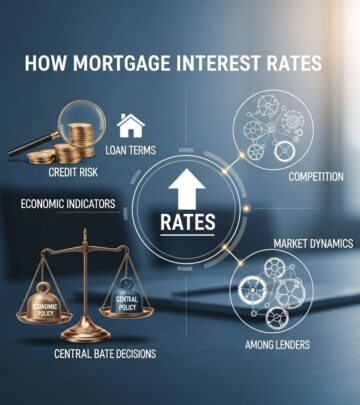
Interest rates represent the cost of borrowing money or the reward for saving it, influencing everything from home purchases to business expansions. These rates fluctuate based on a blend of broad economic indicators, government policies, individual borrower traits, and market dynamics. Understanding these drivers empowers consumers to make informed financial decisions.
The Role of Central Bank Policies
The Federal Reserve plays a pivotal role in shaping interest rates across the U.S. economy, primarily through its control over the federal funds rate—the benchmark rate banks charge each other for overnight loans. When the Fed raises this rate, it aims to curb inflation by making borrowing more expensive, which cools consumer spending and business investments. Conversely, lowering rates stimulates economic activity by reducing borrowing costs, encouraging home loans, auto financing, and corporate expansions.
Although the Fed does not directly set consumer rates like mortgages, its actions ripple through the financial system. For instance, during periods of rapid economic growth, the Fed hikes rates to prevent overheating, leading to higher costs for personal loans and credit cards. In 2022-2023, Fed rate increases pushed mortgage rates upward, even as cuts began in 2024. This demonstrates the indirect but powerful influence of monetary policy.
Inflation’s Direct Impact on Borrowing Costs
Inflation erodes the purchasing power of money, prompting lenders to demand higher rates to offset future value loss. When prices rise quickly, investors seek elevated yields on bonds and securities, which in turn lifts rates on loans and mortgages. High inflation means the interest earned or paid must compensate for diminished returns over time.
For savers, rising inflation paired with higher rates can boost deposit yields on savings accounts and CDs, as banks pass on some Fed-driven increases. However, borrowers face steeper payments, which can slow housing markets and retail spending. Historical patterns show that controlling inflation remains a core Fed mandate, directly tying rate movements to price stability efforts.
Bond Markets and Treasury Yields as Benchmarks
U.S. Treasury securities, especially the 10-year note, serve as a risk-free benchmark for other interest rates. Yields on these government bonds rise with economic optimism and fall during uncertainty, as investors flock to safety. Mortgage rates closely track the 10-year Treasury yield, with lenders adding a spread to cover risks and profits.
Mortgage-backed securities (MBS) also factor in, where pools of home loans are traded; fluctuations in MBS prices influence lender pricing. Strong demand for credit pushes rates up via supply-demand dynamics, while abundant liquidity lowers them. These market mechanisms ensure rates reflect real-time investor sentiment.
Economic Growth and Employment Trends
A robust economy with low unemployment and high consumer confidence typically elevates interest rates, as demand for loans surges. People borrow more for homes and cars during booms, straining credit supply and raising costs. Recessions reverse this: slower growth prompts lower rates to spur activity.
Unemployment data and GDP reports guide Fed decisions and market expectations. For example, a heating job market signals potential rate hikes to temper wage-driven inflation. This cycle underscores how macroeconomic health calibrates borrowing expenses.
| Indicator | Strong Economy Effect | Weak Economy Effect |
|---|---|---|
| Unemployment Rate | Low → Higher Rates | High → Lower Rates |
| GDP Growth | High → Higher Rates | Low → Lower Rates |
| Consumer Spending | High → Higher Rates | Low → Lower Rates |
Geopolitical Events and Global Influences
International crises, such as wars or elections, can drive investors toward U.S. Treasurys as a safe haven, compressing yields and mortgage rates. Government policies promoting homeownership, like tax credits, boost demand and may nudge rates higher. These external shocks highlight the interconnectedness of global finance.
Personal Factors Shaping Your Rate
Beyond macro forces, individual profiles significantly affect rates. Credit scores are paramount: higher scores (740+) signal low default risk, unlocking the best rates, while scores below 620 lead to premiums. Lenders analyze payment history, debt levels, and income stability from credit reports.
Loan-to-value (LTV) ratios matter too—larger down payments reduce lender exposure, yielding better terms. Debt-to-income (DTI) ratios gauge repayment capacity; lower DTIs qualify for preferential rates. Home price and loan size influence outcomes, with jumbo loans often carrying higher rates due to scale.
- Credit Score: Primary predictor of reliability.
- Down Payment: Higher reduces LTV risk.
- DTI Ratio: Measures affordability.
- Employment History: Stable jobs favor lower rates.
Lender Variations and Market Competition
Rates differ across lenders due to operational efficiencies, investor networks, and local rivalry. High-competition areas compress margins, benefiting borrowers. Lender costs for origination and staffing directly impact pricing flexibility. Shopping multiple quotes reveals these variances.
Loan Types and Their Rate Structures
Fixed-rate mortgages lock in payments, often at higher initial rates than adjustable-rate mortgages (ARMs), which start lower but risk future hikes. Shorter-term loans like 15-year mortgages carry lower rates due to quicker repayment. Government-backed options (FHA, VA, USDA) offer reduced rates via insurance guarantees.
| Loan Type | Risk to Lender | Typical Rate Relative to 30-Year Fixed |
|---|---|---|
| 15-Year Fixed | Lower (shorter term) | Lower |
| ARM (Initial) | Lower initially | Lower |
| FHA/VA | Reduced (gov’t backing) | Lower |
| Jumbo | Higher (no limits) | Higher |
Effects on Savings and Investments
Higher rates benefit depositors with better yields on CDs and savings, though less than borrowers’ cost increases. Investments shift: bonds lose value as yields rise, favoring cash equivalents. Balanced portfolios adapt to rate environments for optimal returns.
Strategies to Secure Favorable Rates
Boost credit scores by paying debts on time and reducing utilization. Compare lenders, consider points to buy down rates, and lock in during dips. Monitor Fed announcements and economic data for timing.
Frequently Asked Questions (FAQs)
Does the Federal Reserve set mortgage rates directly?
No, but its federal funds rate influences them indirectly through market channels.
How does inflation affect my loan rate?
Higher inflation leads to elevated rates to preserve lender returns.
Can I improve my rate with a better credit score?
Yes, scores above 740 often qualify for the lowest available rates.
Why do rates vary by lender?
Competition, efficiency, and overhead costs create differences.
Are adjustable-rate mortgages always cheaper?
Initially yes, but they can rise later based on market indexes.
References
- What Factors Determine And Move Mortgage Rates? — Bankrate. 2024. https://www.bankrate.com/mortgages/how-interest-rates-are-set/
- Interest Rate – Definition, Cost of Borrow, Formulas — Corporate Finance Institute. 2024. https://corporatefinanceinstitute.com/resources/commercial-lending/interest-rate/
- Why do interest rates matter? — Federal Reserve. 2024. https://www.federalreserve.gov/faqs/why-do-interest-rates-matter.htm
- Understanding Interest Rates in the U.S. and How They Affect Deposits, Lending, and Mortgages — BMT. 2024. https://www.bmt.com/news-insights-events/understanding-interest-rates-in-the-u-s-and-how-they-affect-deposits-lending-and-mortgages/
- Seven factors that determine your mortgage interest rate — Consumer Financial Protection Bureau. 2024. https://www.consumerfinance.gov/about-us/blog/7-factors-determine-your-mortgage-interest-rate/
Similar Articles








Read full bio of Sneha Tete