What Does XD Mean in Investing: Ex-Dividend Explained
Master ex-dividend dates and XD symbols to optimize your dividend investing strategy.

What Does XD Mean in Investing?
If you’ve been researching dividend investing or tracking stocks on your brokerage platform, you’ve likely encountered the symbol “XD” or just “X” next to certain stock tickers. These alphabetic qualifiers might seem cryptic at first, but they convey crucial information that can significantly impact your investment decisions and dividend income. XD stands for “ex-dividend,” and understanding what this symbol means is essential for anyone serious about building a dividend-focused investment portfolio.
The XD designation is far more than just a ticker symbol modification. It represents a specific moment in the dividend payment timeline when stock ownership transfers have significant financial implications. When you see XD displayed on your trading platform or financial news site, it signals that a particular security is trading without the value of the next upcoming dividend payment. This distinction separates buyers into two categories: those eligible to receive the announced dividend and those who are not.
Understanding the Ex-Dividend Date
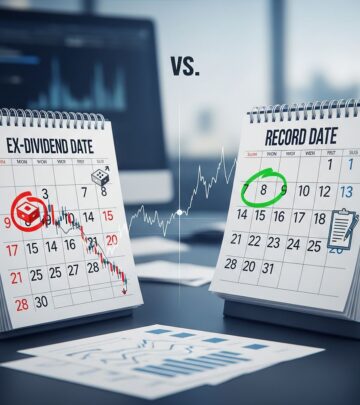
The ex-dividend date, often abbreviated as the ex-date, is one of the four most critical dates that dividend investors must understand and monitor closely. The other three essential dates are the announcement date (or declaration date), the record date, and the payment date. Together, these four dates create the framework within which dividends are declared, allocated, and distributed to shareholders.
The ex-dividend date is typically set as one business day before the record date. This timing might seem arbitrary, but it exists for a very practical reason rooted in how modern stock transactions are settled. When you buy or sell a stock, the transaction doesn’t settle immediately; it takes one full business day to complete. This settlement delay, known as T+1 settlement (trade date plus one day), is why the ex-dividend date must precede the record date by at least one day.
Here’s how this works in practice: if a company announces that its record date for dividend eligibility is Monday, May 30, the ex-dividend date would be Friday, May 27 (the preceding business day). If you purchase shares on Friday, May 27 (the ex-dividend date), your purchase won’t settle until Monday, May 30. Even though you’ll own the shares on the record date, you won’t be eligible for that particular dividend because the company’s records won’t reflect your ownership until after the ex-dividend date has passed.
The Four Important Dividend Dates
To fully grasp the significance of XD in investing, you need to understand how all four key dividend dates work together:
Declaration Date (Announcement Date)
The declaration date is when a company’s Board of Directors publicly announces that it will distribute a dividend to shareholders. On this date, the company specifies several critical pieces of information: the dividend amount per share, the ex-dividend date, the record date, and the payment date. For example, a company might announce on May 1 that it will pay a $0.75 dividend per share.
Ex-Dividend Date (XD Date)
The ex-dividend date is when the stock begins trading without the dividend attached to it. To receive the dividend, you must own the stock before this date. If you purchase shares on or after the ex-dividend date, you will not receive the announced dividend; instead, the seller of those shares receives it. This is the date marked with the XD symbol on trading platforms.
Record Date
The record date is the date the company uses to determine which shareholders are eligible to receive the dividend. The company reviews its shareholder register on this specific date to create a list of dividend recipients. The record date typically falls a few days after the ex-dividend date, allowing for the one-day settlement delay in stock transactions.
Payment Date
The payment date, also called the distribution date, is when the company actually distributes the dividend to eligible shareholders. This is when dividend payments are mailed out or credited to investor accounts. By the time the payment date arrives, the stock price has usually already adjusted to reflect the dividend, so this date typically has no impact on share price.
How Stock Exchanges Determine Ex-Dividend Dates
The ex-dividend date isn’t arbitrary; it’s determined by specific rules established by the stock exchange where the security trades. Once a company’s Board of Directors sets the record date, the exchange automatically calculates the ex-dividend date by working backward one business day. Different exchanges may use slightly different rules, which is why the timing can occasionally vary for stocks trading on different exchanges.
For example, if a company’s Board of Directors declares that the record date will be Monday, May 30, the stock exchange will set the ex-dividend date for Friday, May 27 (assuming both are business days). This one-business-day separation ensures that investors who purchase shares before the ex-dividend date will have those shares registered in their name by the record date, making them eligible for the dividend.
Why XD Appears on Stock Quotes
The XD symbol serves as a visual indicator that alerts investors to the current trading status of a security. When you see XD next to a stock ticker, whether on your brokerage platform, a financial news website, or a charting application, it immediately communicates that the stock is trading ex-dividend. This symbol prevents confusion and helps investors quickly identify whether they’re eligible for an upcoming dividend payment.
Different news services and market data providers may use variations of this symbol. While XD is the most common designation, you might also see just “X” used to indicate ex-dividend status. The specific code letters used can vary depending on which financial data service you’re using, as there’s no single universal standard across all market data providers and brokerages.
Impact of Ex-Dividend Dates on Stock Prices
One of the most observable effects of the ex-dividend date is the immediate impact on stock price. When a stock goes ex-dividend, its price typically falls by approximately the amount of the dividend being paid. This price adjustment reflects the economic reality that new buyers of the stock won’t receive the upcoming dividend payment.
For example, if a company is trading at $50 per share and announces a $1.00 dividend per share, the stock price will typically drop to around $49.00 on the ex-dividend date. This adjustment happens automatically through market mechanics; the exchange doesn’t manually adjust the price, but rather the market itself prices in the absence of the dividend.
This price decline can be misleading to inexperienced investors who might think it represents bad news or market weakness. However, it’s actually a neutral adjustment that reflects the dividend payout. The total value to shareholders remains essentially the same; they’re just receiving part of their value as a dividend payment rather than as appreciation in the stock price.
Dividend Capture Strategy and Its Risks
Understanding XD and ex-dividend dates has led some investors to attempt what’s called a “dividend capture strategy.” This approach involves buying stocks just before the ex-dividend date and selling them shortly after, hoping to collect the dividend without holding the stock for an extended period.
While this strategy might seem appealing in theory, it’s frequently unprofitable in practice for several reasons. First, the stock price drops by approximately the dividend amount on the ex-dividend date, which immediately reduces any gains from the dividend capture. Second, there are transaction costs associated with buying and selling, which can easily exceed the dividend received. Third, tax implications can significantly reduce net returns, as dividends may be subject to income tax depending on your tax bracket and whether the dividend qualifies for preferential tax treatment.
Tax Implications of Ex-Dividend Dates
The ex-dividend date carries important tax consequences that investors should understand. When you receive a dividend, it’s typically subject to income tax. The tax treatment depends on several factors, including whether the dividend is “qualified” or “non-qualified.” Qualified dividends generally receive preferential tax treatment with lower tax rates, while non-qualified dividends are taxed as ordinary income.
Understanding when you become eligible for a dividend and when it’s paid can help you optimize your tax strategy. Some investors deliberately time their purchases to avoid dividends if they expect to be in a higher tax bracket, while others specifically target dividend-paying stocks to create regular taxable income within their portfolios.
Key Considerations for Dividend Investors
If you’re building a dividend-focused investment strategy, keep these essential points in mind:
Purchase Timing is Critical
You must purchase dividend-paying stock before the ex-dividend date to receive the upcoming dividend. Buying on or after the ex-dividend date means you won’t receive that particular dividend, regardless of how long you plan to hold the stock.
Monitor XD Designations
Regularly check your brokerage platform and financial news sites for the XD designation on stocks you’re considering. This helps you plan your trading strategy around dividend dates and ensures you don’t miss dividend payments on stocks you want to own.
Account for Price Adjustments
Remember that stock prices typically decline on the ex-dividend date by the dividend amount. This is normal market behavior and shouldn’t alarm you or suggest something is wrong with the company.
Consider Long-Term Holdings
For most dividend investors, the best approach is to buy quality dividend-paying stocks and hold them long-term, allowing dividends to compound over time. The dividend capture strategy rarely outperforms this buy-and-hold approach when considering all costs and taxes.
How XD Varies Across Different Securities
While XD primarily appears on common stocks, similar ex-dividend concepts apply to other securities. For bonds, the letter X can signify that a bond is trading without interest. For mutual funds and exchange-traded funds, X or XD can indicate that a fund has recently distributed a capital gain or dividend to its investors. Understanding these variations helps you navigate diverse portfolio types with confidence.
Frequently Asked Questions
Q: What exactly does XD stand for?
A: XD stands for “ex-dividend.” It’s an alphabetic qualifier that indicates a stock is trading without the right to receive the upcoming dividend payment. The symbol communicates important information to investors about the security’s trading status.
Q: How far in advance should I buy a stock to receive a dividend?
A: You must purchase the stock at least one business day before the ex-dividend date for it to settle in time for you to be on the company’s record date shareholder list. Buying on or after the ex-dividend date means you won’t receive that dividend payment.
Q: Why does the stock price drop on the ex-dividend date?
A: The stock price typically drops by approximately the dividend amount on the ex-dividend date because new buyers of the stock won’t receive the upcoming dividend. This is a normal market adjustment that reflects the economic value of the dividend.
Q: Is the dividend capture strategy profitable?
A: Rarely. While it sounds appealing, dividend capture typically isn’t profitable after accounting for transaction costs, the stock price drop on the ex-dividend date, and tax implications. A buy-and-hold approach for dividend stocks usually delivers better returns.
Q: Can I receive a dividend if I buy on the ex-dividend date?
A: No. If you purchase shares on or after the ex-dividend date, you won’t be eligible for that particular dividend. The seller of the shares receives the dividend instead, as they owned it before the ex-dividend date.
Q: How does the one-day settlement delay affect ex-dividend dates?
A: The one-day settlement delay (T+1) is why the ex-dividend date is set one business day before the record date. This ensures that shares purchased before the ex-dividend date will be registered in the buyer’s name by the record date, making them eligible for the dividend.
Q: Are all dividends taxed the same way?
A: No. Dividends can be classified as “qualified” or “non-qualified,” with different tax treatments. Qualified dividends typically receive preferential lower tax rates, while non-qualified dividends are taxed as ordinary income. Your specific tax situation depends on several factors including holding period and income level.
Q: What should I do when I see XD next to a stock I own?
A: When you see XD next to a stock, it means the ex-dividend date has arrived or is currently active. If you already own the stock, you’re eligible for the upcoming dividend. If you’re considering buying, you should understand that you won’t receive this particular dividend, though you may receive future dividends if you hold the stock long-term.
References
- XD – Ex-dividend date — Estoppey Value Investments AG. 2024. https://valueinvestments.ch/en/lexicon/xd-ex-dividend-date/
- What Does X or XD Mean in Legal and Financial Contexts? — US Legal Forms. 2024. https://legal-resources.uslegalforms.com/x/x-or-xd
- XD (Ex-Dividend): A Detailed Explanation — Fiduciary Organization. 2024. https://fiduciaryorg.com/library/xd-ex-dividend
- Ex-Dividend Dates: When Are You Entitled to Stock and Cash — U.S. Securities and Exchange Commission (Investor.gov). 2024. https://www.investor.gov/introduction-investing/investing-basics/glossary/ex-dividend-dates-when-are-you-entitled-stock-and
Similar Articles








Read full bio of Sneha Tete