What Does It Mean to Be Vested in My 401(k)?
Understand 401(k) vesting schedules and how employer contributions become yours.

When you participate in a 401(k) retirement plan through your employer, you’ll frequently hear the term “vesting” mentioned in plan documents and HR discussions. But what exactly does it mean to be vested in your 401(k)? Understanding vesting is crucial to maximizing your retirement savings and making informed decisions about your career and finances. Vesting represents your ownership rights to the money in your retirement account—specifically, the contributions your employer makes on your behalf. The distinction between vested and non-vested funds can significantly impact your financial security, particularly if you’re considering changing jobs or retiring.
Understanding the Basics of Vesting
At its core, vesting is about ownership. When you’re vested in a portion of your 401(k), you have the legal right to keep that money, and your employer cannot reclaim it under any circumstances—even if you leave the company. Conversely, if you haven’t fully vested in your employer’s contributions and you separate from the company, you may lose access to some or all of the non-vested funds your employer contributed.
It’s important to understand a fundamental distinction: your own employee contributions to your 401(k) are always 100% vested from day one. This means that every dollar you contribute from your paycheck belongs entirely to you. The vesting timeline only applies to contributions your employer makes, such as matching contributions or profit-sharing amounts. These employer contributions typically vest over a period of time as you remain employed with the company.
Employers use vesting schedules as an incentive program designed to encourage employees to remain with the company longer. By gradually increasing your ownership stake in employer contributions over time, companies hope to reduce employee turnover and build a more stable workforce.
How Vesting Schedules Work
A vesting schedule is essentially a timeline that determines when employer contributions to your 401(k) become fully yours. The Internal Revenue Code establishes specific guidelines for acceptable vesting schedules, and employers must choose one of the approved options. Most vesting schedules spread the vesting process over two to six years, meaning you gradually increase your ownership percentage of employer contributions each year you remain with the company.
The specific vesting schedule used by your employer should be clearly outlined in your plan documents. It’s essential to review this information early in your employment so you understand when you’ll become fully vested. This knowledge helps you make better decisions about job changes, retirement timing, and financial planning.
Types of Vesting Schedules
While all vesting schedules serve the same general purpose—incentivizing employee loyalty—they work in different ways. The IRS recognizes several acceptable vesting schedules that employers can implement for their 401(k) plans. Understanding these different approaches will help you know what to expect with your specific employer’s plan.
Cliff Vesting
Cliff vesting operates on an all-or-nothing principle. Under this schedule, you remain 0% vested for a specified period, typically two or three years. Then, after meeting that time requirement, you suddenly become 100% vested in all employer contributions. The most common cliff vesting schedule is the three-year cliff, where you have no ownership of employer contributions for the first two years but become fully vested after completing three years of service.
Think of cliff vesting like reaching the top of a cliff—you’re either at the bottom with nothing, or you’ve reached the summit with everything. If you leave your employer before the cliff vesting date, you forfeit all non-vested employer contributions. However, once you cross that threshold, all employer contributions become immediately yours.
Cliff vesting can be advantageous if you plan to stay with your employer long enough to reach the vesting date. For employees who might leave before vesting, however, it offers no gradual protection of employer contributions.
Graded Vesting
Graded vesting takes a more gradual approach to ownership, allowing you to accumulate increasing percentages of employer contributions each year you work for the company. Under a typical six-year graded vesting schedule, you might become vested in 20% of employer contributions after one year, 40% after two years, 60% after three years, 80% after four years, and finally 100% after six years.
Graded vesting schedules can range from two to six years, depending on the employer’s plan. The advantage of graded vesting is that if you leave your job before becoming fully vested, you still retain ownership of the percentage you’ve earned. For example, if you leave after three years under the schedule described above, you keep 60% of the employer contributions, even though the remaining 40% reverts to the employer.
This approach provides more protection for employees who might change jobs before becoming fully vested, as you always retain something rather than losing everything if you don’t reach a cliff vesting date.
Immediate Vesting
Immediate vesting is relatively rare but represents the most employee-friendly option. With immediate vesting, you own 100% of employer contributions immediately upon receipt—there is no waiting period. This means from your first day of employment, all employer matching contributions and profit-sharing amounts are entirely yours and cannot be reclaimed by the employer.
While immediate vesting eliminates the incentive for employees to stay with the company based on vesting benefits, some employers use this approach as a competitive advantage in recruiting talent or as part of specialized retirement plans like Safe Harbor 401(k) plans.
Your Contributions vs. Employer Contributions
Understanding the distinction between your contributions and your employer’s contributions is essential to grasping how vesting works.
Employee Contributions
Every dollar you contribute to your 401(k) from your salary is 100% vested immediately. As soon as the money is deducted from your paycheck and deposited into your 401(k) account, it belongs to you completely. Your employer has no claim to these funds, and no vesting schedule applies. This remains true regardless of whether you stay with your employer for one month or thirty years—your contributions are always yours to keep.
Additionally, all investment earnings generated by your contributions are also 100% vested. If your contributions earn $5,000 in investment returns, those gains are entirely yours as well.
Employer Contributions
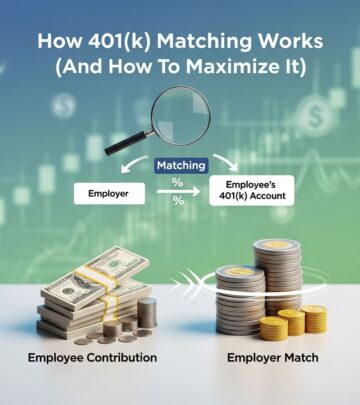
Employer contributions, including matching funds and profit-sharing contributions, are subject to vesting schedules. Your employer may contribute funds to your account based on a matching formula (such as matching 50% of your contributions up to 6% of your salary) or through profit-sharing arrangements. These employer contributions vest according to the vesting schedule outlined in your plan documents.
Investment earnings on employer contributions also follow the same vesting schedule as the contributions themselves. If your employer contributes $3,000 and that contribution earns $500 in investment returns before fully vesting, you may only own a portion of both the contribution and its earnings if you leave before becoming fully vested.
What Happens to Your Vesting When You Change Jobs
One of the most important times to understand vesting is when you’re considering a job change. Your vesting status directly impacts how much retirement savings you can take with you when you leave your employer.
If you’re fully vested (100%) in your 401(k) when you leave your job, you can roll over your entire account balance to an Individual Retirement Account (IRA) or to your new employer’s 401(k) plan if it accepts rollovers. This includes all your contributions, all employer contributions, and all investment earnings.
If you’re not fully vested when you leave, the situation becomes more complicated. You can take your 100% vested employee contributions and the vested portion of employer contributions with you. However, any non-vested employer contributions will be forfeited and returned to your employer’s plan. For example, if you’re 60% vested and you leave your job, you keep 60% of the employer contributions but lose the remaining 40%.
Vesting Service and Hours Worked
Your employer determines vesting service based on your employment with the company. Typically, employers count one year of vesting service when you work 1,000 hours in a calendar year. This means part-time employees might progress through vesting schedules more slowly than full-time employees if they work fewer than 1,000 hours annually.
Different employers may calculate vesting service using different methods, such as a 12-month period from your hire date, a calendar year, or a plan year. Your employee handbook or plan documents should specify how your employer calculates vesting service.
Safe Harbor 401(k) Plans
Some employers offer Safe Harbor 401(k) plans, which have special rules that differ from standard 401(k) plans. In Safe Harbor plans, employer contributions must be fully vested immediately. This means all employee contributions and all employer contributions are 100% vested from day one with no waiting period.
Safe Harbor plans are designed to provide immediate ownership of retirement benefits while offering employers certain tax advantages and exempting them from certain nondiscrimination testing requirements. If your employer offers a Safe Harbor 401(k), you benefit from immediate vesting of all contributions.
Calculating Your Vested Balance
Your 401(k) statement should clearly show your total account balance broken down into vested and non-vested portions. To calculate your vested balance, multiply your total employer contribution balance by your current vesting percentage. For example, if your employer contributions total $10,000 and you’re 75% vested, your vested balance from employer contributions is $7,500.
When you leave your job, you can take your vested balance with you. Add this to your 100% vested employee contributions and investment earnings, and you’ll know exactly how much retirement savings you can roll over to an IRA or new employer plan.
Strategic Considerations for Career Planning
Understanding your vesting schedule can inform important career decisions. If you’re considering leaving your job, knowing when you’ll become fully vested might influence your timing. For instance, if you’re 95% vested and only months away from full vesting, you might choose to stay those extra months to secure the full employer contributions.
Conversely, if you’re only 20% vested and unhappy with your employer, you might not feel locked in by the vesting schedule. The vesting percentage becomes just one factor among many in your decision to stay or leave.
When evaluating job offers, consider the vesting schedules offered by both your current employer and prospective employers. A new position with immediate vesting or a more generous match might offset the loss of unvested funds from your current job.
Frequently Asked Questions About 401(k) Vesting
Q: Are my 401(k) contributions always vested?
A: Yes, absolutely. Your employee contributions to your 401(k) are 100% vested from the moment they’re deposited into your account. You own these funds completely, and your employer cannot reclaim them under any circumstances. This applies to all your contributions and the investment earnings generated by those contributions.
Q: What happens to my non-vested employer contributions if I quit?
A: If you leave your employer before becoming fully vested, any non-vested portions of employer contributions are forfeited. They revert back to your employer’s plan and cannot be rolled over to an IRA or new employer plan. You only take with you your vested balance and your employee contributions.
Q: Can my employer change the vesting schedule?
A: Employers can modify vesting schedules for future contributions, but generally cannot make changes that negatively affect employees’ vested benefits. If your employer changes the vesting schedule to a longer timeline, you typically have the right to remain under the old, more favorable schedule for contributions already made.
Q: How do investment earnings affect my vesting?
A: Investment earnings on vested employer contributions are also vested. Investment earnings on non-vested employer contributions follow the same vesting schedule as the underlying contributions. If employer contributions are 50% vested, then 50% of the earnings on those contributions are also vested.
Q: What is a vesting cliff, and how does it affect me?
A: A vesting cliff is a date after which you suddenly become fully vested in employer contributions. With three-year cliff vesting, you’re 0% vested for the first two years and 100% vested after three years. If you leave before the cliff date, you lose all non-vested employer contributions; if you leave after, you keep everything.
Q: Does my vesting status affect my ability to withdraw money?
A: Vesting status doesn’t directly determine whether you can make withdrawals, but it does determine what you can take if you leave your job. While employed, you can generally access all funds (vested and non-vested) if your plan allows loans or hardship withdrawals. Upon separation from employment, you can only roll over or access your vested balance.
Q: How does changing jobs affect my vesting?
A: When you change jobs, your vesting in your old employer’s plan stops accumulating. Your vested balance remains vested, but non-vested contributions are typically forfeited. With your new employer, you start fresh on their vesting schedule. However, you can roll over your vested balance to an IRA to preserve your retirement savings.
References
- What is a Vested 401(k)? Maximize Your Retirement Savings — Western & Southern Financial Group. https://www.westernsouthern.com/retirement/what-is-a-vested-401k
- What Does Vesting Mean in a 401(k)? — OneMain Financial. https://www.onemainfinancial.com/resources/money-management/401k-vesting
- 401(k) Vesting 101 – What Does It Mean to Be Vested in My 401k? — Slavic 401k. https://slavic401k.com/vesting-101-what-does-it-mean-to-be-vested-in-my-401k/
- What is vesting? | What does it mean to be vested? — Fidelity. https://www.fidelity.com/learning-center/smart-money/vesting
- What to Know About 401(k) Vesting When Changing Jobs — Equifax. https://www.equifax.com/personal/education/personal-finance/articles/-/learn/401k-vesting-changing-jobs/
- 401(k) Vesting Schedules – What They Are and How They Work — Employee Fiduciary. https://www.employeefiduciary.com/blog/401k-vesting-schedules
- What is a vesting period? — Empower. https://www.empower.com/the-currency/work/vesting-period
Similar Articles








Read full bio of Sneha Tete