What Does APR Mean? Understanding Annual Percentage Rates
Master APR basics: Learn how annual percentage rates work and impact your borrowing costs.
What Does APR Mean?
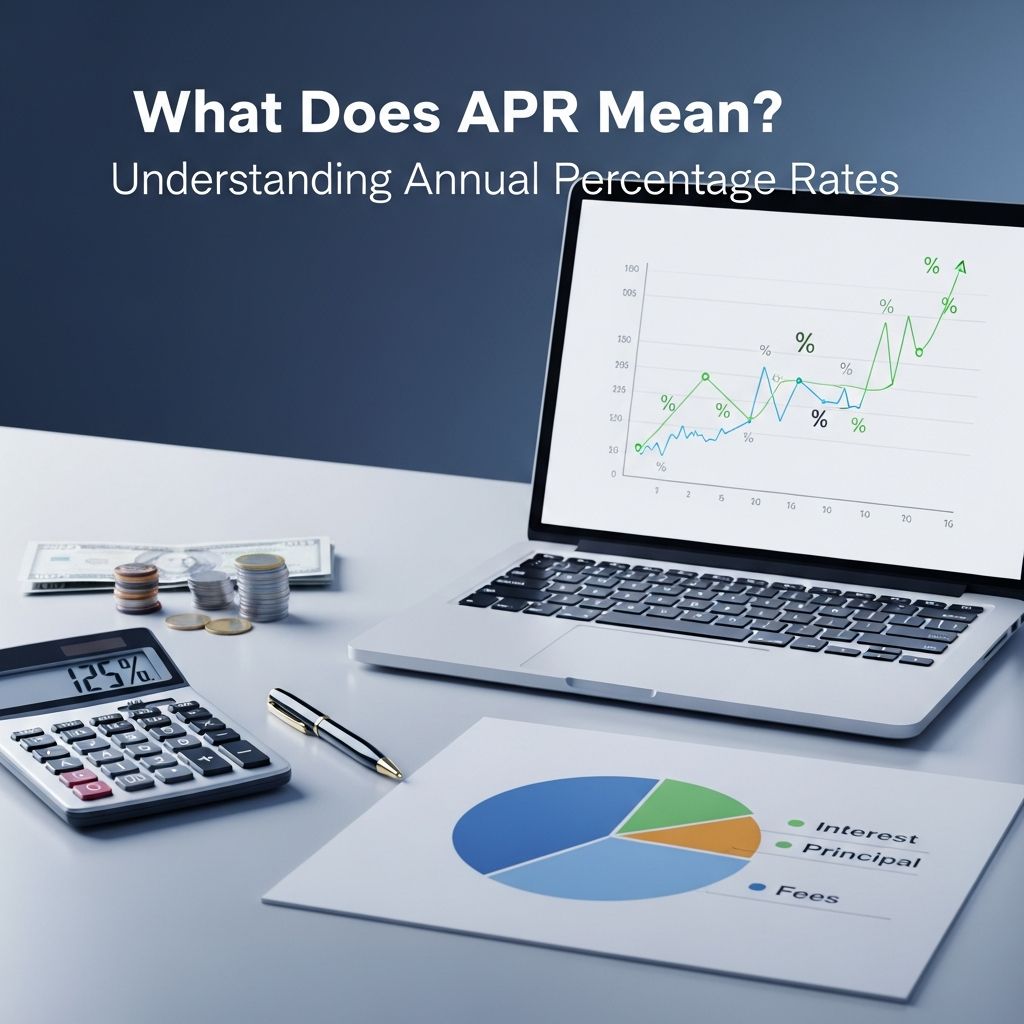
APR stands for annual percentage rate, and it represents the yearly cost of borrowing money expressed as a percentage. When you apply for a credit card, mortgage, auto loan, or personal loan, the APR is one of the most critical numbers to understand before making a financial decision. The APR provides a comprehensive view of what you’ll actually pay to borrow money by combining the interest rate with other associated costs and fees.
Unlike a simple interest rate, which only reflects the cost of borrowing the principal amount, an APR offers a more complete picture of your total borrowing expenses. This makes it an essential metric for comparing loan offers from different lenders and ensuring you’re getting the best possible deal for your financial situation.
APR vs. Interest Rate: Understanding the Difference
While many people use the terms “APR” and “interest rate” interchangeably, they have distinct meanings that are important to understand.
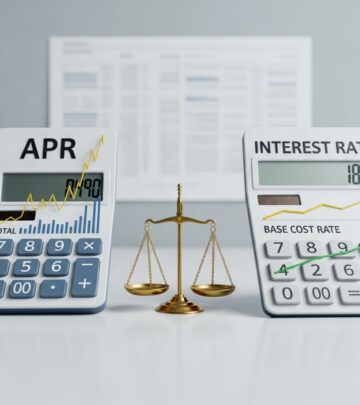
An interest rate is simply the cost of borrowing money expressed as a percentage. It represents the percentage of your principal loan amount that you’ll pay annually as interest. The interest rate is the foundation of your borrowing cost but doesn’t include any additional expenses associated with obtaining or maintaining the loan.
An APR, on the other hand, includes the interest rate plus all other fees and costs associated with borrowing. For mortgages, this might include origination fees, closing costs, discount points, and underwriting fees. For credit cards, the APR is typically just the interest rate since credit cards don’t usually have additional borrowing fees.
Because APR includes more than just interest, it’s usually higher than the interest rate alone, though exceptions exist. When comparing loans side by side, examining the APR rather than just the interest rate gives you a more accurate understanding of the true cost of borrowing.
How APR Works
Understanding how APR functions in practice is crucial for making informed borrowing decisions. The APR is calculated by taking all borrowing costs—interest charges and associated fees—and expressing them as a yearly percentage of the loan amount.
When you borrow money, you’re obligated to repay the original amount (principal) plus additional charges. These charges vary depending on the type of loan, your creditworthiness, and your financial situation. Several factors influence your APR, including:
- Your credit score and credit history
- The type of loan you’re seeking
- Current market interest rates
- The loan term and amount
- Your income and debt-to-income ratio
- The lender’s specific pricing structure
The APR formula is:
APR = (((Interest Charges + Fees & Charges) / Principal) / Number of Days in Loan Term × 365) × 100
By using this standardized calculation, all lenders are required to present APR in the same way, making it easier for consumers to compare offers accurately.
Types of APR
APR comes in two main varieties, each with different characteristics and implications for your borrowing costs.
Fixed APR
A fixed APR remains constant throughout the life of your loan, providing predictability and stability in your monthly payments. With a fixed APR, you know exactly what you’ll pay each month, making it easier to budget and plan your finances. However, fixed APR can still change if you violate the terms of your credit card agreement or if your lender has specific conditions outlined in your loan documents.
Fixed APR is generally preferable for borrowers who value certainty and want to protect themselves against rising interest rates.
Variable APR
A variable APR fluctuates based on changes to an underlying index rate, such as the U.S. prime rate. With a variable APR on a credit card, your rate includes an index rate plus a margin or percentage added by the lender. As the market benchmark changes, your APR adjusts accordingly, which means your monthly payment can increase or decrease over time.
Variable APR rates typically start lower than fixed rates, making them attractive initially. However, they carry the risk of increasing significantly if market conditions change unfavorably. Borrowers who choose variable rates should be prepared for potential payment increases and ensure they can afford higher payments if rates rise.
Credit Card APR Explained
For credit cards specifically, APR represents the annual cost of carrying a balance on your card. Credit card APR typically includes only the interest rate without additional fees, as credit card borrowing doesn’t usually involve the origination fees and closing costs associated with mortgages or personal loans.
Understanding credit card APR is essential because it directly impacts how much you pay when you carry a balance. The higher your APR, the more expensive it becomes to maintain an outstanding balance on your card. However, there’s a critical advantage: you can avoid paying any interest on credit card purchases if you pay off your entire balance within the grace period each month.
Different credit cards offer different APRs based on your creditworthiness. Consumers with excellent credit scores typically qualify for lower APRs, while those with fair or poor credit may face significantly higher rates.
APR vs. APY: A Critical Distinction
APR and APY (Annual Percentage Yield) are related terms that often confuse consumers, but they serve opposite purposes.
| Aspect | APR | APY |
|---|---|---|
| Definition | Annual Percentage Rate – cost of borrowing | Annual Percentage Yield – earnings on savings |
| Application | Loans and credit cards | Savings accounts and investments |
| Includes | Interest rate plus fees and charges | Compound interest earned |
| Direction | Money you pay out | Money you earn |
APR represents what you pay when borrowing money, while APY represents what you earn on a savings account, certificate of deposit, or other investment account. APY accounts for compound interest, meaning interest is calculated not only on your principal but also on accumulated interest from previous periods.
How to Calculate APR
While lenders are required to disclose APR, understanding how to calculate it yourself can help you verify their figures and make better financial decisions.
The basic APR calculation involves dividing the total annual cost (interest plus fees) by the principal loan amount and multiplying by 100 to express it as a percentage. For more complex calculations involving the specific timing of payments, you may need to use more sophisticated formulas or financial calculators.
When reviewing loan documents, always look for the APR clearly disclosed, usually in a prominent section of your loan agreement or disclosure documents.
Factors That Influence Your APR
Several key factors determine what APR a lender will offer you:
- Credit Score: Your credit score is one of the most significant factors influencing your APR. Borrowers with higher credit scores typically receive lower APRs, while those with lower scores face higher rates.
- Credit History: Lenders examine your payment history, the length of your credit accounts, and your overall creditworthiness.
- Debt-to-Income Ratio: This measures how much of your monthly income goes toward debt payments and affects your borrowing capacity and APR.
- Loan Type: Different types of loans carry different APR ranges. Secured loans (backed by collateral) typically have lower APRs than unsecured loans.
- Market Conditions: Overall economic conditions and the Federal Reserve’s interest rate decisions influence the APRs lenders offer.
- Loan Term: Longer loan terms may carry different rates than shorter ones.
How to Lower Your APR
If you currently have a high APR or want to qualify for a better rate, several strategies can help:
- Improve Your Credit Score: Pay all bills on time, reduce credit card balances, and maintain a good credit mix to boost your score.
- Shop Around: Compare offers from multiple lenders before committing, as rates vary significantly between institutions.
- Negotiate: Don’t hesitate to ask lenders if they can offer better rates, especially if you have improved credit since your last application.
- Pay Down Debt: Reducing your outstanding debt lowers your debt-to-income ratio, making you a more attractive borrower.
- Request a Rate Reduction: If you have an existing card or loan with a high APR, contact your lender and request a reduction based on improved creditworthiness.
- Balance Transfer: For credit card debt, consider a balance transfer to a card with a lower or promotional APR.
- Choose Fixed Over Variable: When possible, opt for fixed APR to protect yourself from future rate increases.
APR in Different Types of Loans
APR functions similarly across different loan types but may include different components:
Mortgage APR: Includes the interest rate plus closing costs, discount points, origination fees, and other expenses associated with securing a mortgage. This makes mortgage APR typically higher than the stated interest rate.
Auto Loan APR: Includes the interest rate and any fees charged by the lender for originating or servicing the loan.
Personal Loan APR: Combines the interest rate with any origination fees or other charges associated with the unsecured loan.
Credit Card APR: For credit cards, APR is typically just the interest rate with no additional fees, though annual membership fees may apply to some premium cards.
Frequently Asked Questions (FAQs)
Q: Is a 20% APR good for a credit card?
A: A 20% APR is relatively high for a credit card. The national average credit card APR typically ranges between 15-22%. If you have good credit, you should qualify for rates in the 12-18% range. However, the “good” APR depends on your creditworthiness—those with excellent credit may get rates below 12%, while those with poor credit might see rates above 25%.
Q: Can APR change after I get a loan?
A: For fixed APR loans and credit cards, the rate should remain constant, though variable APR rates can fluctuate. Even fixed rates can change if you violate your agreement terms, such as missing payments. Always review your loan documents to understand whether your APR is fixed or variable.
Q: How often is APR applied?
A: While APR is expressed as an annual rate, it’s typically applied on a daily, monthly, or periodic basis depending on your specific loan or credit card. For credit cards, interest is usually calculated daily on your average daily balance.
Q: What’s the difference between APR and interest rate on a mortgage?
A: The interest rate is just the cost to borrow the principal amount, while the APR includes the interest rate plus all other mortgage costs like closing costs, discount points, and origination fees. This makes APR higher than the interest rate and gives you a more complete picture of the loan’s true cost.
Q: How can I find my current APR?
A: Your current APR appears on your monthly statements for credit cards and loans. You can also contact your lender directly or log into your online account to view your APR. For new applications, lenders must disclose the APR before you agree to the loan.
Q: Does paying off my credit card in full affect my APR?
A: No, your APR remains the same regardless of your payment habits. However, if you pay your full balance each month before the grace period ends, you avoid paying any interest charges, effectively making the APR irrelevant for your purchases.
References
- What is APR? Types of APR, How to Calculate & Lower It — Bank of America. https://bettermoneyhabits.bankofamerica.com/en/credit/what-is-apr
- What Is an Annual Percentage Rate (APR)? | APR vs. APY — Equifax. https://www.equifax.com/personal/education/credit-cards/articles/-/learn/what-is-apr/
- What is APR and How Does It Work? — HFS FCU. https://hfsfcu.org/education/what-is-apr-how-does-it-work/
- What Is an APR? — Experian. https://www.experian.com/blogs/ask-experian/what-is-apr/
- What is APR — Wells Fargo. https://www.wellsfargo.com/mortgage/learn/what-is-apr/
- How APR Works and Your Credit Score Impact — Citizens Bank. https://www.citizensbank.com/learning/what-is-apr.aspx
Similar Articles








Read full bio of medha deb