What Determines Bond Prices in the Open Market
Understanding the key factors that influence bond valuations and market dynamics.

What Determines Bond Prices in the Open Market?
Bond pricing in the open market is a fundamental concept for investors seeking to understand fixed-income securities. Unlike stocks, which represent ownership stakes in companies, bonds are debt instruments that obligate issuers to pay interest and return principal to investors. The price of a bond fluctuates based on several interconnected factors that reflect changing market conditions, economic expectations, and risk assessments. Understanding these determinants is essential for both novice and experienced investors who want to make informed decisions about fixed-income investments.
The Inverse Relationship Between Bond Prices and Interest Rates
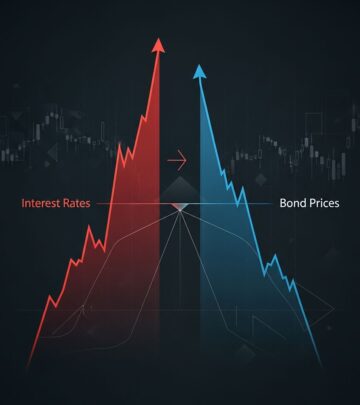
The most significant factor influencing bond prices is the prevailing interest rate environment. When interest rates rise, existing bond prices fall, and when interest rates fall, existing bond prices rise. This inverse relationship is one of the most fundamental principles in bond investing.
Consider a practical example: if you own a bond paying 4% interest and new bonds in the market begin offering 6%, your bond becomes less attractive to potential buyers. To make your bond competitive, its price must decrease to provide a yield comparable to newer offerings. Conversely, if new bonds offer only 2% interest while yours pays 4%, your bond becomes more valuable and its price will increase in the secondary market.
This relationship exists because bond prices adjust to maintain a consistent yield relative to market interest rates. The longer the bond’s duration—the measure of its sensitivity to interest rate changes—the more pronounced the price movement will be. Long-term bonds experience greater price fluctuations than short-term bonds when interest rates change.
Credit Quality and Default Risk
The creditworthiness of the bond issuer significantly impacts bond prices. Investors demand higher yields from issuers perceived as riskier, and this increased yield demand translates into lower bond prices. Rating agencies such as Standard & Poor’s, Moody’s, and Fitch assess credit quality and assign ratings ranging from AAA (highest quality) to D (default).
When an issuer’s credit quality deteriorates, the bond’s price typically falls as investors require compensation for increased default risk. Conversely, when an issuer’s financial condition improves, demand for its bonds increases, pushing prices higher. Corporate scandals, earnings disappointments, or economic challenges affecting an industry can trigger sudden price declines, as seen during periods of financial stress when spreads between government and corporate bonds widen substantially.
Key factors affecting credit quality include:
- Company profitability and cash flow generation
- Debt-to-equity ratios and leverage levels
- Industry conditions and competitive positioning
- Management quality and strategic direction
- Economic conditions affecting the issuer
Time to Maturity and Duration
The length of time until a bond matures substantially affects its price sensitivity to interest rate changes. Bonds with longer maturities have greater duration risk because their prices fluctuate more dramatically when interest rates change. This occurs because investors must wait longer to receive their principal repayment and are exposed to interest rate risk for an extended period.
Duration, measured in years, quantifies this price sensitivity more precisely than maturity alone. A bond with a duration of 5 years will experience approximately a 5% price decline for every 1% increase in interest rates. This relationship helps investors understand and compare the interest rate risk of different bonds, even those with different coupon rates or maturities.
Short-term bonds are less sensitive to interest rate changes and therefore more stable in price, making them attractive during periods of rising rates. Long-term bonds offer higher yields but expose investors to greater price volatility, making them more suitable for those with longer time horizons who believe interest rates will decline.
Supply and Demand Dynamics
Like any market, bond prices are influenced by the fundamental economic principle of supply and demand. When demand for bonds exceeds supply, prices rise. When supply exceeds demand, prices fall. Several factors influence these market dynamics:
Demand drivers include:
- Central bank purchases and quantitative easing programs
- Institutional investment requirements (pension funds, insurance companies)
- Flight-to-quality periods when investors seek safety
- Foreign investor demand for high-quality securities
- Changes in investment mandates and asset allocation decisions
Supply-side factors include:
- Government issuance of Treasury securities
- Corporate bond issuance for financing needs
- Municipal bond offerings by state and local governments
- Maturity schedules causing existing bonds to mature
- Economic conditions affecting borrowing demand
Economic Outlook and Inflation Expectations
Investor expectations about future economic conditions and inflation rates profoundly influence bond prices. If investors anticipate stronger economic growth, they may demand higher yields to compensate for the expected rise in interest rates, causing bond prices to decline. Conversely, expectations of economic slowdown or deflation support bond prices as investors seek safe-haven securities.
Inflation expectations are particularly important because they erode the purchasing power of fixed interest payments. When inflation expectations rise, investors require higher yields to maintain the real (inflation-adjusted) return on their investments, leading to price declines. This relationship is why inflation-protected securities (TIPS) exist—they adjust principal values based on inflation, providing protection during high-inflation environments.
Central bank policy and forward guidance significantly influence these expectations. Comments from Federal Reserve officials about future interest rate decisions can immediately impact bond prices, as markets respond to the likelihood of policy changes.
Liquidity Considerations
Liquidity refers to how easily a bond can be bought or sold without significantly affecting its price. Highly liquid bonds, such as Treasury securities, typically trade at tighter spreads and more consistent prices. Less liquid bonds, particularly corporate and municipal securities, may trade at wider spreads and experience more volatile pricing.
During market stress periods, liquidity can evaporate quickly. Investors may demand higher yields to compensate for liquidity risk, causing prices to fall for less liquid securities even if their credit quality remains unchanged. This was evident during the 2008 financial crisis and the 2020 COVID-19 market disruption, when even investment-grade corporate bonds experienced significant price declines due to liquidity concerns.
Market Structure and Trading Venue
Bond prices can vary depending on where they are traded and the nature of the transaction. The bond market includes multiple segments with different characteristics:
Primary market transactions involve newly issued bonds sold directly by issuers, while secondary market transactions occur between investors through various dealers and platforms. Treasury securities trade on highly efficient electronic platforms with minimal spreads, while corporate and municipal bonds often trade over-the-counter with larger bid-ask spreads, giving dealers some pricing discretion.
Recent regulatory changes and technology improvements have increased transparency in bond pricing, but the decentralized nature of many bond markets means prices can vary between different dealers and execution venues. Sophisticated investors who shop for the best prices can achieve better execution outcomes.
Call Features and Other Embedded Options
Many bonds include embedded options that affect their prices. Callable bonds give issuers the right to redeem bonds before maturity, typically when interest rates have declined and refinancing is attractive. This embedded option limits upside price appreciation because issuers will likely call bonds if prices rise substantially due to falling interest rates. Consequently, callable bonds typically trade at lower prices than non-callable bonds with similar credit quality and maturity, compensating investors for this option risk.
Other embedded options include putable bonds (allowing bondholders to force redemption) and convertible bonds (allowing conversion into company stock). These features require careful analysis when comparing bond prices across different securities.
Market Sentiment and Risk Appetite
Broader market sentiment and investors’ risk appetite significantly influence bond prices, particularly for higher-yielding securities. During periods of strong economic confidence and low uncertainty, investors may shift from high-quality government bonds toward riskier corporate bonds, causing spreads to narrow and corporate bond prices to rise. During risk-off periods, when uncertainty increases, investors flee to quality, supporting government bond prices while depressing corporate and high-yield bond prices.
How Open Market Bond Trading Works
The secondary bond market, where existing bonds are traded between investors, operates quite differently from stock markets. Unlike equity exchanges with centralized trading floors, bond markets are largely decentralized and dealer-based. Most bond transactions occur over-the-counter (OTC) between buyers, sellers, and dealers through electronic communication networks and telephone negotiations.
Bond prices in the open market are determined through these bilateral negotiations, with prices fluctuating based on all the factors discussed above. Dealers maintain inventory positions and profit from the spread between bid prices (what they pay to buy) and ask prices (what they charge to sell). The width of this spread depends on the bond’s liquidity, with Treasury spreads typically measured in 1/32nds of a point while corporate bond spreads may be much wider.
Practical Implications for Bond Investors
Understanding bond price determination helps investors make better decisions about their fixed-income allocations. Investors concerned about rising interest rates might favor shorter-duration bonds or floating-rate securities. Those expecting interest rates to decline might extend duration to capture price appreciation. Investors with strong risk tolerance might seek higher-yielding corporate bonds, while conservative investors might stick with government securities.
Bond price movements also create trading opportunities. Sophisticated investors who accurately anticipate interest rate changes or identify mispriced credit spreads can profit through bond trading or relative value strategies.
Frequently Asked Questions
Q: Why do bond prices fall when interest rates rise?
A: Bond prices fall when interest rates rise because existing bonds with lower coupon rates become less attractive compared to newly issued bonds with higher yields. To maintain competitive yields, existing bond prices must decrease. This inverse relationship reflects the financial principle that bond prices adjust to maintain consistent yields in the market.
Q: How does credit rating affect bond prices?
A: Credit ratings directly influence bond prices because they reflect default risk. When a bond issuer’s credit rating is downgraded, investors perceive higher default risk and demand greater yields, causing bond prices to decline. Conversely, rating upgrades typically increase demand and push prices higher. Investment-grade bonds (BBB- and above) trade at lower yields than below-investment-grade (high-yield) bonds, reflecting their lower credit risk.
Q: What is duration and why does it matter?
A: Duration measures how sensitive a bond’s price is to interest rate changes, expressed in years. A bond with a 5-year duration will experience approximately 5% price movement for every 1% interest rate change. Duration is important because it helps investors understand and compare interest rate risk across different bonds with varying coupons and maturities.
Q: Can bond prices go to zero?
A: While bond prices can decline substantially, they typically don’t fall to zero unless the issuer defaults and investors recover nothing. Most bonds trade at prices reflecting their remaining cash flows and credit risk. During extreme market stress, high-yield and distressed bonds can trade at deep discounts, sometimes below 50% of par value, but complete loss typically requires default.
Q: How do Treasury securities differ from corporate bonds in pricing?
A: Treasury securities are backed by the U.S. government and generally trade at lower yields (higher prices) due to minimal default risk. Corporate bonds require higher yields to compensate investors for credit risk. Treasury markets are also significantly more liquid with tighter bid-ask spreads, while corporate bond markets are more fragmented with wider spreads and potentially greater price variation between dealers.
Q: What happens to bond prices during inflation?
A: Bond prices typically decline during inflation periods because investors demand higher yields to compensate for the erosion of purchasing power from fixed interest payments. The real (inflation-adjusted) return on bonds decreases as inflation rises. This is why inflation expectations are a key determinant of bond prices, and why central banks’ inflation forecasts significantly impact the bond market.
References
- Understanding Bond Pricing and Yields — U.S. Department of the Treasury. 2024. https://home.treasury.gov/education
- Fixed Income Analysis — CFA Institute. 2024. https://www.cfainstitute.org
- How Interest Rates Affect Bond Prices and Yields — Federal Reserve Bank of New York. 2024. https://www.newyorkfed.org/medialibrary
- Bond Market Structure and Trading — Securities Industry and Financial Markets Association (SIFMA). 2024. https://www.sifma.org
- Credit Risk and Bond Valuation — International Capital Market Association (ICMA). 2024. https://www.icmagroup.org
Similar Articles








Read full bio of medha deb