Good Credit Score: What Counts And How To Improve
Unlock the secrets of credit scores: ranges, factors, and strategies to achieve and maintain excellent credit for better financial opportunities.

Your credit score is a crucial three-digit number that shapes your financial future. Ranging typically from 300 to 850, it acts as a snapshot of your creditworthiness, influencing everything from mortgage approvals to credit card offers and even insurance premiums. Lenders rely on it to predict if you’ll repay debts on time, with higher scores signaling lower risk and unlocking better terms like lower interest rates.
Why Your Credit Score Matters in Everyday Finance
A strong credit score opens doors to favorable financial products. For instance, scores above 750 often qualify you for the best rates on loans and cards, potentially saving thousands in interest over time. Conversely, lower scores can lead to denials, higher costs, or limited options. Beyond lending, landlords check scores for rentals, and insurers may use them to set premiums, making credit health a cornerstone of overall financial stability.
In today’s economy, maintaining a good score is more important than ever. It affects auto loans, personal lines of credit, and even job applications in some fields. Understanding its components empowers you to take control and build lasting financial security.
Breaking Down Credit Score Ranges: Good, Fair, or Poor?
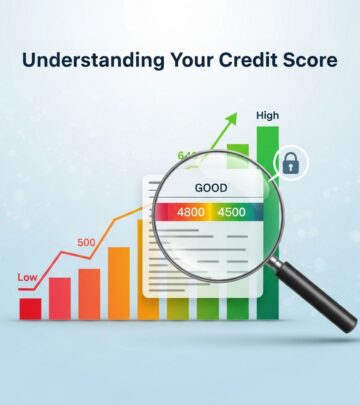
Credit scores aren’t one-size-fits-all; they fall into categories that lenders interpret differently. Most models, including the widely used FICO, use this 300-850 scale:
| Score Range | Category | Typical Implications |
|---|---|---|
| 800-850 | Exceptional | Best rates, highest approval odds, premium rewards cards |
| 740-799 | Very Good | Excellent terms, low risk profile |
| 670-739 | Good | Competitive rates, broad access to credit |
| 580-669 | Fair | Higher rates, some approvals with conditions |
| 300-579 | Poor | Limited options, high rates, frequent denials |
Generally, 670+ is considered ‘good’ by many lenders, but ‘very good’ (740+) is ideal for top-tier benefits. These ranges guide decisions: a 750+ score might mean prime mortgage rates, while below 650 often triggers scrutiny or alternatives like secured cards.
The Evolution of Credit Scoring Models
Credit scoring began in 1958 with Fair Isaac Corporation’s formula to assess repayment likelihood, becoming standard by 1989. Today, FICO dominates, used by 90% of top lenders, while VantageScore, launched in 2006 by the three major bureaus (Equifax, Experian, TransUnion), offers an alternative with similar ranges but nuanced weighting.
You don’t have just one score; variations arise from models, data timing, and bureau differences. FICO versions (e.g., FICO 8, 9, 10) tailor to loan types like mortgages or autos, pulling from your credit reports which update frequently. Free annual reports from AnnualCreditReport.com help track accuracy without impacting scores.
Key Factors That Shape Your Credit Score
Scores derive from credit report data via algorithms analyzing habits. FICO weights five categories:
- Payment History (35%): Tracks on-time payments across cards, loans, mortgages. Late payments (30+ days) harm scores for years; perfect history boosts it most.
- Amounts Owed/Credit Utilization (30%): Ratio of balances to limits. Under 30% is optimal; high usage signals risk even if paid off monthly.
- Length of Credit History (15%): Average age of accounts. Longer histories (oldest and average) indicate stability.
- New Credit (10%): Recent inquiries and accounts. Too many suggest desperation; space applications.
- Credit Mix (10%): Variety like revolving (cards) and installment (loans). Diverse management shows skill.
VantageScore adjusts these slightly, emphasizing trended data like payment patterns over 24 months. Negative marks like collections, foreclosures, or bankruptcies linger 7-10 years but fade over time.
How Lenders Use Scores in Real-World Decisions
Banks apply scores alongside income and debt-to-income ratios. A 700-749 score likely yields good terms, 650-699 higher rates, and below 650 denials or subprime options. For mortgages, FICO variants consider down payments too. Insurers derive ‘credit-based insurance scores’ similarly, correlating credit with claim likelihood.
Scores update as reports change—payments, new debts—so monitor weekly via free tools from bureaus or banks, noting soft pulls don’t affect scores.
Proven Strategies to Build and Elevate Your Score
Improving takes time, but consistent actions yield results:
- Pay bills on time every time—automate to avoid lapses.
- Keep utilization low: pay down balances before statements close.
- Retain old accounts for history length; don’t close unused cards hastily.
- Limit applications: one every 6 months max.
- Diversify responsibly: add installment loans if needed.
- Dispute errors: Review reports yearly; correct inaccuracies promptly.
For poor starters, secured cards or credit-builder loans help. Aim for 35%+ growth in months with discipline. Patience matters—derogatory items age off eventually.
Common Myths and Misconceptions About Credit Scores
Myth 1: Rent/utilities build scores. Rarely, unless reported via services.
Myth 2: Closing cards helps. It shortens history, raises utilization.Myth 3: Scores are static. They fluctuate daily.
Myth 4: Carrying balances builds credit. No—interest hurts, full pay-off is best.
Separate fact from fiction to avoid pitfalls.
Frequently Asked Questions
What is a good credit score for a mortgage?
740+ for best rates; 620 minimum for conventional loans.
How long does a late payment stay on my report?
Up to 7 years, but impact lessens over time.
Does checking my own score hurt it?
No—soft inquiries don’t count.
What’s the difference between FICO and VantageScore?
Similar factors, different weights; FICO more common.
Can I improve my score in 30 days?
Yes, via payments and utilization drops.
Monitoring Tools and Next Steps
Leverage apps from FICO, bureaus, or banks for real-time tracking. Set alerts for drops. Combine with budgeting for holistic health. A good score isn’t luck—it’s managed habits yielding lifelong rewards.
References
- How to Understand Your Credit Score & Report — TD Bank. 2023. https://www.td.com/us/en/personal-banking/learning/understanding-your-credit
- How are FICO Scores Calculated? — myFICO. 2024. https://www.myfico.com/credit-education/whats-in-your-credit-score
- What is a Credit Score and How is it Calculated? — ESL Federal Credit Union. 2024. https://www.esl.org/resources-tools/educational-resources/what-is-a-credit-score
- What is a credit score? — Consumer Financial Protection Bureau. 2025-01-15. https://www.consumerfinance.gov/ask-cfpb/what-is-a-credit-score-en-315/
- Credit Scores — Federal Trade Commission. 2024. https://consumer.ftc.gov/credit-scores
- What Affects Your Credit Scores? — Experian. 2025-02-01. https://www.experian.com/blogs/ask-experian/credit-education/score-basics/what-affects-your-credit-scores/
Similar Articles








Read full bio of Sneha Tete