What Causes Inflation and Who Benefits From It?
Understanding inflation causes and discovering who truly benefits from rising prices in the economy.

What Causes Inflation and Does Anyone Gain From It?
Inflation represents one of the most significant economic phenomena affecting households, businesses, and governments worldwide. When the general price level of goods and services rises over time, purchasing power declines, meaning consumers can buy less with the same amount of money. However, inflation is not uniformly negative for all economic participants. Understanding what causes inflation and identifying who benefits from it requires examining the complex interplay of monetary policy, supply dynamics, and various economic actors.
Understanding Inflation Fundamentals
Inflation occurs when the average prices of goods and services in an economy increase over a specific period. Central banks typically measure inflation using consumer price indices (CPIs) or similar metrics that track price changes across broad categories of consumer goods and services. While moderate inflation is often considered healthy for economic growth, excessive inflation can undermine economic stability and consumer confidence.
Primary Causes of Inflation
Several interconnected factors drive inflation in modern economies. Understanding these causes is essential for policymakers, investors, and consumers seeking to navigate economic cycles effectively.
Monetary Inflation
One of the most significant causes of inflation stems from excessive money supply growth. When central banks expand the money supply too rapidly relative to the growth in goods and services available in the economy, more money chases the same amount of products. This classic “too much money chasing too few goods” scenario drives prices upward. Quantitative easing programs, where central banks purchase securities to inject liquidity into financial systems, can contribute to monetary inflation if not carefully managed. The relationship between money supply and inflation has been documented extensively in economic literature, with economists recognizing that sustained inflation typically requires continued monetary expansion to persist.
Demand-Pull Inflation
When aggregate demand for goods and services exceeds aggregate supply, prices naturally rise. This demand-pull inflation occurs during periods of strong economic growth when consumers and businesses increase their spending faster than producers can increase output. For example, if employment is high and wages are rising, consumers may spend more aggressively, pulling prices upward as businesses struggle to meet demand. Post-pandemic economic stimulus programs in various countries contributed to demand-pull inflation as consumers deployed accumulated savings and government transfers to purchase goods and services.
Cost-Push Inflation
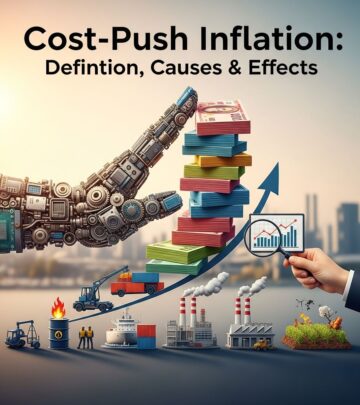
Rising production costs drive cost-push inflation, occurring when businesses face higher expenses for labor, raw materials, energy, or transportation. When input costs increase, companies typically pass these costs to consumers through higher prices. Supply chain disruptions, such as those experienced during the COVID-19 pandemic, exemplified how constrained supplies can raise production costs. Similarly, increases in energy prices, labor wages, or raw material costs can trigger widespread cost-push inflation across multiple economic sectors.
Built-In Inflation
Inflation expectations can become self-fulfilling through built-in inflation, also called wage-price spiral inflation. When workers expect future inflation, they demand higher wages to maintain purchasing power. Businesses then raise prices to cover higher labor costs, confirming inflation expectations. This cycle can persist even after the initial inflationary shock disappears if inflation expectations become anchored at elevated levels.
Supply Chain Disruptions and External Shocks
External events can trigger inflationary pressures by constraining supply. Natural disasters, geopolitical conflicts, pandemics, or trade disruptions can reduce the availability of critical goods and services. When supply suddenly contracts while demand remains stable or increases, prices rise significantly. Recent global inflation episodes have been partly attributed to supply chain bottlenecks affecting semiconductor production, shipping, and manufacturing sectors worldwide.
Fiscal Policy and Government Spending
Large government spending programs, particularly when funded through central bank financing rather than taxation or borrowing, can fuel inflation. Expansionary fiscal policy that increases aggregate demand without corresponding increases in productive capacity can push prices higher. Deficit spending during economic downturns aims to stabilize the economy, but excessive spending relative to economic slack can generate inflation.
Who Gains From Inflation?
While inflation is often portrayed negatively, certain economic actors and sectors actually benefit from rising price levels. Identifying these beneficiaries provides insight into how inflation redistributes wealth across the economy.
Borrowers and Debtors
Perhaps the most direct beneficiaries of inflation are borrowers with fixed-rate debt. When someone borrows money at a fixed interest rate and inflation subsequently rises, they repay the loan with money that is worth less than when they borrowed it. For example, a homeowner with a 3% fixed-rate mortgage benefits when inflation rises to 5% or higher, effectively reducing the real burden of their debt. This advantage particularly helps individuals with large mortgages and long-term business loans at fixed rates. Government entities with substantial debt burdens also benefit as inflation reduces the real value of their obligations.
Real Asset Owners
Investors holding real assets—tangible properties that maintain intrinsic value—often benefit from inflation. Real estate investors experience rising property values during inflationary periods, as property prices typically increase with inflation while mortgage payments remain fixed. Similarly, investors in commodities, precious metals, and collectibles often see these assets appreciate during inflationary cycles. These real assets serve as inflation hedges, preserving purchasing power better than cash or bonds.
Companies with Pricing Power
Businesses operating in markets where they can raise prices without losing significant customer volume benefit from inflation. Large corporations with strong brand recognition, limited competition, or exclusive products often possess this pricing power. Companies can pass increased costs to consumers, maintaining profit margins despite higher expenses. Industries with inelastic demand—where consumers need the product regardless of price increases—experience better profit performance during inflationary periods.
Wage Earners in Strong Labor Markets
Workers in tight labor markets with strong bargaining power can negotiate wage increases that match or exceed inflation rates, maintaining or improving their real purchasing power. During periods of low unemployment and high demand for skilled labor, wage earners can secure raises that offset inflationary effects. However, this advantage primarily benefits those with specialized skills or in sectors experiencing labor shortages. General workers in competitive labor markets often see wages lag behind inflation.
Financial Institutions and Lenders
Banks and lenders benefit from inflation in complex ways. When they hold long-term, fixed-rate loans, inflation reduces the real value of repayments they receive, creating a potential disadvantage. However, banks may benefit if they can raise lending rates faster than deposit rates, expanding net interest margins. Additionally, during inflationary periods, banks’ collateral values (primarily real estate) often rise, strengthening their balance sheets.
Export-Oriented Businesses
Companies producing goods for export markets may benefit from domestic inflation if their home currency depreciates as a result. A weaker currency makes exports more competitive internationally, potentially boosting sales volume. Manufacturing exporters particularly benefit when domestic inflation exceeds inflation rates in trading partner countries.
Who Loses From Inflation?
Conversely, numerous economic participants face hardship during inflationary periods.
Savers and Fixed-Income Recipients
Individuals holding cash savings or receiving fixed incomes suffer from inflation’s erosive effects. Savers watching their purchasing power decline may be forced to reduce consumption or take excessive investment risks seeking inflation-matching returns. Retirees on fixed pensions or fixed annuities experience declining living standards as inflation reduces their purchasing power over time.
Creditors and Bond Investors
Lenders and bond investors lose when inflation rises unexpectedly. They receive repayment in currency worth less than anticipated, reducing real returns on their investments. Government bonds and corporate bonds paying fixed interest rates suffer price declines when inflation rises, creating capital losses for existing bondholders.
Low-Income and Vulnerable Populations
Lower-income households typically face disproportionate inflation impacts. These households spend larger portions of income on necessities like food, energy, and housing—categories often experiencing above-average inflation. Limited financial cushions prevent adaptation strategies available to wealthier households, such as investing in real assets or negotiating wage increases.
The Inflation-Growth Tradeoff
Economists have long debated whether moderate inflation stimulates or hinders economic growth. Some argue that modest inflation encourages spending and investment by reducing real debt burdens and motivating capital deployment. Others contend that uncertainty about future inflation dampens long-term investment and consumer planning. Most contemporary analysis suggests that very low inflation rates (1-3% annually) support optimal economic growth, while both excessive inflation and deflation prove economically damaging.
Policy Responses to Inflation
Central banks typically respond to elevated inflation through monetary tightening—raising interest rates and reducing money supply growth. Higher interest rates increase borrowing costs, discouraging consumption and investment, thereby reducing aggregate demand. While these measures can control inflation, they may also slow economic growth and employment. The challenge facing policymakers involves calibrating responses to control inflation without triggering excessive economic contraction.
Frequently Asked Questions
Q: What’s the difference between inflation and deflation?
A: Inflation represents rising price levels, while deflation represents falling price levels. Deflation increases the real burden of debt and discourages spending, often proving more economically damaging than inflation.
Q: How does inflation affect retirement planning?
A: Inflation erodes purchasing power, meaning retirement savings must be larger to maintain desired living standards. Retirees should consider inflation-protected investments and diversified portfolios including real assets and inflation-hedging securities.
Q: Can inflation be completely eliminated?
A: Complete elimination of inflation is neither feasible nor desirable. Most economists target modest inflation (2-3% annually) to encourage economic activity while maintaining purchasing power stability.
Q: How do businesses prepare for inflationary periods?
A: Businesses can hedge inflation exposure through long-term contracts, diversified supply chains, inventory management, and pricing strategies that maintain profit margins despite rising input costs.
Q: Is inflation always bad for stock investors?
A: Moderate inflation can support equity valuations through economic growth, though unexpected inflation spikes can harm stocks. Real asset stocks and companies with pricing power often outperform during inflationary periods.
Q: How long does inflation typically last?
A: Inflation duration varies significantly based on underlying causes and policy responses. Supply-driven inflation may resolve as supply recovers, while monetary inflation persists until central banks tighten policy.
Conclusion
Inflation represents a complex economic phenomenon affecting different participants in fundamentally different ways. While causing genuine hardship for savers, fixed-income recipients, and vulnerable populations, inflation simultaneously benefits borrowers, real asset owners, and businesses with pricing power. Understanding these distributional effects helps individuals and investors make informed decisions about asset allocation, debt management, and financial planning. Rather than viewing inflation as uniformly negative, recognizing both its costs and benefits enables more sophisticated economic analysis and personal financial strategy development.
References
- Inflation and Its Long-Term Effects on Savings and Investment — Federal Reserve System. 2024. https://www.federalreserve.gov/faqs/economy_14400.htm
- Understanding Inflation and the Role of Central Banks — European Central Bank. 2024. https://www.ecb.europa.eu/explainers/show/what_is_inflation.html
- The Distributional Effects of Inflation and Monetary Policy — International Monetary Fund. 2023. https://www.imf.org/en/Publications/WP/Issues/2023/05/05/The-Distributional-Effects-of-Monetary-Policy-532701
- Supply Chain Disruptions and Inflation: Evidence from Global Supply Networks — National Bureau of Economic Research. 2023. https://www.nber.org/papers/w31324
- Fiscal Policy and Inflation: Theory and Evidence — World Bank. 2024. https://www.worldbank.org/en/topic/inflation
- Real Assets as Inflation Hedges: A Comprehensive Analysis — U.S. Bureau of Labor Statistics. 2024. https://www.bls.gov/opub/mlr/2024/article/inflation-measurement.htm
Similar Articles








Read full bio of Sneha Tete