What Caused the 2008 Global Financial Crisis
Understanding the root causes and events that triggered the worst economic collapse since the Great Depression.
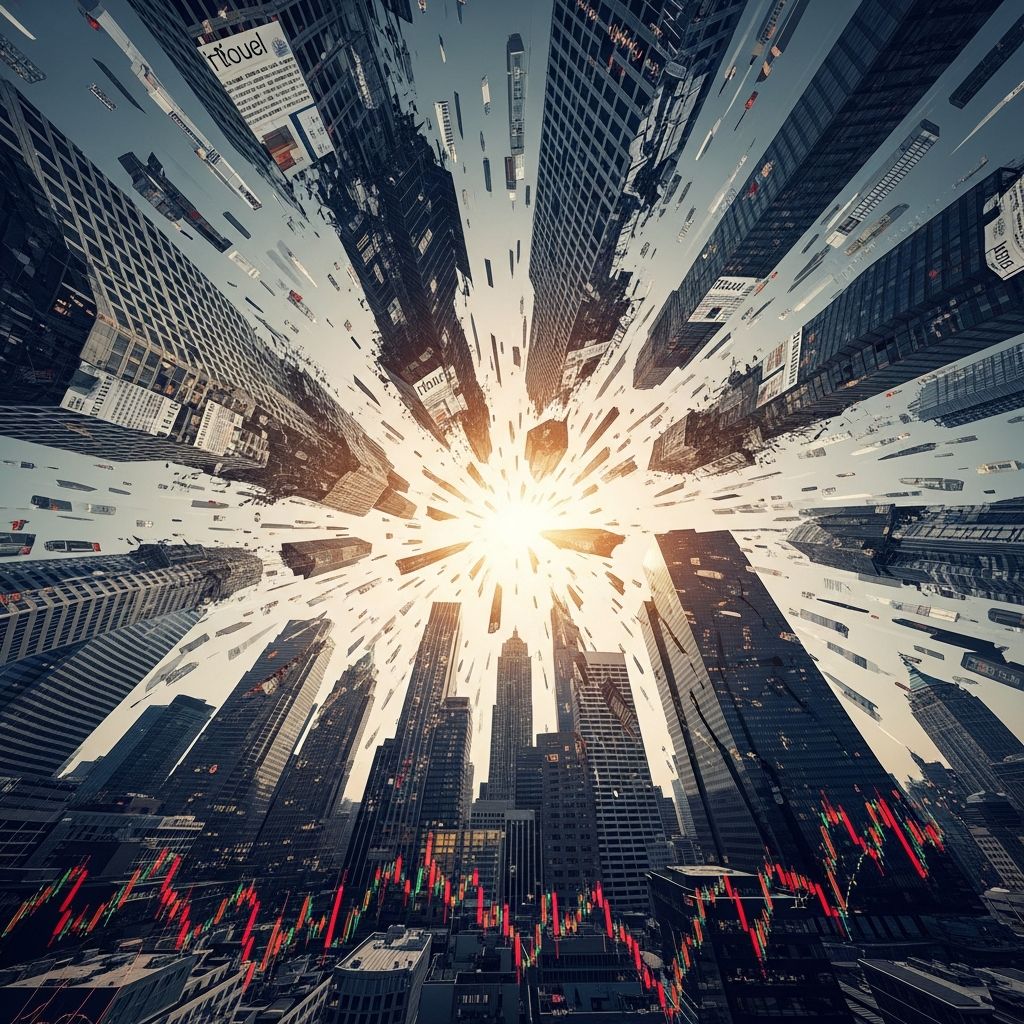
The 2008 financial crisis stands as one of the most devastating economic events in modern history, fundamentally reshaping global markets and household finances. Understanding what triggered this catastrophic collapse requires examining the interconnected factors that converged in the years leading up to September 2008. From rampant speculation in real estate to the proliferation of complex financial instruments, multiple causes combined to create what many experts describe as a “perfect storm” of economic dysfunction.
The Housing Bubble and Subprime Mortgage Crisis
The primary catalyst for the 2008 financial crisis was the bursting of the United States housing bubble, which directly precipitated the subprime mortgage crisis. During the early 2000s, housing prices soared to unprecedented levels as both homeowners and financial institutions engaged in excessive speculation on property values. This speculative frenzy was fueled by a widespread belief that home prices would continue rising indefinitely, making real estate investment an almost risk-free proposition.
The subprime mortgage market played a crucial role in inflating the housing bubble. Banks and lending institutions began extending mortgages to borrowers with poor credit histories and questionable ability to repay loans. Many of these mortgages were adjustable-rate mortgages (ARMs), which featured artificially low initial interest rates that would reset to higher rates after several years. Lenders issued these risky loans with minimal verification of borrowers’ income and assets, a practice known as “no-doc” or “low-doc” lending.
Excessive Risk-Taking and Deregulation
Financial institutions engaged in unprecedented levels of risk-taking during the years preceding the crisis. Operating in a favorable macroeconomic environment characterized by low interest rates and abundant credit availability, banks and investment firms abandoned traditional lending standards and embrace increasingly complex and opaque financial strategies.
Regulatory oversight failed to keep pace with financial innovation. The deregulation that had begun in the 1980s continued through the 1990s and early 2000s, removing safeguards designed to prevent excessive leverage and speculative behavior. Financial institutions exploited regulatory gaps to expand their operations into riskier territories without adequate capital reserves to cover potential losses.
The Proliferation of Complex Financial Instruments
One of the most significant factors contributing to the crisis was the creation and widespread distribution of complex, poorly understood financial instruments. Banks bundled subprime mortgages into mortgage-backed securities (MBS) and collateralized debt obligations (CDOs), selling these instruments to investors worldwide. Financial engineers obscured the underlying risk in these securities through multiple layers of complexity.
These mortgage-backed securities were then used as collateral for further borrowing and derivative creation, amplifying the risk throughout the financial system. Credit rating agencies, which earned fees from the very institutions they were supposed to rate objectively, gave AAA ratings to many of these toxic assets, providing false assurance to investors about their safety. The disconnect between the actual risk of these instruments and their assigned ratings created a house of cards ready to collapse.
Excessive Leverage and Borrowed Capital
Banks and investment firms dramatically increased their leverage in the years before the crisis. They borrowed heavily to fund their operations and investments, operating with minimal equity cushions. Some financial institutions maintained debt-to-equity ratios exceeding 30:1, meaning they had only $1 in capital for every $30 in borrowed funds.
This massive leverage amplified both gains during good times and losses during downturns. When housing prices began declining and mortgage defaults increased, the losses on these leveraged positions grew catastrophically. The interconnected nature of the financial system meant that losses at one institution threatened the solvency of counterparties throughout the network.
The Timeline of Crisis Events
The financial crisis unfolded gradually at first, then with increasing velocity. Key dates in the crisis timeline reveal how quickly the situation deteriorated:
| Date | Event |
|---|---|
| January 21, 2008 | Global stock markets suffer their largest falls since 9/11, with London’s FTSE 100 declining significantly |
| March 24, 2008 | The Federal Reserve facilitates JPMorgan Chase’s acquisition of Bear Stearns, creating a $30 billion security arrangement |
| September 7, 2008 | The Federal Housing Finance Agency places Fannie Mae and Freddie Mac in government conservatorship |
| September 15, 2008 | Lehman Brothers files for bankruptcy; Bank of America announces acquisition of Merrill Lynch for $50 billion |
| September 18, 2008 | Treasury Secretary Paulson and Fed Chair Bernanke warn of potential economic meltdown without intervention |
| October 3, 2008 | Congress passes $700 billion Troubled Asset Relief Program (TARP) |
Global Contagion and Systemic Risk
The crisis quickly spread beyond American borders, demonstrating the deep interconnections in the global financial system. A liquidity crisis that began in mid-2007 cascaded through international institutions as losses on mortgage-related financial assets mounted. The bankruptcy of Lehman Brothers in September 2008 triggered a stock market crash and bank runs in several countries, accelerating the spread of the crisis worldwide.
European economies, which had strong exposure to U.S. mortgage securities, were particularly affected. Ireland became the first Eurozone country to fall into recession, while warnings emerged that the UK, Germany, and Spain would follow. The IMF announced emergency bailout plans as the crisis threatened to engulf governments globally, warning that “no country would be immune from the ripple effects of the credit crunch.”
Credit Market Dysfunction and Bank Failures
As confidence in financial institutions evaporated, credit markets effectively froze. Banks stopped lending to each other, as trust in counterparty solvency disappeared. Lack of investor confidence in bank solvency combined with declining credit availability to create a vicious cycle of economic contraction.
Plummeting stock and commodity prices in late 2008 and early 2009 reflected both the collapsing real estate market and the broader economic downturn. Several financial institutions failed or required government rescue. Washington Mutual Bank was closed by regulators, while other major players like AIG, General Motors, and Chrysler required massive government bailouts to avoid complete collapse.
The Role of Credit Rating Agencies
Credit rating agencies played an outsized role in enabling the crisis. These institutions, compensated by the very financial firms whose products they were rating, issued inflated credit ratings to mortgage-backed securities and complex financial instruments. The agencies failed to adequately assess the risks embedded in these products, providing spurious AAA ratings that suggested safety equivalent to U.S. Treasury bonds.
This failure of due diligence had catastrophic consequences. Investors worldwide relied on these ratings when making investment decisions, purchasing securities that were far riskier than represented. The subsequent revelation of massive rating errors shattered investor confidence and accelerated the crisis.
Government Response and Emergency Measures
Recognizing the severity of the situation, the Federal Reserve and U.S. Treasury implemented unprecedented emergency measures. The Housing and Economic Recovery Act authorized the Treasury to purchase government-sponsored enterprise obligations and reformed regulatory supervision. The Emergency Economic Stabilization Act of October 2008 established the $700 billion Troubled Asset Relief Program, providing authority to invest in troubled financial institutions.
Federal Reserve actions included lowering the federal funds rate to zero by December 2008, instituting the Term Auction Facility to supply short-term credit to troubled banks, and expanding deposit insurance coverage to $250,000 per depositor. The Fed also approved applications from major investment banks, including Goldman Sachs and Morgan Stanley, to become bank holding companies, providing them access to emergency lending facilities.
Impact on Employment and Global Trade
The crisis triggered severe employment disruptions and international economic slowdown. Unemployment in the United States climbed from 5% in December 2007 as businesses shed jobs in response to the collapsing demand. Economies worldwide slowed as credit tightened and international trade declined due to reduced consumer spending and business investment.
The recession, which officially began in December 2007, persisted for 18 months, making it the longest downturn since the Great Depression. Global GDP contracted, and unemployment remained elevated for years following the crisis’s initial impact.
Frequently Asked Questions
Q: When exactly did the 2008 financial crisis begin?
A: The crisis developed gradually, beginning in 2007 with problems in the subprime mortgage market. The liquidity crisis spread to global institutions by mid-2007 and climaxed with Lehman Brothers’ bankruptcy in September 2008. The U.S. economy officially entered recession in December 2007.
Q: What was the primary cause of the 2008 financial crisis?
A: The bursting of the United States housing bubble and the resulting subprime mortgage crisis served as the precipitating factor. This was triggered by high default rates and foreclosures on mortgage loans, particularly adjustable-rate mortgages made to borrowers with poor credit histories.
Q: How did the crisis spread globally?
A: Financial institutions worldwide held significant quantities of U.S. mortgage-backed securities and related derivatives. As these assets declined in value, losses spread throughout the global financial system, affecting banks and economies in Europe, Asia, and other regions.
Q: What was TARP and how much money did it involve?
A: TARP (Troubled Asset Relief Program) was authorized by the Emergency Economic Stabilization Act of October 3, 2008, providing $700 billion in government funds to invest in and purchase troubled assets from financial institutions.
Q: Which major financial institutions failed during the crisis?
A: Lehman Brothers filed for bankruptcy in September 2008. Other major institutions required government rescue, including Bear Stearns (acquired with Fed assistance), Washington Mutual Bank (closed and acquired by JPMorgan Chase), and AIG (which received $180 billion in government aid).
Q: How long did the 2008 recession last?
A: The official recession lasted from December 2007 through June 2009, a period of 18 months, making it the longest recession since the Great Depression.
References
- Financial Crisis Timeline — Pace University Law Library. 2008. https://libraryguides.law.pace.edu/financialcrisis
- The Global Economic & Financial Crisis: A Timeline — Lauder Institute, University of Pennsylvania. 2015. https://lauder.wharton.upenn.edu/wp-content/uploads/2015/06/Chronology_Economic_Financial_Crisis.pdf
- 2008 Financial Crisis — Federal Reserve History. 2008. https://www.federalreservehistory.org/essays/great-recession-and-its-aftermath
- The Global Financial Crisis — Reserve Bank of Australia. 2024. https://www.rba.gov.au/education/resources/explainers/the-global-financial-crisis.html
- Why Did the Global Financial Crisis of 2007-09 Happen? — Economics Observatory. 2024. https://www.economicsobservatory.com/why-did-the-global-financial-crisis-of-2007-09-happen
Similar Articles








Read full bio of Sneha Tete