What Are Tariffs?
Explore how tariffs function as trade taxes, their economic ripple effects, and strategies for consumers and businesses in a tariff-driven world.
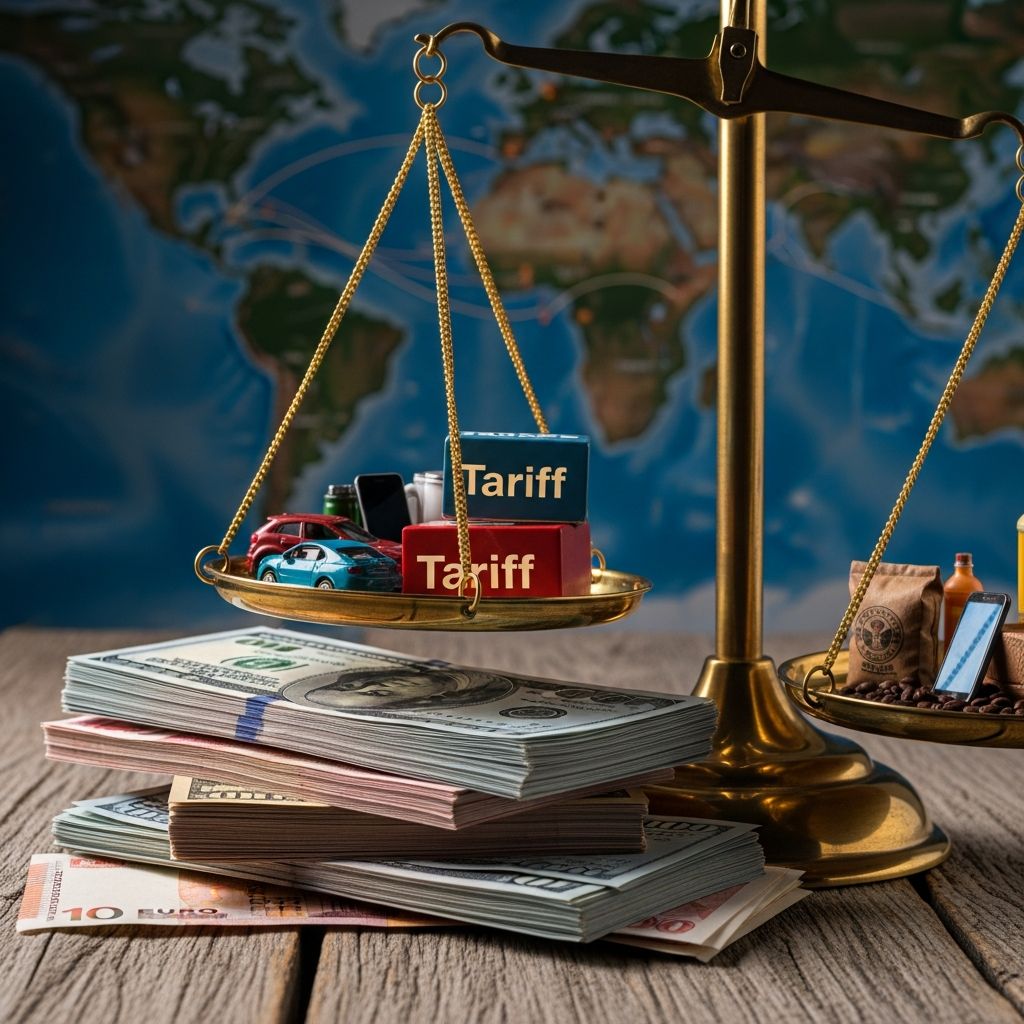
Tariffs represent a fundamental tool in international trade policy, functioning as taxes levied by governments on goods entering their borders from foreign countries. These duties aim to regulate commerce, generate revenue, and shield domestic markets from external competition. While they can bolster local industries, tariffs often lead to higher costs for consumers and complex global repercussions. This comprehensive examination delves into their definition, historical context, operational mechanics, economic consequences, and practical implications for individuals and enterprises.
Defining Tariffs in Modern Trade
At their core, tariffs are financial charges applied to imported products, calculated either as a percentage of the item’s value (ad valorem tariffs) or a fixed amount per unit (specific tariffs). Governments collect these fees at the point of entry, effectively raising the price of foreign goods to make them less competitive against domestic alternatives.
Unlike general sales taxes, tariffs specifically target cross-border transactions, influencing decisions on sourcing materials and consumer purchases. For instance, a 10% tariff on imported electronics would increase their retail price, potentially steering buyers toward locally made options. This mechanism not only affects final products but also ripples through supply chains reliant on international components.
Historical Evolution of Tariff Policies
Tariffs have shaped global economics for centuries, evolving from mercantilist protections in the 18th century to instruments of modern geopolitical strategy. In the U.S., early tariffs funded the federal government before income taxes emerged, with rates fluctuating amid events like the Smoot-Hawley Act of 1930, which exacerbated the Great Depression by sparking retaliatory measures worldwide.
Post-World War II, institutions like the General Agreement on Tariffs and Trade (GATT), later the World Trade Organization (WTO), promoted reductions to foster free trade. However, recent decades have seen a resurgence, driven by concerns over trade deficits and national security. U.S. tariffs on steel and aluminum under both Trump and Biden administrations illustrate this shift, aiming to revitalize manufacturing while navigating WTO rules.
Primary Purposes Behind Imposing Tariffs
- Government Revenue Generation: Tariffs provide a direct income stream; U.S. import duties doubled to $74 billion from 2015-2020, though offset by agricultural subsidies amid retaliations.
- Domestic Industry Protection: By inflating import costs, tariffs allow local producers to compete, potentially expanding employment in shielded sectors like steel.
- Trade Negotiation Leverage: Nations deploy tariffs to pressure trading partners, as seen in U.S.-China disputes, where duties served as bargaining chips.
- Addressing Imbalances: They aim to correct perceived unfair practices, such as subsidies or dumping, though effectiveness varies.
Types of Tariffs and Calculation Methods
Tariffs vary by structure to suit policy goals:
| Type | Description | Example |
|---|---|---|
| Ad Valorem | Percentage of goods’ value | 25% on $100 item = $25 duty |
| Specific | Fixed fee per unit | $2 per kilogram of steel |
| Compound | Combination of both | 10% + $1 per unit |
| Protective | High rates for infant industries | Steel tariffs to aid U.S. mills |
| Revenue | Moderate for fiscal gain | General import duties |
Importers declare values via customs forms, with rates listed in national tariff schedules, often harmonized under WTO’s Harmonized System (HS) codes.
Who Ultimately Pays the Tariff Burden?
While importers pay tariffs upfront, economic incidence distributes costs. Studies show domestic consumers and firms bear most, as foreign exporters rarely absorb full hikes due to pricing power. For example, U.S. tariffs raised core goods prices by 2.0% in 2025, per Yale Budget Lab analysis.
Exchange rates can mitigate impacts; tariff-imposing nations often see currency appreciation, offsetting about one-third of costs. Yet, retaliation complicates this, as seen when China curbed U.S. farm purchases, necessitating $61 billion in aid.
Economic Consequences: Winners and Losers
Tariffs create multifaceted effects across economies:
- Inflationary Pressures: Higher input costs elevate prices; IMF models predict a 10% universal tariff hike could boost U.S. inflation amid retaliation.
- Employment Shifts: Protected sectors gain jobs, but user industries lose more—a 2020 study found 75,000 net manufacturing job losses from steel tariffs.
- Growth Dampening: Consensus holds tariffs curb GDP; Tax Foundation estimates 0.2% U.S. GDP drop and 142,000 fewer jobs from recent policies.
- Supply Chain Disruptions: Firms rethink global networks, raising uncertainty and investment hesitancy.
Short-term, tariffs mimic demand shocks with rising unemployment and falling inflation; long-term, inflation climbs as activity stabilizes.
Global Trade Dynamics and Retaliation Risks
Tariffs seldom occur in isolation. Affected nations respond with counter-duties, escalating tensions. U.S.-China trade wars reduced Chinese growth modestly while straining exporters like Canada (16% of U.S. steel).
Export-dependent economies suffer most; Vietnam and Germany face headwinds from lost markets. Broader escalations strain WTO norms, potentially fragmenting global trade.
U.S. Tariffs: Recent Developments and Data
Recent U.S. actions highlight tariff potency. 2025 hikes generated $194.8 billion extra revenue but showed mixed employment effects in exposed sectors. Steel duties targeted Canada, Mexico, and others, aiming to punish perceived unfairness.
Proponents cite reshoring benefits; a 2022 Economic Policy Institute analysis noted supply chain returns with minimal price impacts from reductions. Critics, including J.P. Morgan, warn of 1% GDP hits from broad reciprocal tariffs.
Business Strategies in a Tariff Environment
Companies adapt via:
- Diversifying suppliers to low-tariff nations.
- Stockpiling ahead of hikes.
- Localizing production (nearshoring).
- Passing costs to consumers judiciously.
- Lobbying for exemptions.
Multinationals must model scenarios, balancing cost hikes against retaliatory risks.
Consumer Impacts and Mitigation Tips
Households face pricier imports—from apparel to appliances—potentially eroding purchasing power. Real incomes dip via higher prices or stagnant wages.
- Opt for domestic goods where quality matches.
- Shop sales and compare total costs.
- Monitor policy news for price forecasts.
- Build savings for potential inflation.
Tariffs and Credit Health: Financial Linkages
Rising costs strain budgets, elevating debt risks. Higher goods prices may spur credit use, impacting scores if payments lag. Businesses face cash flow squeezes, affecting lending. Monitoring trade policies aids proactive financial planning, like refinancing amid rate shifts from tariff-induced inflation.
Future Outlook: Tariffs in Policy Debates
Debates intensify as politicians across spectra endorse tariffs for jobs and security. Yet, economists largely concur on growth limits. With evolving U.S. policies, expect ongoing volatility; firms and consumers must stay agile.
Frequently Asked Questions
What is the difference between tariffs and quotas?
Tariffs tax imports; quotas limit quantities, both protecting domestic markets but via price vs. volume controls.
Do tariffs reduce trade deficits?
Short-term yes, via import curbs, but currency effects and retaliation often prevent lasting reductions.
Are tariffs passed to consumers?
Primarily yes, with studies showing U.S. buyers absorbing most costs.
Can tariffs boost manufacturing jobs?
They aid targeted sectors but often net job losses elsewhere.
How do tariffs affect inflation?
They raise it over time via supply costs, after initial demand slowdowns.
References
- Tariffs 101: Economic Impact and Policy Guide — American Century. 2025. https://www.americancentury.com/insights/understanding-tariffs-policy/
- The Economic Effects of Tariffs — Federal Reserve Bank of San Francisco. 2025-11. https://www.frbsf.org/research-and-insights/publications/economic-letter/2025/11/economic-effects-of-tariffs/
- What is a Tariff and How Does it Impact Trade? — Boston Consulting Group. 2025. https://www.bcg.com/capabilities/international-business/navigating-international-trade/what-is-a-tariff
- Tracking the Economic Effects of Tariffs — The Budget Lab at Yale. 2025. https://budgetlab.yale.edu/research/tracking-economic-effects-tariffs
- Tariffs 101: What are they and how do they work? — Oxford Economics. 2025. https://www.oxfordeconomics.com/resource/tariffs-101-what-are-they-and-how-do-they-work/
- What Are Tariffs? — Council on Foreign Relations. 2025. https://www.cfr.org/backgrounders/what-are-tariffs
- US Tariffs: What’s the Impact? — J.P. Morgan. 2025. https://www.jpmorgan.com/insights/global-research/current-events/us-tariffs
Similar Articles








Read full bio of medha deb