What Are Step Costs? Definition and Examples
Understanding step costs: How fixed expenses change at discrete activity levels in business operations.
What Are Step Costs?
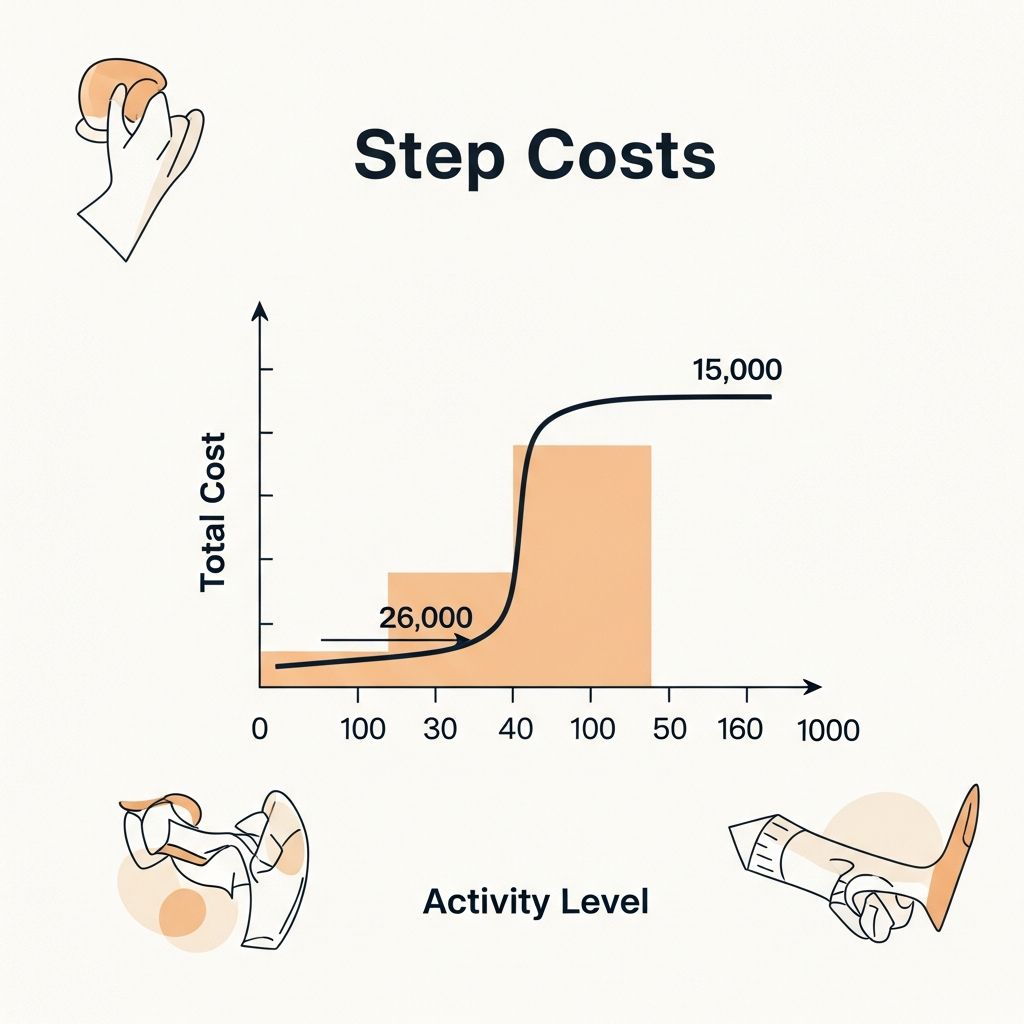
Step costs, also known as stair-step costs or stepped costs, are expenses that remain constant within a specific range of activity but increase or decrease in discrete increments when production or activity levels cross certain thresholds. Unlike variable costs that change proportionally with activity levels, step costs maintain their value across a defined range and then jump to a new level once that range is exceeded. When plotted on a graph, these costs create a distinctive staircase pattern, with horizontal lines representing periods of constant cost and vertical jumps indicating increases when activity thresholds are reached.
Understanding the Core Concept
The fundamental principle behind step costs lies in their behavior across different activity ranges. Within a relevant range of production or service delivery, a step cost functions as a fixed cost. However, when business activity expands beyond that range, the cost automatically increases to accommodate the new capacity requirements. This pattern continues upward as activity continues to expand, creating multiple steps in the cost structure.
For example, a manufacturing facility might maintain the same facility costs for production volumes between 10,000 and 40,000 units. Once production exceeds 40,000 units, the company must invest in additional floor space, equipment, heating, air conditioning, and insurance, causing facility costs to jump to a higher level where they remain constant until the next threshold is reached at 65,000 units.
Step Costs vs. Variable Costs
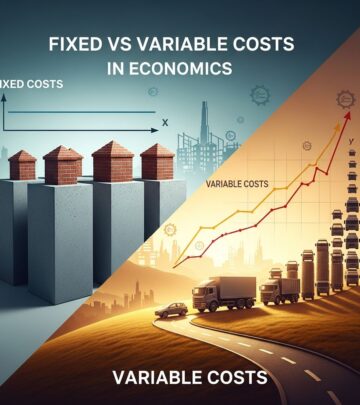
A critical distinction exists between step costs and variable costs. Variable costs change continuously and proportionally with each unit of production or activity level. In contrast, step costs remain flat across a range of activity and only change when specific thresholds are crossed. This fundamental difference has significant implications for cost management, pricing decisions, and profitability analysis.
Why Step Costs Matter for Business Decisions
Understanding step costs is essential for business profitability and strategic planning. Companies must recognize when they are approaching activity thresholds that will trigger significant cost increases. This awareness allows management to make informed decisions about accepting new customer orders, expanding production capacity, or scaling operations.
In some situations, the modest increase in revenue from accepting additional orders might not justify the substantial jump in step costs. A company could find that accepting a relatively small increase in business volume that crosses a step cost threshold actually results in lower overall profitability than before the expansion. This counterintuitive outcome occurs because the incremental cost increase far exceeds the incremental revenue gain.
Conversely, when business activity declines, companies must consider the costs associated with reducing capacity. This might involve terminating employees, selling equipment, or downsizing facilities. Understanding step costs in declining scenarios helps management make cost-reduction decisions that preserve profitability during slower periods.
Common Examples of Step Costs
Production Supervisors and Personnel
One of the most straightforward examples of step costs involves production supervisors. A manufacturing facility might employ one supervisor capable of overseeing production volumes up to 40,000 units per month. Once production demands exceed this level, the company must hire an additional supervisor. The cost of adding each new supervisor represents a step increase in total personnel costs. This pattern continues as production scales higher, with each new supervisor managing production up to a specific capacity level before another supervisor becomes necessary.
Facility Expansion and Production Lines
When a manufacturing company decides to expand its production facility to add additional production lines, facility costs remain constant until the expansion occurs. Once the expansion is complete, costs jump significantly due to expenses for additional floor space, utilities, maintenance, insurance, and equipment. The company then operates at this new cost level until further expansion becomes necessary.
Shift Requirements
Consider a manufacturing operation capable of producing 10,000 widgets during a single eight-hour shift. When customer orders increase beyond this capacity, the company must add a second shift. This addition requires hiring a new shift supervisor, creating a step cost. The company operates with the higher personnel cost structure until production demands increase enough to justify adding a third shift and another supervisor.
Machinery and Equipment
A parts manufacturing company using a single machine to produce up to 10,000 units maintains constant machinery costs as production ranges from 1,000 to 9,000 units. When production must increase to 12,000 units, the company must purchase an additional machine. This capital expenditure creates a significant step cost increase in machinery expenses. The cost remains at this new level until production expansion requires purchasing yet another machine.
Office Space and Facilities
Service-oriented businesses experience step costs when expanding office space. A consulting firm operating from a single office suite maintains constant facility costs as revenue grows. When client expansion requires additional office locations or larger facilities, facility costs jump significantly. This step cost remains until further growth necessitates additional expansion.
Step Costs in Different Business Contexts
Service Industry Applications
Step costs are not limited to manufacturing environments. Service businesses also experience stepped cost patterns. For instance, a medical facility might operate with one administrative staff member for patient visit volumes up to 10,000 monthly visits. As patient volume increases beyond this threshold, hiring additional administrative staff becomes necessary. Healthcare providers, professional services firms, and consulting practices all encounter step costs as they scale operations to meet growing client demands.
Insurance and Utility Costs
Insurance expenses often function as step costs in business operations. A company’s insurance premiums might remain constant for a facility operating at a specific location. However, opening additional locations causes insurance costs to increase in steps. Similarly, utility costs may represent step costs when production volumes increase substantially, requiring additional capacity or contractual agreements with utility providers that trigger higher rates.
Strategies for Managing Step Costs
Delaying Step Cost Increases Through Efficiency
Businesses can postpone the point at which step costs must be incurred by implementing production efficiencies. By improving processes, reducing waste, and optimizing operations, companies can increase output without requiring additional resources. A manufacturing facility might increase production capacity by 20 percent through process improvements without adding production lines or expanding floor space, thereby delaying step cost increases that would otherwise be necessary.
Utilizing Overtime and Flexible Staffing
Rather than immediately hiring additional full-time employees when production increases moderately, companies can offer overtime to existing staff. This approach allows increased production without incurring the full step cost of additional personnel. However, companies must carefully evaluate whether overtime costs remain lower than the expense of hiring permanent staff, considering factors such as fatigue, quality concerns, and regulatory requirements.
Outsourcing and Contract Services
Another strategy involves outsourcing specific functions or utilizing contract services instead of expanding internal capacity. Rather than building additional facility space or hiring permanent staff, companies can contract with external providers to handle overflow capacity. This approach converts step costs into variable costs, providing greater flexibility and potentially lower overall expenses.
Best Practices for Step Cost Management
Identifying Critical Activity Thresholds
The most important step cost management practice involves clearly identifying the specific activity levels at which step costs will be incurred. Management must understand precisely when production volume, service volume, or other activity metrics will trigger cost increases. This knowledge enables proactive planning and allows companies to structure operations to avoid crossing thresholds unnecessarily.
Incorporating Step Costs into Budgeting
Annual budgeting processes should explicitly include discussions of anticipated step costs. Financial forecasts must account for when activity levels will likely cross thresholds requiring new investments or capacity increases. By planning for step costs in advance, management can allocate resources appropriately and avoid surprises that could disrupt profitability targets.
Evaluating Order Acceptance Decisions
Before accepting new customer orders or contracts that will significantly expand activity levels, companies should carefully analyze whether the incremental revenue justifies the step cost increase. In some cases, maintaining current profitability levels by declining growth opportunities proves more economical than expanding operations and incurring substantial step costs that compress margins.
Monitoring Activity Level Trends
Ongoing monitoring of activity levels helps management anticipate when step costs will likely be triggered. This vigilance allows time for planning capacity expansion, recruiting and training personnel, or arranging financing for equipment purchases. Early awareness prevents crisis management situations and enables more favorable terms when making capacity-related investments.
The Financial Impact of Step Costs
Step costs have profound implications for financial analysis and business performance. Because they increase in discrete jumps rather than gradual increments, step costs can significantly impact profit margins when activity levels expand. A company must achieve sufficient revenue growth to offset the entire step cost increase, not just the additional activity. If growth barely exceeds a threshold, profitability may decline despite increased sales volume.
Understanding this dynamic helps explain why some periods of business expansion appear less profitable than management expected. The relationship between activity level changes and step cost increases must be clearly understood to set realistic profitability expectations and evaluate whether expansion opportunities genuinely enhance shareholder value.
Step Costs in Capacity Planning
Capacity planning represents a strategic process directly influenced by step cost considerations. When determining facility size, equipment capacity, and staffing levels, management must consider not only current needs but also anticipated growth patterns. Poor capacity planning that forces multiple step cost increases in short timeframes can prove more expensive than initially sizing operations to accommodate projected growth, even if excess capacity exists temporarily.
Conversely, overly ambitious capacity planning that results in long periods of underutilized resources can similarly damage profitability. The optimal approach balances anticipated growth against step cost increases, positioning capacity at levels that minimize overall costs while meeting demand.
Frequently Asked Questions
Q: How do step costs differ from fixed costs?
A: While both remain constant over activity ranges, fixed costs remain constant indefinitely within a relevant range, whereas step costs increase in discrete increments when specific thresholds are crossed. Step costs represent a subset of fixed costs with built-in escalation points.
Q: Can step costs decrease when activity levels decline?
A: Yes, step costs can decrease when business activity falls below certain thresholds. However, companies typically face significant costs associated with reducing capacity, such as severance pay, equipment disposal, or facility termination. These reduction costs may exceed the savings from eliminating the step cost capacity.
Q: Why would a company decline profitable orders due to step costs?
A: If accepting an order requires crossing a step cost threshold and the incremental cost increase exceeds the incremental profit from the order, overall company profitability would decline despite additional revenue. In such cases, maintaining current operations proves more profitable than accepting the order.
Q: How can companies estimate when step costs will be triggered?
A: Companies analyze historical activity patterns, growth trends, and capacity constraints to forecast when thresholds will be reached. Scenario analysis with different growth rates helps identify multiple possible trigger points and allows for contingency planning.
Q: Are step costs relevant for small businesses?
A: Yes, step costs apply to businesses of all sizes. A small business hiring its first employee, renting additional office space, or purchasing equipment experiences step costs just as larger corporations do when scaling operations.
References
- Step costs definition – AccountingTools — AccountingTools. 2025. https://www.accountingtools.com/articles/what-is-a-step-cost.html
- What is a Step-Wise Cost? – Definition | Meaning | Example — MyAccountingCourse. 2025. https://www.myaccountingcourse.com/accounting-dictionary/step-wise-cost
- What does stepped cost mean? — Accounting Coach. 2025. https://www.accountingcoach.com/blog/what-does-stepped-cost-mean
- Step-Variable Costs Definition — Becker. 2025. https://www.becker.com/accounting-terms/step-variable-costs
- What is stepped fixed cost? (Definition and examples) — Indeed. 2025. https://uk.indeed.com/career-advice/career-development/what-is-stepped-fixed-cost
- Step Costs – Definition, Importance, and Examples — Wall Street Oasis. 2025. https://www.wallstreetoasis.com/resources/skills/accounting/step-costs
Similar Articles








Read full bio of Sneha Tete