What Are Commodities: Types, Examples & Trading Guide
Complete guide to understanding commodities, their types, and how to trade them effectively.
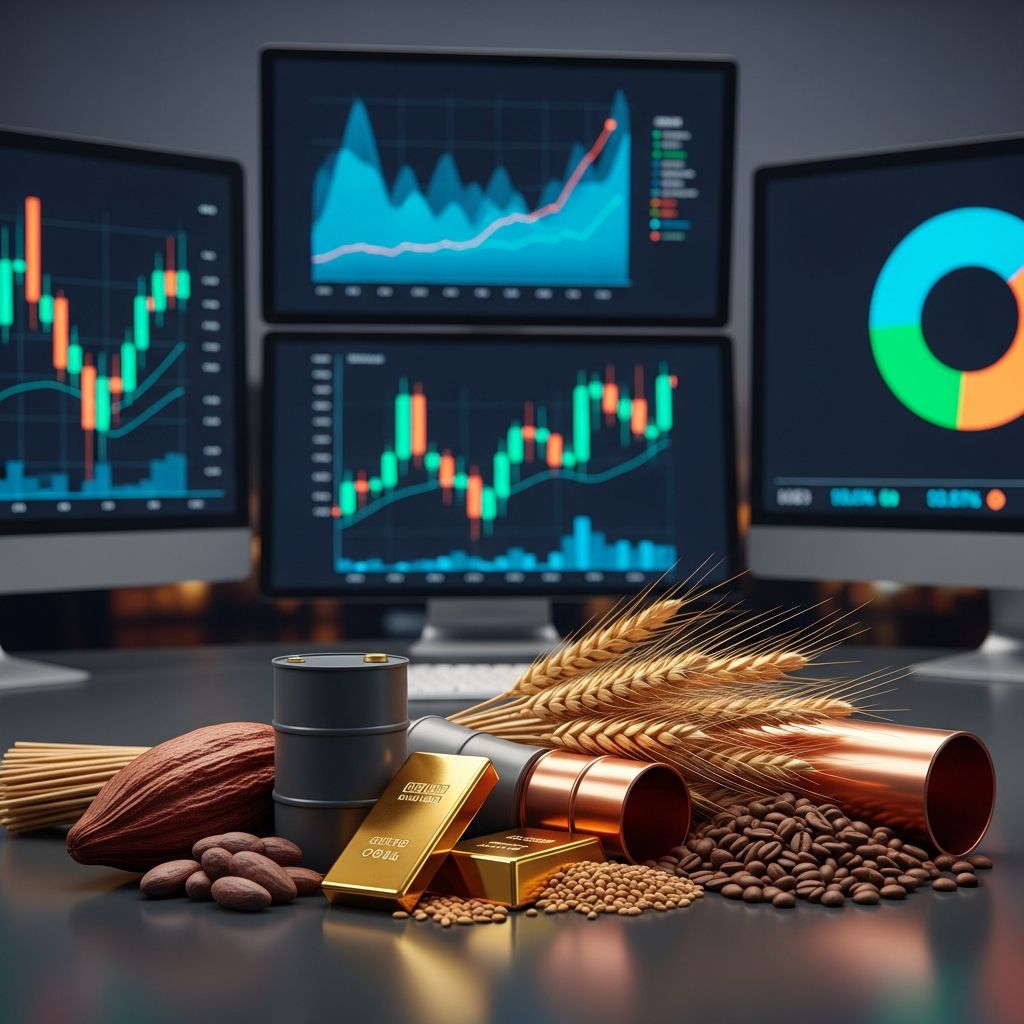
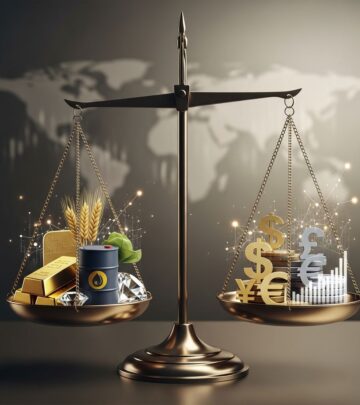
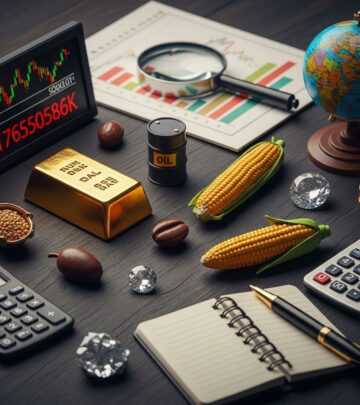
Commodities are fundamental to global commerce and represent some of the most actively traded assets in financial markets. Whether you’re an investor looking to diversify your portfolio or simply curious about how markets work, understanding commodities is essential. This comprehensive guide explores what commodities are, their various types, and how they function within the broader economy.
Understanding Commodities: Definition and Basics
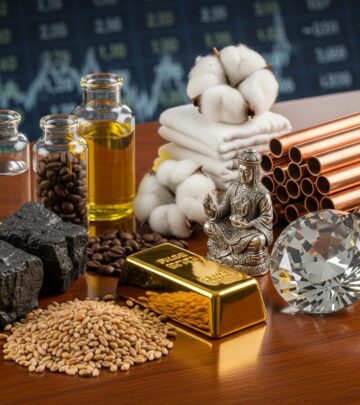
A commodity is a raw material or agricultural product that can be bought, sold, and traded in financial markets. These tangible assets form the foundation of industrial production and consumer goods manufacturing worldwide. The term “commodity” refers to basic goods used for both consumption and production, representing underlying assets that range from agricultural crops to energy resources and precious metals.
Commodities possess a unique characteristic called fungibility, meaning that one unit of a commodity is essentially interchangeable with another unit of the same commodity, regardless of who produced it. This interchangeability distinguishes commodities from branded consumer products, where brand identity and origin matter significantly. For example, one barrel of crude oil is fundamentally the same as another barrel of crude oil from a different producer, making price the primary differentiating factor.
Over time, commodities have evolved beyond simple physical exchanges to become sophisticated financial instruments. Today, commodities are frequently traded through derivative instruments and various speculative investment vehicles, allowing traders to gain exposure to these assets without necessarily taking physical possession.
The Two Main Categories: Hard and Soft Commodities
Commodities are traditionally divided into two primary categories based on their origin and production methods: hard commodities and soft commodities. Understanding this distinction is crucial for anyone involved in commodity trading or investment.
Hard Commodities
Hard commodities are natural resources that must be mined or drilled from the earth. These resources require significant capital investment and extraction infrastructure to bring to market. Hard commodities are typically subject to geopolitical factors due to their uneven global distribution, and their production volumes can significantly impact global industrial output and energy markets.
Hard commodities are further subdivided into two main groups: precious metals and energy resources.
Soft Commodities
Soft commodities can be farmed or ranched, representing agricultural products and livestock. These commodities are generally renewable resources that can be cultivated and harvested. Soft commodities are subject to weather conditions, natural disasters, and disease outbreaks, making them inherently more unpredictable than some hard commodities. However, they can be highly profitable in response to population growth and limited food supplies.
Detailed Commodity Classifications
Metals Commodities
Metals represent one of the most significant commodity categories and are divided into precious metals and industrial metals.
Precious Metals: These metals derive their value primarily from their use as speculative assets and stores of value. Gold stands as one of the most popular metal commodities due to its long historical significance as a store of wealth. Many investors turn to precious metals when stock prices decline, viewing them as a hedge against market volatility. Common precious metals include:
- Gold
- Silver
- Platinum
- Palladium
Industrial Metals: These metals are primarily used in manufacturing and production of consumer goods, electronics, and infrastructure. Industrial metals include:
- Copper
- Aluminum
- Nickel
- Zinc
- Lead
- Lithium
- Cobalt
Copper, for example, is extensively used in wiring for electronics and automobiles, making it essential to global manufacturing. The demand for industrial metals often reflects the health of the global economy, as increased industrial production requires more of these materials.
Energy Commodities
Energy commodities fuel the global economy and include:
- Crude Oil
- Natural Gas
- Heating Oil
- Gasoline
- Coal
Energy commodities are volatile and highly influenced by multiple factors including economic cycles, regulatory changes from organizations like OPEC (Organization of the Petroleum Exporting Countries), and the global shift toward renewable energy sources. These commodities have historically increased in price with rising demand and are critical for both industrial applications and consumer energy needs.
Agricultural Commodities
Agricultural commodities represent crops and goods that are grown rather than mined or extracted. Common agricultural commodities include:
- Wheat
- Corn
- Soybeans
- Rice
- Cocoa
- Coffee
- Cotton
- Sugar
- Rubber
- Timber
These commodities are subject to weather patterns, seasonal variations, and crop diseases. Agricultural commodities can represent significant investment opportunities during periods of limited supply and growing global demand for food products.
Livestock Commodities
Livestock commodities represent farm animals raised for food production. These include:
- Live Cattle
- Lean Hogs
- Feeder Cattle
- Pork Cutouts
Comparing Commodity Types
| Commodity Type | Examples | Production Method | Primary Use |
|---|---|---|---|
| Precious Metals | Gold, Silver, Platinum | Mined | Investment, Jewelry, Industry |
| Industrial Metals | Copper, Aluminum, Nickel | Mined | Manufacturing, Electronics, Construction |
| Energy | Crude Oil, Natural Gas, Coal | Extracted/Drilled | Fuel, Electricity, Heating |
| Agriculture | Wheat, Corn, Coffee, Cocoa | Farmed/Grown | Food Production, Industrial Uses |
| Livestock | Cattle, Hogs | Raised | Food Production |
Key Characteristics of Commodities
Commodities possess several defining characteristics that distinguish them from other investment assets:
1. Massive Supply and Demand Scale: Commodities operate on a global scale with enormous volumes traded daily, making them fundamental to the industrial economy.
2. Significant Price Volatility: Commodity prices fluctuate dramatically based on multiple factors including supply disruptions, geopolitical events, weather conditions, and economic cycles.
3. High Storage and Transportation Convenience: Most commodities can be stored and transported efficiently, enabling global trade and market accessibility.
4. Diverse Categories: The wide range of commodity types allows for portfolio diversification across different sectors of the economy.
5. High Degree of Quality Homogeneity: Commodities are standardized products, making comparison and trading straightforward.
6. Prominent Financial Attributes: Commodities function as both real economic assets and financial instruments, connecting physical markets with capital markets.
How Commodities Are Used in Production
Commodities serve as essential building blocks for virtually all manufactured goods. Metals like copper are used extensively in automotive manufacturing and electronics production. Oil is involved in the creation of an enormous range of consumer goods, from plastics to cosmetics. Agricultural commodities form the basis of food production and industrial applications like textiles and biofuels.
The interconnected nature of commodity markets means that price changes in raw materials directly impact consumer prices for finished goods. When copper prices rise, manufacturers pass increased costs to consumers through higher prices for electronics and automobiles.
Investing in Commodities
Investors can gain exposure to commodities through several different methods:
Direct Ownership: Investors can purchase commodities directly, though this approach typically applies more to precious metals like gold and silver, which are easily storable.
Commodity-Related Stocks: Investors can buy shares in companies that produce or trade commodities, such as mining companies or oil producers.
Commodity ETFs and Mutual Funds: Exchange-traded funds and mutual funds offer diversified exposure to multiple commodities within a single investment vehicle.
Futures Contracts: Sophisticated investors can trade commodity futures contracts, which are derivative instruments that allow speculation on future price movements.
Options Contracts: Options on commodity futures provide additional leverage and flexibility for experienced traders.
Why Investors Trade Commodities
Commodities serve several important functions within investment portfolios. Though highly volatile and high-risk, commodities can serve as a counterweight to stocks and bonds, providing portfolio diversification. Additionally, commodities historically serve as a hedge against inflation, as their prices typically rise when the purchasing power of currency declines. During periods of economic uncertainty or stock market volatility, many investors increase their commodity holdings to reduce overall portfolio risk.
Understanding Commodity Market Behavior
Commodity markets behave differently from equity markets in important ways. Investment assets like commodity futures can be borrowed and lent, facilitating various trading strategies. However, physical commodity markets operate differently, as borrowing and lending are less common in consumer asset markets.
Price determination in commodity markets relies heavily on global supply and demand dynamics rather than company-specific factors like in stock markets. Well-established physical commodities have actively traded spot and derivative markets, with prices typically determined as a function of the market as a whole. The wide availability of commodities typically leads to smaller profit margins for producers and diminishes the importance of factors like brand name compared to price.
Frequently Asked Questions
Q: What is the difference between hard and soft commodities?
A: Hard commodities are natural resources that must be mined or extracted from the earth, including metals and energy products. Soft commodities are agricultural products that are grown or raised, including crops and livestock.
Q: Can individual investors trade commodity futures contracts?
A: Yes, individual investors can trade commodity futures contracts through brokerage accounts, though this requires understanding derivatives and managing significant risk exposure. Many beginners prefer commodity ETFs or stocks as less complex alternatives.
Q: Why are commodity prices so volatile?
A: Commodity prices fluctuate due to factors including weather events, geopolitical disruptions, supply changes, demand cycles, currency fluctuations, and regulatory changes. Energy commodities, for example, are affected by OPEC decisions and shifts toward renewable energy.
Q: Are commodities a good inflation hedge?
A: Historically, commodities have served as a hedge against inflation because their prices typically increase when inflation rises. However, commodity prices can be volatile and don’t always move in tandem with inflation.
Q: What makes commodities different from stocks?
A: Commodities are tangible physical goods with intrinsic utility in production, while stocks represent ownership in companies. Commodity prices are determined by global supply and demand, whereas stock prices reflect company performance, earnings, and future prospects.
References
- Commodities: Definition, Types, and Examples — Wall Street Prep. Accessed November 2025. https://www.wallstreetprep.com/knowledge/commodities/
- What Are Commodities? Definition And Examples — Bankrate. Accessed November 2025. https://www.bankrate.com/investing/commodities-defined/
- Welcome to The World of Commodities — Commodities Hub. Accessed November 2025. https://commoditieshub.ch/en/fundamentals/what-is-commodity-trading/
- What Are Commodities? Types, Examples, and Investment Strategies — Business Insider. Accessed November 2025. https://www.businessinsider.com/personal-finance/investing/what-are-commodities
- Understanding Commodities — PIMCO. Accessed November 2025. https://www.pimco.com/us/en/resources/education/understanding-commodities
- Commodity — Wikipedia. Accessed November 2025. https://en.wikipedia.org/wiki/Commodity
- Commodities: Definition, Types, and Strategic Role — Société Générale Wholesale Banking. Accessed November 2025. https://wholesale.banking.societegenerale.com/en/news-insights/glossary/commodities/
Similar Articles








Read full bio of medha deb