Wells Fargo Savings: Missing Out on $5K Interest?
Discover why $25K in a Wells Fargo savings account over 5 years could cost you over $5,000 in potential earnings compared to high-yield alternatives.

Traditional big-bank savings accounts like those from Wells Fargo often promise convenience through widespread branches, but they come at a steep hidden cost: minuscule interest rates. For someone parking $25,000 in a Wells Fargo savings account for five years, the earnings might total just a few hundred dollars, while top high-yield alternatives could deliver over $5,000 more. This gap highlights a critical choice for savers in 2026: prioritize branch access or pursue higher returns online.
The Hidden Cost of Low-Yield Banking
Wells Fargo, one of America’s largest banks with over 4,200 branches, maintains savings rates that lag far behind market leaders. Their Way2Save Savings and Platinum Savings accounts typically offer a base annual percentage yield (APY) of 0.01%, with relationship bonuses pushing Platinum up to 0.05% under specific conditions. These rates, unchanged for years despite Federal Reserve adjustments, mean your money barely keeps pace with inflation, let alone grows meaningfully.
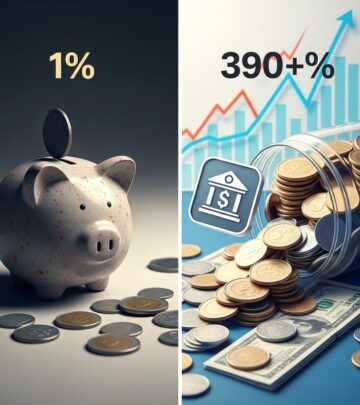
Consider a $25,000 deposit held for five years at these rates. At 0.01% APY, compounded daily, you’d earn roughly $12.50 in interest over the period. Even at the premium 0.05% APY, gains climb to just $63. This pales against high-yield savings accounts (HYSAs) from online banks, where APYs often exceed 4.00%, potentially generating $5,300 or more on the same amount. The difference? Over $5,000 in opportunity cost, enough to fund a family vacation or emergency buffer.
Breaking Down Wells Fargo’s Savings Options
Wells Fargo provides two primary savings products, each with fees and features tailored to different needs, but neither competes on yield.
- Way2Save Savings: This entry-level account charges a $5 monthly fee, waivable with a $300 daily balance or automatic transfers. It includes a unique feature rounding up debit card purchases to transfer spare change to savings, promoting habitual saving. Base APY: 0.01% on balances of $25 or more.
- Platinum Savings: Aimed at higher balances, it carries a $12 monthly fee (waived at $3,500 daily balance or with linked qualifying checking). Relationship rates apply when paired with Prime or Premier Checking: up to 0.05% APY. Still, minimum opening deposit is $25.
These accounts suit those valuing in-person service, but fees can erode even these modest gains if balances dip below thresholds.
| Account | Base APY | Relationship APY | Monthly Fee | Fee Waiver |
|---|---|---|---|---|
| Way2Save Savings | 0.01% | N/A | $5 | $300 balance or auto-transfers |
| Platinum Savings | 0.01% | 0.02%-0.05% | $12 | $3,500 balance or linked checking |
Note: Rates as of March 2026; variable and subject to change.
Interest Earnings Calculator: $25K Over 5 Years
To quantify the loss, simple compound interest formulas reveal the disparity. The formula for future value is FV = P(1 + r/n)^(nt), where P is principal ($25,000), r is annual rate, n is compounds per year (365 for daily), and t is years (5).
- Wells Fargo Way2Save (0.01%): ~$25,012.50 total (~$12.50 interest).
- Wells Fargo Platinum max (0.05%): ~$25,063 total (~$63 interest).
- Top HYSA like SoFi (4.00%): ~$30,508 total (~$5,508 interest).
That’s a $5,445 shortfall versus Wells Fargo’s best. Online calculators from sites like Bankrate confirm these figures, assuming no withdrawals or fees. Inflation at 2-3% annually further diminishes real returns, turning nominal ‘gains’ into losses.
Why Big Banks Pay So Little: The Branch Penalty
Physical branches cost banks millions in rent, staffing, and maintenance—expenses passed to customers via low rates. Wells Fargo’s vast network provides ATM access and advisors, but online-only banks like SoFi or Ally eliminate overhead, offering 300-400x higher APYs. Relationship rates incentivize bundling products, yet even these rarely exceed 0.05%.
Federal regulations cap savings transaction limits (six per month), but digital banks comply seamlessly without branches. Post-2020 shifts accelerated online adoption, with HYSAs surging in popularity.
Top High-Yield Alternatives to Wells Fargo
Switching unlocks superior growth. Here’s a comparison of leading HYSAs as of March 2026:
| Bank | APY | Min. Balance | Fees | Bonus |
|---|---|---|---|---|
| SoFi | Up to 4.00% | $0 | None | $300 + APY boost |
| Other Top Online Banks | 3.85%-4.00% | $0 | None | Varies |
| Wells Fargo (for comparison) | 0.01%-0.05% | $25 | Up to $12/mo | None |
These FDIC-insured options match Wells Fargo’s safety while delivering real growth. Many include goal trackers and no-fee checking hybrids.
Strategies to Maximize Savings Returns
Beyond switching banks, optimize your approach:
- Shop Annually: Rates fluctuate; monitor via FDIC or comparison sites.
- Laddering with CDs: Wells Fargo CDs start at $2,500 minimum, with variable rates, but online CDs often beat them.
- Automate Transfers: Mimic Way2Save’s rounding in high-yield accounts.
- Build Emergency Funds First: Aim for 3-6 months’ expenses in liquid HYSAs before investing.
- Consider Inflation: Target APYs beating CPI (currently ~2.5%).
For $25K, reallocating to a 4% HYSA post-tax could yield $200+ annually—compounding to thousands over time.
Fees That Further Erode Your Money
Wells Fargo’s service fees compound the low-rate issue. Miss a $300 balance in Way2Save? That’s $60 yearly—wiping out interest entirely. Platinum’s $12/month ($144/year) demands $3,500+ to avoid, limiting accessibility for average savers. High-yield competitors charge $0, preserving every penny of interest.
Is Wells Fargo Right for Everyone?
If you need frequent cash access or prefer face-to-face banking, Wells Fargo’s network shines. However, for pure saving, the math favors digital banks. Hybrid strategies—core HYSA for growth, minimal Wells Fargo checking for daily needs—balance both worlds.
Frequently Asked Questions (FAQs)
Q: Are Wells Fargo savings FDIC-insured?
A: Yes, up to $250,000 per depositor, matching online banks.
Q: How often do rates change?
A: Variable anytime; check Wells Fargo’s site or call 1-800-869-3557.
Q: Can I move my $25K without penalties?
A: Savings accounts have no withdrawal penalties beyond monthly limits; transfer freely.
Q: What’s the best HYSA for beginners?
A: SoFi’s 4.00% with $0 minimum and bonuses suits most.
Q: Does inflation affect my choice?
A: Absolutely—0.01% loses purchasing power; aim for 4%+ to outpace it.
Take Control of Your Savings Today
The $5,000+ gap isn’t inevitable. Review your statements, compare APYs, and act. In 2026’s competitive landscape, savers who choose high-yield options build wealth faster without sacrificing security. Start by opening an HYSA—your future self will thank you.
References
- Wells Fargo Savings Account Interest Rates — Bankrate. 2026-03. https://www.bankrate.com/banking/savings/wells-fargo-savings-rates/
- Savings and Certificate of Deposit (CD) Interest Rates — Wells Fargo. 2026-03. https://www.wellsfargo.com/savings-cds/rates/
- Best High-Yield Savings Accounts for March 2026 — NerdWallet. 2026-03-18. https://www.nerdwallet.com/banking/best/high-yield-online-savings-accounts
- Open a Way2Save® Savings Account Online — Wells Fargo. 2026-03-28. https://www.wellsfargo.com/savings-cds/way2save/
- Open a Platinum Savings Account Online — Wells Fargo. 2026. https://www.wellsfargo.com/savings-cds/platinum/
Similar Articles








Read full bio of medha deb