Welfare Programs: Definition and Comprehensive List
Complete guide to welfare programs: definitions, types, and eligibility requirements.

Understanding Welfare Programs: Definition and Overview
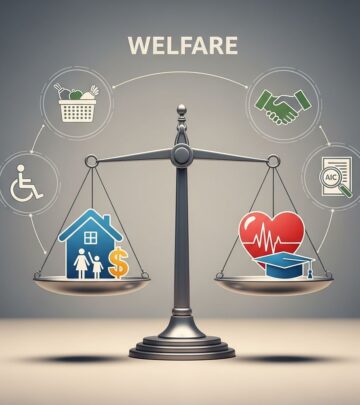
Welfare programs represent a critical component of the social safety net, designed to provide essential assistance to individuals and families facing financial hardship. These programs encompass various local, state, and federal initiatives that help vulnerable populations access basic necessities such as food, housing, and medical care. The primary objective of welfare programs is to reduce poverty and provide stability during periods of economic uncertainty or personal crisis.
Welfare, in its broadest sense, refers to government-administered assistance programs that offer financial support and services to individuals and families with limited income. These programs operate under different funding mechanisms and eligibility criteria, but they all share a common goal: to ensure that citizens have access to fundamental resources needed for survival and dignity.
Types of Welfare Programs
Welfare programs fall into distinct categories based on their structure, funding mechanisms, and eligibility requirements. Understanding these categories helps clarify how different programs operate and whom they serve.
Social Welfare Programs vs. Social Insurance Programs
The U.S. public assistance system comprises two major types of programs: social welfare programs and social insurance programs. Social welfare programs typically operate on a means-tested basis, meaning eligibility depends primarily on income level. These programs provide cash assistance or in-kind benefits to those meeting specific income thresholds. Social insurance programs, by contrast, are funded through payroll contributions and provide benefits based on prior earnings or contributions rather than need alone.
Distributive and Redistributive Policies
Welfare programs can also be categorized by their funding approach. Distributive policies fund programs from general tax revenue available to all taxpayers, benefiting a broad population. Redistributive policies, however, rely on progressive taxation where higher-income individuals and businesses contribute more tax revenue, which is then directed to programs serving lower-income populations. Examples of redistributive programs include Medicaid, Head Start, SNAP, and TANF, all of which leverage the progressive income tax system to support vulnerable populations.
Major Federal Welfare Programs
The United States maintains several significant federal welfare programs that address different aspects of poverty and economic insecurity. Here are the six major welfare programs:
1. Supplemental Nutrition Assistance Program (SNAP)
SNAP, formerly known as food stamps, represents one of the most widely used welfare programs in America. This program subsidizes grocery purchases for low-income individuals and families, helping them afford nutritious food. SNAP benefits are distributed through electronic benefit transfer (EBT) cards, allowing recipients to purchase eligible food items at authorized retailers.
2. Temporary Assistance for Needy Families (TANF)
TANF provides cash assistance to low-income families with dependent children. This program replaced the earlier Aid to Families with Dependent Children (AFDC) program and emphasizes work requirements and time limits on benefits. TANF offers flexible funding to states, allowing them to design programs suited to local needs while meeting federal requirements.
3. Supplemental Security Income (SSI)
SSI offers monetary assistance to individuals who are mentally or physically disabled and unable to work for at least twelve months. This program also provides support to elderly individuals with limited income and resources. SSI ensures that vulnerable populations have basic income to meet essential needs.
4. Medicaid
Medicaid represents the nation’s primary health insurance program for low-income individuals and families. Established as a joint federal-state program, Medicaid covers hospitalization, doctor visits, prescription medications, and other necessary medical services for those who cannot afford or access insurance through employment due to disability, age, or income limitations. Medicaid serves as a critical safety net for millions of Americans.
5. Housing Assistance Programs
Federal and state governments provide various housing assistance programs to help low-income families afford safe, adequate housing. These programs may include rental subsidies, low-income housing development, utility assistance, and home improvement loans. Housing assistance ensures that vulnerable populations have access to stable living environments.
6. Earned Income Tax Credit (EITC)
The EITC provides tax credits to working individuals and families with low to moderate income. This program effectively functions as a wage supplement, reducing tax liability or providing refunds to eligible workers. The EITC encourages employment while providing financial relief to working families.
Additional Important Welfare Programs
Children’s Health Insurance Program (CHIP)
CHIP functions similarly to Medicaid but specifically targets children in low-income families. This program provides health insurance coverage for children under a specific age and income threshold, ensuring that vulnerable youth have access to preventive care, treatment, and necessary medical services.
Head Start
Head Start represents an educational program designed for low-income families with preschool-age children. Beyond academics, most Head Start programs provide comprehensive services including free transportation, free breakfast and lunch, health screenings, and social services. The program emphasizes school readiness and supporting early childhood development for disadvantaged children.
Low Income Home Energy Assistance Program (LIHEAP)
LIHEAP helps low-income households manage home energy costs for heating and cooling. Administered by the Department of Health and Human Services, this program distributes block grants to states, which then allocate funds through local agencies to assist families facing energy cost burdens.
Child Care Assistance
This program supports low-income families by providing access to affordable child care services. The Department of Health and Human Services distributes block grants to states and local agencies, enabling them to offer subsidized child care, supporting parental employment and child development.
Income Support Benefit Structures
Welfare programs employ different benefit structures to deliver assistance effectively. Understanding these structures clarifies how programs serve different populations.
Income Replacement Benefits
Income replacement benefits provide cash payments based on prior earnings levels. These benefits serve individuals who experience a drop in earnings due to retirement, disability, job loss, or similar circumstances. Programs in this category include old-age pensions, disability pensions, survivor benefits, paid leave, and unemployment compensation. Recipients typically qualify based on specific status rather than current income.
Income Supplement Benefits
Income supplement benefits provide cash and in-kind assistance not based on prior earnings but rather on current income levels. These benefits supplement existing income to help recipients meet basic needs. Income supplement programs include health care, child care, education, housing, child allowances, and wage subsidies.
Benefit Distribution Models
Income supplement benefits can be structured in three primary ways:
Flat Grants: Everyone receives identical benefits regardless of income level. K-12 public education exemplifies this model, where all children of school age receive equal access without user fees.
Means-Tested Benefits: Benefit levels begin high for those with very low incomes and gradually phase out as income increases. The SNAP program demonstrates this approach, providing larger benefits to the poorest recipients while reducing support as income rises.
Trapezoid Benefits: These structures phase in based on income and then phase out at higher income levels, concentrating benefits on individuals just above the poverty line. The Child Tax Credit exemplifies this model, providing maximum benefits to moderate-income families while limiting assistance at both lower and higher income levels.
International Welfare Approaches
United Kingdom Welfare System
The UK maintains a comprehensive welfare system distinct from the American model. Key programs include Universal Credit, a monthly payment that consolidates multiple benefits including income support, housing costs, childcare, and job-seeking assistance. The National Health Service (NHS) provides free healthcare to all residents, funded through taxation. State pensions offer financial support to retirees based on National Insurance contributions, while Housing Benefit, Jobseeker’s Allowance, and Disability Living Allowance provide targeted assistance to unemployed, disabled, and housing-insecure populations.
Government Welfare Programs Globally
Government welfare programs vary significantly across nations, reflecting different policy philosophies and economic systems. Common program types include old-age and invalidity programs, unemployment benefits, family allowance benefits, and work-injury compensation. These programs typically vary in financing methods, administration structures, coverage scope, and benefit levels depending on national circumstances and priorities.
Eligibility and Access Considerations
Welfare program eligibility varies considerably across different programs, but most rely on specific criteria to determine who qualifies for assistance.
Income Requirements: Most welfare programs employ income thresholds that determine eligibility. These thresholds typically align with federal poverty guidelines, though specific limits vary by program and family size.
Asset Limits: Many programs restrict the total assets recipients can hold while remaining eligible, ensuring assistance reaches genuinely disadvantaged populations.
Citizenship and Residency: Eligibility often requires U.S. citizenship or qualified immigrant status and state residency.
Work Requirements: Some programs, particularly TANF, include work requirements or encourage employment through incentive structures.
Application Process: Applicants typically apply through state or local agencies, providing documentation of income, household composition, and other relevant information.
How to Access Welfare Benefits
Individuals seeking welfare assistance can access multiple resources to learn about available programs and apply for benefits. USAGov provides comprehensive information about government programs that help pay for food, housing, medical care, and other basic living expenses. Applicants can visit official websites, contact local social services offices, or call benefits hotlines to determine eligibility for specific programs and begin the application process.
Frequently Asked Questions
Q: What is considered welfare?
Welfare refers to government programs providing financial assistance and support services to individuals and families with limited income. These programs help with necessities such as food, housing, and healthcare, reducing poverty and providing a safety net for vulnerable populations.
Q: What are the six major welfare programs?
The six major welfare programs are TANF, SNAP, SSI, Medicaid, housing assistance, and the Earned Income Tax Credit (EITC). Together, these programs provide income, food, and housing assistance for people in need.
Q: Who qualifies for welfare programs?
Eligibility for welfare programs typically depends on income level, family size, citizenship status, and specific program requirements. Most programs use means-testing to determine qualification, ensuring assistance reaches those with genuine financial need.
Q: How do distributive and redistributive policies differ?
Distributive policies fund programs from general tax revenue benefiting broad populations, while redistributive policies use progressive taxation where higher-income individuals contribute more to fund programs serving lower-income populations.
Q: What welfare programs does the United States provide?
The United States provides TANF for financial support, SNAP for food assistance, Medicaid for healthcare, CHIP for children’s health insurance, housing assistance programs, LIHEAP for energy costs, and Head Start for early childhood education.
Q: How can I apply for welfare benefits?
Individuals can apply for welfare benefits through state and local social services offices or online through official government websites. Applications typically require documentation of income, household composition, citizenship status, and other relevant information.
References
- Social Welfare | Definition, Types & Examples — Study.com. 2024. https://study.com/learn/lesson/social-welfare-types-examples.html
- Social Welfare Program | Benefits, Types & History — Britannica Money. 2024. https://www.britannica.com/money/social-welfare-program
- Welfare Benefit Types: Flat, Means-Tested, Trapezoid, and More — Peoples Policy Project. 2018. https://www.peoplespolicyproject.org/2018/12/04/welfare-benefit-types-flat-means-tested-trapezoid-and-so-on/
- What is Welfare: Its Types, Benefits, & Significance — OneMoneyWay. 2024. https://onemoneyway.com/en/dictionary/welfare/
- About Program Income and Public Assistance — U.S. Census Bureau. 2024. https://www.census.gov/topics/income-poverty/public-assistance/about.html
- U.S. Welfare Programs | Antipoverty Programs — Federal Safety Net. 2024. https://federalsafetynet.com/welfare-programs/
- Government Benefits — USAGov. 2024. https://www.usa.gov/benefits
Similar Articles








Read full bio of Sneha Tete