How to Save $1,850 a Year With 25 Easy Tips
Discover 25 proven strategies to save $1,850 annually without drastic lifestyle changes, from budgeting to smart shopping.
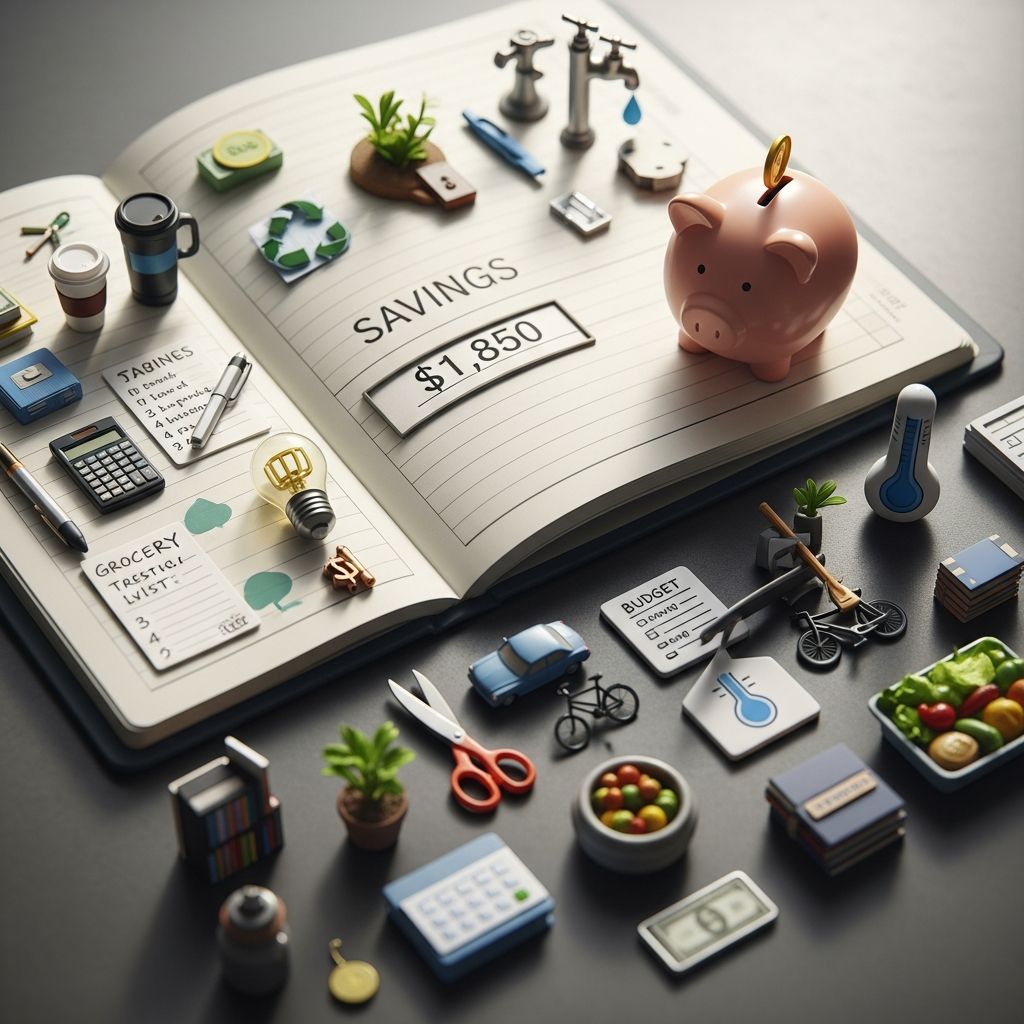
Saving money doesn’t require extreme measures or sacrificing everything you love. With 25 simple, proven strategies, you can stash away $1,850 annually—about $154 per month—while maintaining a balanced life. These tips, drawn from financial experts and real-world applications, focus on budgeting, automating savings, cutting expenses smartly, and optimizing lifestyle choices. Whether you’re starting small or aiming for big wins, implementing just a few can transform your finances.
Track Your Spending to Spot Leaks
The first step to saving is knowing where your money goes. Many people spend unconsciously on small items like coffee or subscriptions that add up. Use free apps like Mint or a simple spreadsheet to log every expense for a month. You’ll likely uncover $50–$100 in monthly waste, such as forgotten gym memberships or daily lattes costing $200 yearly.
- Review bank statements weekly for hidden fees.
- Categorize spending: essentials, wants, savings.
- Set alerts for low balances to avoid overdrafts.
This awareness alone can save $200–$300 a year by eliminating impulse buys.
Set a Budget That Fits Your Lifestyle (50/30/20 Rule)
Budgeting isn’t about restriction; it’s about intention. The
50/30/20 rule
allocates 50% of after-tax income to needs (rent, groceries), 30% to wants (dining out, entertainment), and 20% to savings or debt. For a $3,000 monthly income, that’s $1,500 needs, $900 wants, and $600 savings/debt payoff.Alternatives include:
- Zero-based budgeting: Assign every dollar a purpose until income minus expenses equals zero.
- Envelope method: Use cash envelopes for categories like groceries; stop spending when empty.
Adapting this to your life prevents overspending and builds savings effortlessly.
Automate Your Savings
Out of sight, out of mind. Set up automatic transfers from checking to savings on payday. Start with 10% of income—even $50 biweekly grows significantly via compound interest. High-yield savings accounts (currently 4–5% APY) amplify this. Automation bypasses temptation, ensuring consistent growth.
Start an Emergency Fund, Even If It’s Just $500
Life happens: car repairs, medical bills. An emergency fund covers 3–6 months of expenses ideally, but begin with $500–$1,000. This prevents high-interest credit card debt (average 20% APR). Direct deposits or round-up apps like Acorns help build it quickly.
Cut Expenses Without Feeling Deprived
Savings thrive on smart cuts. Audit subscriptions—cancel one $15/month service for $180 yearly savings. Negotiate bills: cable, insurance, phone. A 10% phone bill reduction saves $120 annually. Switch to store brands for groceries (up to 25% cheaper) without quality loss.
- Brew coffee at home: Save $1,000/year vs. daily cafe stops.
- Pack lunches: $500–$800 annual savings.
Plan Meals and Shop Smart to Save on Groceries
Groceries eat budgets—average family spends $5,000 yearly. Meal planning cuts waste and impulse buys. Plan four home-cooked dinners weekly vs. $40 takeout, saving $2,000/year. Use lists, apps like Flipp for deals, buy bulk/store brands. A sample weekly plan:
| Day | Meal | Cost Savings Tip |
|---|---|---|
| Monday | Stir-fry | Use frozen veggies ($2 vs. $5 fresh) |
| Tuesday | Pasta | Store pasta/sauce ($3 total) |
| Wednesday | Tacos | Bulk ground meat ($4 lb) |
| Thursday | Soup | Pantry staples only |
This slashes $50–$100 monthly.
Repair or Buy Used Instead of Replacing New
Extend item life: Fix phones ($50 battery), sew clothes, repair appliances. Buy used via Facebook Marketplace, thrift stores—quality furniture for 50–70% less. This mindset saves $300–$500 yearly on replacements.
Save on Lifestyle & Transportation
Transportation costs 15% of budgets. Carpool, use public transit, bike short trips—save $500 gas/year. Maintain tires/oil for efficiency. Lifestyle: Downgrade cable, stream free content. Sell unused items on eBay for $200–$500 extra cash.
Take Advantage of Libraries and Community Freebies
Libraries offer free books, audiobooks, streaming (Kanopy), museum passes, classes. Swap one $15 streaming sub for $180 savings. Attend free concerts, park events—endless entertainment zero cost.
Try a No-Spend Challenge (But Budget Small Splurges)
Reset habits: No non-essentials for a week/month. Skip dining out once monthly: $400 savings. Allow $20–$30 fun fund for sustainability. Track progress for motivation.
Bonus Quick Wins
- Tax refund: Pay debt/save, avoid $500 interest.
- Sell clutter: Apps like OfferUp net $300+.
- Negotiate bills: $20/month internet drop = $240/year.
Frequently Asked Questions (FAQs)
Q: How much can I realistically save with these tips?
A: Implementing 5–10 tips yields $1,000–$1,850 annually, depending on starting habits.
Q: What’s the best budgeting rule for beginners?
A: The 50/30/20 rule—simple and flexible for most incomes.
Q: How do I start an emergency fund with no extra money?
A: Automate $10–$20/paycheck; cut one coffee weekly to fund it.
Q: Are no-spend challenges sustainable long-term?
A: Use short-term (1–4 weeks) with small splurges to build habits.
Q: Can meal planning really save $2,000 a year?
A: Yes, by reducing takeout and waste—track to see proof.
These tips compound over time. Start with 3–5 today for momentum toward financial security.
References
- Consumer Financial Protection Bureau: Budgeting and Saving Tools — CFPB (U.S. Government). 2024-10-15. https://www.consumerfinance.gov/consumer-tools/budgeting-saving/
- Federal Reserve: Report on the Economic Well-Being of U.S. Households — Board of Governors of the Federal Reserve System. 2025-05-20. https://www.federalreserve.gov/publications/2025-economic-well-being-of-us-households-in-2024-executive-summary.htm
- National Bureau of Economic Research: Household Saving Behavior — NBER. 2024-11-01. https://www.nber.org/papers/w31995
- U.S. Bureau of Labor Statistics: Consumer Expenditure Survey — BLS (U.S. Government). 2025-09-10. https://www.bls.gov/cex/
- Financial Industry Regulatory Authority: Emergency Savings Guidelines — FINRA. 2024-07-22. https://www.finra.org/investors/insights/build-emergency-fund
Similar Articles








Read full bio of Sneha Tete