Warren Buffett’s Top 10 Tips For Investing Success
Master Warren Buffett's proven investment principles and strategies for long-term wealth building.
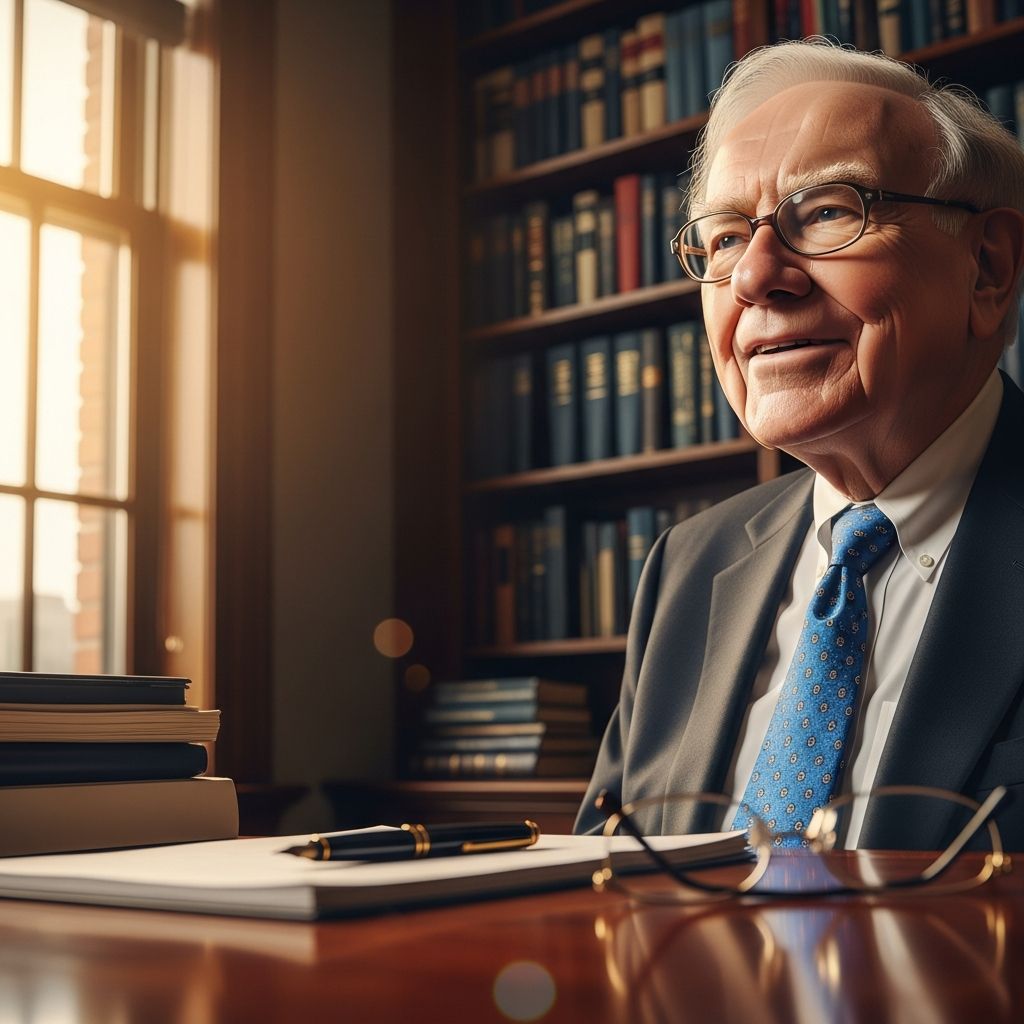
Warren Buffett, often referred to as the “Oracle of Omaha,” has built an extraordinary investment legacy over more than six decades. As the chairman and CEO of Berkshire Hathaway, Buffett has achieved an annual return of 19.9 percent since 1965, nearly doubling the S&P 500’s 10.4 percent average return. His investment philosophy has transformed countless portfolios and inspired millions of investors worldwide. Whether you’re a seasoned investor or just beginning your financial journey, understanding Buffett’s core investment principles can provide valuable guidance for building and protecting your wealth.
1. Rule No. 1: Never Lose Money. Rule No. 2: Never Forget Rule No. 1
Buffett’s most fundamental principle revolves around capital preservation. While this advice may seem straightforward on the surface, it carries profound implications for how you approach investing. The essence of this rule is that avoiding losses should be your primary focus, not chasing maximum returns.
When you eliminate decisions that expose your portfolio to unnecessary risk and loss, what remains is more likely to generate gains. This philosophy shifts your mindset from viewing the stock market as a high-stakes gambling arena to understanding it as a vehicle for building wealth through careful decision-making. By protecting your capital first and seeking gains second, you position yourself to compound those gains exponentially over time. A portfolio that preserves capital consistently will ultimately outperform one that experiences significant downturns, even if the latter occasionally generates higher returns.
2. Buy Wonderful Companies at Fair Prices, Not Fair Companies at Wonderful Prices
Buffett distinguishes between two investment approaches that produce dramatically different results. Rather than searching for the cheapest companies available, Buffett advocates for purchasing high-quality businesses at reasonable valuations. Wonderful companies possess superior economics, durable competitive advantages, and strong management teams.
The challenge with this approach lies in timing and availability. While mediocre companies frequently appear on sale and attract bargain hunters, truly exceptional businesses rarely trade at steep discounts. When great companies do become available at fair prices, those represent the most compelling investment opportunities. This strategy requires patience and discipline—you may need to wait extended periods between purchases, but the quality and durability of the businesses you acquire justify the wait.
3. Seize Opportunities When They Arise: When It Rains Gold, Put Out the Bucket, Not the Thimble
Buffett uses vivid language to emphasize the importance of decisive action when exceptional opportunities present themselves. Investment opportunities with favorable odds don’t arrive frequently, and when they do, you must respond with appropriate scale.
This principle explains why Buffett accumulates substantial cash reserves during normal market conditions. During periods when stocks plunge dramatically and valuations become extraordinarily attractive, he can deploy these reserves aggressively. During the 2008 financial crisis, for example, Buffett invested billions in companies like Goldman Sachs and later acquired BNSF Railway in 2009, which has since become a cornerstone asset for Berkshire Hathaway. The cash reserves he maintained during prosperous times positioned him to capitalize on one of history’s greatest buying opportunities.
4. Identify Quality Businesses With Strong Returns on Capital
Buffett’s investment selection process emphasizes identifying businesses that generate exceptional returns on invested capital. These companies produce substantial cash flow for shareholders while often requiring minimal additional capital investment to maintain their competitive positions and fuel growth.
Buffett frequently cites See’s Candies, a Berkshire Hathaway subsidiary, as an exemplary business. Since acquisition, See’s has generated $1.9 billion in pre-tax earnings while requiring only $40 million in additional capital investment. This efficiency demonstrates the power of businesses with durable competitive advantages. Such enterprises combine multiple attractive characteristics: strong pricing power, the ability to grow without consuming excessive capital, and consistent generation of shareholder value. When you identify and invest in such businesses, your investment works efficiently without requiring constant attention or additional capital infusions.
5. Look for Competitive Advantages and Economic Moats
Understanding that high returns attract competition, Buffett emphasizes the critical importance of identifying competitive advantages—what he calls “economic moats.” These moats protect a company’s competitive “castle” from rivals seeking to capture similar profits.
Economic moats take various forms. Brand strength, exemplified by companies like Coca-Cola and Apple, represents one powerful form of protection. Cost advantages constitute another category, as demonstrated by Geico’s efficient insurance operations. Other moats include network effects, switching costs, and proprietary technology. By focusing on businesses with sustainable competitive advantages, you invest in companies likely to maintain their market positions and profitability for decades, providing reliable returns to patient investors.
6. Buy With a Margin of Safety
The margin of safety represents one of Buffett’s most important concepts. This approach requires determining a business’s intrinsic value—what it’s genuinely worth based on the cash it will generate throughout its remaining life—and then purchasing at a meaningful discount to that valuation.
The gap between your purchase price and the calculated intrinsic value serves as your margin of safety. This buffer protects you if your assumptions about the business prove incorrect or if economic conditions deteriorate. Buffett once stated that margin of safety comprises “the three most important words in investing.” By refusing to overpay and insisting on purchasing at discounts to intrinsic value, you dramatically improve your risk-adjusted returns and provide yourself with protection against both analytical errors and unforeseen adverse events.
7. Focus on Index Funds for Most Investors
Buffett consistently recommends that most investors utilize low-cost index funds rather than attempting to pick individual stocks. His reasoning is straightforward: individual stock pickers compete against professional investors with extensive resources, research capabilities, and information advantages. Most investors lack these competitive advantages and consequently underperform the broader market.
By investing in an index fund tracking the S&P 500, you own a diversified portfolio of companies representing the market itself. This approach offers multiple advantages: it’s simple to implement, costs remain extremely low, immediate diversification reduces risk, and historically it outperforms most actively managed portfolios. Buffett suggests this approach particularly for investors who cannot or do not want to dedicate substantial time to investment analysis and stock selection. For those who genuinely enjoy investing and can dedicate six to eight hours weekly to research and analysis, active stock selection may be appropriate. However, for the vast majority of investors, low-cost index funds represent the optimal path to wealth accumulation.
8. Take Advantage of Market Downturns
Bear markets and significant downturns are inevitable features of investing, and Buffett has consistently used these periods to his advantage. His famous statement encapsulates this philosophy: “I will tell you how to become rich. Be fearful when others are greedy, and be greedy when others are fearful.”
When stock prices plunge and investors panic, rational investors with available capital can purchase exceptional businesses at attractive valuations. The emotional turmoil surrounding market declines creates opportunities for disciplined investors. By maintaining adequate cash reserves and psychological discipline during market downturns, you position yourself to purchase quality investments when prices are depressed. This contrarian approach—buying when others are selling due to fear—represents one of the most reliable paths to investment success over extended periods.
9. Maintain Your 90/10 Portfolio Strategy
Buffett’s recommended portfolio allocation provides a simple yet effective framework, particularly relevant for those without the time or expertise for active management. This strategy allocates 90 percent of invested capital to a low-cost S&P 500 index fund and 10 percent to short-term government bonds.
The rationale for this allocation balances growth objectives with conservative risk management. The S&P 500 index fund exposure provides long-term growth potential and compound returns over decades. The 10 percent allocation to short-term government bonds serves a specific purpose: if market downturns coincide with periods when you need to withdraw funds, you can draw from the conservative bonds rather than selling stocks at depressed prices. This approach prevents forced sales of equities during market bottoms—precisely when you should retain exposure to eventual recoveries. Buffett emphasizes that this simple strategy, with minimal fees and automatic rebalancing requirements, should provide superior results compared to those achieved by most investors using high-fee active managers.
10. Adjust Your Consumption to Your Income
During challenging market environments, Buffett advises investors to adapt their consumption levels to match their income rather than attempting to increase income to maintain higher consumption levels. This principle becomes particularly relevant during bear markets when income may decline due to job changes, investment losses, or other factors.
The temptation during such periods is to pursue riskier investments promising higher returns to maintain accustomed lifestyle levels. Buffett warns against this dangerous approach. Rather than compounding financial difficulties by exposing yourself to excessive risk, adaptation and prudent financial management provide sounder strategies. By calibrating your spending to realistic income levels, you avoid the psychological and financial pressures that drive poor investment decisions.
Key Principles Summary
Warren Buffett’s investment philosophy fundamentally centers on capital preservation, patience, disciplined decision-making, and long-term thinking. His approach contradicts much of the noise surrounding investment management, including complex strategies, frequent trading, and expensive active management fees. Instead, Buffett advocates for simplicity: identify quality businesses, purchase them at reasonable prices with an adequate margin of safety, maintain diversification through index funds, and remain calm during inevitable market turbulence.
The beauty of Buffett’s investment wisdom lies in its accessibility. You need not be extraordinarily sophisticated to implement these principles. Ordinary investors who follow basic rules—avoiding unnecessary losses, thinking long-term, maintaining discipline during market extremes, and keeping costs low—can build substantial wealth over decades. Buffett’s own investment success, combined with his consistent recommendations for average investors, demonstrates that exceptional investment results derive not from complexity but from fundamental principles applied with discipline and patience.
Frequently Asked Questions
Q: What is Warren Buffett’s recommended portfolio allocation?
A: Buffett recommends a 90/10 portfolio allocation, with 90 percent invested in a low-cost S&P 500 index fund and 10 percent in short-term government bonds. This simple approach provides growth potential while preserving capital for strategic withdrawals during market downturns.
Q: How often should I rebalance my portfolio according to Buffett’s philosophy?
A: Buffett emphasizes a long-term buy-and-hold approach with minimal trading. Most investors should rebalance annually or when allocations drift significantly from targets, avoiding the temptation to frequently trade based on short-term market movements.
Q: Should I try to pick individual stocks or use index funds?
A: Buffett recommends index funds for most investors unless you’re willing to dedicate six to eight hours weekly to investment research and analysis. Most individual investors underperform the market, making low-cost index funds the superior choice.
Q: How should I behave during bear markets?
A: During bear markets, maintain your allocation and avoid panic selling. If you have available cash, consider deploying it to purchase quality investments at reduced prices. Remember Buffett’s principle: “Be fearful when others are greedy, and be greedy when others are fearful.”
Q: What is the margin of safety and why is it important?
A: The margin of safety is the discount between a business’s intrinsic value and your purchase price. It protects you against analytical errors and provides cushion if conditions deteriorate. Buffett considers it among the most important investing concepts.
Q: How can I identify quality businesses with strong returns on capital?
A: Look for companies generating high returns on invested capital with minimal capital requirements for growth. These businesses typically feature strong brand recognition, pricing power, or cost advantages that create durable competitive moats.
References
- Warren Buffett’s 90/10 Portfolio: Does This Strategy Still Make Sense — Bankrate. 2024. https://www.bankrate.com/investing/warren-buffetts-90-10-portfolio/
- 8 Essential Rules To Invest Like Warren Buffett — Bankrate. 2024. https://www.bankrate.com/investing/how-to-invest-like-warren-buffett/
- Warren Buffett’s Top 10 Tips For Investing Success — Bankrate. 2024. https://www.bankrate.com/investing/warren-buffett-top-investment-advice/
- Warren Buffett’s Top 5 Tips For Surviving A Bear Market — Bankrate. 2024. https://www.bankrate.com/investing/warren-buffett-tips-for-bear-market/
Similar Articles








Read full bio of Sneha Tete