Warren Buffett’s First Home: The Farnam Street Manor
Explore the historic Omaha residence where the Oracle of Omaha has lived for nearly seven decades.
Warren Buffett’s First Home: A Century of Omaha History
Warren Buffett, one of the world’s most successful investors and often referred to as the “Oracle of Omaha,” is known for his frugal lifestyle and contrarian investment philosophy. While billionaires typically reside in palatial estates and penthouse apartments, Buffett has chosen to remain in his first home—a modest Dutch Colonial mansion located at 5505 Farnam Street in Omaha, Nebraska. Purchased in 1957 for just $31,500, this property has become an iconic symbol of Buffett’s pragmatic approach to wealth and lifestyle choices. The house, which he purchased when he was just 28 years old, stands as testament to his belief that one doesn’t need to constantly upgrade their living situation to lead a fulfilling life.
The Origins and Original Construction of 5505 Farnam Street
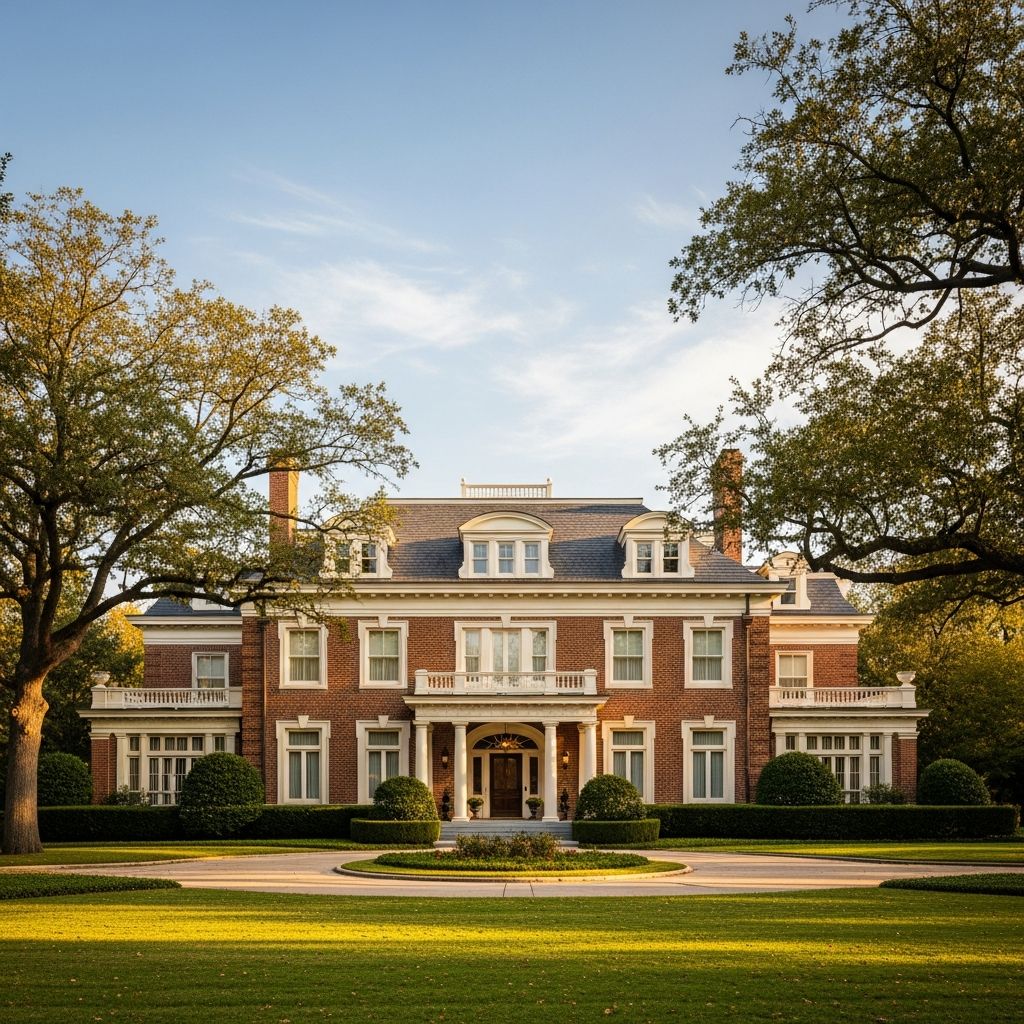
The history of 5505 Farnam Street begins in 1922, when prominent businessman George H. Payne commissioned the construction of this magnificent residence. Payne, a successful real estate entrepreneur who would later establish the Payne Investment Company, spared no expense in creating what would become one of Omaha’s most distinguished properties. He invested $25,000 to construct the home during the prosperous 1920s—a significant sum at that time. The architectural vision for this estate was brought to life by renowned architect Charles Steinbaugh, who designed the structure in the Dutch Colonial style, a choice that reflected both sophistication and timelessness.
Architectural Features and Design Elements
The original 5505 Farnam Street represents a masterclass in early 20th-century residential design. The 2½-story structure encompasses 6,570 square feet of living space and contains ten rooms thoughtfully arranged across three levels. The exterior, constructed of brick and stucco, presents an elegant facade characteristic of Dutch Colonial architecture. The first floor was designed for entertaining and daily living, featuring an entrance hall, powder room, a living room with a fireplace, a conservatory for botanical displays, a formal dining room, a modern kitchen for its era, a large pantry, and a breakfast room. The second floor housed five spacious bedrooms, a sun room for natural light and leisure, and four full bathrooms—luxurious provisions for a 1920s residence. The third floor served as a recreation space, while the basement included a laundry room, fruit and vegetable storage, a wine cellar, a boiler room, and sleeping quarters with a bathroom for household staff. Additionally, an attached two-car garage provided secure parking for George Payne’s automobiles.
Beyond the architecture, George H. Payne invested considerable resources into landscaping the grounds, transforming the property into a showcase estate within Omaha’s prestigious neighborhoods. The beautifully manicured landscape became as much a part of the home’s appeal as the structure itself.
The Succession of Owners Before Warren Buffett
Before Warren Buffett took ownership, 5505 Farnam Street passed through the hands of several prominent Omaha residents, each leaving their mark on the property.
George H. Payne Era (1922-1925)
George H. Payne, the original builder and owner, resided in the Dundee neighborhood’s Evanston addition before moving to his new estate in 1922. However, his tenure at 5505 Farnam Street proved relatively brief. By 1925, just three years after completing the construction, Payne relocated to another stunning property located at 3402 Lincoln Boulevard in the exclusive Bemis Park neighborhood. His decision to move reflected the dynamic nature of Omaha’s real estate market during the prosperous 1920s and the possibility that Payne viewed real estate ownership as both an investment and a lifestyle choice to be periodically updated.
The Nesselhous and Withnell Era (1925-1939)
Billy Nesselhous, a former jockey who had become a key political operative in Omaha, purchased the home as a gift for his mother, Martha Withnell. Billy’s investments in the property demonstrated his devotion and financial success. He paid $75,000 for the house and then invested an additional $35,000 in furnishings and artwork to create an exquisite interior. Martha Withnell enjoyed the benefits of a fully staffed household, complete with a live-in maid and personal chauffeur. The residence became renowned throughout Omaha as one of the city’s most beautiful homes, reflecting both its architectural quality and the refined taste of its inhabitants.
Billy Nesselhous’s connection to Omaha’s political scene ran deep. He had served as a key figure in Tom Dennison’s political machine, which wielded enormous influence over city politics for nearly three decades. His business ventures included ownership of the Budweiser Saloon, which also functioned as headquarters for the city’s political operations.
Following Martha Withnell’s death in 1934, Billy Nesselhous continued to occupy the residence. Historical records indicate that Nesselhous had faced legal troubles related to prohibition-era bootlegging activities as part of Dennison’s organization. During his residence at 5505 Farnam Street, Billy transformed the third-floor recreation room into a rustic log cabin-style space, which he used to entertain lavishly. The spacious room hosted frequent parties where he could enjoy the company of friends and acquaintances. Billy’s time at the property proved brief, as he passed away in 1937, just three years after his mother’s death. He bequeathed the house to his sister, Ida Caldwell, but the property was subsequently sold in 1939, likely to settle estate matters.
Sam Reynolds Era (1939-1957)
The fourth owner to occupy 5505 Farnam Street was Sam Reynolds, a successful businessman who served as vice president and general manager of the Reynolds Updike Coal Company. Reynolds’s professional accomplishments extended beyond the private sector. President Franklin D. Roosevelt recognized his administrative abilities by nominating him to serve as director of the Army Specialist Corps in Omaha from 1942 to 1943, a position reflecting his standing within the community during World War II.
Reynolds’s influence continued to grow in the postwar period. In 1954, Governor Robert B. Crosby appointed him to the United States Senate to complete the term of Hugh Butler following Butler’s death. Though Reynolds chose not to seek his own election to the Senate, he remained politically active, subsequently serving on the Omaha City Council. Eventually, Reynolds decided to relocate outside the city limits, and it was at this point that he sold 5505 Farnam Street to Warren Buffett.
Warren Buffett’s Acquisition and Residence
In 1957, at the remarkably young age of 28, Warren Buffett purchased 5505 Farnam Street for $31,500. At the time of his purchase, Buffett was working as a securities analyst, a far cry from the billionaire investment guru he would eventually become. His decision to purchase this home in Omaha, rather than relocate to New York or another major financial center, reflected both his roots in the region and his independent thinking about lifestyle choices.
Life at the Farnam Street Residence
Remarkably, Buffett has lived in this home continuously for nearly 68 years, making it one of the longest continuous residencies by a billionaire in a single property. This extraordinary commitment to a single residence stands in stark contrast to the typical behavior of ultra-wealthy individuals who often maintain multiple properties across different locations and upgrade their primary residences as their wealth increases.
In 1967, Buffett made some alterations to the house, though historical records provide limited details regarding the specific nature of these modifications. Beyond this renovation, relatively little information has been publicly disclosed about changes or updates Buffett may have made to the property over the decades.
The Significance of Buffett’s Home Ownership Choice
Buffett’s decision to remain at 5505 Farnam Street despite accumulating extraordinary wealth reflects his personal philosophy about consumption and lifestyle. While many ultra-wealthy individuals view home ownership as an opportunity to demonstrate status and acquire progressively more luxurious properties, Buffett has consistently maintained that such expenditures represent inefficient uses of capital. His choice to stay in a home he purchased as a young analyst communicates his values regarding financial discipline and the distinction between needs and wants.
The home’s location in Omaha also reflects Buffett’s deep connection to the region. Despite having the financial resources to establish himself anywhere in the world, Buffett has chosen to maintain his residence and business headquarters in Omaha. This decision underscores his belief in the importance of community roots and his rejection of the conventional wisdom that success requires relocation to traditional financial capitals.
Architectural and Historical Significance
Beyond its association with Warren Buffett, 5505 Farnam Street holds architectural and historical importance for Omaha. The Dutch Colonial design represents a significant example of early 20th-century residential architecture in the Great Plains region. The craftsmanship evident in the brick and stucco construction, combined with the thoughtful interior layout and generous proportions of the rooms, reflects the building standards and aesthetic preferences of the 1920s.
The property’s history also documents the evolution of Omaha’s business and political leadership over the course of a century. From George H. Payne’s real estate and investment ventures, through Billy Nesselhous’s involvement in the city’s political machinery, to Sam Reynolds’s business and public service, and finally to Warren Buffett’s transformation into one of the world’s most successful investors, the residence has been home to individuals who shaped the community’s development and character.
Comparative Property Overview
| Aspect | Original 1922 Details | Warren Buffett Era (1957-Present) |
|---|---|---|
| Purchase Price | $25,000 (George Payne, 1922) | $31,500 (Buffett, 1957) |
| Architectural Style | Dutch Colonial | Dutch Colonial (preserved) |
| Square Footage | 6,570 sq ft | 6,570 sq ft |
| Stories | 2½ stories | 2½ stories |
| Occupancy Duration | 3 years (1922-1925) | 68 years (1957-present) |
Frequently Asked Questions About Warren Buffett’s Home
Q: Why does Warren Buffett continue to live in a home he purchased in 1957?
A: Buffett has stated that he sees no practical reason to upgrade his residence. He views the purchase of larger, more expensive homes as an inefficient use of capital that would not improve his quality of life. His choice reflects his philosophy of distinguishing between needs and wants and his commitment to financial discipline regardless of wealth accumulation.
Q: What is the current estimated value of the Farnam Street property?
A: While exact valuations vary based on market conditions and comparable sales in the Dundee neighborhood, the property is typically estimated to be worth between $600,000 and $1 million, significantly higher than the $31,500 Buffett paid in 1957, yet modest compared to the properties of other billionaires.
Q: Can visitors tour Warren Buffett’s home?
A: The residence is a private property and does not offer public tours. However, the exterior can be viewed from the street, and the house remains a popular destination for architecture enthusiasts and Buffett fans visiting Omaha.
Q: What modifications has Buffett made to the home over the years?
A: Records indicate that Buffett made alterations to the property in 1967, though specific details about these modifications have not been widely publicized. The home has retained its original architectural character and distinctive Dutch Colonial style.
Q: How does Buffett’s home choice compare to other billionaires?
A: Buffett’s decision to remain in a relatively modest home purchased as a young professional stands in stark contrast to most ultra-wealthy individuals, who typically own multiple luxury properties worth tens or hundreds of millions of dollars. His choice exemplifies his contrarian approach to consumption and wealth management.
Q: What neighborhood is the Farnam Street property located in?
A: The home is situated in Omaha’s Dundee neighborhood, a historic and prestigious residential area known for its tree-lined streets, architectural diversity, and proximity to shopping and cultural amenities.
References
- 5505 Farnam Street From George Payne to Warren Buffet — Omaha Exploration. 2025-05-11. https://omahaexploration.com/2025/05/11/5505-farnam-street-from-george-payne-to-warren-buffet/
Similar Articles








Read full bio of medha deb