Why Are My W-2 Wages Lower Than My Salary?
Understand why your W-2 shows lower wages than your salary and learn how pre-tax deductions reduce your taxable income.
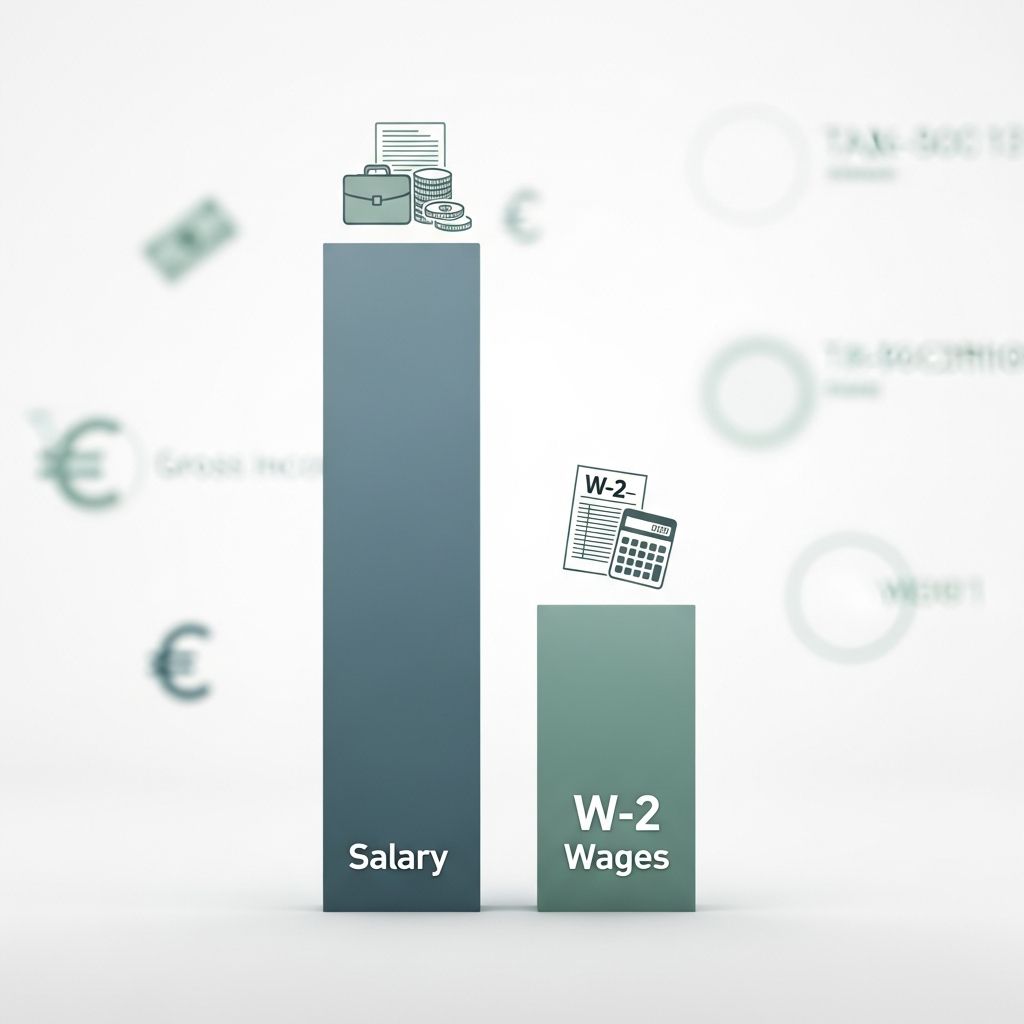
When you receive your W-2 form each year, you might notice that the wages reported don’t match the salary you believe you earned. This discrepancy can be confusing, but it’s actually a positive sign. It’s a good thing to have your W-2 wages be less than your salary because this means you’ll owe less in taxes. Understanding this difference is essential for making sense of your tax documents and ensuring you’re filing correctly.
The key to understanding this difference lies in recognizing that what appears on your W-2 is your taxable income, not your total salary. The amount shown in Box 1 for “wages, tips and other compensation” may differ from the amounts in Box 3 for “Social Security wages” or Box 5 for “Medicare wages,” and all three sums may be less than what you actually earned during the year. This variation occurs because of pre-tax deductions and other factors that reduce your taxable wages.
The Difference Between Gross Salary and W-2 Wages
Your salary represents the total amount of money you earned before any taxes or deductions are applied. This is often called your gross pay. Your W-2, on the other hand, reflects your taxable wages after accounting for pre-tax deductions. These pre-tax deductions are amounts that come out of your paycheck before federal income tax is calculated, which reduces the amount of income that the government considers taxable.
Think of it this way: your salary is what you earned, while your W-2 wages represent what amount of your earnings the government will tax. The difference between these two figures represents successful income sheltering strategies that benefit you financially. Lower-than-expected taxable wages mean you were successful at reducing your tax burden over the past year.
Four Main Reasons Your W-2 Wages Are Lower Than Your Salary
The difference between your actual earnings and your taxable wages typically arises from four distinct situations:
1. Retirement Plan Contributions
One of the most common reasons for reduced W-2 wages is contributing to a company-sponsored retirement plan. When you contribute to a 401(k) or similar retirement account, the amount you contribute is deducted from your paycheck before taxes are calculated. This pre-tax contribution reduces the amount of federal and state wages you will be taxed on, which are reported in Boxes 1 and 16 of your W-2 respectively. For example, if your gross salary is $50,000 and you contribute $5,000 to your 401(k), your taxable wages will be reported as $45,000 on your W-2.
2. Health Insurance Premiums
If you participate in your company’s health insurance plan, you likely pay your portion of the premium with pre-tax dollars. This means your employer deducts your insurance costs from your paycheck before calculating your income taxes. Your taxable wages in Boxes 1, 3, and 5 are reduced by the total of the premiums you paid throughout the year. This is one of the most straightforward ways to reduce your taxable income while ensuring you maintain necessary health coverage.
3. Flexible Spending Accounts (FSA) and Transportation Reimbursement Accounts
Pre-tax money you have deducted for a transportation account—used to pay for public transit or parking—and health care or dependent care FSAs will lower your taxable wages that appear in Boxes 1, 3, and 5. These accounts allow you to set aside money before taxes to pay for qualified expenses, effectively reducing your taxable income. For instance, if you contribute $2,500 to a health care FSA annually, that amount is deducted from your taxable wages.
4. Other Pre-Tax Deductions
Beyond the major categories, various other pre-tax deductions can reduce your W-2 wages, including life insurance premiums, disability insurance, and other employer-sponsored benefit programs. Each of these deductions removes money from your gross pay before taxes are applied, resulting in lower taxable wages reported on your W-2.
Understanding the Different Boxes on Your W-2
Your W-2 form contains multiple boxes, each serving a specific purpose. Understanding what each box represents is crucial for verifying your income and ensuring accuracy.
| Box | Description | Typical Amount |
|---|---|---|
| Box 1 | Wages, Tips, and Other Compensation | Total taxable wages subject to federal income tax |
| Box 2 | Federal Income Tax Withheld | Amount your employer withheld for federal taxes |
| Box 3 | Social Security Wages | Wages subject to Social Security tax |
| Box 5 | Medicare Wages and Tips | Wages subject to Medicare tax |
| Box 16 | State Wages, Tips, Etc. | Wages subject to state income tax |
| Box 18 | Local Wages, Tips, Etc. | Wages subject to local or city income tax |
The Social Security Wage Cap Mystery
Another common confusion on your W-2 relates to why your Social Security wages differ from your actual pay. The answer involves the Social Security wage cap, which is the maximum income you pay Social Security taxes on each year.
If you earned less than the annual Social Security wage cap, expect your Box 1 wages to be less than Box 3 and 5 wages. This occurs because you can shelter more of your earnings from federal taxes through pre-tax deductions than you can from Social Security and Medicare taxes, which have different rules about what qualifies as deductible.
However, if you earned more than the Social Security wage cap limit, you likely ran up against this cap. In that case, your Box 3 wages (Social Security wages) will likely be less than your Box 1 wages (federal income tax wages). This is because once you reach the cap, no additional earnings are subject to Social Security tax for the remainder of the year, though they continue to be subject to federal income tax and Medicare tax.
W-2 Versus Your Final Pay Stub
Another source of confusion for many employees is the difference between their W-2 and their final pay stub of the year. Your end-of-year pay stub reflects gross wages, including all earnings and some deductions. Your W-2, however, reflects taxable income after pre-tax deductions have been subtracted.
Your pay stub shows the gross dollar amount of your salary before taxes are applied. Your W-2 shows only the taxable wages reported after pre-tax deductions like health insurance, life insurance, 401(k) contributions, and disability insurance have been removed. This is why an employee’s final pay stub and W-2 typically differ, and it’s completely normal.
Common Pre-Tax Deductions Affecting Your W-2
Understanding which deductions reduce your W-2 wages can help you maximize your tax advantages:
- Retirement Plan Contributions: 401(k), 403(b), and similar plans
- Health Insurance Premiums: Medical, dental, and vision coverage
- Flexible Spending Accounts: Health care FSA and dependent care FSA
- Transportation Benefits: Public transit passes and parking fees
- Life Insurance: Employer-sponsored life insurance premiums
- Disability Insurance: Short-term and long-term disability premiums
What This Means for Your Tax Filing
The fact that your W-2 wages are lower than your salary is beneficial during tax season. A lower W-2 wage amount typically results in less federal income tax owed. This is because your taxable income is reduced by the pre-tax contributions you made throughout the year.
When you file your taxes, use the amounts reported on your W-2, not your gross salary. Box 1 of your W-2 is what gets reported on your tax return and determines your tax liability. Since this amount already reflects your pre-tax deductions, you’re already receiving the tax benefit from those contributions.
Frequently Asked Questions
Q: Why doesn’t my W-2 match my salary?
A: Your salary is the total amount earned before any deductions. Your W-2 reflects taxable wages, which are reduced by pre-tax deductions such as 401(k) contributions and health insurance premiums. Therefore, your W-2 amount is usually lower.
Q: Is it bad if my W-2 is lower than my salary?
A: No, it’s actually beneficial. A lower W-2 means you’ve successfully sheltered income from taxes through pre-tax deductions, resulting in lower taxes owed.
Q: What if my W-2 is higher than my salary?
A: If your W-2 shows a higher amount than expected, it could include taxable income not considered part of your regular salary, such as bonuses, tips, or prizes. Additionally, certain benefits or deferred compensation might be included, making the reported amount higher than your base salary.
Q: How do I know what pre-tax deductions I have?
A: Check Box 1 of your W-2 and compare it to your gross salary. The difference represents your pre-tax deductions. You can also review your pay stubs throughout the year to see itemized deductions.
Q: Do all employers report the same way on W-2s?
A: While W-2 reporting follows federal guidelines, states may have different rules regarding state income tax withholding. It’s important to understand your state’s specific tax laws.
Q: Should I increase my pre-tax deductions?
A: Increasing pre-tax deductions reduces your taxable income and can lower your tax bill. However, ensure you’re comfortable with the reduced take-home pay and that you’re adequately funding necessary benefits and retirement savings.
References
- Why Are My W-2 Wages Lower Than My Salary? — Money Magazine. 2015. https://money.com/w2-wages-salary-taxes/
- 2025 General Instructions for Forms W-2 and W-3 — Internal Revenue Service (IRS). 2025. https://www.irs.gov/pub/irs-pdf/iw2w3.pdf
- What is a W-2 Form? Who Gets It and How to Read it — TurboTax by Intuit. 2024. https://turbotax.intuit.com/tax-tips/irs-tax-forms/what-is-a-w-2-form/
- The Employer’s Guide to Payroll Taxes — Paychex. 2024. https://www.paychex.com/articles/payroll-taxes/employers-guide-to-payroll-taxes
- How to read a W-2 form — Khan Academy. 2024. https://www.khanacademy.org/college-careers-more/financial-literacy/xa6995ea67a8e9fdd:taxes-and-tax-forms/xa6995ea67a8e9fdd:tax-forms/a/how-to-read-a-w-2-form
Similar Articles








Read full bio of medha deb