Undefined: What Is A Voucher And How It Works, A Complete Guide
Understanding vouchers: A comprehensive guide to payment methods, types, and practical applications.
What Is a Voucher?
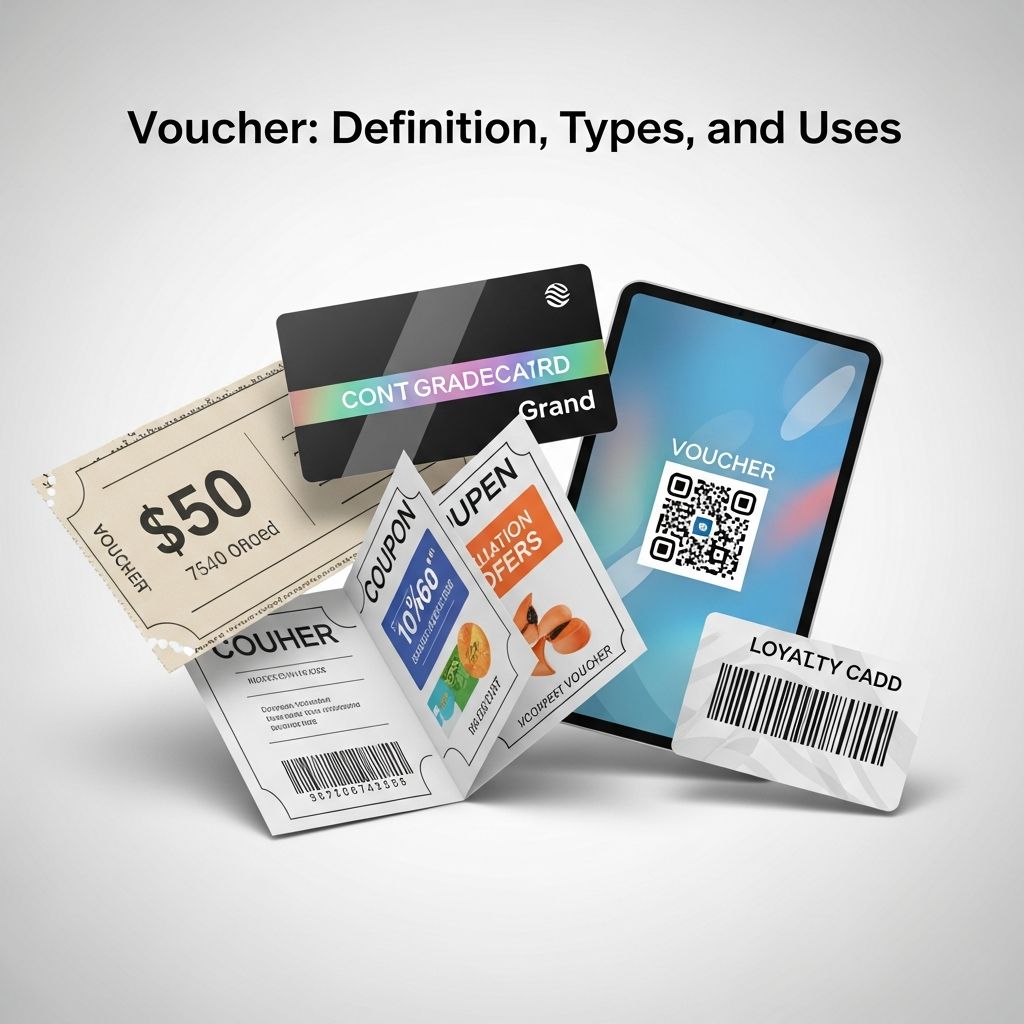
A voucher is a physical or virtual paper, plastic card, or digital token that holds a designated amount of money earmarked for purchasing specific goods or services. Vouchers function as prepaid payment instruments that authorize the holder to receive products or services up to the value specified on the voucher. Unlike traditional currency, vouchers are restricted to particular uses and often come with specific terms and conditions governing their redemption.
The concept of vouchers has evolved significantly over time, transforming from simple paper-based documents to sophisticated digital payment instruments. Today, vouchers represent an important payment medium across numerous industries, facilitating transactions in retail environments, hospitality sectors, government benefit programs, and online marketplaces. They serve multiple functions simultaneously, combining aspects of marketing, cost reduction, and payment processing into a single instrument.
Common examples of vouchers include cards distributed to Social Security benefit recipients, gift cards available at grocery stores and malls, discount coupons from pharmacies, and digital codes provided by online retailers. The versatility of vouchers has made them increasingly popular among both consumers and businesses, as they offer flexibility and convenience while providing businesses with valuable data about consumer preferences and purchasing patterns.
Understanding the Basic Concept
At their core, vouchers represent a contractual agreement between the issuer and the holder. The issuer commits to providing goods or services equivalent to the monetary value stated on the voucher, while the holder agrees to use the voucher only for its designated purpose. This mutual understanding creates a controlled payment environment where both parties understand the transaction parameters.
Vouchers differ from regular currency because they cannot be used for arbitrary purchases. Instead, they are restricted to specific merchants, product categories, or service providers. This restriction is intentional and serves multiple purposes: it helps issuers control costs, directs consumer spending toward desired products or services, and provides a tracking mechanism for understanding consumer behavior.
The medium through which vouchers are delivered has transformed dramatically. While traditionally vouchers were printed documents or plastic cards requiring physical possession, modern vouchers exist primarily in digital form. Electronic vouchers offer greater convenience, enhanced security features, and instantaneous delivery to consumers. However, some institutions maintain hybrid systems where vouchers are available in both physical and digital formats to accommodate consumer preferences and ensure accessibility.
Types of Vouchers
Vouchers come in numerous varieties, each designed for specific purposes and contexts. The classification and characteristics of vouchers vary considerably depending on the overall economic environment, the specific market in which they operate, and the intended effect of the issuing organization.
Gift Cards and Gift Certificates
Gift cards and gift certificates represent among the most recognizable forms of vouchers in consumer markets. These instruments function identically to cash for purchases at designated retailers, allowing customers to exchange them for goods or services. Gift certificates typically come in fixed denominations and can be used at specific stores or chains. Unlike loyalty programs that track repeat purchases, gift cards are straightforward payment instruments representing a specific monetary value.
When using a gift card with insufficient balance to cover a purchase, customers can typically pay the remaining amount using cash or credit cards. For example, if an item costs $25 and the customer has a $10 gift certificate, the remaining $15 would be paid through alternative payment methods. This flexibility makes gift cards practical for everyday purchasing situations.
Coupons and Discount Vouchers
Coupons represent a specialized category of vouchers designed to provide discounts on specific products or services. These promotional vouchers appear in multiple formats: digital coupons distributed through websites and mobile applications, printed coupons found in newspapers and magazines, and point-of-sale coupons generated at checkout counters.
Electronic coupons offer particular advantages over their paper counterparts. These digital vouchers are typically sent directly to consumers’ devices and can be redeemed immediately at checkout. The key requirement for coupon validity is that the coupon must be presented before an item is scanned at the checkout counter or kiosk, ensuring retailers can properly apply the discount to the customer’s transaction.
Hotel and Hospitality Vouchers
Hotels and hospitality organizations commonly issue vouchers in both paper and electronic formats. Accor Hotels exemplifies this practice, issuing vouchers that allow customers to purchase goods and services from their properties and affiliated merchants. Hotel vouchers typically come in two formats: digital codes entered during online or app-based bookings, and printable vouchers presented upon check-in.
Hotels may prefer customers to arrive with printed vouchers for strategic reasons. Physical voucher presentation at check-in allows hotel staff to discuss available room types and amenities with guests, enabling them to select accommodations that best match their preferences and needs. This face-to-face interaction can enhance customer satisfaction and justify premium room selections.
Government and Social Benefits Vouchers
Government organizations issue specialized vouchers as part of social benefit programs. Social Security benefit recipients commonly receive voucher cards that function as prepaid debit cards, allowing them to access their entitled benefits and make purchases at authorized retailers. These government-issued vouchers serve crucial functions in ensuring benefit recipients can access essential goods and services.
Online Retailer Vouchers
E-commerce platforms frequently issue vouchers to customers as proof of purchase or to facilitate online transactions. When products or services are purchased from online retailers, vouchers are often provided to allow consumers to receive what they have paid for. These vouchers typically require both a printed copy and a signature to be valid, ensuring proper authorization and reducing fraud risks.
Benefits of Using Vouchers
Vouchers offer compelling advantages for both consumers and businesses. Key benefits include:
Flexibility: Vouchers can be applied to numerous products and services, from retail goods to hotel accommodations to real estate transactions, making them adaptable across various economic contexts and market conditions.
Convenience: Modern electronic vouchers deliver immediate value to consumers, eliminating the need for physical card storage or paper document management. Digital delivery enables instant access and redemption through websites and mobile applications.
Marketing Effectiveness: Vouchers serve as powerful marketing tools, attracting new customers and encouraging repeat purchases. The promotional aspect of vouchers, particularly discount coupons, directly influences consumer purchasing decisions.
Cost Reduction: For businesses, vouchers enable precise control over marketing expenses and customer acquisition costs. Rather than broad advertising campaigns, vouchers target specific customer segments with tailored offers.
Integrated Payment Solution: Vouchers combine marketing, cost management, and payment processing into a single instrument, reducing complexity and administrative overhead for businesses managing multiple payment methods.
Disadvantages and Limitations
Despite their benefits, vouchers present certain challenges and limitations. Key disadvantages include:
Consumer Familiarity Gaps: Many consumers, particularly older demographics, remain unfamiliar with paper-based voucher systems and their redemption procedures. This knowledge gap can reduce voucher utilization rates and create customer confusion at point-of-sale environments.
Security Concerns: While security concerns around voucher systems are largely unfounded and addressed by modern encryption and verification technologies, consumer perception of security risks persists. This perception can deter adoption of electronic voucher systems despite robust underlying security measures.
Limited Adoption: Vouchers remain generally unpopular compared to other payment methods like credit cards or cash. This limited acceptance prevents widespread voucher use and restricts their effectiveness as universal payment instruments.
Redemption Restrictions: The limitations built into vouchers—restrictions on where and what can be purchased—while beneficial for businesses, reduce consumer flexibility and may discourage acceptance among customers preferring unrestricted payment methods.
How to Use Vouchers
Voucher usage processes vary depending on the voucher type and issuing organization:
Retail and Store Vouchers: In retail environments, present your voucher at checkout before items are scanned. Retailers will apply the voucher value to your transaction, with any remaining balance payable through alternative methods if the voucher insufficient covers the purchase amount.
Online Redemption: For online purchases, voucher codes are typically entered during the checkout process on retailer websites or mobile applications. The system automatically applies the voucher value to your order before payment processing.
Hotel Bookings: Digital hotel voucher codes are entered during online or app-based reservations. For printed vouchers, present the physical document upon check-in at the hotel property. Hotel staff will verify the voucher and apply its value to your booking.
Discount Coupons: Electronic coupons should be presented through digital devices or mobile wallets at checkout. Printed coupons must be presented to cashiers before items are scanned. The timing of coupon presentation is critical for proper discount application.
Vouchers in Different Economic Contexts
The implementation and effectiveness of vouchers varies significantly across different economic environments and market conditions. In stable economic periods, vouchers primarily function as marketing and customer retention tools. During economic downturns, governments and businesses may increase voucher distribution to stimulate spending and support consumer purchasing power.
Different market sectors employ vouchers with varying strategies. The hospitality industry uses vouchers to drive bookings and increase occupancy rates. Retail sectors employ discount vouchers to clear inventory and attract price-sensitive consumers. Government programs utilize vouchers to direct social benefits toward essential goods and services, ensuring resources reach intended populations effectively.
The Evolution of Vouchers
Voucher technology and implementation have evolved substantially. Early vouchers were simple paper documents or tokens with limited tracking capabilities. The introduction of plastic cards enhanced durability and enabled basic transaction tracking. Contemporary electronic vouchers leverage advanced technologies including encryption, real-time verification, mobile integration, and comprehensive analytics.
This technological evolution has expanded voucher applications significantly. Real estate transactions, historically conducted through cash or institutional financing, now incorporate voucher-based payment mechanisms in some contexts. The integration of vouchers with mobile wallets and digital payment platforms has further accelerated adoption among technology-comfortable consumers.
Frequently Asked Questions
Q: What is the primary difference between a voucher and a coupon?
A: While often used interchangeably, coupons are a specific type of voucher designed to provide discounts on products or services. All coupons are vouchers, but not all vouchers are coupons. Vouchers represent the broader category encompassing gift cards, government benefits, and other prepaid instruments, while coupons specifically offer percentage discounts or price reductions.
Q: Can vouchers expire?
A: Many vouchers include expiration dates or validity periods specified by the issuer. These timeframes encourage prompt redemption and help businesses manage accounting and liability. However, expiration policies vary by issuer, jurisdiction, and voucher type. Some jurisdictions regulate expiration terms, particularly for government-issued vouchers, to protect consumer interests.
Q: Are electronic vouchers secure?
A: Modern electronic vouchers employ robust security measures including encryption, multi-factor authentication, and real-time fraud detection systems. While security concerns persist among some consumers, these concerns are largely unfounded, as contemporary technology provides comprehensive protection against unauthorized access and fraudulent redemption.
Q: Can partial voucher amounts be used?
A: Yes, vouchers can typically be applied partially to transactions. If a voucher value exceeds the purchase amount, the unused balance may be retained for future transactions or refunded depending on issuer policies. Conversely, if the purchase amount exceeds the voucher value, the remaining balance is paid through alternative payment methods like cash or credit cards.
Q: Where can vouchers be used?
A: Voucher applicability depends on issuer restrictions. Some vouchers work at specific retailers or store chains, others apply to entire merchant networks, and some function across multiple service providers. Government-issued vouchers typically have restricted use to designated categories of goods or services, ensuring benefits target intended purposes.
Q: What should I do if my voucher doesn’t work at checkout?
A: If a voucher fails to scan or isn’t accepted, contact store management or customer service. Issues may include expired vouchers, incorrect redemption methods, or system errors. Retailers should resolve voucher problems by either correcting the redemption process, issuing replacement vouchers, or providing alternative solutions.
References
- Finance Strategists: Definition, Types of Vouchers, and How To Use — Finance Strategists. 2024. https://www.financestrategists.com/financial-advisor/voucher/
Similar Articles








Read full bio of medha deb