Volatility: Definition, Types, and Market Impact
Understanding market volatility: How price fluctuations affect investments and trading strategies.

Volatility is one of the most critical concepts in finance and investing. It represents the degree of variation in trading prices over time, measuring how dramatically an asset’s price swings up and down. For investors, traders, and financial professionals, understanding volatility is essential to making informed decisions about portfolio management, risk assessment, and investment strategy. This comprehensive guide explores what volatility is, how it’s measured, the different types that exist, and how it impacts financial markets and individual investments.
What is Volatility?
Volatility is a statistical measure of the dispersion of returns for a given security or market index. In simple terms, it quantifies how much the price of an asset fluctuates over a specific period. When an asset experiences large price swings, it is considered highly volatile. Conversely, when an asset’s price remains relatively stable with small fluctuations, it is said to have low volatility.
The concept of volatility is fundamental to risk assessment in investing. Higher volatility generally indicates greater risk because the price of an investment can change dramatically in a short period, potentially resulting in significant gains or losses. Lower volatility suggests more stable, predictable price movements, which typically means lower risk but also potentially lower returns.
Volatility is expressed as a percentage and is often annualized. For example, a stock might have an annual volatility of 20%, meaning its price typically fluctuates within a certain range around its average value over the course of a year. Understanding this metric helps investors determine whether an investment aligns with their risk tolerance and investment objectives.
How is Volatility Measured?
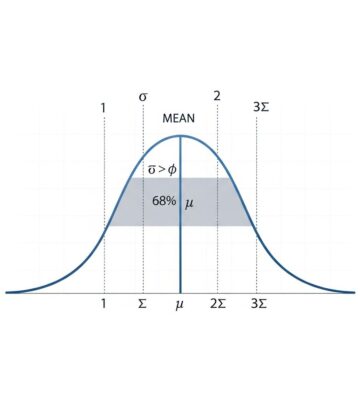
Volatility is primarily measured using statistical formulas that analyze historical price data. The most common method is calculating the standard deviation of an asset’s returns over a specific time period. Standard deviation measures how much the returns deviate from the average, providing a quantitative representation of price fluctuations.
The calculation involves several steps: first, determine the average (mean) return over the period; second, calculate the difference between each period’s return and the average; third, square these differences; fourth, sum all squared differences; fifth, divide by the number of periods; and finally, take the square root of the result. This final figure represents the standard deviation, which is the primary measure of volatility.
Other volatility measurement methods include:
- Variance: The square of standard deviation, representing the average of squared deviations from the mean
- Beta: Measures an asset’s volatility relative to the overall market, with a beta above 1 indicating higher volatility than the market
- Average True Range (ATR): Used primarily in technical analysis to measure market volatility based on price range
- VIX Index: Often called the “fear index,” it measures market volatility expectations based on S&P 500 index options
Historical Volatility vs. Implied Volatility
Two main types of volatility measurements help investors and traders understand different aspects of market behavior. Historical volatility, also known as realized volatility, calculates actual price movements over a past period. It uses historical price data to determine how much an asset has fluctuated, providing insights into the asset’s past behavior.
Implied volatility, conversely, represents the market’s expectation of future volatility. It is derived from option prices and reflects what traders believe will be the magnitude of future price movements. When implied volatility is high, option prices increase because traders expect significant price swings. When it’s low, option prices decrease as traders expect more stable prices.
The relationship between these two measures is important for traders. If historical volatility is significantly lower than implied volatility, options may be overpriced. If historical volatility exceeds implied volatility, options may be underpriced. This discrepancy creates trading opportunities for sophisticated investors.
Types of Volatility
Volatility manifests in several distinct forms, each with different causes and implications:
Market Volatility
Market volatility refers to large fluctuations in overall stock market indices. During periods of market volatility, broad-based market indices like the S&P 500, Nasdaq, or Dow Jones Industrial Average experience significant price swings. Market volatility typically results from macroeconomic factors, geopolitical events, or shifts in investor sentiment. Economic recessions, inflation concerns, interest rate changes, and political instability commonly trigger market-wide volatility.
Intraday Volatility
Intraday volatility measures price fluctuations within a single trading day. An asset might open at one price in the morning, experience significant ups and downs throughout the session, and close substantially higher or lower than the opening price. Intraday volatility is particularly important for day traders and short-term investors who make trading decisions within a single session.
Long-term Volatility
Long-term or historical volatility measures price fluctuations over extended periods, such as months or years. This type of volatility is crucial for long-term investors developing buy-and-hold strategies. An asset might experience significant price swings on a daily or weekly basis but show moderate long-term volatility, indicating relative stability over longer investment horizons.
Volatility Clustering
Volatility clustering describes the tendency for periods of high volatility to be followed by more high volatility, and periods of low volatility to be followed by more low volatility. This pattern reflects how market shocks tend to have lingering effects on asset prices. Financial crises or major news events often trigger extended periods of elevated volatility.
Factors That Influence Volatility
Multiple factors affect asset volatility across different market conditions:
- Economic Data: Unexpected changes in employment figures, inflation rates, GDP growth, and other economic indicators trigger volatility spikes
- Interest Rate Changes: Federal Reserve decisions and interest rate adjustments significantly impact market volatility
- Corporate Earnings: Company earnings reports and missed expectations cause individual stock volatility
- Geopolitical Events: Wars, political instability, international disputes, and trade tensions elevate market volatility
- Market Sentiment: Investor fear or excessive optimism can rapidly shift market direction and increase price swings
- Liquidity Conditions: Markets with lower trading volumes experience higher volatility than highly liquid markets
- Sector-Specific Events: Industry-specific news, technological changes, or regulatory shifts affect volatility in particular sectors
Volatility and Investment Risk
Volatility is intrinsically linked to investment risk. While volatility and risk are not identical concepts—volatility measures price fluctuations, while risk encompasses the potential for loss—they are closely related. Higher volatility generally indicates higher risk because larger price swings increase the possibility of significant losses.
However, the relationship between volatility and risk is complex. Two investments with identical volatility levels may carry different risk profiles depending on their underlying characteristics. Additionally, some investors view volatility as an opportunity rather than purely as a risk factor. Volatility creates price discrepancies that skilled traders can exploit for profit.
For long-term investors with diversified portfolios, moderate volatility may not represent significant risk. However, for investors requiring stable returns or those with limited investment horizons, high volatility poses substantial risk to capital preservation.
Impact of Volatility on Trading and Investment Strategies
Volatility significantly influences how investors approach markets and develop trading strategies. During high volatility periods, investors often become more cautious, increasing allocations to defensive assets like bonds and commodities. During low volatility periods, investors may become complacent or increase exposure to riskier assets.
Different investment strategies respond differently to volatility environments. Value investors may find attractive opportunities when volatility drives prices below intrinsic values. Growth investors might struggle during high volatility. Options traders specifically profit from volatility through strategies like straddles or strangles that benefit from large price moves regardless of direction.
Risk management becomes crucial during volatile periods. Stop-loss orders, position sizing, and diversification become more important. Portfolio rebalancing may be necessary to maintain desired asset allocations when some positions experience significant price movements.
The VIX: Measuring Market Fear
The Volatility Index (VIX) is a crucial indicator of market volatility expectations. Calculated by the Chicago Board Options Exchange, the VIX measures implied volatility of S&P 500 index options. Often called the “fear gauge” of the market, the VIX increases when investors expect significant market turmoil and declines when market conditions stabilize.
VIX readings above 20 generally indicate elevated market anxiety, while readings below 15 suggest complacency. During significant market downturns, VIX can spike dramatically, sometimes exceeding 40 or higher. Understanding VIX levels helps investors gauge overall market sentiment and adjust their strategies accordingly.
Volatility in Different Asset Classes
Volatility characteristics vary significantly across different asset classes. Stocks typically exhibit higher volatility than bonds. Growth stocks are usually more volatile than dividend-paying stocks. Cryptocurrencies demonstrate extreme volatility compared to traditional assets. Real estate investments generally show lower volatility than equities. Commodities experience volatility driven by supply-demand dynamics and geopolitical factors.
Understanding how different asset classes respond to market conditions helps investors construct balanced portfolios. Combining assets with different volatility characteristics can reduce overall portfolio volatility through diversification benefits.
Managing Volatility in Your Portfolio
Effective portfolio management during volatile periods involves several key strategies:
- Diversification: Spreading investments across multiple asset classes, sectors, and geographic regions reduces volatility exposure
- Asset Allocation: Maintaining appropriate allocations between stocks, bonds, and other assets based on risk tolerance and time horizon
- Dollar-Cost Averaging: Investing fixed amounts regularly regardless of market conditions can reduce timing risk
- Rebalancing: Periodically adjusting portfolio allocations to maintain target weightings despite price fluctuations
- Hedging Strategies: Using options, futures, or other derivatives to protect against downside risk
- Long-Term Focus: Maintaining perspective that short-term volatility often matters less for long-term investment success
Frequently Asked Questions About Volatility
Q: Is high volatility always bad for investors?
A: Not necessarily. While high volatility increases risk, it also creates opportunities. Long-term investors with diversified portfolios may view volatility as a buying opportunity. Traders specifically seek volatility to generate profits. The impact depends on individual investment objectives, time horizon, and risk tolerance.
Q: How can I reduce volatility in my portfolio?
A: Diversification across multiple asset classes, sectors, and geographic regions is the most effective approach. Additionally, maintaining appropriate asset allocation based on your risk tolerance, regular rebalancing, and avoiding market timing help reduce portfolio volatility.
Q: What does a VIX reading of 20 mean?
A: A VIX reading of 20 indicates moderate market volatility expectations. It suggests investors expect annualized volatility of approximately 20% over the next 30 days. Readings above 20 indicate elevated anxiety, while readings below 15 suggest relative calm.
Q: Can volatility be predicted?
A: While future volatility cannot be predicted with certainty, historical patterns, economic indicators, and market conditions provide clues about future volatility levels. Volatility clustering suggests that high volatility periods tend to follow periods of high volatility, but sudden events can cause unpredictable volatility spikes.
Q: How does implied volatility differ from historical volatility?
A: Historical volatility measures actual past price movements, while implied volatility represents market expectations for future volatility. Implied volatility is derived from option prices and reflects trader beliefs about future market conditions. These two measures often diverge, creating potential trading opportunities.
Q: Should I avoid investing in volatile stocks?
A: Not necessarily. Volatile stocks may be appropriate for investors with longer time horizons, higher risk tolerance, and well-diversified portfolios. However, conservative investors nearing retirement or those with limited risk tolerance should generally prefer more stable investments.
References
- Volatility (finance) — U.S. Securities and Exchange Commission (SEC). https://www.investor.gov
- Historical Volatility vs. Implied Volatility — CME Group Education. https://www.cmegroup.com/education.html
- Understanding Stock Market Volatility — Board of Governors of the Federal Reserve System. https://www.federalreserve.gov
- VIX Index Methodology — Cboe Global Markets. https://www.cboe.com/vix
- Portfolio Risk Management During Market Volatility — CFA Institute. https://www.cfainstitute.org
Similar Articles








Read full bio of medha deb