Volatility Definition and Types: Market Guide
Master market volatility: Learn definitions, types, and implications for your investments.

Understanding Volatility in Financial Markets
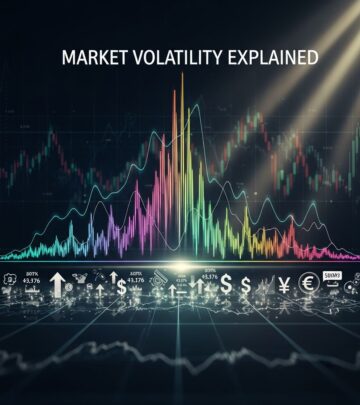
Volatility is a fundamental concept in investing and financial markets that every investor should understand. In simple terms, volatility refers to the degree of variation or fluctuation in the price of a security over a period of time. When markets experience volatility, asset prices rise and fall at varying speeds and magnitudes, creating opportunities and risks for investors. Understanding what volatility is and how it works is essential for making informed investment decisions and managing your portfolio effectively.
Market volatility is defined as a statistical measure of an asset’s deviations from a set benchmark or its own average performance. In other words, volatility measures the severity of price fluctuations that a security or market experiences. When you hear financial commentators discussing “volatile markets,” they’re referring to situations where prices are changing rapidly and unpredictably, moving significantly away from their historical averages or expected patterns.
What Is Volatility?
In the financial world, volatility describes the tendency of asset prices to change rapidly and unpredictably. This concept is related to how much the price of an investment moves up and down over time. The greater the price swings, the higher the volatility; conversely, when prices remain relatively stable, volatility is considered low.
Volatility is often expressed as a percentage to help investors understand the potential magnitude of price changes. For example, if a stock has an annualized volatility of 15%, this means the stock has the potential to either gain or lose approximately 15% of its total value within a year, based on historical patterns and statistical analysis. This percentage representation makes it easier for investors to compare the volatility levels across different securities and asset classes.
The Relationship Between Volatility and Risk
While volatility and risk are not identical concepts, they are closely related. Volatile assets are often considered riskier because their performance is less predictable. Assets with high volatility experience sharper price fluctuations, making future returns less certain. However, it’s important to note that high volatility is not inherently negative—it can represent both danger and opportunity. A highly volatile asset might suffer sharp downside losses, but it could also experience substantial gains.
Investors typically exhibit risk-averse behavior, preferring assets with lower volatility to minimize anxiety and uncertainty. However, some investors, particularly those with longer time horizons and higher risk tolerance, may be willing to accept greater volatility in exchange for potentially higher returns.
Types of Volatility in Markets
Understanding the different types of volatility is crucial for investors and traders. The two primary types of market volatility are historical volatility and implied volatility. Each type serves different purposes in investment analysis and decision-making.
Historical Volatility
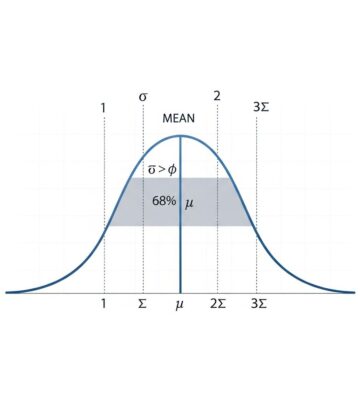
Historical volatility (HV), also known as statistical volatility, examines past price movements to measure how much a security’s price has deviated from its average over a previous, set interval. This type of volatility is calculated by observing a security’s performance over a defined historical period and noting the extent of price fluctuations from its own average price.
To calculate historical volatility, analysts use the standard deviation of annual returns over a specific period. The formula used is:
vol = σ√T
Where:
- vol = volatility over some interval of time
- σ = standard deviation of total returns
- T = total number of periods in the particular time horizon
Historical volatility is useful because it provides concrete data about past behavior. If historical volatility is increasing, it signals caution, as it may indicate something is happening or about to happen with the underlying security. Conversely, if historical volatility is declining, it suggests that market conditions are returning to normal and stabilizing, which is generally viewed as a positive sign by investors.
Traders and investors use historical volatility data to estimate potential future volatility and make informed decisions based on the market’s past behavior. If a stock has a history of large price swings, it indicates higher historical volatility and suggests that investors should be prepared for potentially significant price movements in the future.
Implied Volatility
Implied volatility (IV), also called future volatility or projected volatility, is more complex than historical volatility. Rather than looking backward at actual price movements, implied volatility looks forward by forecasting an asset’s future activity based on current option prices. This type of volatility represents market expectations about how much an asset’s price is expected to move in the future.
To understand implied volatility, it’s helpful to know about options. An option is a financial contract that gives the buyer the right, but not the obligation, to buy or sell an underlying asset at a specific price on or before a certain date. The prices of these options contain valuable information about market participants’ expectations regarding future volatility. If option prices are high, traders expect more significant price swings in the future, suggesting higher implied volatility.
Implied volatility is derived mathematically from option pricing models, which work backward from the market price of the option to determine what volatility assumption would justify that price. This makes implied volatility particularly useful for traders who use options strategies, as it directly influences option pricing and trading decisions.
Volatility as a Risk Indicator
Volatility serves as an important indicator of investment risk. Risk can take many different forms in financial markets, but generally, assets that have greater volatility are perceived as being riskier because they experience sharper price fluctuations. When an asset’s price swings wildly, investors face greater uncertainty about future returns, which increases perceived risk.
The relationship between volatility and risk is so significant that many investors use volatility as a primary measure of investment risk when constructing their portfolios. Lower-volatility assets are typically associated with lower risk, while higher-volatility assets carry greater risk. This relationship helps investors determine appropriate allocations based on their risk tolerance and investment objectives.
What Causes Volatility?
Market volatility doesn’t occur randomly—multiple factors contribute to price fluctuations and market swings. Understanding these drivers can help investors anticipate and respond to volatile market conditions more effectively.
Key Factors Contributing to Volatility
Many different factors can contribute to volatility in financial markets:
- News Events: Major news developments, whether positive or negative, can trigger rapid market movements as investors reassess market conditions.
- Financial Reports: Earnings reports, economic data releases, and other financial publications can cause significant price swings as new information becomes available.
- Social Media Posts: In today’s connected world, influential posts and trends on social media platforms can influence market sentiment and trigger volatility.
- Changes in Market Sentiment: Shifts in investor psychology, fear, greed, and uncertainty can drive abrupt changes in buying and selling patterns.
Economic Indicators
Economic information significantly impacts market volatility. Employment figures, gross domestic product (GDP) growth, and inflation rates play major roles in determining market direction and volatility levels. Negative or positive surprises in economic data can lead to increased uncertainty and volatility. For instance, a higher-than-expected unemployment rate may trigger market fluctuations as investors reassess economic conditions and adjust their portfolios accordingly.
Investor Emotions and Market Sentiment
Investor emotions, collectively known as market sentiment, heavily influence volatility. Fear, greed, and uncertainty can drive abrupt changes in buying and selling patterns. Sudden shifts in sentiment, such as a wave of optimism or a spike in fear, can lead to increased market volatility as traders respond to changing perceptions about future economic conditions and investment returns.
Company-Specific News
The performance and news related to individual companies can significantly affect volatility in specific stocks and, sometimes, the broader market. Earnings reports, product launches, legal issues, or management changes can lead to sharp price movements. Positive or negative news about a specific company can create ripples throughout the broader market, influencing overall market volatility.
Which Assets Are More Volatile?
Different asset classes and securities exhibit varying levels of volatility. Understanding these differences helps investors select appropriate investments based on their risk tolerance and investment objectives.
Generally speaking, stocks are more volatile than bonds, reflecting their higher risk profile and greater sensitivity to economic and company-specific factors. Within the stock market itself, different categories of stocks have different volatility profiles:
- Large-Cap Stocks: Stocks of large, established companies are typically less volatile than smaller companies.
- Small-Cap Stocks: Small-cap stocks are more volatile than large-cap stocks, reflecting greater uncertainty about their future prospects and more limited liquidity.
- Penny Stocks: Penny stocks experience even greater price fluctuations and are considered highly volatile investments.
This relationship exists because larger companies tend to have more stable cash flows, broader customer bases, and greater financial resources, making their stock prices less subject to dramatic swings. Smaller companies lack these stability factors, making their stock prices more sensitive to news, market sentiment, and economic conditions.
Measuring Volatility
Several methods and metrics are used to measure volatility, each providing different insights into price fluctuations and risk levels:
Standard Deviation
Standard deviation measures changes in a security’s price over a specific period, calculating how far prices typically deviate from their average. This statistical measure is one of the most common ways to quantify volatility and is used in many investment analyses and risk assessments.
Beta
Beta (β) measures a security’s volatility in relation to the market as a whole. A security with a beta higher than 1.0 is seen as more volatile than the market, while a beta below 1.0 indicates lower volatility than the market. This relative measure helps investors understand how a specific security’s price movements compare to overall market movements.
Volatility Index
The Volatility Index (VIX) is a measure derived from option prices that represents market expectations for future volatility. It serves as a “fear gauge,” rising during periods of market uncertainty and falling during stable market periods.
The Impact of Volatility on Investment Decisions
Volatility significantly influences investment strategies and portfolio management. Understanding how volatility affects your investments helps you make better decisions aligned with your financial goals.
Higher volatility increases potential returns but also increases potential losses. Investors with longer time horizons and higher risk tolerance may embrace volatility to capture potentially higher returns. Conversely, investors approaching retirement or with lower risk tolerance typically prefer lower-volatility investments to preserve capital and ensure more predictable outcomes.
Portfolio diversification serves as one of the most effective tools for managing volatility. By investing in different asset classes, industries, and geographic regions, investors can reduce overall portfolio volatility while still pursuing meaningful returns. This approach helps smooth out price fluctuations and reduces the impact of volatility from any single investment.
Frequently Asked Questions About Volatility
Q: Is volatility the same as risk?
A: No, volatility and risk are not identical, though they are related. Volatility measures the degree of price fluctuation, while risk refers to the possibility of losing money on an investment. However, volatile assets are typically considered riskier because their performance is less predictable and their prices are more subject to dramatic swings.
Q: Can volatility be positive for investors?
A: Yes, volatility can be positive for investors. While high volatility can mean sharp downside losses, it can also present opportunities for substantial gains. Investors with longer time horizons and higher risk tolerance may benefit from volatility by purchasing undervalued assets during price dips and selling them after price recoveries.
Q: How can I reduce volatility in my portfolio?
A: You can reduce portfolio volatility through diversification across different asset classes, industries, and geographic regions. Additionally, focusing on lower-volatility investments like large-cap stocks and bonds, and maintaining a longer time horizon, can help reduce overall volatility exposure.
Q: What does an annualized volatility of 20% mean?
A: An annualized volatility of 20% means that based on historical patterns, a security has the potential to either gain or lose approximately 20% of its value over the course of a year. This is used to help investors understand the range of potential price movements they might expect.
Q: How is implied volatility different from historical volatility?
A: Historical volatility measures actual past price movements over a specific period, while implied volatility forecasts expected future price movements based on current option prices. Historical volatility is backward-looking and based on actual data, while implied volatility is forward-looking and based on market expectations.
Q: Why do stocks tend to be more volatile than bonds?
A: Stocks are more volatile than bonds because stock returns depend on company profitability and market sentiment, which can change rapidly. Bonds provide fixed income payments and are less sensitive to company-specific events or market sentiment, making them less volatile. This difference reflects the higher risk profile of stock investments.
References
- What Is Volatility? Understanding Market Swings — Business Insider. 2024. https://www.businessinsider.com/personal-finance/investing/what-is-volatility
- Volatility – Meaning, Example, Calculations, Types — Aditya Birla Capital. 2024. https://mutualfund.adityabirlacapital.com/blog/what-is-volatility
- Understanding VIX or Volatility Index — TD Bank. 2024. https://www.td.com/ca/en/investing/direct-investing/articles/understanding-vix
- What is volatility and how does it work? — Fidelity Investments. 2024. https://www.fidelity.com/learning-center/smart-money/what-is-volatility
Similar Articles








Read full bio of medha deb