Vision, Strategy, and Tactics: Key Differences
Understand the critical distinctions between vision, strategy, and tactics for effective organizational planning and execution.
Understanding Vision, Strategy, and Tactics in Business Management
In the realm of business management and organizational planning, three fundamental concepts frequently intertwine and are often misunderstood: vision, strategy, and tactics. While these terms are sometimes used interchangeably in casual conversation, they represent distinct phases of organizational planning and execution. Understanding the precise differences between them is essential for effective decision-making, resource allocation, and long-term success. Each element plays a unique role in the journey from conceptualizing ambitious goals to achieving tangible results. This comprehensive guide explores each concept, their individual characteristics, and how they interconnect to form a cohesive framework for organizational success.
What Is a Vision?
A vision represents the overarching, long-term destination that an organization aspires to reach. It answers the fundamental question: Where do you want to go? What do you want to achieve? The vision describes an idealized future state that the organization is working toward, serving as the inspirational and directional foundation for all organizational activities. Vision statements are typically created by top-level executives and board members, representing the highest aspirations of the organization.
The primary function of a vision is to establish a lasting sense of direction and purpose. A compelling vision enables employees to identify with their organization on a deeper level, fostering motivation and commitment to their work. It provides an orientation function that guides decision-making at all levels of the organization. Every strategic decision, investment, and operational initiative should be evaluated against the fundamental question: “Does this help me realize my vision?”
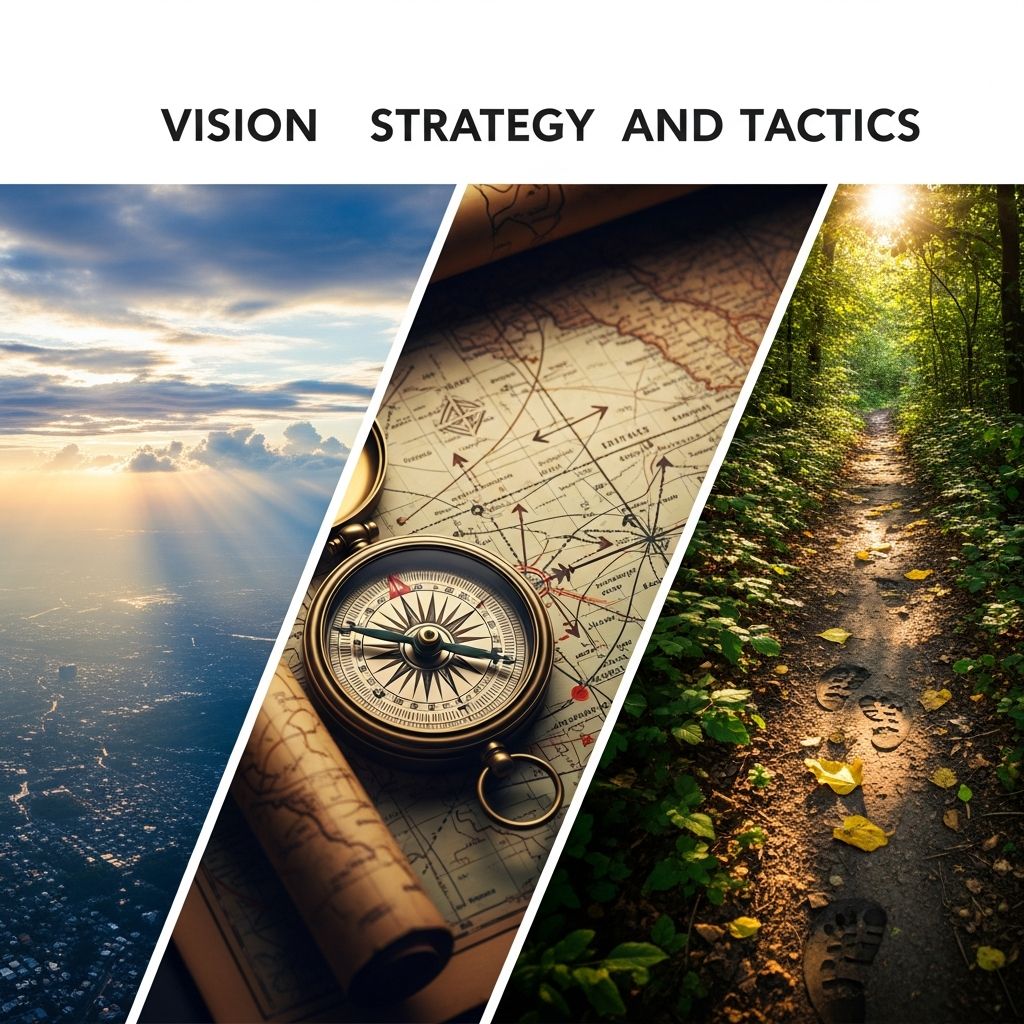
Think of the vision as a compass that provides unwavering direction. Unlike tactics or even strategies, the vision remains relatively stable over time. While minor refinements may occur in response to significant market shifts or organizational evolution, a well-crafted vision typically endures for years or even decades. This stability provides predictability and consistency, allowing organizations to build long-term brand equity and stakeholder trust. For example, a company’s vision might be to become the world’s most trusted provider of sustainable consumer goods, transforming how people think about environmental responsibility in their daily purchasing decisions.
Characteristics of an Effective Vision
An effective vision statement should be:
- Inspirational and motivating to employees and stakeholders
- Clear and easily understood across all organizational levels
- Ambitious yet achievable within a realistic timeframe
- Aligned with core organizational values and culture
- Forward-looking and adaptable to market evolution
- Specific enough to provide direction but broad enough to accommodate growth
What Is a Strategy?
Once an organization has established its vision, the next logical step is determining how to get there. This is where strategy enters the picture. Strategy defines the pathway and approach an organization will use to achieve its vision. If the vision is the destination, the strategy is the route selected to reach that destination. Strategy addresses the critical question: How will we achieve our vision?
In business practice, strategy involves deliberate choices about which markets to invest in, which customer segments to target, how to position the organization relative to competitors, and which products or services to prioritize. A robust strategy requires thorough research and deep understanding of market trends, customer needs, competitive dynamics, and organizational capabilities and limitations. Strategic decisions typically involve senior leadership and shape the organization’s medium-term direction, usually spanning three to five years.
Unlike the vision, which remains relatively constant, strategy must be agile and responsive to environmental changes. Market conditions evolve, customer preferences shift, and competitive landscapes transform. An effective strategy allows for adaptation when circumstances warrant it. However, organizations must strike a careful balance—while adaptability is important, constantly changing strategic direction leads to organizational confusion and wasted resources. Frequent strategy pivots can undermine employee confidence and dilute organizational focus. The ideal approach involves regular strategy reviews, typically annually, with adjustments made only when compelling evidence suggests a course correction is necessary.
Strategic Planning Framework
Developing an effective strategy typically involves several key steps:
- Assess Current State: Conduct a comprehensive SWOT analysis (Strengths, Weaknesses, Opportunities, Threats) to evaluate internal capabilities and external market conditions
- Define Vision and Mission: Articulate clear organizational aspirations and ensure they reflect core values
- Set Long-Term Goals: Establish measurable, achievable objectives aligned with the vision
- Identify Key Strategies: Develop broad strategic initiatives prioritized by impact and feasibility
- Allocate Resources: Ensure sufficient resources are committed to execute the strategy effectively
- Monitor and Review: Establish metrics and review cycles to track strategic progress
What Are Tactics?
Tactics represent the specific, operational actions an organization takes to execute its strategy and make progress toward its vision. While vision addresses the “why” and strategy addresses the “how broadly,” tactics address the “how specifically.” Tactics are concrete, actionable measures implemented at the departmental and functional levels to achieve strategic objectives.
Unlike strategy, which provides medium-term direction, tactics are inherently short-term and reactive. Tactics focus on day-to-day activities and immediate decisions that move the organization closer to its long-term goals. They require careful planning and resource allocation to ensure alignment with overall strategy. For instance, if a marketing strategy is to increase brand visibility through targeted digital communication, specific tactics might include launching a social media campaign on Facebook, creating targeted email marketing sequences, producing video content for YouTube, or establishing partnerships with influential voices in the industry.
The reactive nature of tactics is one of their defining characteristics. To respond successfully to unexpected market developments, competitive threats, or customer feedback, organizations need the flexibility to adjust tactics quickly. Returning to our earlier example: if a marketing department’s strategy is to increase audience visibility through targeted Facebook communication, but initial results prove disappointing, the team might tactically pivot to Instagram or TikTok where their target audience proves more engaged. This tactical flexibility allows organizations to optimize execution without abandoning the underlying strategy.
Scope and Scale of Tactical Decisions
Tactical decisions are typically narrow in scope compared to strategic ones. While strategic decisions affect the entire organization and its future direction, tactical decisions focus on specific departments, projects, or functions. They are implementer by middle management and operational teams rather than senior executives. This narrower scope allows for rapid decision-making and execution, which is critical given the time-sensitive nature of many tactical initiatives.
Key Differences Between Vision, Strategy, and Tactics
Understanding the distinctions between these three elements is crucial for organizational effectiveness. The following table provides a comprehensive comparison:
| Dimension | Vision | Strategy | Tactics |
|---|---|---|---|
| Time Horizon | Long-term (10+ years) | Medium-term (3-5 years) | Short-term (weeks to months) |
| Scope | Organization-wide, overarching | Organization-wide but more focused | Department or function-specific |
| Primary Question | Where do we want to go? | How will we get there? | What specific actions will we take? |
| Decision Makers | Board members, C-suite executives | Senior leadership team | Middle management, operational teams |
| Flexibility | Rarely changes | Periodically reviewed and adjusted | Frequently adjusted based on results |
| Nature | Inspirational | Practical and logical | Operational and execution-focused |
| Examples | Become industry leader in innovation | Invest in R&D; expand to new markets | Launch product campaign; hire specialists |
How Vision, Strategy, and Tactics Work Together
These three elements form an integrated system where each level builds upon and supports the others. The vision provides the aspirational destination, strategy charts the general course, and tactics represent the daily steps along that journey. Effective organizations maintain alignment across all three levels, ensuring that tactical actions genuinely support strategic objectives, which in turn advance the organizational vision.
Consider a multinational company deciding to enter a new geographic market. The strategic plan involves conducting comprehensive market research, financial assessments, and competitive analysis to understand potential opportunities and risks. The tactical decisions in this context might include hiring local sales representatives, adapting marketing messages to reflect local culture and consumer behavior, establishing distribution partnerships with local retailers, and designing product variations tailored to regional preferences. Each tactical decision, while narrow in scope and short-term in nature, collectively supports the strategic objective and advances the overarching vision of global market leadership.
This interconnected nature means that success requires balance and integration. A brilliant vision without sound strategy often remains abstract and unrealized. A well-designed strategy without effective tactical execution fails to deliver results. Conversely, organizations that excel at tactical execution but lack strategic direction and vision often find their efforts scattered and inefficient. The organizations that achieve sustainable success are those that maintain clear vision, aligned strategy, and disciplined tactical execution.
Implementing an Integrated Planning Approach
To effectively leverage vision, strategy, and tactics, organizations should consider implementing a comprehensive planning framework that integrates all three elements.
Step 1: Establish or Refine Your Vision
Begin by ensuring your organizational vision is clearly articulated, inspiring, and aligned with stakeholder values. The vision should answer fundamental questions about the future state your organization aspires to create in the world.
Step 2: Develop Strategic Objectives and Key Results
Based on your vision, establish clear, ambitious strategic goals that reflect your broader mission. Define measurable key results that provide concrete ways to track progress toward these strategic objectives. These should typically cover a 3-5 year planning horizon.
Step 3: Break Down Goals into Tactical Actions
Transform broader strategic goals into specific, measurable tactical actions that clarify the “how” behind the “what.” Assign ownership, establish timelines, and allocate resources for each tactical initiative. These tactics should be monitored and reviewed regularly, with adjustments made based on performance data and changing circumstances.
Step 4: Communicate Across Organizational Levels
Ensure that the vision, strategy, and tactics are communicated clearly throughout the organization. Employees at all levels should understand how their work contributes to strategic objectives and ultimately to the organizational vision.
Step 5: Monitor, Measure, and Adjust
Establish regular review cycles to assess progress. While vision typically remains stable, strategy should be formally reviewed at least annually, and tactics should be reviewed more frequently based on operational needs and performance metrics.
Common Mistakes to Avoid
Organizations often make predictable errors when managing vision, strategy, and tactics:
- Confusing Vision with Strategy: Attempting to establish specific operational steps within the vision statement, which should remain inspirational and forward-looking
- Neglecting the Vision: Becoming so focused on quarterly targets and tactical execution that the broader organizational purpose becomes lost
- Strategy Without Tactics: Developing well-reasoned strategies but failing to translate them into concrete operational actions
- Tactical Chaos: Allowing tactical initiatives to proliferate without ensuring they support core strategic objectives
- Inconsistent Communication: Failing to help employees understand how their work connects to broader strategic and visionary goals
- Excessive Strategy Changes: Pivoting strategy too frequently in response to short-term pressures, causing organizational confusion and resource waste
Frequently Asked Questions
Q: How often should an organization revisit its vision?
A: A well-crafted vision typically remains relatively stable for 10 or more years. However, it should be reviewed during significant organizational milestones, market disruptions, or when the original vision has been largely achieved. Most organizations review their vision every 5-7 years at minimum.
Q: Can tactics be successful if the strategy isn’t clearly defined?
A: While individual tactics might achieve short-term success, without a clear strategy, tactical efforts often become disconnected and inefficient. Organizations may excel at executing individual initiatives but fail to make meaningful progress toward their broader goals.
Q: How do I ensure my strategy aligns with my vision?
A: Regularly review your strategic objectives using your vision as a benchmark. Ask whether each strategic initiative advances your vision. If a strategic priority doesn’t clearly connect to your vision, reconsider whether it truly serves your organization’s long-term interests.
Q: What’s the relationship between mission and vision?
A: Vision describes where you want to go in the future. Mission describes your organization’s purpose and how you will contribute value. Mission typically focuses on the present and near future, while vision is aspirational and future-focused.
Q: How do I communicate vision, strategy, and tactics to employees effectively?
A: Use multiple communication channels and formats. Ensure leaders at all levels understand and can articulate how their department’s strategy and tactics support the organizational vision. Use concrete examples and regularly reinforce these connections.
References
- What Are the Differences Between Vision, Strategy and Tactics? — Inloox. 2024. https://www.inloox.com/company/blog/articles/management-definitions-what-are-the-differences-between-vision-strategy-and-tactics/
- From Vision to Implementation: Breaking Down Strategy vs. Tactics — Tability. 2024. https://www.tability.io/odt/articles/from-vision-to-implementation-breaking-down-strategy-vs-tactics
- Vision vs. Strategy: What’s the Difference? — Indeed Career Guide. 2024. https://www.indeed.com/career-advice/career-development/vision-vs-strategy
- Vision, Mission, Strategy, Tactics – What’s the Difference? — Grace Judson. 2024. https://www.gracejudson.com/vision-mission-strategy-tactics-whats-the-difference/
Similar Articles








Read full bio of Sneha Tete