Virginia Mortgage Rates & Refinance Options Today
Current Virginia mortgage rates, refinancing options, and loan programs for homebuyers.
Current Virginia Mortgage Rates
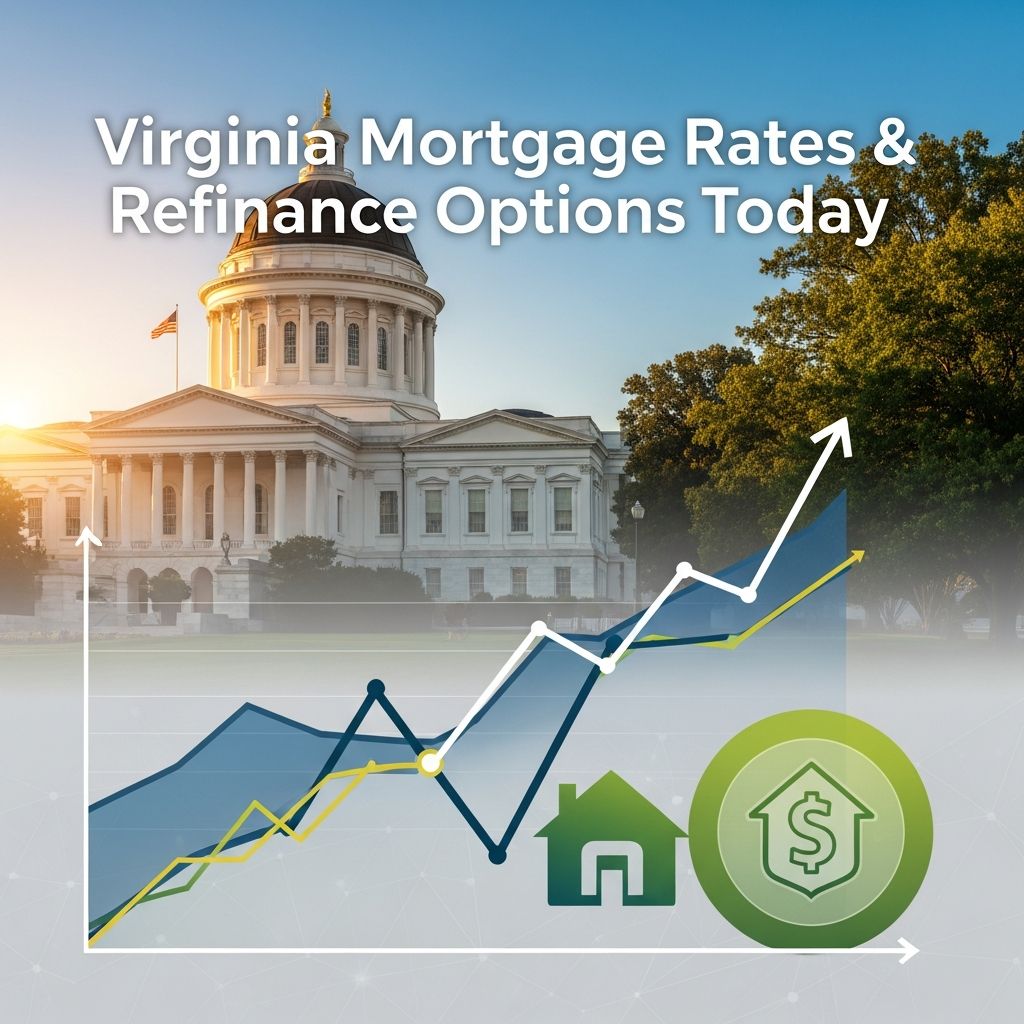
As of Saturday, November 29, 2025, mortgage rates in Virginia reflect the broader national mortgage landscape. The current interest rate for a 30-year fixed mortgage in Virginia stands at 6.31 percent, while the 15-year fixed mortgage rate is at 5.63 percent. These rates represent the average offerings from major lenders and can fluctuate based on individual borrower qualifications and market conditions.
Mortgage rates in Virginia vary significantly based on several critical factors, including your specific location within the state, credit score, debt-to-income ratio, and broader economic conditions such as inflation and Federal Reserve monetary policy decisions. While mortgage rates have declined modestly in recent months compared to earlier in 2025, industry experts predict that 30-year fixed mortgage rates will likely remain above 6 percent through the remainder of the year, making this an important consideration for prospective homebuyers and refinancing homeowners.
Understanding Virginia’s Real Estate Market
Virginia’s housing market presents distinct characteristics that affect mortgage opportunities and homeownership decisions. The state’s real estate statistics as of August and September 2025 paint a picture of a moderately active market with specific trends homebuyers should understand.
Key Market Indicators
- Median home sales price (August 2025): $420,000
- Median home value (August 2025): $405,505
- Median down payment (August 2025): $71,959
- Median days on market (September 2025): 39 days
- Percentage of homes sold above list price (September 2025): 28 percent
- Percentage of homes with price reductions (September 2025): 30.8 percent
- Homeownership rate (Q2 2025): 70.6 percent
These metrics indicate a balanced market where nearly 30 percent of homes are selling above asking price, while almost 31 percent are experiencing price reductions. This dynamic suggests negotiating leverage for buyers, particularly in certain market segments and geographic areas within Virginia.
Refinance Rates in Virginia
Refinancing decisions require careful consideration, especially in the current interest rate environment. Mortgage refinance rates are substantially higher today compared to the pandemic era when historically low rates attracted numerous refinancing applications. As of November 29, 2025, the average 30-year fixed refinance APR is 6.74 percent, which is notably higher than current purchase mortgage rates.
For many homeowners, refinancing no longer makes financial sense unless specific circumstances align favorably. However, homeowners who obtained their mortgages within the last one to two years should monitor refinance rates continuously for potential opportunities to reduce their monthly payments or change loan terms.
Long-term homeowners may have accumulated significant home equity that presents opportunities for cash-out refinancing. According to recent mortgage market data, approximately 48 million U.S. homeowners have access to home equity, with an average of $213,000 in tappable equity available. This equity can be leveraged through cash-out refinances to fund home improvements, consolidate debt, or cover other financial needs.
National Mortgage Rates by Loan Type
While Virginia-specific rates are important, understanding how Virginia rates compare to national averages helps borrowers assess their local market position. As of November 29, 2025, here are the current national average rates by loan product type:
| Loan Product | Interest Rate | APR |
|---|---|---|
| 30-Year Fixed Rate | 6.25% | 6.31% |
| 15-Year Fixed Rate | 5.58% | 5.69% |
| 30-Year Fixed Rate FHA | 6.04% | 6.10% |
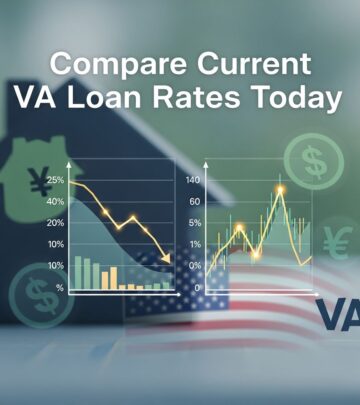
| 30-Year Fixed Rate VA | 6.23% | 6.28% |
| 30-Year Fixed Rate Jumbo | 6.41% | 6.44% |
These rates demonstrate important variations based on loan type and borrower qualification levels. VA loans maintain competitive rates slightly below conventional loans, while FHA loans provide options for borrowers with lower credit scores or smaller down payments. Jumbo loans, for properties exceeding conventional lending limits, naturally carry higher rates reflecting increased lender risk.
Virginia Conventional Mortgage Requirements
Conventional mortgages remain the most common loan type for qualified borrowers in Virginia. Understanding the eligibility requirements helps prospective homebuyers assess whether conventional financing fits their situation.
To qualify for a conventional mortgage in Virginia, lenders typically require a minimum credit score of 620 and a debt-to-income ratio (DTI) of no more than 45 percent. However, these are baseline requirements that vary by lender. Some lenders demonstrate flexibility and may approve DTI ratios up to 50 percent for well-qualified borrowers, while others maintain stricter standards requiring ratios of 36 percent or lower. Your specific credit profile, employment history, savings, and overall financial situation all influence the actual terms offered.
Virginia VA Loan Programs
Virginia residents with military service or current military affiliation benefit from VA loan programs, which represent some of the most advantageous mortgage options available. VA loans don’t require a down payment or private mortgage insurance, eliminating two significant costs that burden many homebuyers.
However, VA loans do require payment of an upfront funding fee, which ranges from 1.25 percent to 2.15 percent for first-time use. This funding fee, while non-negligible, is typically lower than the combination of down payment savings and mortgage insurance avoidance with conventional loans. The VA loan program remains especially valuable for Virginia military families and veterans seeking to build equity without substantial upfront capital requirements.
Virginia USDA Loan Programs
For Virginia residents purchasing rural properties, USDA loans present an excellent mortgage alternative. Guaranteed by the U.S. Department of Agriculture, these loans don’t require a down payment, making homeownership accessible to rural buyers who might otherwise struggle to accumulate sufficient down payment funds.
USDA loan eligibility depends on several factors: the property must be located in a designated rural area, and the borrower must meet specific area income limits. These programs specifically target rural economic development and serve communities underserved by conventional lending. Rural Virginia areas qualify, and interested borrowers should verify their property’s eligibility and their income qualification status through USDA loan resources.
Virginia Housing Conventional Loan Program
Virginia Housing offers specialized conventional mortgage products designed specifically for first-time and repeat homebuyers in the state. This 30-year fixed-rate program requires less cash at closing compared to FHA loans, while maintaining flexibility for various buyer situations and financial circumstances.
The Virginia Housing conventional program can be used for both purchase transactions and cash-out refinances, providing versatility for different homeownership stages. A key advantage involves flexible down payment sources: borrowers can use gift funds, Virginia Housing down payment assistance grants, or the Virginia Housing Plus Second Mortgage program to satisfy down payment requirements.
Applicants must maintain a minimum credit score of 640 and a maximum debt-to-income ratio of 50 percent. The program allows for down payments as low as 3 percent, or just 1 percent when utilizing the down payment assistance grant. For exceptional candidates, the Plus Second Mortgage option may eliminate down payment requirements entirely, though borrowers should understand that not all down payment sources qualify for all loan programs.
Virginia Housing Conventional with No Mortgage Insurance
Virginia Housing offers a specialized variant of their conventional program that eliminates mortgage insurance requirements. Nearly identical to the standard Virginia Housing conventional loan, this product primarily differs in its mortgage insurance provisions and slightly elevated credit score requirements.
Applicants for this program must maintain a minimum credit score of 660, reflecting the reduced lender risk profile. By eliminating mortgage insurance, borrowers achieve meaningful monthly payment reductions compared to traditional conventional loans carrying mortgage insurance. For borrowers able to meet the 660 credit score threshold, this program represents substantial monthly savings over the loan’s 30-year term.
Virginia Housing Plus Second Mortgage Program
The Virginia Housing Plus Second Mortgage program specifically targets first-time homebuyers seeking to eliminate down payment barriers entirely. This innovative program pairs an eligible Virginia Housing first mortgage with a second mortgage that covers the down payment requirement, creating a zero-down-payment pathway to homeownership.
The program structure works by combining a primary 30-year fixed-rate mortgage with a second mortgage covering 3 to 5 percent of the purchase price. Combined, these mortgages provide 100 percent financing without requiring the buyer to contribute cash for down payment purposes. Income limits apply to program qualification, as the initiative targets moderate-income buyers. This program represents a significant opportunity for qualified Virginia first-time homebuyers who have accumulated minimal savings but possess stable employment and adequate credit profiles.
Factors Affecting Virginia Mortgage Rates
Several dynamic factors influence the mortgage rates available to Virginia borrowers at any given time. Understanding these factors helps homebuyers anticipate rate movements and time their mortgage applications strategically.
Credit Score Impact
Your credit score remains one of the most significant individual factors affecting your mortgage rate. Borrowers with excellent credit (760+) typically receive the best available rates, while those with lower scores pay substantially higher rates reflecting increased default risk. Even 20-point credit score differences can result in 0.5 percent rate variations.
Debt-to-Income Ratio
Lenders scrutinize your DTI ratio carefully, comparing total monthly debt obligations to gross monthly income. Lower DTI ratios demonstrate stronger repayment capacity and qualify for better rates. Many lenders consider DTI a stronger predictor of default risk than credit scores alone.
Economic Conditions
Broader economic factors including inflation rates, employment trends, and Federal Reserve monetary policy decisions drive national mortgage rate movements. When inflation concerns rise, the Federal Reserve typically raises interest rates, increasing mortgage rates. Conversely, economic slowdowns often prompt rate reductions.
Geographic Location
Even within Virginia, specific geographic areas may experience rate variations based on local economic conditions, property values, and lender operational costs. Northern Virginia, Hampton Roads, and rural western Virginia areas may see slightly different rate offerings.
Frequently Asked Questions About Virginia Mortgages
Q: What credit score do I need for a Virginia mortgage?
A: Conventional mortgages typically require a minimum 620 credit score, while Virginia Housing conventional programs require 640 (or 660 for no-mortgage-insurance options). FHA loans may accept scores as low as 580. Higher credit scores qualify for better rates.
Q: Should I refinance my Virginia mortgage right now?
A: Refinancing makes sense only if the new rate is at least 1 percent lower than your current rate and you’ll recoup closing costs within your remaining ownership timeline. Current refinance rates around 6.74 percent make refinancing beneficial only for older mortgages with higher original rates.
Q: What’s the difference between interest rate and APR?
A: The interest rate is the annual percentage charged on your loan balance, while APR includes the interest rate plus closing costs and other lender fees, expressed as an annual percentage. APR provides a more complete picture of your actual borrowing cost.
Q: Can I use a gift for my Virginia down payment?
A: Yes, most Virginia mortgage programs including Virginia Housing conventional loans accept gift funds from family members. Lenders require documentation showing the gift is genuinely a gift, not a loan requiring repayment.
Q: Are Virginia USDA loans available in urban areas?
A: No, USDA loans require properties in designated rural areas. Properties in or immediately adjacent to urban areas typically don’t qualify, though some suburban Virginia properties may meet rural designation criteria. Check your specific property’s eligibility through USDA resources.
Q: What home equity can I tap through refinancing?
A: Approximately 48 million homeowners have access to home equity averaging $213,000. You can access this through cash-out refinancing, paying off the original mortgage and obtaining a new larger mortgage, receiving the difference in cash.
Q: How do 15-year mortgages compare to 30-year mortgages?
A: 15-year mortgages have lower interest rates (currently 5.63% vs. 6.31%) but higher monthly payments due to faster principal payoff. They build equity faster and result in substantial interest savings over the loan’s lifetime.
References
- Current Virginia Mortgage & Refinance Rates — Bankrate. 2025-11-29. https://www.bankrate.com/mortgages/mortgage-rates/virginia/
- Compare Current Mortgage Rates for Today — Bankrate. 2025-11-29. https://www.bankrate.com/mortgages/mortgage-rates/
- Compare 30-Year Mortgage Rates Today — Bankrate. 2025-11-29. https://www.bankrate.com/mortgages/30-year-mortgage-rates/
- Today’s 30-Year Refinance Rates — Bankrate. 2025-11-29. https://www.bankrate.com/mortgages/30-year-refinance-rates/
- Current Mortgage Rates Report for Nov. 25, 2025 — Fortune. 2025-11-25. https://fortune.com/article/current-mortgage-rates-11-25-2025/
- Home Equity Access and Tapping Opportunities — ICE Mortgage Monitor. 2025. https://www.mba.org/
- Virginia Housing Programs and Conventional Mortgages — Virginia Housing Development Authority. 2025. https://www.virginiahousing.com/
Similar Articles








Read full bio of Sneha Tete