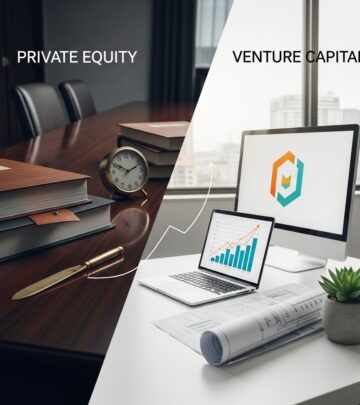
VC Fund: Venture Capital Funding Explained
Understanding venture capital funds, their structure, operations, and role in startup financing.

What is a VC Fund?
A venture capital (VC) fund is a pooled investment vehicle that raises capital from multiple investors to finance early-stage, high-growth potential companies. These funds are typically managed by experienced investment professionals who identify, evaluate, and support promising startups and emerging businesses. VC funds play a crucial role in the entrepreneurial ecosystem by providing not only financial capital but also strategic guidance, industry connections, and operational expertise to help portfolio companies achieve their growth objectives.
Venture capital funding has become instrumental in launching and scaling innovative companies across technology, healthcare, biotechnology, clean energy, and other sectors. VC funds differ from traditional investment vehicles in their focus on high-risk, high-reward opportunities and their hands-on approach to portfolio management. Unlike public market investments, VC funds typically hold equity stakes in their portfolio companies for several years before seeking liquidity through acquisition or initial public offering (IPO).
Key Characteristics of VC Funds
Understanding the fundamental characteristics of venture capital funds is essential for entrepreneurs seeking funding and investors considering venture capital investments:
- High-Risk, High-Reward Investment Strategy: VC funds accept higher failure rates among portfolio companies in exchange for potentially exceptional returns from successful investments. Many portfolio companies may fail or underperform, while a few breakout successes can generate returns of 10x, 100x, or more.
- Long Investment Horizon: VC funds typically commit capital for 10 to 15 years, allowing sufficient time for portfolio companies to develop, scale, and achieve liquidity events. This long-term perspective enables fund managers to make strategic decisions focused on long-term value creation rather than short-term gains.
- Active Involvement: Beyond providing capital, VC fund managers actively participate in portfolio company governance through board seats, strategic guidance, recruitment assistance, and operational mentoring to enhance company performance and reduce risk.
- Equity-Based Returns: VC funds generate returns primarily through equity appreciation and exit events such as acquisitions or IPOs rather than through dividend payments or interest income.
- Illiquidity: VC fund investors face extended holding periods before realizing returns, making these investments suitable primarily for institutional investors and accredited individuals with long-term investment horizons and capital they can afford to lock up.
- Selective Investment Criteria: VC funds employ rigorous due diligence processes to identify companies with strong management teams, large addressable markets, scalable business models, and breakthrough technologies or innovative approaches.
How VC Funds Operate
The operational structure and investment process of venture capital funds follows a well-established framework designed to maximize returns while managing risk across diverse portfolio companies:
Fund Formation and Fundraising
VC fund managers typically establish new funds every 3 to 5 years, raising capital from limited partners (LPs) such as pension funds, university endowments, insurance companies, family offices, and institutional investors. The fund manager presents an investment thesis outlining their strategy, market focus, and track record to potential investors. Once investors commit capital, the fund is officially formed with a predetermined investment period during which the fund can deploy capital into new investments.
Investment Sourcing and Evaluation
Fund managers source investment opportunities through multiple channels including founder referrals, industry conferences, business plan competitions, and relationships with service providers in the entrepreneurial ecosystem. Promising opportunities undergo intensive due diligence examining team capabilities, market opportunity, competitive landscape, business model viability, and financial projections. Successful companies receive term sheets outlining investment terms, valuation, and governance rights.
Portfolio Management
After investment, fund managers work closely with portfolio company leaders to support growth initiatives, provide strategic advice, facilitate introductions to potential customers and partners, and assist with subsequent funding rounds. As the fund matures, the focus shifts toward helping portfolio companies prepare for exit events through acquisition or public market offerings.
Exit and Returns
VC funds seek liquidity events through company acquisitions, mergers, or initial public offerings. Successful exits generate capital gains distributed to fund investors after deduction of management fees and fund operating expenses. Fund performance is typically measured by the multiple on invested capital (MOIC) and internal rate of return (IRR).
Types of VC Funds
Venture capital has evolved to encompass multiple fund types catering to different investment stages and strategies:
- Seed-Stage Funds: Focus on pre-revenue and early-revenue companies, often providing initial capital of $250,000 to $2 million to support product development and market validation.
- Early-Stage Funds: Invest in companies that have achieved product-market fit and demonstrated traction, typically deploying $2 million to $15 million per investment.
- Growth-Stage Funds: Target established companies with proven business models seeking capital for rapid expansion, market penetration, or geographic expansion, with typical investments ranging from $10 million to $50 million or more.
- Later-Stage Funds: Support mature portfolio companies preparing for exit events through acquisition or IPO, often providing mezzanine or bridge financing.
- Sector-Specific Funds: Concentrate investments within particular industries such as healthcare, software, fintech, clean technology, or artificial intelligence.
- Geographic Funds: Focus on specific regions or countries to leverage local market expertise and networks.
- Corporate Venture Capital: Established corporations manage their own venture funds to identify emerging innovations and maintain strategic optionality in their industries.
VC Fund Structure and Economics
Understanding VC fund economics helps explain the incentive structures and financial arrangements governing fund operations:
Fund Size and Capital Structure
VC funds vary significantly in size, from micro-funds managing $25 million to mega-funds controlling $1 billion or more. Fund size influences investment strategy, with smaller funds typically focusing on seed and early-stage opportunities while larger funds pursue growth and later-stage investments. Capital is divided between committed investor capital and management company equity stakes.
Management Fees and Carry
VC fund managers typically charge annual management fees (generally 2 to 2.5% of committed capital) to cover operational expenses. Managers also receive carried interest (typically 20% of profits above a preferred return threshold) incentivizing strong performance. This “2 and 20” fee structure has become industry standard, though variations exist based on fund size and manager track record.
Investor Returns and Valuations
VC fund returns depend on portfolio company valuations at exit events. Early-stage companies typically receive post-money valuations of $5 million to $50 million, while growth-stage companies may command valuations exceeding $100 million. Fund investors receive preferred shares granting rights to dividends, liquidation preferences, and anti-dilution protections to mitigate downside risk.
The VC Fund Investment Process
VC funds follow systematic investment processes to evaluate opportunities and make funding decisions:
- Pitch and Initial Screening: Entrepreneurs present their business plans to fund managers who conduct preliminary assessment of market opportunity, team quality, and strategic fit.
- Due Diligence: Promising companies undergo comprehensive evaluation including team background checks, market validation, competitive analysis, financial modeling, and legal review.
- Investment Committee Review: Fund partners convene to discuss investment merits and decide whether to pursue the opportunity.
- Term Sheet Negotiation: Successful companies receive term sheets specifying valuation, investment size, governance rights, and exit preferences.
- Legal Documentation: Parties execute definitive agreements establishing investment terms and investor rights.
- Fund Deployment: Capital transfers to the portfolio company’s bank account, completing the investment transaction.
Advantages of VC Funding
VC funding offers significant benefits to high-growth companies despite its challenges and equity dilution:
- Access to substantial capital enabling rapid product development, market expansion, and competitive positioning
- Strategic guidance and operational expertise from experienced investors with successful track records
- Industry networks and introductions facilitating customer acquisition, partnerships, and future funding rounds
- Enhanced credibility and market validation through association with reputable venture firms
- Support in attracting top talent through compensation advice and recruitment connections
- Board-level oversight and governance improving operational discipline and accountability
Challenges and Considerations
While VC funding accelerates growth, it presents significant challenges entrepreneurs must carefully evaluate:
- Equity Dilution: Founders’ ownership percentages decrease with each funding round, reducing long-term wealth capture unless company valuation grows proportionally.
- Loss of Control: VC investors gain board representation and decision-making authority, potentially constraining founder autonomy on strategic matters.
- Exit Pressure: VC funds operate within defined fund lifecycles, potentially pressuring portfolio companies toward exits (acquisition or IPO) even if founders prefer different trajectories.
- Liquidity Constraints: Growth-stage investments restrict founder liquidity until exit events, potentially limiting personal wealth realization.
- Market Volatility: Public market conditions and economic cycles significantly influence IPO feasibility and acquisition valuations, creating timing uncertainties.
VC Fund Performance and Returns
Venture capital returns exhibit wide dispersion reflecting high-risk investment nature. Historical data demonstrates significant performance variation across fund managers and vintages. Top-quartile VC funds frequently generate returns exceeding 3x MOIC and 25%+ IRR, while median performers may achieve 1.5x to 2x returns. Approximately 50% of VC-backed companies fail to return invested capital. However, successful portfolio companies can generate returns of 10x, 100x, or greater, making single winners capable of offsetting numerous failures.
Fund performance depends on numerous factors including investment thesis quality, market timing, portfolio company execution, and exit market conditions. Experienced managers with established track records, strong industry networks, and proven operational expertise tend to outperform less experienced funds. However, past performance does not guarantee future results, and selecting between competing funds requires careful evaluation of strategy, team capabilities, and alignment with investor objectives.
Frequently Asked Questions
Q: What is the minimum investment required to invest in a VC fund?
A: Minimum investments typically range from $250,000 to $1 million or more, depending on the fund’s size and investor status. Many VC funds require investor accreditation status. Some emerging platforms offer lower minimum investments through secondary market participation.
Q: How long does it take for VC-backed companies to achieve returns?
A: VC fund investors typically experience extended holding periods of 10 to 15 years before realizing meaningful returns. Early-stage portfolio companies may require 5 to 10 years to reach exit events, with subsequent distributions occurring over the fund’s lifecycle.
Q: What percentage of VC-funded startups succeed?
A: Approximately 75% to 80% of VC-backed companies fail to return invested capital, though many may generate positive returns on company valuations before failure. Success rates vary by industry, geography, and fund quality, with technology companies historically showing higher success rates than capital-intensive sectors.
Q: How do VC funds manage risk across portfolio companies?
A: VC funds employ diversification across multiple portfolio companies, thorough due diligence before investment, active portfolio monitoring and governance, and strategic support initiatives to improve company performance and reduce failure risk.
Q: Can founders maintain control of their companies after VC investment?
A: Founders retain operational control in most cases, but VC investors typically secure board seats and approval rights over major decisions. Negotiating favorable governance terms during funding rounds helps founders preserve decision-making authority while accommodating investor oversight.
Q: What alternatives exist to traditional VC funding?
A: Alternative funding sources include angel investors, corporate venture capital, crowdfunding, bank loans, Small Business Administration (SBA) loans, accelerator programs, and bootstrap financing through founder capital or retained earnings.
References
- National Venture Capital Association Industry Reports — NVCA. 2024. https://www.nvca.org/research
- Pitchbook Venture Capital Analysis — Pitchbook Data. 2024. https://pitchbook.com/
- U.S. Securities and Exchange Commission: Venture Capital — SEC Official Website. 2024. https://www.sec.gov/education/capitalraising/
- Cambridge Associates LLC Venture Capital Performance Analysis — Cambridge Associates. 2023. https://www.cambridgeassociates.com/
- Kauffman Foundation Research on Startup Survival and Success Rates — Ewing Marion Kauffman Foundation. 2023. https://www.kauffman.org/
Similar Articles








Read full bio of Sneha Tete