Venmo Business Accounts: Complete Setup and Payment Guide
Learn how to set up and manage Venmo Business for merchant payments
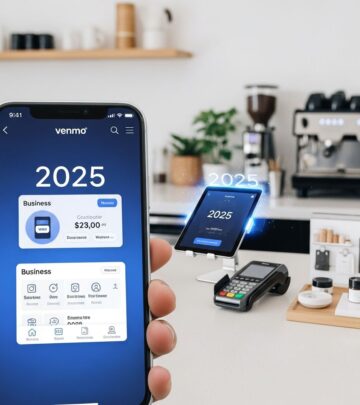
Digital payment solutions have transformed how small businesses and independent professionals manage transactions. Among the most accessible options for entrepreneurs seeking straightforward payment processing is Venmo for Business, a mobile-first platform that enables merchants to accept payments through the widely-used Venmo app. Unlike traditional payment processors that demand extensive documentation and setup fees, Venmo Business offers an alternative approach designed for businesses of all sizes.
Understanding Venmo Business: Core Concepts
Venmo Business represents a merchant-focused adaptation of Venmo’s personal peer-to-peer payment platform. While personal Venmo accounts facilitate transactions between friends and family with minimal or no fees, business profiles enable merchant-to-customer transactions with transaction-based pricing. A business profile functions as a separate identity linked to your existing personal Venmo account, allowing you to maintain clear separation between personal spending and commercial revenue.
The fundamental distinction between personal and business accounts centers on purpose and transparency. A personal account prioritizes informal money sharing, whereas a business profile presents a professional storefront identity, complete with transaction records and merchant features. This separation proves crucial for tax reporting and bookkeeping accuracy, particularly as your business scales.
Initiating Your Merchant Profile: Step-by-Step Setup
Creating a Venmo Business account requires minimal friction compared to conventional merchant services. You can establish a business profile through either an existing personal Venmo account or a newly created one. The process involves converting your account into a business profile—no separate account opening or lengthy application procedures.
Once activated, your business profile appears distinct from your personal handle, displaying your business name instead. This professional presentation builds customer confidence and reinforces brand identity. You can seamlessly toggle between personal and business modes within the app with just a few taps, maintaining organizational clarity.
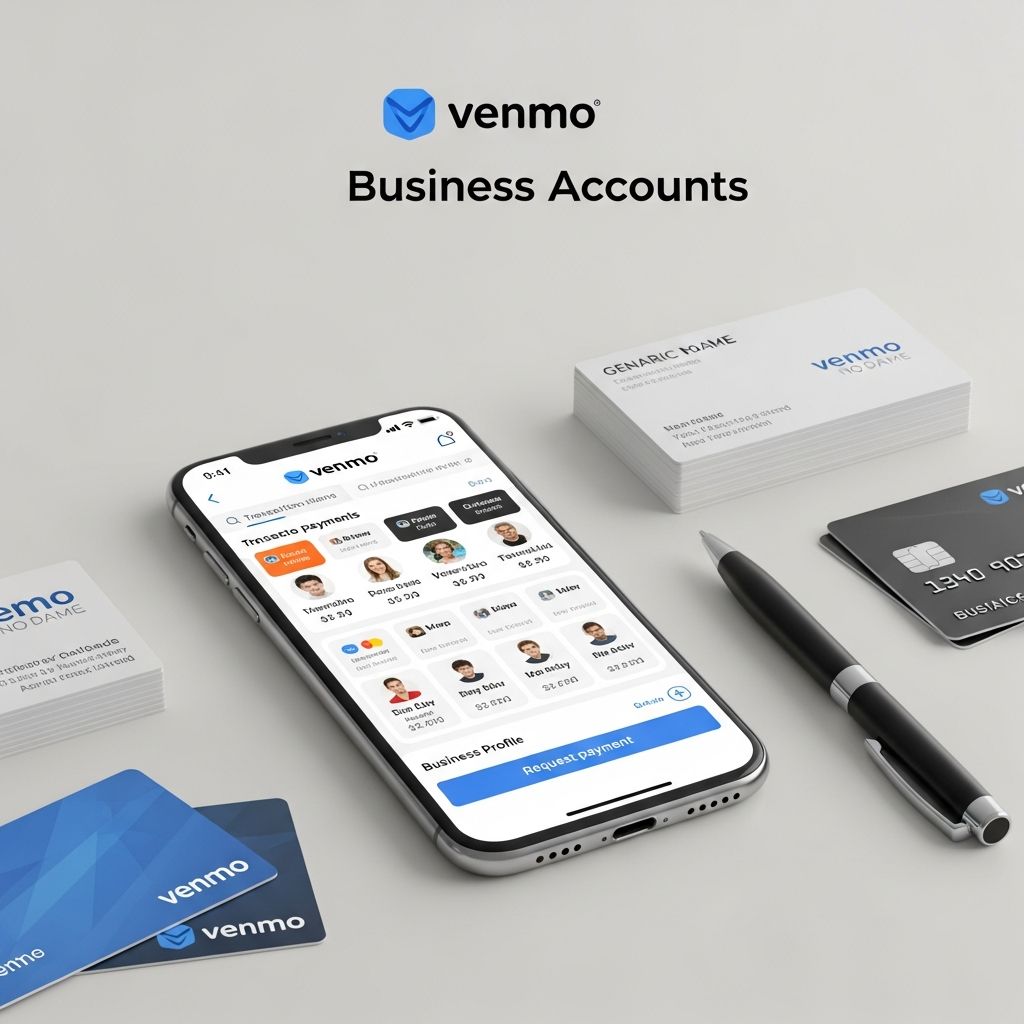
Venmo provides complimentary resources to support your merchant presence. New business users receive a free kit containing:
- Tabletop QR code display with stand
- Five branded stickers
- Wallet card with lanyard for customer reference
These materials facilitate payment collection during pop-up events, retail environments, or service locations where in-person transactions occur.
Transaction Fee Structure and Pricing
Understanding Venmo Business’s fee model is essential for profitability calculations. The platform employs transaction-based pricing rather than subscription models, meaning costs scale directly with payment volume.
| Payment Method | Transaction Fee |
|---|---|
| Venmo business profile transfers | 1.9% + $0.10 |
| In-app or online payments | 3.49% + $0.49 |
| Credit card payments | 3% |
| Tap-to-Pay transactions | 2.29% + $0.10 |
Critically, Venmo imposes no setup fees, monthly maintenance charges, or account initiation costs. This zero-barrier entry point appeals particularly to solo entrepreneurs, freelancers, and small-scale merchants testing new revenue streams without financial commitment.
Fund transfers warrant separate consideration. Standard bank transfers to your linked account remain free and process within 1–3 business days. Instant transfers to your bank account incur a 1.75% fee, providing flexibility for cash flow management. This tiered approach lets you balance speed and cost depending on operational requirements.
Payment Acceptance Methods: Customer Perspectives
Venmo Business accommodates multiple customer payment pathways, recognizing diverse transaction environments and preferences. Understanding these channels helps optimize your payment infrastructure.
QR Code Payments represent the most contactless option. Customers scan your phone screen or printed QR code through their Venmo app, completing payment without physical proximity or card swiping. This method suits retail, events, or service-based businesses. You can email or text QR codes to remote clients, enabling virtual payment collection for freelance work, consulting, or remote services.
Digital Wallet Integration connects Venmo to online checkout systems. Businesses can embed Venmo as a payment option within Shopify storefronts, Braintree platforms, or PayPal checkouts, streamlining e-commerce transactions. Customers recognize Venmo during checkout, reducing cart abandonment and increasing conversion rates—PayPal’s internal analysis indicates 73% of Pay with Venmo traffic converts to completed purchases.
Username-Based Transfers allow direct payments to your business username, ideal for clients already comfortable with Venmo’s interface. This straightforward approach requires minimal explanation or technical guidance.
Tap to Pay Functionality enables contactless payments through NFC technology on compatible devices, though Venmo does not provide physical card readers or dedicated point-of-sale equipment. This limitation makes Venmo primarily suitable for mobile-first or micro-merchant models rather than traditional brick-and-mortar retail requiring dedicated terminals.
User Experience and Customer Adoption
Venmo’s widespread adoption among younger demographics creates inherent advantages for merchant adoption. With millions of existing U.S. users holding active Venmo accounts, customers often prefer this familiar payment method over unfamiliar processors. This familiarity translates to faster checkout processes and reduced friction during transactions.
Research demonstrates that Venmo users exhibit stronger purchase behavior patterns. Analysis shows Venmo users are 19% more likely to make repeat purchases compared to non-Venmo users, suggesting the payment method itself can influence customer retention.
Additionally, Venmo’s social features create organic marketing opportunities. While users can maintain transaction privacy, many choose to share purchases with comments and emojis on Venmo’s social feed. This visibility exposes your business to millions of other platform users, creating subtle word-of-mouth marketing effects without active promotional spending.
Tax Reporting and Financial Documentation
A significant advantage for conscientious business operators is Venmo’s automated tax preparation support. Merchants receiving more than $600 annually in business payments automatically receive a 1099-K tax form, eliminating manual record-gathering and ensuring IRS compliance. This documentation streamlines annual filing and reduces accounting complexity, particularly valuable for sole proprietors without dedicated bookkeeping staff.
The platform maintains detailed transaction histories within the business profile, facilitating expense tracking, revenue reconciliation, and financial analysis. This built-in record-keeping simplifies quarterly business reviews and tax preparation cycles.
Competitive Advantages for Specific Business Models
Venmo Business excels for particular entrepreneurial contexts. Solo practitioners—freelancers, consultants, photographers, and service providers—benefit from low operational costs and minimal setup barriers. Pop-up retailers and temporary vendors avoid expensive POS equipment investment while accepting contactless payments at markets or events.
Direct-to-consumer brands targeting younger demographics gain conversion advantages through Venmo integration. The payment method’s popularity among Gen Z and millennial consumers reduces checkout friction and abandonment.
However, high-volume merchants handling substantial transaction amounts should evaluate whether percentage-based fees become cost-prohibitive compared to flat-rate processors. A business processing $50,000 monthly would incur approximately $950 in fees at the standard 1.9% rate, potentially exceeding alternative solutions.
Important Limitations and Considerations
Venmo’s terms explicitly permit business use through official business profiles; however, misusing personal accounts for consistent merchant transactions violates platform policies. Systematic business use through personal accounts risks account suspension or freezing, disrupting payment collection and cash flow.
The platform’s limited feature set suits specific business models but may constrain others. Venmo does not provide physical card readers, hardware terminals, or comprehensive POS systems. Brick-and-mortar retailers requiring integrated inventory systems, employee management, or advanced reporting capabilities need supplementary solutions.
International payment capabilities remain limited compared to global payment processors. While Venmo offers major currency account details for receiving overseas payments via one-off fee arrangements, the platform prioritizes domestic U.S. transactions.
FAQ: Common Questions About Venmo Business
Can I convert my personal Venmo account to business?
Yes. You can create a business profile within your existing personal account without opening a separate account. The profiles remain distinct, allowing easy switching between personal and business contexts.
What fees apply when customers pay with credit cards?
Credit card payments incur a 3% transaction fee, higher than Venmo balance or linked bank account transfers.
How quickly do payments arrive in my bank account?
Standard transfers process free within 1–3 business days. Instant transfers cost 1.75% and arrive immediately for time-sensitive cash needs.
Does Venmo require approval or underwriting?
No. Venmo Business enables rapid setup without lengthy application processes, credit checks, or formal approval cycles, unlike traditional merchant services.
Can I track sales and revenue through Venmo?
Yes. Business profiles maintain comprehensive transaction records and can generate invoices, supporting financial reporting and tax preparation.
Strategic Recommendations for Implementation
Evaluate Venmo Business primarily for service-based, freelance, or direct-to-consumer models targeting younger demographics. The platform’s strength lies in convenience, brand familiarity, and frictionless mobile adoption rather than comprehensive merchant infrastructure.
Calculate whether transaction fees align with your profit margins and volume expectations. For low-value transactions or high-volume operations, the percentage-based model may prove cost-prohibitive. For occasional transactions or remote payment collection, Venmo’s simplicity offers exceptional value.
Maintain compliance by consistently using your business profile for merchant transactions rather than personal accounts, protecting your account from suspension and ensuring proper financial documentation.
References
- Venmo for Business – Business Profiles — PayPal/Venmo. Accessed March 31, 2026. https://venmo.com/business/profiles
- Venmo Personal vs Business: Key Differences Explained — Bonsai. Accessed March 31, 2026. https://www.hellobonsai.com/blog/venmo-business-vs-personal
- Venmo for Business: Benefits, use cases, and integration guide — Checkout.com. Accessed March 31, 2026. https://www.checkout.com/blog/venmo-for-business-guide-use-cases-and-strategy-advice
- How to Use Venmo for Business: Getting Started, Pros & Cons — Business.com. Accessed March 31, 2026. https://www.business.com/articles/venmo-business/
- Venmo Fees: Features, and How To Accept Payments — SwipeSum. Accessed March 31, 2026. https://www.swipesum.com/insights/venmo-for-business-fees-features-and-how-to-accept-payments
- Accept Business Payments – Venmo — PayPal/Venmo. Accessed March 31, 2026. https://venmo.com/business/start
Similar Articles








Read full bio of Sneha Tete