Vendor: Definition, Types, and Business Role
Understanding vendors: their role in supply chains and business operations.

What Is a Vendor?
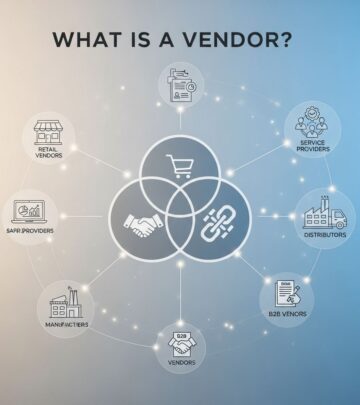
A vendor is a person or business entity that sells products or services to another company or directly to consumers. Vendors are essential participants in the modern economy, operating across diverse industries including manufacturing, retail, technology, and professional services. They serve as critical links in supply chains, providing businesses with the goods and services necessary for daily operations and growth.
The primary role of a vendor is to deliver value through quality products, competitive pricing, and reliable service. By partnering with vendors, companies can reduce operational costs, improve efficiency, and access specialized resources or expertise that may not be available internally. In today’s interconnected business environment, most organizations recognize vendor partnerships as fundamental to long-term success and competitive advantage.
Understanding the Vendor Role in Business
Vendors operate in various capacities within the broader business ecosystem. Some function as direct suppliers, shipping materials and products straight from production facilities to their customers. Others operate as intermediaries, sourcing products from manufacturers and distributing them to businesses or consumers. This flexibility allows vendors to adapt to different market needs and business models.
The influence of vendors on business operations cannot be overstated. They directly impact pricing strategies, product quality standards, and overall customer satisfaction. By ensuring that companies receive the goods and services they need, when they need them, vendors play a vital role in maintaining operational continuity and enabling business growth. Many organizations now rely on multiple vendors to diversify their supply chains and minimize the risk of disruption.
Types of Vendors
Product-Based Vendors
Product-based vendors primarily focus on selling finished goods to businesses and consumers. They can operate in both B2B and B2C markets, though their main revenue typically comes from business-to-business transactions. In 2024, the global manufacturing industry’s market size reached $14.5 trillion, demonstrating the substantial economic importance of product-based vendors.
Examples of product-based vendors include major corporations like Apple, which provides electronics and accessories through direct sales and authorized resellers, and 3M, which supplies a wide range of products from medical supplies to office products to businesses and retailers worldwide. These vendors enable companies to access high-quality goods at scale, driving operational efficiency and supporting business expansion.
Service-Based Vendors
Service-based vendors provide expertise and professional support rather than tangible products. They offer specialized services that help businesses operate more efficiently and address complex challenges. Common service-based vendors include IT support providers, marketing consultants, legal firms, and management consultants.
These vendors primarily serve B2B clients seeking to enhance operations, improve processes, or gain competitive advantages through external expertise. The U.S. professional services sector is expected to reach $2.07 trillion in revenue by 2028, underscoring the growing importance of service-based vendors in the modern economy. Businesses increasingly recognize the value of outsourcing specialized functions to dedicated vendors rather than maintaining expensive in-house departments.
B2B Vendors
Business-to-business (B2B) vendors supply goods or services from one company to another, rather than to individual consumers. These vendors play a critical role in industrial supply chains, providing raw materials, components, specialized software, and professional services. B2B vendors enable businesses to acquire the resources, technology, and expertise needed to operate efficiently and remain competitive in their respective markets.
The B2B vendor landscape encompasses a wide range of specializations, from manufacturing suppliers providing raw materials and components to technology vendors offering enterprise software solutions. These partnerships are typically characterized by longer contract terms, larger transaction volumes, and more complex negotiation processes compared to B2C relationships.
Vendor vs. Supplier vs. Contractor: Key Differences
While vendors, suppliers, and contractors are often used interchangeably in business conversations, they have distinct roles and functions within organizational structures.
| Aspect | Vendor | Supplier | Contractor |
|---|---|---|---|
| Definition | Sells finished products or services to businesses or consumers | Provides raw materials, parts, or components used in manufacturing | Offers specialized services or labor under a contract for a specific project |
| Primary Function | Distributes and sells goods or services in bulk (wholesale) or retail quantities | Supplies inputs needed to produce or assemble final products | Completes specific work or services based on agreed contract terms |
| Target Market | B2B and B2C customers | Manufacturers, wholesalers, and other vendors | Businesses requiring specialized expertise for projects |
| Nature of Goods/Services | Ready-to-use products or services like office supplies, software, or food | Materials or components such as fabric, steel, or chemicals | Skilled labor or technical expertise such as construction, consulting, or IT development |
| Example Industries | Retail, e-commerce, technology, professional services | Manufacturing, agriculture, industrial production | Construction, IT consulting, legal services, marketing |
| Payment Structure | Per transaction, through purchase orders, or service agreements | Based on bulk orders, supply contracts, or recurring agreements | Hourly rates, per milestone, or upon project completion |
| Relationship Duration | Relies on regular customer purchases of goods or services | Depends on manufacturers and retailers for long-term partnerships | Works on project basis and may not maintain long-term engagements |
| Impact on Operations | Affects product availability, service efficiency, and sales revenue | Influences production costs, quality, and supply chain stability | Affects project timelines, budgets, and specialized outcomes |
The Importance of Vendor Selection and Management
Selecting the right vendor is a critical business decision that can significantly impact operational success. Organizations must carefully evaluate potential vendors based on multiple criteria to ensure alignment with business objectives and operational requirements.
Key Vendor Selection Criteria
Technical Capability and Expertise: Assess whether the vendor possesses the necessary technical skills, certifications, and experience to deliver the required products or services. For instance, if you need a software development vendor, verify they have proficiency in your required technology stack and relevant industry experience.
Scalability and Capacity: Determine whether the vendor can scale operations to meet your business growth. A vendor might offer competitive pricing, but if they cannot accommodate increased volumes or adapt to changing requirements, they may become a constraint on your business expansion. Evaluate their infrastructure, staffing levels, and responsiveness to urgent demands.
Reliability and Track Record: Research the vendor’s history with other clients, their on-time delivery rates, and their reputation for quality. References from existing customers provide valuable insights into their performance and reliability.
Pricing and Payment Terms: Compare pricing models among competing vendors while considering the total cost of ownership. Evaluate payment terms, minimum order quantities, and any volume discounts that could improve your financial position.
Location and Logistics: Consider geographic proximity, shipping capabilities, and supply chain logistics. Vendors with reliable distribution networks can reduce delivery times and associated costs.
Vendor Relationships and Partnership Models
Modern business emphasizes strategic vendor partnerships rather than transactional relationships. Companies increasingly recognize that strong vendor relationships contribute to innovation, improved quality, and operational resilience. Effective vendor management involves:
- Regular communication and performance reviews
- Clear contract terms and service level agreements
- Collaborative problem-solving approaches
- Mutual commitment to continuous improvement
- Fair pricing that supports vendor sustainability
Challenges in Vendor Management
While vendors provide substantial value, managing vendor relationships presents ongoing challenges. Supply chain disruptions, quality inconsistencies, pricing volatility, and communication gaps can create operational difficulties. Organizations must develop robust vendor management systems and contingency plans to mitigate these risks. Diversifying the vendor base across multiple providers reduces dependency on any single vendor and enhances supply chain resilience.
Frequently Asked Questions
Q: What is the difference between a vendor and a distributor?
A: A vendor sells products or services directly to businesses or consumers, while a distributor specifically focuses on moving products through supply chains to reach end customers. Distributors are typically intermediaries in the supply chain, whereas vendors can operate at various points in the distribution network.
Q: How can businesses evaluate vendor performance?
A: Businesses evaluate vendor performance through metrics such as on-time delivery rates, product quality scores, responsiveness to issues, pricing competitiveness, and customer satisfaction feedback. Regular performance reviews and key performance indicators (KPIs) help organizations track vendor effectiveness.
Q: What role does vendor management software play in modern business?
A: Vendor management software streamlines procurement processes, tracks vendor performance, manages contracts, and facilitates communication. These systems improve visibility into vendor relationships and help organizations optimize costs and minimize risks.
Q: How should companies handle vendor disputes or quality issues?
A: Clear contract terms should outline dispute resolution procedures and quality standards. Open communication, documentation of issues, and collaborative problem-solving typically resolve most vendor disputes. Escalation procedures should be established for unresolved issues.
Q: Can a company function with a single vendor?
A: While possible, relying on a single vendor creates supply chain vulnerability. Business continuity best practices recommend diversifying vendors across multiple providers to mitigate risk and ensure operational resilience during disruptions.
References
- What is a Vendor: Definition and Types — Ramp. 2025-11-29. https://ramp.com/blog/what-is-a-vendor
- Global Manufacturing Market Size 2024 — Statista. 2024. https://www.statista.com/outlook/io/worldwide
- Professional Services Sector Revenue Forecast — U.S. Bureau of Labor Statistics. 2024. https://www.bls.gov/oes/current/oes_stru.htm
Similar Articles








Read full bio of medha deb