Understanding Vehicle Valuation: Stated vs. Agreed Coverage
Learn how different vehicle valuation methods protect your investment.
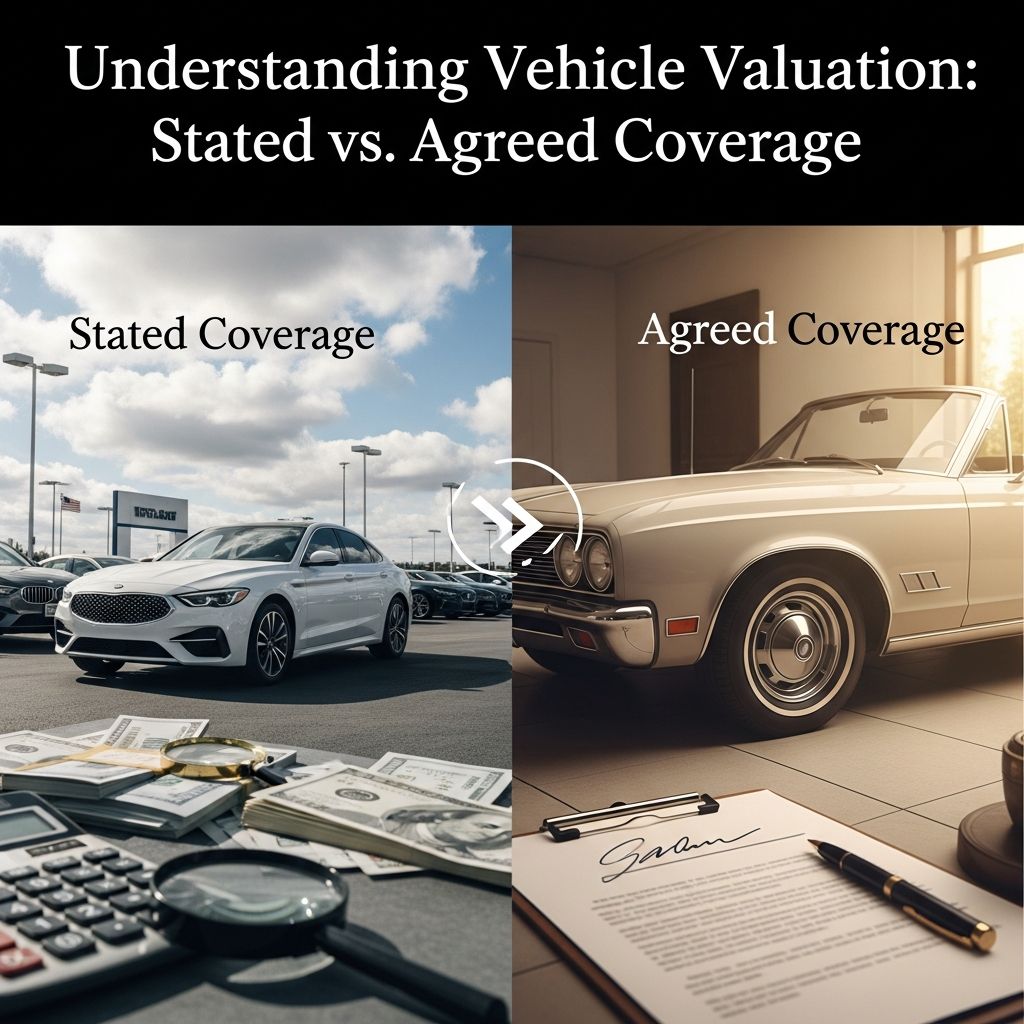
When insuring vehicles with unique characteristics or special modifications, vehicle owners face critical decisions about how their cars should be valued for insurance purposes. Two primary approaches—stated valuation and agreed valuation—offer different frameworks for establishing coverage amounts. While both methods involve setting a vehicle’s value through mutual discussion between the owner and insurer, they operate under fundamentally different claim settlement principles that can significantly impact what owners receive when losses occur.
The Foundation: How Vehicle Valuation Works in Insurance
Insurance companies traditionally use actual cash value (ACV) to determine claim payouts, which represents what a vehicle is worth at the specific moment a loss occurs. This approach considers depreciation, market conditions, and the vehicle’s current condition. However, actual cash value creates challenges for owners of specialized vehicles—including commercial equipment carriers, classic automobiles, and customized motorcycles—whose true value may exceed standard depreciation calculations. To address this gap, insurers developed alternative valuation methods that allow owners to participate in establishing vehicle value upfront, potentially providing more predictable claim outcomes.
Stated Valuation: Owner-Determined Coverage Limits
Stated valuation permits vehicle owners to declare the amount they believe their vehicle is worth when obtaining insurance coverage. This approach works particularly well for commercial vehicles requiring specialized modifications, such as refrigerated trucks or plows, where market comparables are difficult to establish. The owner determines a valuation based on factors including:
- Current market conditions and comparable vehicle prices
- The vehicle’s existing condition and maintenance history
- Mileage and usage patterns
- Specialized or modified equipment attachments
- Recent upgrades or replacement parts
- Customizations that enhance functionality or performance
The primary appeal of stated valuation lies in premium calculation. The declared value becomes the baseline for determining insurance costs—typically, higher stated values result in proportionally higher premiums. This structure incentivizes owners to declare realistic, defensible values rather than inflated amounts. Owners may need to provide documentation supporting their stated value, such as purchase receipts, maintenance records, or professional appraisals.
However, a critical distinction separates how stated values function for premium purposes versus claim settlements. While the stated amount influences what owners pay for coverage, it does not guarantee that exact amount will be paid in a claim. Insurers retain the right to compare the stated value against the vehicle’s actual cash value at the time of loss, paying whichever amount is lower. This provision creates a gap between owner expectations and actual payouts.
Agreed Valuation: Guaranteed Protection for Specialty Vehicles
Agreed valuation operates under fundamentally different principles. Under this approach, the vehicle owner and insurance company collaborate to establish a value before the policy issues, based on concrete documentation and mutual assessment. Rather than the owner unilaterally declaring a value, both parties examine evidence to reach consensus. Documentation supporting agreed valuations typically includes:
- Professional appraisals from certified evaluators
- High-quality photographs documenting condition and features
- Receipts and documentation for upgrades or restoration work
- Historical records tracking maintenance and repairs
- Provenance documentation for rare or collectible vehicles
- Market analysis for comparable vehicles
The transformative feature of agreed valuation emerges during claims. Once the parties establish an agreed value and incorporate it into the policy, that amount becomes guaranteed in the event of a total loss. The insurance company commits to paying the agreed amount regardless of depreciation, market fluctuations, or other factors affecting actual cash value. This guarantee eliminates the uncertainty and potential disputes that can accompany stated value claims.
Agreed valuation policies are commonly offered through specialty insurers focused on classic cars, collectibles, and high-value vehicles. Companies like Hagerty and Chubb have built substantial business models around providing agreed value coverage for vehicles whose value may appreciate over time or whose unique characteristics make standard valuation methods inappropriate.
Comparing Claim Settlement Approaches
| Feature | Stated Valuation | Agreed Valuation |
|---|---|---|
| Value Determination | Owner declares value unilaterally | Owner and insurer collaborate on value |
| Claim Payout Guarantee | Insurer pays stated value OR actual cash value, whichever is less | Insurer pays full agreed value regardless of depreciation |
| Documentation Required | May require supporting documentation | Requires appraisals and comprehensive documentation |
| Best For | Commercial vehicles with modifications | Classic cars and appreciating collectibles |
| Premium Impact | Higher stated values increase premiums proportionally | Often competitive premiums due to lower risk profile |
| Dispute Risk | Higher—insurer may contest value at claim time | Lower—value predetermined and guaranteed |
Why the Payout Difference Matters
The distinction between these approaches creates real financial consequences. Consider a scenario involving a stated value policy on a commercial refrigeration truck. An owner declares the vehicle worth $85,000 based on recent equipment additions and customizations. When the truck suffers a total loss, the insurer determines its actual cash value at $62,000, accounting for depreciation and market conditions. Despite the owner’s stated value, the insurance company pays $62,000—the lesser amount—leaving the owner substantially undercompensated relative to the stated coverage level.
Under an agreed value policy with the same $85,000 vehicle, the claim settlement process differs entirely. Having mutually established $85,000 as the appropriate value during policy inception, the insurer guarantees that $85,000 payment upon total loss, regardless of what depreciation or market analysis might suggest at claim time. The owner receives full protection matching their coverage expectations.
Vehicle Types and Coverage Suitability
Different vehicle categories benefit from different valuation approaches. Commercial vehicles—particularly those with specialized attachments—often represent optimal candidates for stated valuation policies. These vehicles frequently have equipment that increases their functional value beyond what standard market comparisons would suggest. A landscape company’s truck with integrated snow-plowing equipment, salt spreaders, and hydraulic systems exemplifies a vehicle whose true value exceeds that of identical trucks lacking such modifications.
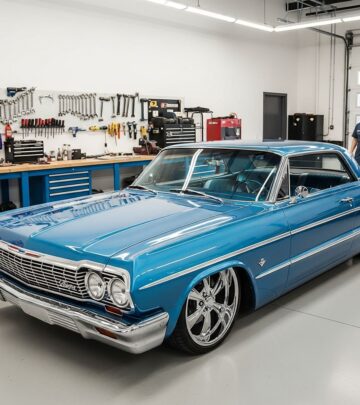
Classic automobiles, rare motorcycles, and collectible vehicles typically align better with agreed valuation approaches. These vehicles often appreciate rather than depreciate, and their value depends heavily on condition, provenance, and market demand rather than standard depreciation tables. A restored 1963 Ferrari or a pristine vintage Harley-Davidson represents an asset where collaborative valuation and guaranteed protection make financial sense.
Premium Considerations and Cost Impact
Stated valuation policies generally appeal to owners seeking lower premium costs. By declaring realistic values aligned with actual vehicle utility rather than aspirational assessments, owners can achieve competitive rates. The direct relationship between declared value and premium calculations rewards conservative, defensible valuations.
Agreed valuation policies, while sometimes commanding higher premiums than standard comprehensive coverage, often prove cost-effective for specialty vehicles. These policies typically involve vehicles that are well-maintained, infrequently driven, and pose lower claims risk to insurers. The reduced mileage and careful operation of classic cars, for example, justify competitive premium pricing despite the guaranteed payout structure. For high-value vehicles, the premium difference may be minimal compared to the coverage certainty provided.
Documentation and Preparation Requirements
Successfully obtaining either valuation type requires proper preparation. Owners considering stated valuation should compile comprehensive documentation supporting their declared value, including:
- Recent purchase receipts or sales documentation
- Detailed records of all modifications and upgrades
- Professional appraisals or evaluations
- Photographs showing current condition
- Maintenance records demonstrating proper care
- Market research or comparable vehicle pricing
Owners pursuing agreed valuation policies face more rigorous documentation requirements, necessitating professional appraisals and comprehensive condition assessments. However, this investment creates the advantage of predetermined, guaranteed values that eliminate future disputes.
Common Misconceptions About Valuation Policies
Many vehicle owners misunderstand the relationship between stated values and claim payments. A widespread misconception holds that stating a value guarantees receiving that amount at claim time—a false assumption that can lead to disappointing claim outcomes. Insurance companies clearly retain the ability to compare stated values against actual cash value and pay the lower amount. Understanding this distinction prevents unrealistic expectations during the claims process.
Another misconception suggests that agreed valuation policies guarantee inflated payouts unrelated to vehicle reality. In fact, agreed valuations must be supported by documentation and represent genuine collaborative assessments of vehicle worth. Insurance companies conducting appraisals protect themselves against overvaluation while ensuring owners receive fair, predetermined protection.
Selecting the Right Approach for Your Vehicle
Vehicle owners should base valuation method selection on specific circumstances. Stated valuation suits owners of commercial vehicles, modified personal-use vehicles, or specialized equipment carriers where modifications significantly enhance value beyond stock configurations. This approach works best when vehicle owners have realistic expectations about vehicle value and maintain thorough documentation.
Agreed valuation better serves owners of classic vehicles, collectibles, or rare automobiles whose value may not follow standard depreciation curves. This approach provides certainty for high-value vehicles and eliminates the risk of post-loss valuation disputes. Owners willing to invest time in comprehensive appraisals gain peace of mind through guaranteed protection.
Working With Insurers on Valuation
Successful valuation requires active collaboration with insurance providers. For stated valuation, owners should clearly communicate vehicle modifications, special features, and the rationale behind their declared value. Providing supporting documentation strengthens the position and increases the likelihood of claim acceptance at the stated amount.
For agreed valuation, owners must cooperate fully with appraisers and provide complete access to vehicles for evaluation. Transparent communication about restoration work, maintenance practices, and vehicle history facilitates accurate valuations that protect all parties involved. Building this collaborative relationship from policy inception prevents complications during claim settlement.
Frequently Asked Questions
Can I switch from stated to agreed valuation during my policy term?
Switching between valuation methods typically requires policy modification or policy cancellation and replacement. Contact your insurance provider to understand modification procedures and any impact on coverage or premiums.
What happens if I overstate my vehicle’s value?
With stated valuation, overstating value increases premiums without providing additional claim protection—insurers will pay the lower of stated or actual cash value. With agreed valuation, overstated values would likely be rejected during the appraisal process before policy inception.
Does agreed valuation cover depreciation between policy years?
Agreed valuation covers the established value at the time of loss without depreciation adjustments. However, some policies may include provisions allowing value adjustment during renewal periods based on vehicle condition changes.
Which approach is more expensive?
Stated valuation generally costs less due to owner-declared values and presumed higher risk. Agreed valuation costs vary based on vehicle type and condition, but specialty insurers often provide competitive rates for well-maintained vehicles.
Are these policies available from standard auto insurers?
Traditional auto insurance companies primarily offer standard ACV coverage. Stated and agreed valuation policies are more commonly available through specialty insurers, particularly those focusing on commercial vehicles, classic cars, or collectibles.
References
- Stated Amount vs. Agreed Value Car Insurance — Experian. 2024. https://www.experian.com/blogs/ask-experian/stated-amount-vs-agreed-value-car-insurance/
- What is Stated vs. Guaranteed Value Insurance? — Hagerty. 2024. https://www.hagerty.com/resources/insurance-guides/what-is-stated-vs-guaranteed-value-insurance
- Agreed Value vs. Stated Amount — American Family Insurance. 2024. https://www.amfam.com/resources/articles/on-the-road/agreed-value-vs-stated-amount
- Actual Cash Value vs. Stated Value vs. Agreed Value — Premier Mountain Insurance. 2024. https://www.premiermountaininsurance.com/agreed-value-car-insurance/
- What Is Agreed Value Insurance? — Progressive. 2024. https://www.progressive.com/answers/agreed-value-insurance/
Similar Articles








Read full bio of Sneha Tete