Selecting the Right Vehicle for Growing Families
Navigate essential factors when choosing a car suited to parenting needs

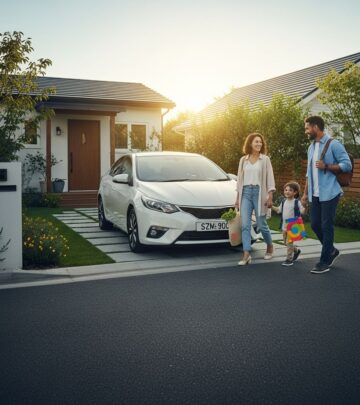
Becoming a parent fundamentally changes transportation priorities. The family car transforms from a personal conveyance into a mobile sanctuary that must accommodate multiple passengers, diverse cargo needs, and evolving lifestyle demands. Whether you’re expecting your first child or expanding an existing family, selecting an appropriate vehicle requires careful consideration of numerous factors beyond style and performance. This guide explores the essential criteria that should inform your automotive decision-making as you navigate the intersection of parenthood and vehicle ownership.
Understanding Your Family’s Transportation Requirements
Before evaluating specific vehicle options, establish clarity about your household’s actual transportation needs rather than speculative future scenarios. Parents often overestimate or underestimate their requirements, leading to vehicles that either prove unnecessarily large or frustratingly cramped.
Consider the number of children you plan to have and their anticipated age ranges during your vehicle’s ownership period. A vehicle suitable for an infant and toddler may feel inadequate once those children become school-aged and their activities multiply. Additionally, assess how frequently you transport additional passengers such as extended family members, childcare providers, or your children’s friends.
Evaluate your typical journey patterns. Families with primarily local, neighborhood-based transportation needs operate differently from households managing lengthy highway commutes or frequent road trips. Your climate and geographic location also influence vehicle selection—snowy regions require different capabilities than temperate areas, while rural settings demand different features than urban environments.
Safety Features as Your Primary Selection Criterion
No aspect of vehicle selection supersedes safety when children occupy the vehicle. Modern automobiles offer increasingly sophisticated protective technologies that warrant careful comparison across models you’re considering. Crashworthiness ratings, derived from standardized testing protocols, provide objective comparisons of how vehicles protect occupants during collisions. The National Highway Traffic Safety Administration (NHTSA) and Insurance Institute for Highway Safety (IIHS) conduct rigorous impact testing that produces quantifiable safety performance data.
Beyond structural crash protection, evaluate the availability and quality of advanced driver assistance systems. Technologies such as automatic emergency braking, blind-spot detection, lane-keeping assistance, and adaptive cruise control substantially reduce accident probability. These features prove particularly valuable for parents managing the cognitive load of driving while attending to children’s needs.
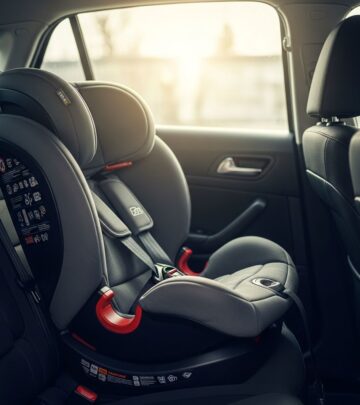
Childproof features deserve specific attention. Built-in vehicle safety systems should include rear door child locks, clear sightlines for rear-seat monitoring, and properly positioned LATCH connectors that facilitate secure child safety seat installation. Some vehicles incorporate innovative features such as rear-seat reminder alerts that prompt drivers to check for passengers before exiting, particularly valuable for preventing tragedy from forgotten children.
Interior Space Configuration and Practical Cargo Solutions
The relationship between vehicle interior volume and family functionality extends far beyond simple square footage. A spacious interior proves worthless if that space arranges in configurations that don’t accommodate your family’s typical cargo patterns.
Evaluate seating arrangements systematically. Vehicles accommodating five passengers suit many growing families, while larger households or those regularly transporting additional passengers may require seven or eight-seat configurations. The placement and width of middle seats significantly impact daily usability—cramped center positions make that seat undesirable except as emergency overflow accommodation. Some vehicles offer flexible seating arrangements such as removable or reconfigurable rows that adapt to changing family needs.
Cargo space behind occupied seating rows determines practical functionality. A vehicle claiming impressive total interior volume proves less useful if accommodating all passengers leaves negligible room for strollers, car seats, groceries, or recreational equipment. Vehicles specifically designed to maximize usable cargo space while maintaining passenger capacity offer superior real-world functionality compared to those optimizing merely theoretical volume measurements.
Storage compartments throughout the interior—including door pockets, center console capacity, and under-seat access—substantially improve daily usability. Parents appreciate vehicles offering abundant small-item storage for snacks, toys, tissues, and emergency supplies without requiring constant tidying to maintain visibility and safety.
Fuel Efficiency and Operational Cost Considerations
Fuel consumption directly impacts vehicle affordability, particularly for families managing the financial realities of expanding household size. Vehicles delivering superior fuel economy reduce ongoing operational expenses, stretching limited family budgets further. This consideration gains importance when evaluating larger vehicles—while a compact car may seem significantly cheaper upfront, a midsize SUV with hybrid technology might deliver comparable or superior overall value depending on your usage patterns.
Evaluate both conventional fuel efficiency and alternative powertrain options. Hybrid vehicles combining traditional engines with electric propulsion systems offer improved efficiency without the range limitations some families associate with fully electric vehicles. Fully electric vehicles present compelling long-term value propositions for households with reliable charging access and typical daily mileage falling within battery range capabilities.
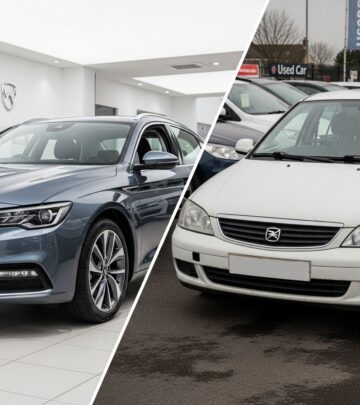
Beyond fuel costs, calculate insurance premiums, maintenance expenses, and depreciation rates as you compare vehicles. Some manufacturers warrant extended coverage for powertrains and emissions systems, reducing unexpected expense risks. Vehicles with reputation for reliability and simple service procedures ultimately prove more economical than bargain-priced options requiring frequent repairs.
Reliability and Long-Term Ownership Satisfaction
Vehicle reliability becomes increasingly critical for family transportation. Parents lack flexibility to accommodate unexpected mechanical failures—missing childcare pickups or school commitments creates cascading complications extending far beyond inconvenience.
Manufacturer reliability records, accessible through publications evaluating vehicle construction quality and ownership experiences, provide valuable decision-making data. Brands demonstrating consistent mechanical dependability reward families with predictable, uninterrupted transportation. This reliability translates into reduced stress for parents already managing multiple demands simultaneously.
Warranty coverage provides additional peace-of-mind protection during the ownership period when unexpected issues most frequently arise. Manufacturers offering comprehensive warranties demonstrate confidence in their engineering while protecting your financial investment. Extended warranty options allow families to budget predictably for maintenance rather than confronting surprise repair expenses.
Practical Features Enhancing Daily Parenting Operations
Beyond fundamental transportation functionality, numerous vehicle features substantially improve the daily experience of driving with children. Infotainment systems integrating smartphone connectivity enable hands-free communication and audio entertainment. Rear-seat entertainment systems, while not essential, can reduce travel friction during longer journeys involving young children.
Climate control functionality matters significantly, particularly rear-seat temperature management. Children prove more vulnerable to temperature extremes, making vehicles offering independent rear-zone climate adjustment valuable investments. Some families prioritize heated seats for cold-weather regions, while others emphasize ventilated seating for hot climates.
Vehicle door handles, power window controls, and locking mechanisms should accommodate parents managing multiple young children simultaneously. Vehicles offering easy-to-operate door handles and simple child lock activation reduce the physical coordination required during passenger loading and unloading in challenging environments.
Visibility factors frequently overlooked prove critical during daily operation. Vehicles offering clear rear and side sightlines with minimal blind spots reduce accident risks when maneuvering in parking areas or low-speed conditions. Some vehicles incorporate camera systems and parking assistance features that substantially improve driver awareness, particularly valuable when children occupy surrounding parking areas.
Vehicle Categories Suited to Family Transportation
Different vehicle categories suit distinct family needs and preferences. Midsize sedans deliver fuel efficiency and affordability for families prioritizing passenger capacity over cargo volume. Three-row midsize SUVs offer maximum flexibility, accommodating growing families while maintaining reasonable fuel consumption. Full-size SUVs provide commanding driving positions and spacious interiors suited to large families or those regularly transporting recreational equipment.
Compact SUVs balance maneuverability suitable for urban environments with increased cargo capacity compared to traditional sedans. Hybrid powertrains available across most categories improve fuel efficiency without requiring charging infrastructure investment. Electric vehicles suit families with reliable home charging and daily driving patterns within battery capabilities.
Evaluating Cost Factors Beyond Purchase Price
| Cost Category | Impact on Total Ownership |
|---|---|
| Fuel or Electricity | Varies significantly based on powertrain choice and driving patterns |
| Insurance | Influenced by vehicle value, safety ratings, and repair costs |
| Maintenance and Repairs | Depends on manufacturer reliability and warranty coverage |
| Depreciation | Popular models retain value better than niche vehicles |
| Registration and Taxes | Varies by jurisdiction and vehicle specifications |
Comprehensive cost evaluation extends well beyond initial purchase price. Calculate estimated five-year ownership costs by incorporating fuel, insurance, maintenance, and depreciation predictions. Vehicles with lower purchase prices may prove more expensive long-term if maintenance costs or poor fuel economy offset initial savings.
Test Driving and Practical Evaluation Protocols
Dealer test drives provide valuable experience but rarely replicate actual family transportation patterns. Request extended test periods allowing you to evaluate vehicles during typical family conditions. Test installing your existing child safety seats—many vehicles accommodate certain seats better than others due to LATCH connector positioning and seat design nuances.
Evaluate vehicles during various weather and traffic conditions if possible. Quiet highway driving differs significantly from urban maneuvering or parking lot navigation. Bring family members who regularly occupy the vehicle to provide input on seat comfort, visibility, and practical functionality.
Assess how vehicles perform with actual cargo you regularly transport. Test whether your stroller, recreational equipment, and typical groceries fit comfortably. Evaluate how easily you can load and unload child safety seats, groceries, and other items while managing young children simultaneously.
Timing Your Vehicle Purchase Decision
Vehicle purchase timing influences available inventory, pricing, and model options. Midyear and end-of-month timing often provides greater negotiating leverage as dealers prioritize inventory clearance. However, purchase timing should never override practical family needs—buying an inadequate vehicle simply because pricing looked favorable creates years of transportation frustration.
Consider your timeline before children arrive if possible. Purchasing vehicles during the later pregnancy months allows thorough evaluation and installation of car seats before arrival day chaos. However, families already managing young children should never delay necessary vehicle changes hoping for optimal purchase timing.
Key Takeaways for Parent Vehicle Selection
- Safety performance through crash testing and driver assistance technology should guide primary selection decisions
- Evaluate usable cargo space and seating configurations specific to your family’s actual needs rather than theoretical maximum capacity
- Compare total ownership costs including fuel, insurance, and maintenance rather than focusing exclusively on purchase price
- Prioritize reliability and warranty coverage to minimize unexpected expenses and transportation disruptions
- Test vehicles thoroughly under realistic family conditions before finalizing purchase decisions
- Balance current needs with anticipated family growth over your vehicle’s ownership period
Frequently Asked Questions
Should families choose larger vehicles automatically?
Larger vehicles offer practical advantages for many families but prove unnecessarily bulky and expensive for others. Evaluate your specific transportation patterns rather than assuming bigger always means better. A well-configured midsize vehicle often serves families more effectively than an oversized SUV you don’t utilize.
Are hybrid vehicles worth the additional cost for families?
Hybrid powertrains improve fuel efficiency, reducing operational costs that may justify premium pricing over conventional engines. Evaluate your anticipated annual mileage and fuel costs in your region to determine payback periods. For families driving substantial distances, hybrids typically prove economically advantageous within five to seven years.
What vehicle features matter most for parent safety?
Crashworthiness ratings, automatic emergency braking, blind-spot detection, and rearview cameras collectively reduce accident risk substantially. Child locks and LATCH compatibility ensure proper safety seat installation and security. Vehicles combining these features offer optimal protection for vulnerable young passengers.
How important is interior layout compared to total volume?
Interior layout proves equally important as total volume. A vehicle arranged inefficiently wastes space, while thoughtful design maximizes practical functionality. Evaluate how seating, cargo areas, and storage compartments suit your specific family patterns.
References
- National Highway Traffic Safety Administration — U.S. Department of Transportation. 2026. https://www.nhtsa.gov/
- Cars.com Best Family Car of 2026 — Cars.com. February 2026. https://www.cars.com/articles/best-family-car-of-2026-520768/
Similar Articles








Read full bio of Sneha Tete