Vehicle Protection in Bankruptcy: Chapter 7 vs Chapter 13
Understand how different bankruptcy types affect car ownership and discover strategies to keep your vehicle.

When facing financial difficulties that lead to bankruptcy filing, one of the most pressing concerns for many debtors involves their transportation. Your vehicle often represents essential personal property needed for employment, family responsibilities, and daily living. Understanding how bankruptcy law addresses vehicle ownership is crucial for making informed decisions about your financial future.
Understanding Bankruptcy’s Two Main Pathways
The bankruptcy system provides two primary approaches for individuals struggling with overwhelming debt. Each pathway treats your assets, including vehicles, quite differently. The distinctions between these options fundamentally shape whether you can retain ownership of your car throughout the bankruptcy process.
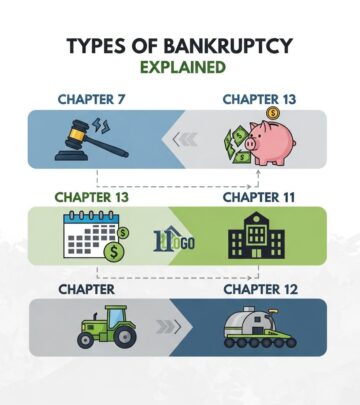
Chapter 7 bankruptcy operates on a liquidation model, where the bankruptcy trustee identifies non-exempt assets and sells them to generate funds for creditor repayment. This process aims to discharge eligible unsecured debts like credit cards and medical bills. Chapter 13 bankruptcy follows a reorganization approach, establishing a three-to-five-year repayment plan that allows you to retain your assets while addressing your debt obligations systematically.
Vehicle Equity and State Exemption Laws
The fundamental question of whether you keep your car during bankruptcy revolves around vehicle equity and state-specific exemption protections. Vehicle equity represents the difference between what your car is worth and what you still owe on any loan secured by that vehicle.
Calculating vehicle equity involves a straightforward mathematical process. Take your car’s fair market value, which can be determined through resources like Kelley Blue Book or professional appraisals, and subtract your outstanding loan balance. The resulting number is your equity. If you own the car outright with no loan, the vehicle’s entire value constitutes your equity.
State exemption laws determine which portion of your vehicle’s equity remains protected from creditor claims. These exemptions vary significantly by jurisdiction. Some states offer modest vehicle exemptions, while others provide substantially more protection. For example, Ohio permits motor vehicle exemptions up to $4,000 for individuals and $8,000 for married couples filing jointly. Texas allows the entire value of one vehicle per licensed household driver. New York limits vehicle exemptions to $2,400. Understanding your specific state’s exemption threshold is essential for predicting whether your car remains protected.
Chapter 7 Bankruptcy and Vehicle Ownership
Filing for Chapter 7 bankruptcy creates potential vulnerability for vehicle ownership, though many debtors successfully retain their cars through this process. Your ability to keep the vehicle depends on several interconnected factors.
Situations Where You Can Keep Your Vehicle in Chapter 7
- Your vehicle’s equity falls entirely within your state’s exemption limit
- You own the car outright and its value stays beneath the exemption threshold
- You remain current on all auto loan payments
- You pursue reaffirmation or redemption strategies to formally retain the vehicle
- Your state provides robust vehicle exemptions that fully cover your car’s value
When your vehicle equity remains protected under exemption law, you can maintain ownership without interference from the bankruptcy trustee. This commonly occurs with vehicles that have depreciated significantly or where loan payoff is near completion, leaving minimal remaining equity.
Risks and Complications in Chapter 7
The bankruptcy trustee possesses authority to liquidate non-exempt vehicle equity when it exceeds state exemption protections. For instance, if your car is worth $12,000 and you owe $8,000 on the loan, your equity is $4,000. If your state’s exemption limit is $3,000, the trustee can potentially sell your vehicle, provide you with $3,000 (the exempted amount), and distribute the remaining $1,000 to creditors.
Delinquency on auto loan payments creates additional complications. When you fall behind on car payments, the lender’s security interest supersedes exemption protections. The lender can repossess your vehicle without awaiting trustee involvement, regardless of exemption status. This occurs because the lender holds a secured claim on the vehicle and maintains repossession rights when payments are missed.
Strategic Options for Retaining Vehicles in Chapter 7
Reaffirmation agreements represent one powerful tool for keeping your car in Chapter 7 bankruptcy. Through reaffirmation, you formally agree with your lender to continue honoring the auto loan obligations despite the bankruptcy discharge. This contractual arrangement signals your intent to maintain the vehicle and your commitment to ongoing payments. Courts must approve reaffirmation agreements, ensuring they represent a genuine ability to pay and don’t create undue hardship.
Redemption offers an alternative path when you own a vehicle with significant equity. This process allows you to pay the vehicle’s current fair market value to the lender in a lump sum, thereby obtaining clear title while potentially paying substantially less than the outstanding loan balance. Redemption works most advantageously when vehicles have declined significantly in value but retain substantial loan balances.
Surrendering the vehicle provides an exit strategy when keeping the car isn’t feasible. By voluntarily returning the vehicle to the lender, you eliminate personal liability for remaining loan balances through the bankruptcy discharge. However, this option leaves you without transportation and may trigger credit reporting consequences similar to repossession, though the voluntary nature may reduce associated damage.
Chapter 13 Bankruptcy and Vehicle Ownership
Chapter 13 bankruptcy generally provides more favorable vehicle ownership outcomes compared to Chapter 7, though specific protections depend on your circumstances and state law.
Core Advantages for Vehicle Retention in Chapter 13
Under Chapter 13’s reorganization framework, your property remains protected throughout the repayment plan period. Unlike Chapter 7’s liquidation process, your car won’t be sold to pay creditors. Instead, your reorganized financial plan addresses vehicle obligations as part of your overall debt management strategy.
If you own your vehicle outright and its value remains within state exemption limits, you keep the car without additional obligations. When your vehicle’s value exceeds exemption thresholds, Chapter 13 permits you to retain ownership by committing to pay the non-exempt equity through your repayment plan. This arrangement protects vehicle ownership while ensuring creditors receive payment from your disposable income over the plan’s life.
Managing Auto Loans During Chapter 13
Chapter 13 provides powerful tools for managing auto loan complications. If you’ve fallen behind on payments, the bankruptcy filing triggers an automatic stay that halts repossession. Your repayment plan can include a provision to catch up on missed payments through the plan itself, rather than requiring an immediate lump-sum payment. You’ll typically resume regular loan payments while simultaneously addressing arrearages through the plan.
The bankruptcy court may also reduce your auto loan’s interest rate under appropriate circumstances. When a vehicle loan carries an above-market interest rate or the loan terms become problematic, Chapter 13 courts can modify the loan structure to produce more manageable payments.
Continuing Payment Obligations
Maintaining current payment status remains critically important in Chapter 13 bankruptcy. If you stop making regular auto loan payments during your repayment plan, the lender retains the right to repossess your vehicle. The automatic stay protecting you from repossession remains in effect, but willfully defaulting on payments demonstrates bad faith to the bankruptcy court and may threaten your case’s viability.
Special Circumstances and Complexities
Jointly Owned Vehicles and Multiple Debtors
When spouses or co-owners are involved, vehicle treatment becomes more nuanced. If both individuals appear on the vehicle title or loan documents, the car is considered jointly owned. In joint bankruptcy filings, the vehicle is evaluated once using combined exemption amounts where applicable. When only one spouse files bankruptcy, that spouse’s ownership interest becomes part of the bankruptcy estate, while the non-filing spouse retains their interest.
Community property states apply different rules than common law property states. In community property jurisdictions, vehicles acquired during marriage are often treated as jointly owned even when only one spouse’s name appears on the title. This distinction can significantly impact exemption calculations and ownership rights during bankruptcy.
Necessity and Equity Considerations
Bankruptcy courts recognize that vehicles are often essential for maintaining employment and managing household responsibilities. This necessity doctrine influences how trustees and judges approach vehicle retention. A modest, practical vehicle necessary for earning income receives greater protection than a luxury vehicle owned outright.
The nature of vehicle equity also matters. Courts distinguish between minimal equity situations and cases involving substantial accumulated equity. When you’ve paid down your loan significantly or own the vehicle free and clear, courts may scrutinize vehicle retention more carefully, particularly in Chapter 7 cases.
Protecting Your Vehicle Through Bankruptcy
Essential Action Items
- Obtain your state’s current exemption limits for vehicles before filing
- Calculate your vehicle’s fair market value and outstanding loan balance accurately
- Ensure you’re current on all auto loan payments before and after filing
- Discuss reaffirmation, redemption, or surrender options with your bankruptcy attorney
- Maintain insurance coverage on your vehicle throughout the bankruptcy process
- Document all vehicle maintenance and payment records for trustee inquiries
Selecting the Appropriate Bankruptcy Chapter
Your vehicle situation should influence your bankruptcy filing choice. If you have substantial vehicle equity exceeding exemption limits and need to retain the vehicle, Chapter 13 typically provides better protection through its reorganization framework. Chapter 7 works well when vehicle equity stays within exemptions or when your car is relatively new with minimal equity built up.
Long-Term Implications and Credit Recovery
Your bankruptcy filing and vehicle treatment strategies carry consequences extending beyond the immediate filing period. Reaffirming an auto loan means that loan will continue reporting to credit bureaus, potentially helping rebuild credit when payments remain current. Surrendering a vehicle or allowing repossession creates credit damage that accumulates beyond the bankruptcy’s direct impact.
In the years following bankruptcy discharge, maintaining perfect vehicle payment history becomes crucial for credit recovery. Demonstrating responsible vehicle ownership through consistent, timely payments rebuilds creditworthiness and improves future financing opportunities.
Frequently Asked Questions
Q: Will bankruptcy automatically mean losing my car?
A: No. Many debtors successfully retain vehicles through bankruptcy using exemption protections, reaffirmation agreements, or redemption strategies. Loss of vehicle isn’t automatic and depends on specific circumstances.
Q: What if I’m behind on car payments before filing bankruptcy?
A: Filing bankruptcy triggers an automatic stay that halts repossession, giving you time to address arrearages. In Chapter 13, your plan can include catch-up payments. In Chapter 7, you’d need to reaffirm the loan or face potential repossession after discharge.
Q: Can bankruptcy reduce my auto loan’s interest rate?
A: In Chapter 13 bankruptcy, courts can modify loan terms, potentially reducing interest rates on secured vehicle loans under certain circumstances.
Q: Should I pay off my car before filing bankruptcy?
A: Not necessarily. Paying off a vehicle immediately before bankruptcy might be considered a fraudulent transfer if it appears designed to hide assets. Consult an attorney about the implications of your specific situation.
References
- Can I Keep My Car After Filing for Bankruptcy? — Gertz & Rosen. Accessed March 2026. https://www.gertzrosen.com/can-i-keep-my-car-after-filing-for-bankruptcy/
- What Happens to My Car During Bankruptcy? — Experian. Accessed March 2026. https://www.experian.com/blogs/ask-experian/what-happens-to-my-car-during-bankruptcy/
- Car Ownership and Bankruptcy — Korotkin Law. Accessed March 2026. https://www.korotkinlaw.com/blog/2022/june/car-ownership-and-bankruptcy/
- The Motor Vehicle Exemption Under Bankruptcy Law — Justia. Accessed March 2026. https://www.justia.com/bankruptcy/exemptions/motor-vehicle-exemption/
- How Will Bankruptcy Affect Ownership of My Car? — Chance McGhee Law. Accessed March 2026. https://www.chancemcgheelaw.com/sanantoniobankruptcyblog/how-will-bankruptcy-affect-ownership-of-my-car
Similar Articles








Read full bio of medha deb