Maximizing Vehicle Value: The Financial Case for Optimal Ownership Duration
Discover the financial sweet spot for keeping your car to maximize savings and minimize costs.
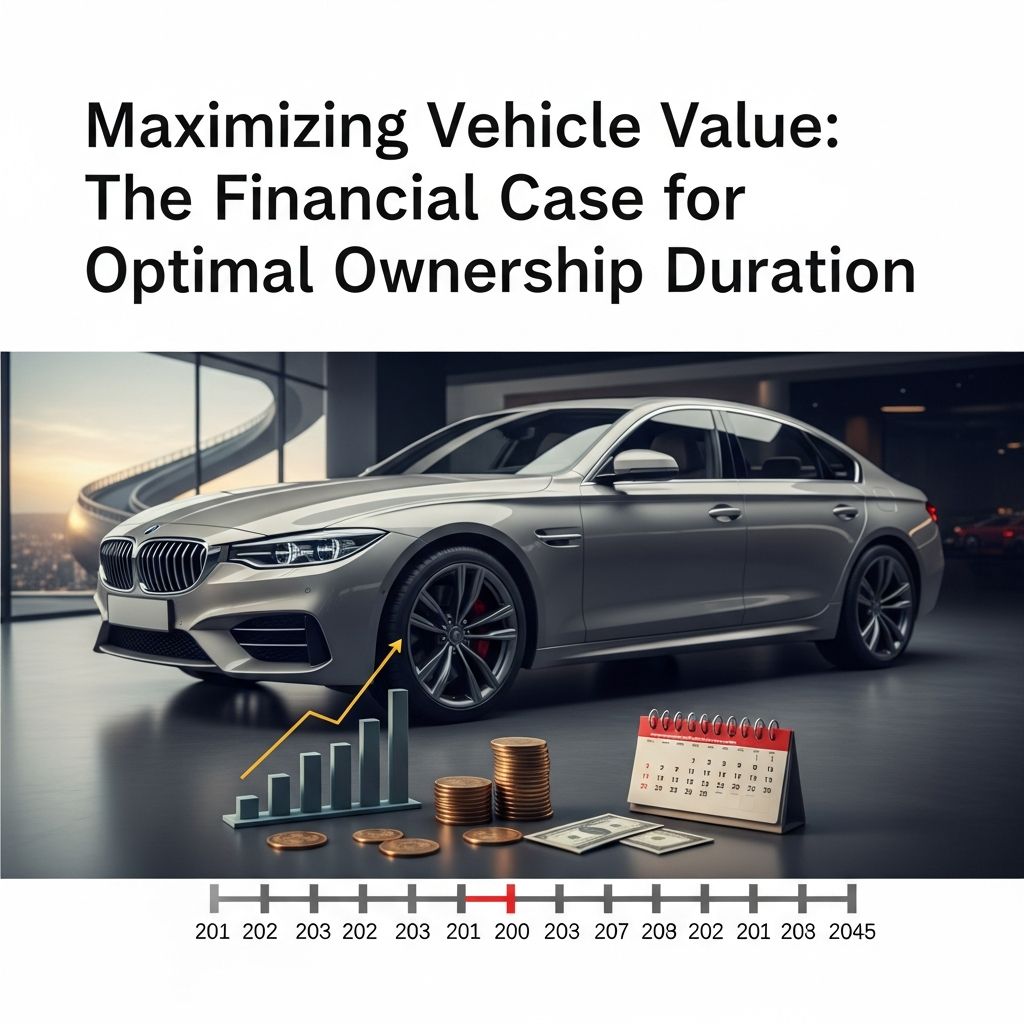
One of the most consequential financial decisions vehicle owners face isn’t which car to buy, but rather how long to keep it. This seemingly straightforward question involves complex calculations spanning depreciation trajectories, escalating maintenance expenses, and the opportunity cost of holding onto aging assets. Rather than viewing car ownership as a binary choice between keeping a vehicle indefinitely or trading it in every few years, savvy financial planning requires understanding the mathematical inflection point where ownership transitions from economically advantageous to financially burdensome.
Understanding the Depreciation Curve and Its Financial Implications
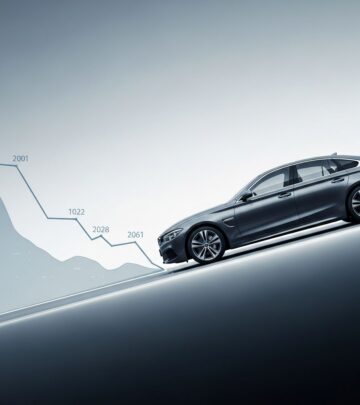
Vehicle depreciation operates on a well-documented pattern that shapes the economics of ownership. New vehicles experience their most dramatic value loss during the initial ownership period, with most cars losing approximately 20-30% of their purchase price within the first year alone. This front-loaded depreciation continues steeply through the second through fourth years, after which the rate of value decline moderates considerably.
By the fifth year of ownership, a typical vehicle retains less than half its original purchase price. However, the percentage rate of depreciation decelerates after this point. A vehicle worth $35,000 when new might decline to $17,500 by year five, but then decrease to perhaps $10,000 by year ten—a smaller absolute loss despite the longer time horizon. Understanding this non-linear depreciation pattern reveals why the purchase versus holding decision involves identifying your position on this curve relative to your financial objectives.
The implications become clearer when examining real financial outcomes. An owner who sells a vehicle after five years experiences substantial depreciation loss during that period. However, if that same owner then purchases another new vehicle, they immediately incur the steepest depreciation losses again. Conversely, an owner who retains their original vehicle for ten years stretches their depreciation losses across a decade, effectively dampening the annual impact of value decline.
The Total Cost of Ownership Framework
Depreciation represents only one component of vehicle ownership expenses. A comprehensive financial analysis requires examining total cost of ownership, which encompasses depreciation, maintenance and repairs, insurance, fuel, registration fees, and financing costs.
Research indicates that drivers maintaining vehicles for seven or more years save approximately $4,200 in combined insurance and registration costs compared to owners trading vehicles every three to four years. This savings reflects the compounding benefit of stable insurance premiums and reduced registration frequency over extended ownership periods.
The financial advantage of longer ownership becomes particularly pronounced after loan payoff. Most auto loans extend three to six years, meaning owners who keep their vehicles beyond this period enjoy years of payments-free driving. For an owner with a $250 monthly car payment, eliminating this expense after year five or six frees up $3,000 to $36,000 in subsequent years—capital that can address accumulated maintenance needs or redirect toward savings priorities.
Maintenance Cost Escalation: The Critical Inflection Point
While depreciation benefits from extended ownership and paid-off loans offer financial advantages, maintenance costs present an opposing force that eventually dominates the ownership calculus. As vehicles age beyond their sixth through tenth years, repair expenses typically increase substantially. Components originally designed with 10-year durability in mind reach the end of their engineered lifespan simultaneously, creating the potential for multiple expensive failures within a compressed timeframe.
Major system failures like transmission replacement, air conditioning compressor failure, or suspension component deterioration can each cost thousands of dollars. For luxury brands including Mercedes-Benz, Land Rover, and Porsche, maintenance expenses become particularly severe after five years of ownership, making the ownership economics fundamentally different from mainstream vehicle brands.
The economic viability of extended ownership depends partly on vehicle brand and design philosophy. Mainstream manufacturers generally engineer vehicles for longer useful lives at lower maintenance costs, while some luxury and specialized manufacturers prioritize performance and features over long-term affordability. Understanding your specific vehicle’s maintenance cost trajectory—available through resources like Consumer Reports data on brand-by-brand maintenance expenses—enables accurate projection of future ownership costs.
Identifying Your Optimal Ownership Window
Financial analysis suggests most owners achieve optimal value by maintaining vehicles for 8-10 years if purchasing new, or 5-7 years if purchasing used vehicles. These timeframes represent mathematically sound balance points where depreciation losses per year, annual maintenance expenses, and insurance costs combine to minimize total cost of ownership on an annualized basis.
However, optimal ownership duration varies significantly based on individual circumstances:
- New vehicle purchase: Retaining the vehicle for 8-10 years minimizes annual depreciation impact while allowing sufficient time to surpass loan payoff before major maintenance expenses emerge
- Used vehicle purchase (3-5 years old): Owners who acquire vehicles that have already absorbed the steepest depreciation typically benefit from holding them 5-7 additional years before disposition, skipping the worst value loss while capturing reasonable resale value
- Low-mileage driving patterns: Owners driving substantially below the 12,000-mile annual average can extend optimal ownership periods, as component wear correlates more directly with time-based degradation than usage in lightly-driven vehicles
- High-mileage driving patterns: Conversely, owners accumulating 15,000+ annual miles may find shorter ownership windows more economical, as accelerated wear compresses the timeline for major component failures
Comparative Ownership Economics by Vehicle Type
Different vehicle categories exhibit distinct ownership economics based on initial cost, depreciation patterns, maintenance characteristics, and market demand:
| Vehicle Category | Typical Ownership Duration | Primary Financial Driver |
|---|---|---|
| Standard Sedans | 6-8 years | Rapid resale value decline; limited brand loyalty |
| Premium SUVs | 8-10 years | High initial cost justifies extended ownership |
| Light Trucks | 10-12 years | Strong used market demand; durable construction |
| Hybrid Vehicles | 7-9 years | Battery degradation concerns; uncertain residual value |
| Electric Vehicles | 6-8 years | Rapid technology evolution; charging infrastructure changes |
| Sports/Specialty Cars | 4-6 years | Lifestyle-driven purchasing; premium maintenance costs |
Light trucks demonstrate interesting ownership economics, often justifying extended retention through strong used market demand and reputation for durability. Premium SUVs, while expensive to purchase and maintain, often show favorable long-term ownership profiles due to their substantial initial cost—spreading this high expenditure across 10+ years proves more economical than purchasing multiple lower-cost vehicles over the same period.
The Maintenance Foresight Strategy
Rather than accepting maintenance cost escalation as an uncontrollable variable, financially sophisticated owners employ foresight-based decision-making. Monitoring your specific vehicle’s maintenance expense trajectory through your early ownership years provides predictive information about future cost patterns. If your vehicle demonstrates maintenance costs below the brand average through years 4-6, you’ve identified a reliable platform likely to support extended ownership with manageable expenses.
Conversely, if maintenance expenses already exceed average by years 3-4, this signals underlying durability challenges likely to accelerate in coming years, suggesting that ownership beyond 7-8 years may prove economically irrational regardless of other factors. Many owners benefit from maintaining detailed maintenance records, comparing their expense patterns against manufacturer specifications and industry benchmarks, then adjusting their ownership timeline accordingly.
Extended warranty protection can modify the maintenance cost equation for owners committed to long-term ownership. While warranties add upfront cost, they provide expense predictability and protection against catastrophic system failures. For owners planning 10+ year ownership, extended warranties that cover major components through year 10 or 150,000 miles can prove cost-effective, transforming uncertain future expenses into fixed known costs.
Insurance Dynamics and Ownership Duration
Insurance economics evolve throughout vehicle ownership in ways that influence optimal holding periods. Comprehensive and collision coverage becomes less economical as vehicle values decline—a $500 comprehensive deductible represents meaningful impact when a vehicle’s value approaches $3,000, but the same deductible matters little when vehicle value exceeds $25,000. Strategic timing of coverage reduction reflects another dimension of extended ownership economics.
Insurance premiums generally decline with vehicle age if no accidents or violations occur during ownership. This premium reduction amplifies the advantage of extended ownership, as owners enjoy declining depreciation rates coinciding with decreasing insurance costs in the post-loan-payoff period.
Real-World Financial Comparison
Consider a concrete financial scenario comparing ownership strategies. An owner purchasing a $35,000 vehicle faces these outcomes under different holding periods:
- Trade after 5 years: Recover approximately $15,000-$20,000; purchase replacement vehicle; incur new depreciation, sales tax, registration, and financing costs
- Retain for 10 years: Recover approximately $8,000-$12,000 eventually; avoid intermediate purchase cycle; total costs potentially $8,000-$15,000 lower when accounting for cumulative depreciation, financing, taxes, and registration fees across both ownership cycles
The financial advantage of retention strategy assumes maintenance expenses remain reasonable and no major catastrophic failures occur. This outcome typically materializes with mainstream brands from manufacturers with solid engineering and durability reputations, whereas specialized or luxury vehicle ownership may produce different outcomes.
Personal Circumstances and the Optimal Duration Decision
While financial analysis provides mathematical guidance, individual circumstances substantially influence optimal ownership duration. A vehicle serving as a secondary family vehicle, driven occasionally with minimal annual mileage, justifies extended retention more than a primary daily-driver accumulating substantial weekly miles. A owner prioritizing driving only the latest technology and safety features may rationally choose shorter ownership cycles despite financial disadvantages, weighting lifestyle preferences against purely economic optimization.
Similarly, owners facing uncertain financial circumstances benefit from different ownership strategies than those with stable income and substantial savings reserves. Extended vehicle ownership creates vulnerability to unexpected major repairs that could strain finances, whereas predictable upgrade cycles distribute vehicle-related expenses more evenly across years.
Frequently Asked Questions
Q: How many miles can a typical car handle?
A typical car can operate reliably for 200,000 miles or more, while hybrid and electric vehicles often reach 300,000 miles. At average American mileage of 12,000 annually, this translates to 14+ years for conventional vehicles and 21+ years for electric vehicles.
Q: What’s the average car ownership length in America?
The national average car ownership length is just over 8 years, with many owners now keeping vehicles 10+ years, particularly if the vehicle maintains clean title and solid maintenance history. Average vehicle age varies by state from 9-13 years.
Q: Should I replace my old car with a new one?
Replace your vehicle when repair costs exceed its current value or when desired safety and technology updates justify the financial investment, not merely because the vehicle has reached an arbitrary age threshold.
Q: Is it better to buy used or new?
Financially, purchasing used vehicles 3-5 years old and retaining them 5-7 years often proves superior to new car purchase and shorter retention, as you bypass the steepest depreciation curves.
Q: How does vehicle type affect optimal ownership?
Light trucks and premium SUVs justify longer ownership (10-12 and 8-10 years respectively), while sedans and specialty vehicles typically show better economics with shorter 6-8 year ownership windows.
References
- The Ideal Length Of Time To Own A Car Is Not Forever — Financial Samurai. Retrieved from https://www.financialsamurai.com/the-ideal-length-of-time-to-own-a-car/
- How Long Should I Keep My Car? A Smarter Way to Decide — VINGurus. Retrieved from https://vingurus.com/blog/vingurus-latest-posts/how-long-should-i-keep-my-car-a-smarter-way-to-decide
- Should You Keep Your Car Longer? The Pros and Cons Explained — CarEdge. Retrieved from https://caredge.com/guides/should-you-keep-your-car-longer
- Survey: Average length of car ownership in America — The Zebra. Retrieved from https://www.thezebra.com/resources/driving/average-length-of-car-ownership/
- The Average Length of Car Ownership at All Time High — Drive Now AZ. Retrieved from https://www.drivenowaz.com/about-us/blog/average-length-car-ownership-time-high/
Similar Articles








Read full bio of medha deb