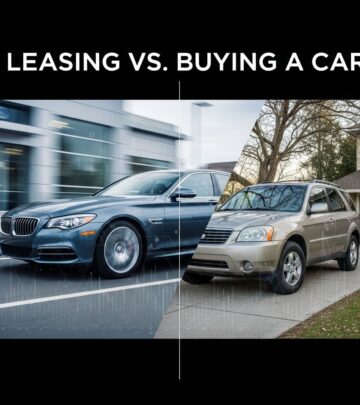
Vehicle Leasing: A Complete Financial Decision Guide
Explore leasing benefits and drawbacks to determine if renting a car aligns with your lifestyle and budget.

The decision between leasing and purchasing a vehicle represents one of the most significant automotive choices consumers face. Each approach carries distinct financial implications, lifestyle constraints, and long-term consequences. Understanding the nuances of vehicle leasing requires examining not just the attractive surface-level benefits, but also the hidden costs and restrictions that may impact your driving experience and financial wellbeing over time.
Understanding the Lease Structure and Payment Mechanics
When you lease a vehicle, you’re essentially entering into a rental agreement with a predetermined term, typically spanning 24 to 36 months. Your monthly payments represent compensation for the vehicle’s depreciation during your lease period, plus associated rental charges and financing fees. Unlike purchasing, where your payments build equity toward ownership, lease payments simply cover the difference between the car’s initial value and its projected residual value at lease conclusion.
The financial structure of leasing makes it initially appealing to budget-conscious consumers. Monthly lease payments typically run 30 to 60 percent lower than equivalent auto loan payments for new vehicles. This cost advantage stems from the fact that you’re only paying for the vehicle’s usage period rather than its entire lifecycle. Dealerships can offer these reduced payments because they maintain ownership throughout the lease term and benefit from the vehicle’s residual value upon return.
The Attractiveness of Lower Initial Financial Commitment
One of leasing’s most compelling advantages is the minimal upfront investment required. Lease agreements frequently demand only a nominal down payment, sometimes as little as a few hundred dollars, compared to substantial down payments typical of vehicle purchases. This accessibility factor makes leasing particularly appealing for individuals without substantial savings or those preferring to preserve capital for other investments.
Additionally, many dealerships offer promotional lease incentives that further reduce initial costs. Limited-time offers, manufacturer rebates, and dealer-specific programs can substantially decrease the capitalized cost of your lease, making the financial entry point even more attractive. For those experiencing temporary cash flow constraints or individuals who value liquidity, these reduced upfront expenses present a genuine advantage.
Access to Newer Technology and Vehicle Features
Leasing provides consistent access to automobiles equipped with the latest technological advancements and safety systems. Since most leases last approximately three years, lessees can transition into new vehicles frequently, ensuring they’re never driving outdated technology. This continuous upgrade cycle means enjoying modern infotainment systems, advanced driver assistance features, and enhanced fuel efficiency improvements that newer model years typically offer.
For technology enthusiasts or those prioritizing the latest safety innovations, this regular refresh cycle holds significant value. Rather than remaining with an aging vehicle lacking contemporary features, lessees maintain vehicles that incorporate manufacturer’s most recent developments. This becomes particularly meaningful as automotive technology advances accelerate, with autonomous features, improved connectivity, and enhanced battery technology becoming standard in newer model years.
Warranty Protection and Maintenance Considerations
Leased vehicles typically include comprehensive manufacturer warranty coverage throughout the entire lease term. This warranty protection eliminates unexpected repair expenses during ownership, providing financial predictability and peace of mind. Most lease agreements cover routine maintenance including oil changes, filter replacements, tire rotations, and other preventative services.
This maintenance inclusion fundamentally changes the cost structure compared to ownership. Vehicle purchasers must budget for increasingly expensive repairs as vehicles age, while lessees enjoy largely predictable monthly expenses. Mechanical failures that could prove financially devastating for vehicle owners become non-issues for lessees, as the manufacturer bears responsibility for repairs throughout the warranty period.
Critical Limitations: Mileage Restrictions and Their Financial Impact
Leasing agreements impose strict annual mileage limitations, typically capping usage at 12,000 to 15,000 miles yearly. For individuals with extensive commutes, frequent long-distance travel, or unpredictable driving patterns, these restrictions present serious constraints. Exceeding mileage limits triggers significant penalties—commonly 15 to 30 cents per excess mile—that accumulate rapidly and substantially increase lease costs.
Consider a practical scenario: a 50-mile daily commute totals approximately 13,000 miles annually, already approaching standard mileage caps. Adding recreational driving, vacation trips, or unforeseen circumstances easily pushes total mileage into penalty territory. A 5,000-mile overage at 25 cents per mile represents a $1,250 unexpected expense—essentially negating several months of payment savings. For high-mileage drivers, this restriction transforms leasing’s apparent affordability into genuine financial burden.
Wear-and-Tear Charges and End-of-Lease Obligations
Lease agreements require returning vehicles in “reasonable condition” subject to normal wear limitations. Dealerships subjectively assess wear-and-tear, charging lessees for perceived excess damage including scratches, dents, interior stains, upholstery tears, and paint imperfections. These charges prove controversial because “reasonable wear” definitions vary significantly between dealerships, and assessment procedures often appear arbitrary to consumers.
Many lessees face surprise invoices upon lease conclusion for damage they considered normal and inevitable. A preventative approach involves having professional detailing completed before return—an expense many lessees don’t anticipate during initial lease excitement. Additionally, accident damage dramatically increases end-of-lease costs regardless of insurance coverage, since insurance considers the vehicle a total loss while dealerships may assess repair costs separately.
Insurance Requirements and Associated Premium Increases
Leasing agreements mandate comprehensive insurance coverage with specific coverage levels determined by the financing company. Lessees must carry collision and comprehensive coverage protecting both their interests and the lessor’s financial stake in the vehicle. This mandatory full coverage typically increases insurance premiums compared to minimum-coverage requirements for owned vehicles in many states.
Gap insurance, while protecting against financial loss if the vehicle is totaled, adds another insurance-related expense. Many leases require gap insurance, representing additional annual costs that vehicle purchasers may avoid. Over a three-year lease, these elevated insurance premiums can add $1,500 to $2,000 to total lease expenses—an often-overlooked cost when evaluating lease affordability.
Long-Term Financial Comparison: Cumulative Costs Over Time
While individual lease payments appear attractive relative to loan payments, comprehensive cost analysis often reveals different conclusions. When combining monthly payments, insurance premiums, excess mileage charges, wear-and-tear fees, and disposition fees, total lease expenses sometimes rival or exceed equivalent purchase costs—especially for long-term ownership patterns.
A critical financial principle emerges: leasing costs more cumulatively when you consistently lease successive vehicles. Monthly payments continue indefinitely when following a lease-to-lease progression, whereas purchasing eventually concludes payment obligations. A vehicle maintained beyond loan repayment delivers increasing value as each additional month costs only maintenance and insurance, without principal reduction payments.
| Expense Category | Leasing | Buying |
|---|---|---|
| Monthly Payment | $350–$450 (typical) | $450–$600 (typical) |
| Insurance (full coverage) | Required, higher premiums | Variable by coverage level |
| Maintenance/Repairs | Warranty covered | Owner responsible after warranty |
| Mileage Restrictions | 12,000–15,000 annually | Unlimited |
| Customization | Prohibited | Permitted |
| End-of-Term | Return vehicle, pay excess charges | Own vehicle or sell/trade |
Flexibility Constraints and Personalization Limitations
Leased vehicles must be returned in their original condition, prohibiting personalizations that owners enjoy. Modifications ranging from enhanced lighting to suspension changes to interior upgrades are contractually forbidden. Even seemingly minor customizations like different floor mats or window tinting violate lease agreements.
This constraint frustrates drivers with specific preferences or those seeking vehicles matching their aesthetic ideals. Vehicle ownership enables unlimited personalization reflecting individual style and preferences. Lessees sacrifice this freedom, accepting standardized configurations and inability to modify vehicles for comfort or preference enhancements.
Early Termination: Hidden Costs of Lease Flexibility
Leasing contracts lock consumers into multi-year agreements with severe penalties for early termination. Life circumstances—job relocation, accident damage totaling the vehicle, significant mileage increases, or simple desire to change vehicles—can necessitate early lease exits. Termination fees often prove extraordinarily expensive, sometimes totaling thousands of dollars beyond remaining payment obligations.
Lease transfer programs offer alternatives for some situations, allowing other consumers to assume lease obligations. However, finding qualified transferees requires time, and transfer procedures involve administrative costs. This aspect of leasing deserves careful consideration for individuals facing potential life changes within lease terms.
Evaluating Your Driving Profile and Lifestyle Match
Leasing suitability fundamentally depends on individual driving patterns, mileage requirements, and lifestyle stability. Professionals with predictable commutes, stable employment locations, and limited vacation driving may find leasing advantageous. Individuals receiving regular vehicle allowances or tax benefits for business-use vehicles often discover leasing aligns with financial optimization.
Conversely, individuals with long commutes, frequent cross-country travel, families requiring vehicle flexibility, or those planning extended residence in current locations typically benefit from purchasing. Independent contractors requiring vehicle reliability without mileage anxiety generally find ownership’s freedom preferable despite higher payments.
Financial Health Considerations and Credit Requirements
Leasing requires strong credit scores and established credit history, as financing companies assess lease applicants similarly to auto loan qualification procedures. Individuals with challenged credit may face lease denial or substantially elevated interest rates. From this perspective, purchasing with poor credit may prove more accessible, though potentially at disadvantageous financing terms.
Frequently Asked Questions About Vehicle Leasing
Can you purchase a leased vehicle? Some lease agreements include purchase options allowing lessees to acquire vehicles at predetermined prices. This option provides flexibility if you develop attachment to specific vehicles, though purchase prices are established upfront and may not reflect actual market values.
What happens if you exceed mileage allowances? Overage charges accumulate at contractually specified rates, typically 15 to 30 cents per excess mile. These charges appear on your final lease statement as additional costs owed before vehicle return completion.
Are lease payments tax-deductible? Business-use vehicle leases may qualify for tax deductions if vehicles are used exclusively for business purposes. Personal vehicle leases generally don’t provide tax advantages, though specific situations warrant professional tax consultation.
What insurance do leased vehicles require? Lease agreements mandate comprehensive and collision coverage with specific liability limits established by financing companies. Gap insurance frequently proves mandatory, protecting against underwater situations if vehicles are totaled.
Making Your Decision: A Practical Framework
Determining leasing suitability requires honest assessment of your specific circumstances. Calculate your actual annual mileage including all driving categories—commuting, recreational, vacation, and miscellaneous. If this total comfortably falls within lease allowances and you possess stable driving patterns, leasing warrants serious consideration.
Evaluate financial priorities: do you prioritize monthly payment minimization, or are you comfortable with higher payments in exchange for ownership and long-term savings? Leasing excels for those prioritizing predictability and minimal vehicle responsibility. Purchasing suits individuals valuing flexibility, long-term economics, and personalization freedom.
Consider lifestyle stability: if significant changes—relocation, employment changes, family composition alterations—seem probable within a lease term, purchasing provides superior flexibility. Conversely, if your situation shows stability and you value driving new vehicles, leasing aligns with your preferences.
Vehicle leasing represents a legitimate financing option that genuinely benefits certain consumers in specific circumstances. However, it’s fundamentally a premium for convenience and predictability rather than an economically superior choice for most long-term vehicle operators. Understanding this distinction—recognizing leasing as a lifestyle choice rather than a financial optimization—enables clearer decision-making aligned with your genuine priorities and circumstances.
References
- Leasing vs. Buying a Car – Pros and Cons — Navy Federal Credit Union. 2024. https://www.navyfederal.org/makingcents/auto/buying-vs-leasing-a-car.html
- Pros and Cons of Leasing a Car — Chase Bank. 2024. https://www.chase.com/personal/auto/education/leasing/pros-and-cons-of-leasing-a-car
- What should I know about leasing versus buying a car? — Consumer Financial Protection Bureau. 2024. https://www.consumerfinance.gov/ask-cfpb/what-should-i-know-about-leasing-versus-buying-a-car-en-815/
- Pros and cons of leasing vs. buying a car — Bankrate. 2025. https://www.bankrate.com/loans/auto-loans/leasing-vs-buying-a-car/
- Leasing vs. Buying a Car: Pros and Cons — Travelers Insurance. 2024. https://www.travelers.com/resources/auto/buying-selling/leasing-a-car-pros-and-cons
- Pros and Cons of Leasing a Vehicle — Toyota. 2024. https://www.toyota.com/car-tips/pros-cons-leasing-vehicle/
- Buying or Leasing a Car in 2026: Which Make is Best for You? — Consumer Reports. 2025. https://www.consumerreports.org/cars/buying-a-car/leasing-vs-buying-a-new-car-a9135602164/
Similar Articles








Read full bio of medha deb