Vehicle Curb Weight: Essential Guide for Owners
Master curb weight basics to optimize your vehicle's performance and safety

When shopping for a vehicle or maintaining one you already own, you’ve likely encountered the term “curb weight” listed in specifications. This measurement represents far more than just a number—it fundamentally influences how your car performs, consumes fuel, and handles on the road. Whether you’re evaluating a new purchase, towing a trailer, or simply trying to understand your vehicle better, grasping the concept of curb weight is essential for making informed decisions about vehicle use and safety.
What Exactly Is Curb Weight?
Curb weight represents the total mass of a vehicle when it’s completely empty of passengers and cargo, yet fully operational and ready to drive. This measurement includes the vehicle’s engine, frame, body, all standard factory equipment, and necessary operating fluids such as motor oil, transmission fluid, brake fluid, coolant, and a full fuel tank.
Think of curb weight as your vehicle’s baseline mass—the weight it presents sitting in your driveway before anyone sits in it or you load anything inside. Manufacturers establish this figure under specific conditions to provide a standardized reference point for consumers and mechanics. Unlike some other vehicle specifications, curb weight remains constant throughout a vehicle’s lifecycle (unless you add permanent modifications like upgraded components).
The term “curb” itself stems from the idea of a car sitting at the curb, parked and unloaded. This straightforward definition makes it easy to understand what’s included and what isn’t—the vehicle and its standard contents, but nothing temporary like passengers or cargo.
The Critical Distinction: Curb Weight Versus Gross Weight
Many vehicle owners confuse curb weight with gross weight, but these measurements serve different purposes and include different components. Understanding the distinction helps you make safer loading decisions and better comprehend your vehicle’s capabilities.
| Measurement | Includes | Variability | Primary Use |
|---|---|---|---|
| Curb Weight | Vehicle structure, engine, standard equipment, operating fluids, full fuel tank | Constant | Baseline performance metrics, fuel efficiency calculations |
| Gross Weight | Everything in curb weight PLUS passengers, cargo, and all loaded items | Variable (changes with load) | Determining safe loading capacity, payload calculations |
| GVWR | Maximum safe weight the vehicle can handle (rated capacity) | Fixed rating | Safety compliance, preventing overloading |
Gross weight is the complete weight of your vehicle when fully loaded, including all passengers, cargo, fuel, and accessories. This number changes based on what you put in your vehicle, making it variable. Gross vehicle weight rating (GVWR), meanwhile, is the manufacturer-determined maximum weight your vehicle can safely carry—a threshold that should never be exceeded.
Understanding both measurements allows you to calculate payload capacity: subtract curb weight from GVWR to determine how much weight your vehicle can safely handle. This calculation becomes particularly important when planning road trips with multiple passengers, hauling equipment, or towing trailers.
How Curb Weight Impacts Fuel Efficiency
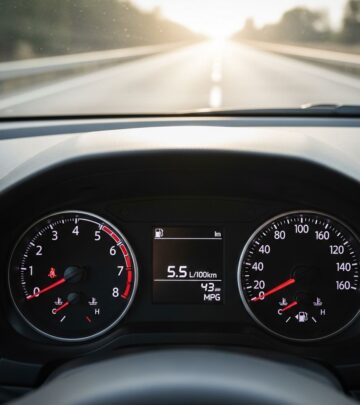
One of the most noticeable ways curb weight affects vehicle ownership is through fuel consumption. The relationship is straightforward: heavier vehicles require more energy to move, resulting in greater fuel consumption. This fundamental physics principle means that reducing vehicle weight through design choices or selecting a lighter model can meaningfully improve your miles per gallon.
Manufacturers and environmental agencies recognize this relationship. The Environmental Protection Agency (EPA) factors vehicle weight heavily when calculating fuel economy ratings. A lighter sedan will typically achieve better fuel economy than a heavier SUV with an equivalent engine, all other factors being equal. Over a vehicle’s lifetime, the difference in fuel costs between a lighter and heavier model can amount to thousands of dollars.
Beyond the wallet impact, fuel efficiency matters for environmental reasons. Lighter vehicles burn less gasoline, resulting in lower emissions. This is why automotive manufacturers have increasingly focused on weight reduction through materials like aluminum, high-strength steel, and composite materials.
Acceleration and Performance Dynamics
Curb weight fundamentally determines how quickly and smoothly a vehicle accelerates. The power-to-weight ratio—calculated by dividing a vehicle’s horsepower by its weight—directly influences acceleration capability.
A higher power-to-weight ratio means faster acceleration and more responsive handling. This is why lightweight sports cars feel nimble and quick despite having similar or even lower horsepower than heavier sedans. The reduced mass requires less force to overcome inertia, allowing the engine to move the vehicle more efficiently.
For everyday drivers, this translates to practical benefits: smoother merging onto highways, quicker response when accelerating from stops, and better agility in traffic situations. Heavier vehicles require more energy to achieve the same acceleration, which contributes to the perception that they feel slower or less responsive despite potentially having adequate power.
Stability and Handling Characteristics
While lighter weight improves acceleration, heavier vehicles offer distinct advantages in stability and traction. Additional mass improves traction and stability, particularly in challenging weather conditions like rain, snow, or ice. The increased weight helps the vehicle maintain contact with the road surface, reducing the likelihood of slipping or losing control on slippery surfaces.
This is why trucks and SUVs with higher curb weights often feel more planted and stable during adverse weather driving. The trade-off becomes clear: lighter vehicles prioritize responsiveness, while heavier vehicles prioritize stability and traction. Vehicle selection should account for your typical driving conditions and priorities.
Handling also involves braking performance. While heavier vehicles require more braking force to stop from a given speed, modern brake systems are engineered to accommodate their curb weight. Exceeding a vehicle’s GVWR, however, can compromise braking efficiency and safety features, as the braking system wasn’t designed for that additional load.
Payload Capacity and Load Calculations
Understanding curb weight becomes critically important when determining how much cargo your vehicle can safely carry. The calculation is straightforward: payload capacity equals GVWR minus curb weight.
For example, if your vehicle has a GVWR of 4,500 pounds and a curb weight of 3,200 pounds, your maximum payload capacity is 1,300 pounds. This 1,300-pound capacity must accommodate all passengers, cargo, and any equipment added to the vehicle. Exceeding this limit can cause multiple problems:
- Reduced braking performance and increased stopping distance
- Suspension strain and potential damage to shock absorbers and springs
- Tire pressure increases, accelerating tire wear and increasing blowout risk
- Transmission strain, particularly during acceleration or uphill driving
- Compromised handling and stability, increasing accident risk
- Reduced fuel efficiency and increased engine wear
Respecting payload limits isn’t merely about following manufacturer guidelines—it’s a safety imperative that protects both your vehicle and its occupants.
Practical Applications for Vehicle Selection and Use
Knowing curb weight helps you select the right vehicle for your needs. Lighter vehicles suit urban drivers prioritizing fuel efficiency and agility. Heavier vehicles better serve those who frequently tow, haul cargo, or navigate challenging terrain. Consider your typical driving patterns and use cases when evaluating vehicles with different curb weights.
Fleet managers particularly benefit from understanding curb weight. Selecting vehicles with appropriate curb weights for intended tasks optimizes fuel efficiency across the entire fleet, reducing operational costs significantly. A delivery company routing light cargo should prioritize lower curb weight vehicles, while a construction company hauling heavy materials needs vehicles with higher GVWR ratings and appropriate curb weights to handle the work safely.
How to Find Your Vehicle’s Curb Weight
Your vehicle’s curb weight appears in multiple locations:
- Owner’s manual: Listed in the specifications section, typically near the beginning
- Vehicle door jamb placard: The driver’s side door jamb contains a label with weight specifications
- Manufacturer website: The official manufacturer’s specification sheets for your vehicle model
- Window sticker: New vehicles include a Monroney label with curb weight information
- Vehicle registration documents: Some jurisdictions include weight information
If you’re unable to locate this information, your vehicle’s dealership can quickly provide accurate curb weight data for your specific model and year.
Common Misconceptions About Curb Weight
Myth: Curb weight doesn’t include fuel. Fact: Curb weight includes a full fuel tank.
Myth: Curb weight is the same for all vehicles of the same model. Fact: Different trim levels, engine options, and body styles of the same model may have different curb weights.
Myth: There’s a universal industry standard for calculating curb weight. Fact: No government-regulated method for calculating curb weight exists, though manufacturers follow general guidelines.
Myth: Curb weight affects only fuel economy. Fact: Curb weight influences acceleration, handling, stability, braking, safety, and overall performance.
Frequently Asked Questions
What’s the difference between curb weight and dry weight?
Curb weight and dry weight are essentially synonymous terms. Both refer to the vehicle’s weight without passengers or cargo, including all standard equipment and operating fluids.
Does curb weight include passengers?
No. Curb weight specifically excludes passengers. It represents only the vehicle itself and its standard contents.
Why is curb weight important for safety?
Understanding curb weight allows you to calculate safe payload capacity. Respecting these limits prevents overloading, which compromises braking, handling, and stability—all critical safety factors.
Can curb weight change over time?
Curb weight remains constant unless you permanently modify the vehicle by adding or removing components. Regular maintenance and fluid changes don’t alter curb weight.
How does curb weight relate to towing capacity?
While curb weight itself doesn’t determine towing capacity, it factors into the overall GVWR calculation. Heavier vehicles generally have higher towing capacities, but the vehicle’s braking, suspension, and transmission also play crucial roles.
Making Informed Vehicle Decisions
Curb weight serves as a foundation for understanding your vehicle’s capabilities and limitations. Whether you’re comparing vehicles for purchase, planning to load cargo, or simply seeking to comprehend your vehicle better, this measurement provides essential context. The interplay between curb weight, gross weight, and GVWR creates a framework ensuring safe, efficient, and reliable vehicle operation. By mastering these concepts, you’ll make better decisions about vehicle selection and use, ultimately saving money on fuel while maintaining optimal safety on every journey.
References
- Gross Weight vs Curb Weight: Definitions, Differences, and Affects — Inbound Logistics. https://www.inboundlogistics.com/articles/gross-weight-vs-curb-weight/
- Curb weight vs. gross weight: A comprehensive guide to better vehicle performance and compliance — Geotab. 2025-07-21. https://www.geotab.com/blog/curb-weight-vs-gross-weight/
- Your Guide to Understanding Curb Weight vs. Gross Weight — Azuga. https://www.azuga.com/blog/curb-vs-gross-weight
- What Is a Curb Weight and How to Calculate It — Weigh Safe. https://www.weigh-safe.com/towing-education/what-is-a-curb-weight-and-what-does-it-mean/
- Curb Weight: Why It’s Important — Autotrader. https://www.autotrader.com/car-shopping/what-is-curb-weight
- Understanding Car Weight: The Importance of Curb Weight — Oreate AI. https://www.oreateai.com/blog/understanding-car-weight-the-importance-of-curb-weight/ca248375745381c26c46b2564a9b989e
- Average Weight of a Car: Why It Matters — Edmunds. https://www.edmunds.com/car-maintenance/average-weight-of-a-car-why-it-matters.html
Similar Articles








Read full bio of medha deb