Variable Cost: Definition, Formula & Examples
Learn what variable costs are, how to calculate them, and their impact on business profitability.
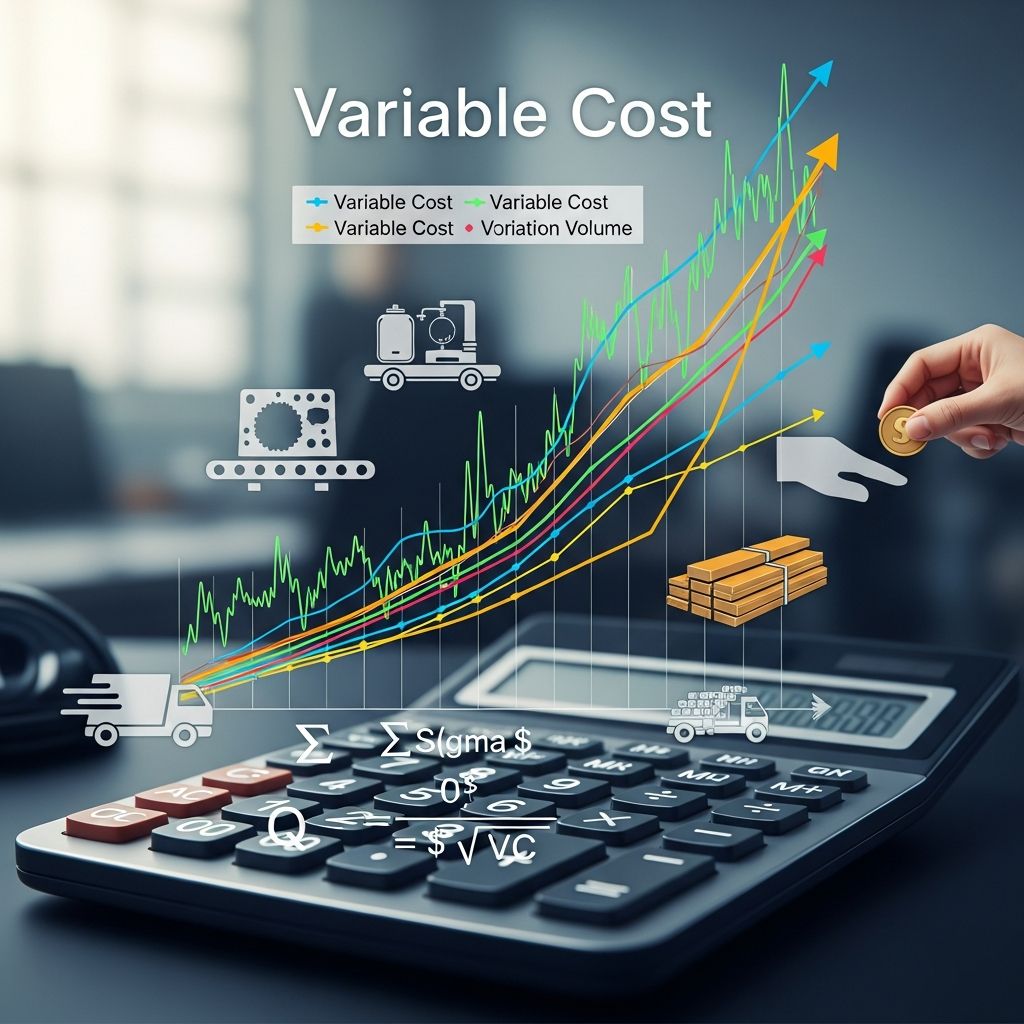
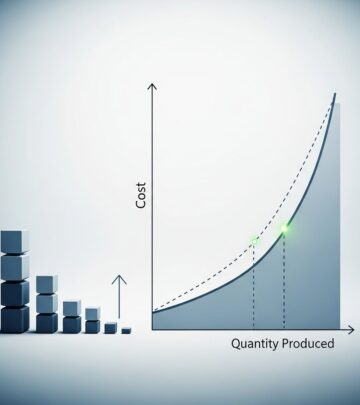
Variable costs are expenses that fluctuate proportionally with the quantity of output produced by a business. Unlike fixed costs that remain constant regardless of production levels, variable costs rise when production increases and fall when production decreases. Understanding variable costs is essential for business managers, accountants, and financial analysts who need to make informed decisions about pricing, budgeting, and operational efficiency.
Variable costs represent a critical component of a company’s cost structure and play a fundamental role in determining profitability, break-even points, and pricing strategies. By properly analyzing and managing variable costs, businesses can optimize their operations and improve their bottom line.
Understanding Variable Costs
Variable costs are expenses directly tied to the production activities of a business. These costs change in direct proportion to changes in production volume. For example, if a bakery produces twice as many cakes, it will incur approximately twice the cost in raw materials and direct labor. The defining characteristic of variable costs is their direct relationship with business activity levels.
Variable costs encompass both direct and indirect expenses related to production. Direct costs are expenses directly involved in manufacturing a product, such as raw materials and production labor. Indirect costs are expenses associated with production support activities, such as utilities used in the factory or packaging materials. Both categories vary with production volume.
Common examples of variable costs include:
– Raw materials and components- Direct labor wages for production workers- Manufacturing supplies and packaging- Sales commissions- Shipping and delivery costs- Utility costs directly tied to production
Variable Cost Formula
Calculating variable costs requires a straightforward mathematical approach. The primary formula for determining total variable cost is:
Total Variable Cost = Total Quantity of Output × Variable Cost Per Unit
This formula allows businesses to calculate their total variable expenses for a specific period. To use this formula effectively, you need two pieces of information: the total quantity of units produced during the period and the variable cost per unit of output.
For example, consider a manufacturing company that produces 5,000 units in a month, with each unit costing $8 in variable expenses. Using the formula:
Total Variable Cost = 5,000 units × $8 per unit = $40,000
Average Variable Cost Per Unit
Beyond total variable cost, businesses often need to determine the average variable cost per unit. This metric helps in pricing decisions and profitability analysis. The formula for average variable cost per unit is:
Average Variable Cost Per Unit = Total Variable Cost ÷ Quantity Produced
Using the previous example, if total variable costs are $40,000 and 5,000 units were produced, the average variable cost per unit would be $8 ($40,000 ÷ 5,000 = $8). This represents the variable expense associated with producing each individual unit.
Variable Costs vs. Fixed Costs
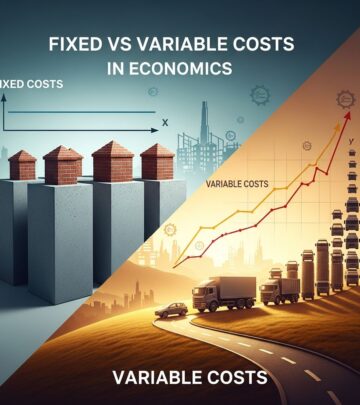
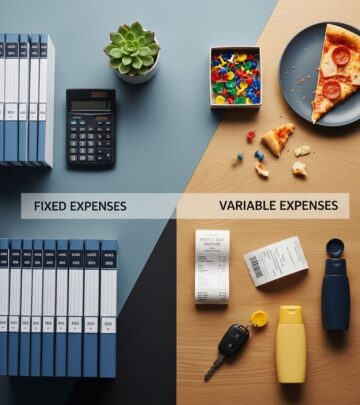
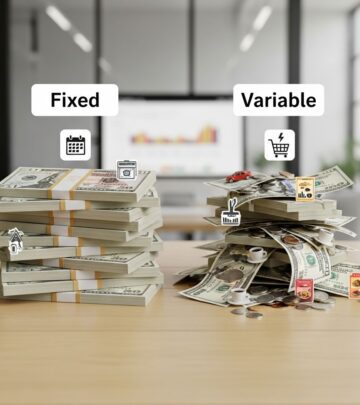
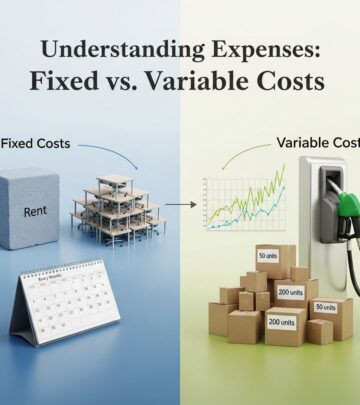
Understanding the distinction between variable and fixed costs is crucial for effective business management. While variable costs change with production levels, fixed costs remain constant regardless of how much a company produces.
Fixed costs include expenses such as building rent or lease payments, employee salaries for administrative staff, insurance premiums, and equipment depreciation. These costs must be paid each month or period, whether the company produces one unit or one million units.
The total cost of a business is the sum of its variable costs and fixed costs. By analyzing both types of costs, managers can make better decisions about production levels, pricing strategies, and operational efficiency. For instance, if a company has high fixed costs, it needs to sell more units to break even and become profitable.
Real-World Variable Cost Example
Consider a bakery that produces custom cakes. The bakery incurs the following costs per cake:
Raw materials (flour, eggs, sugar, decorations): $5 per cake
Direct labor (baker’s wages): $20 per cake
Packaging and delivery: $2 per cake
Additionally, the bakery has fixed costs of $500 per month for equipment and facility rent.
If the bakery produces 50 cakes in a month:
Total Variable Cost = 50 cakes × ($5 + $20 + $2) = 50 × $27 = $1,350
Total Fixed Cost = $500
Total Cost = $1,350 + $500 = $1,850
If production increases to 100 cakes:
Total Variable Cost = 100 cakes × $27 = $2,700
Total Fixed Cost = $500
Total Cost = $2,700 + $500 = $3,200
Notice how variable costs doubled when production doubled, while fixed costs remained constant at $500.
Variable Costs and Break-Even Analysis
Break-even analysis is a critical business tool that determines the point at which a company’s total revenue equals its total costs, resulting in neither profit nor loss. Variable costs play an integral role in this analysis because they directly affect the contribution margin.
The break-even formula in units is calculated as:
Break-Even Point (Units) = Fixed Costs ÷ (Selling Price Per Unit − Variable Cost Per Unit)
The denominator in this formula is known as the contribution margin per unit, which represents how much each unit sold contributes toward covering fixed costs and generating profit.
Using the bakery example, if the selling price per cake is $50:
Contribution Margin Per Unit = $50 − $27 = $23
Break-Even Point = $500 ÷ $23 = approximately 22 cakes
This means the bakery needs to sell at least 22 cakes per month to cover all its fixed and variable costs. Any sales beyond this point generate profit.
Variable Cost Ratio
The variable cost ratio (VCR) is an important profitability metric that expresses a company’s variable costs as a percentage of its net sales revenue. This ratio helps businesses understand what portion of each dollar in revenue is consumed by variable expenses.
The formula for the variable cost ratio is:
Variable Cost Ratio = Total Variable Costs ÷ Net Sales Revenue
For example, if a company has total variable costs of $8,000 and net sales revenue of $20,000, the variable cost ratio would be:
Variable Cost Ratio = $8,000 ÷ $20,000 = 0.40 or 40%
This means that 40% of every sales dollar is consumed by variable costs, leaving 60% to cover fixed costs and generate profit (the contribution margin ratio).
A low variable cost ratio indicates that a company has better profit margins and more flexibility in pricing. Conversely, a high variable cost ratio suggests lower profit margins and less cushion for absorbing cost increases or price reductions.
Importance of Variable Costs in Decision-Making
Variable costs are essential for numerous business decisions and analyses. Understanding and properly calculating variable costs enables managers to:
– Determine optimal pricing strategies for products and services- Identify break-even points for new product launches- Evaluate profitability of different product lines- Make sourcing decisions to reduce production costs- Assess the impact of production changes on overall profitability- Decide whether to accept special orders or contracts- Optimize production levels based on demand- Calculate target profit requirements
When businesses understand their variable cost structure, they can make more informed strategic decisions that directly impact their financial performance.
Managing and Reducing Variable Costs
While variable costs cannot be eliminated entirely (they are necessary for production), they can be managed and reduced through various strategies. Some effective approaches include:
– Negotiating better rates with suppliers for raw materials- Improving production efficiency to reduce labor costs- Implementing lean manufacturing principles to minimize waste- Automating routine production tasks- Outsourcing certain production activities to lower-cost providers- Investing in employee training to increase productivity- Optimizing supply chain management
By focusing on variable cost reduction, companies can improve their contribution margin and overall profitability without necessarily raising prices.
Contribution Margin and Profitability
The contribution margin is directly derived from variable costs and represents the amount of revenue available to cover fixed costs and generate profit. It is calculated as:
Contribution Margin = Sales Revenue − Total Variable Costs
The contribution margin can also be expressed as a percentage:
Contribution Margin Ratio = (Sales Revenue − Total Variable Costs) ÷ Sales Revenue
A higher contribution margin ratio indicates that more of each sales dollar is available for fixed costs and profit. This metric is crucial for evaluating product profitability and making decisions about which products to emphasize in the product mix.
Variable Costs in Different Industries
Variable costs vary significantly across different industries based on the nature of business operations. Manufacturing companies typically have substantial raw material and labor variable costs. Service companies may have lower material costs but higher labor variable costs. Retail businesses focus on cost of goods sold as their primary variable expense.
Understanding industry-specific variable costs helps businesses benchmark their performance against competitors and identify areas for improvement.
Frequently Asked Questions
Q: What is the difference between variable costs and semi-variable costs?
A: Variable costs fluctuate directly with production volume, while semi-variable costs have both fixed and variable components. For example, a utility bill might include a base fee (fixed) plus charges based on usage (variable). Semi-variable costs are more complex to analyze and require separating the fixed and variable portions.
Q: How do variable costs affect pricing decisions?
A: Variable costs set the minimum price floor for products because a company must cover at least its variable costs per unit to avoid losing money on each sale. Additionally, understanding variable costs helps determine the appropriate markup to cover fixed costs and achieve target profit margins. Pricing must be set above the variable cost per unit to ensure profitability.
Q: Can a business operate if variable costs exceed revenue?
A: No, a business cannot sustain operations long-term if variable costs exceed revenue. When this occurs, the company loses money on each unit sold and will quickly deplete its resources. This situation typically indicates fundamental problems with pricing, cost structure, or market demand and requires immediate corrective action.
Q: How are variable costs used in target costing?
A: Target costing is a pricing strategy that works backward from the desired profit. Managers determine the target cost by subtracting desired profit from the market price, then work to reduce variable and fixed costs to achieve that target. This approach helps ensure products remain competitive while maintaining profitability.
Q: What role do variable costs play in short-term business decisions?
A: Variable costs are critical for short-term decisions such as accepting special orders, discontinuing product lines, or deciding whether to make or buy components. Since variable costs change with production volume, they directly impact the profitability of short-term decisions. Fixed costs, which cannot be avoided in the short term, are less relevant for these decisions.
References
- Variable Costs – Examples, Formula, Guide to Analyzing Costs — Corporate Finance Institute. 2025. https://corporatefinanceinstitute.com/resources/accounting/variable-costs/
- Variable Cost | Definition, Formula & Examples – Lesson — Study.com Academy. 2025. https://study.com/academy/lesson/variable-cost-definition-formula-examples.html
- Financial Accounting Standards and Cost Analysis — U.S. Securities and Exchange Commission. 2024. https://www.sec.gov/cgi-bin/browse-edgar
Similar Articles








Read full bio of medha deb