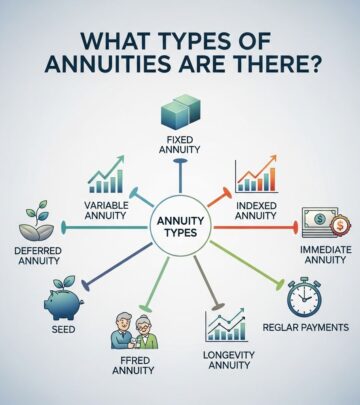
Variable Annuity: Definition, How It Works & Benefits
Understand variable annuities: combining stock market potential with insurance protection for retirement planning.

What Is a Variable Annuity?
A variable annuity is an insurance product designed to help individuals accumulate and distribute retirement funds with a combination of investment flexibility and guaranteed income protection. Unlike traditional fixed annuities that offer predetermined payment amounts, variable annuities allow investors to direct their funds into various investment options, primarily mutual funds, stocks, bonds, and money market accounts. This structure provides investors with exposure to market returns while maintaining the security of an insurance wrapper that guarantees minimum income levels during retirement.
Variable annuities have become increasingly popular among retirement planners seeking a balance between growth potential and security. They represent a middle ground between purely market-based investments and conservative fixed-income products, offering investors the opportunity to participate in market gains while protecting against severe losses through insurance guarantees.
How Variable Annuities Work
Variable annuities operate through two distinct phases: the accumulation phase and the payout phase. Understanding each phase is crucial for determining whether this investment vehicle aligns with your retirement goals.
The Accumulation Phase
During the accumulation phase, investors make regular or lump-sum payments into their annuity accounts. These contributions can be made through various payment schedules depending on the annuity contract terms. The investor then divides these accumulated funds among different sub-accounts, which function similarly to mutual funds. This allocation strategy allows investors to customize their investment portfolio based on their risk tolerance, time horizon, and retirement objectives.
The funds within these sub-accounts are invested in diverse securities including equities, fixed-income securities, money market instruments, and other investment vehicles. The performance of these underlying investments directly impacts the account value, which can increase or decrease based on market conditions. This flexibility enables investors to adjust their investment mix as their circumstances change or market conditions evolve.
The Payout Phase
Once the investor reaches retirement age, the annuity enters the payout phase, also known as the annuitization phase. During this period, the investor receives distributions from the annuity based on the accumulated value, which reflects both their original contributions and any investment gains or losses. The insurance component of the variable annuity becomes particularly valuable during this phase.
Even if the account value has declined below the original investment due to market downturns or poor investment performance, the insurance guarantee ensures that the investor receives a predetermined minimum payment. This feature provides peace of mind and financial security, knowing that retirement income will continue regardless of market conditions. The payout amount and frequency can be customized to meet individual needs, whether that means monthly payments, quarterly distributions, or other schedules.
Key Features and Components
Variable annuities include several important features that distinguish them from other investment and insurance products:
Death Benefit Guarantees
Most variable annuities include a death benefit provision that ensures beneficiaries receive at least the amount originally invested, even if the account value has declined. Some contracts offer enhanced death benefits that may include guaranteed growth rates or higher minimums, providing additional protection for the investor’s heirs.
Living Benefits
Modern variable annuities often include living benefit riders that provide income guarantees while the investor is still alive. These riders guarantee a minimum withdrawal amount or income stream regardless of investment performance, adding an extra layer of security to retirement income planning.
Flexible Investment Allocation
Investors can typically reallocate funds among sub-accounts multiple times annually without penalty, allowing them to rebalance their portfolios or adjust their investment strategy in response to changing market conditions or personal circumstances.
Tax-Deferred Growth
Like other annuity products, variable annuities offer tax-deferred growth, meaning investment gains and income are not subject to immediate taxation. This tax advantage allows investments to compound more efficiently, potentially resulting in larger account values at retirement.
Advantages of Variable Annuities
Variable annuities offer several compelling benefits for retirement-focused investors:
- Market Participation: Unlike fixed annuities, variable annuities allow investors to benefit from stock market gains through their sub-account investments.
- Insurance Protection: The guaranteed minimum income ensures that investors receive predetermined payments during retirement, regardless of market performance.
- Tax Deferral: Investment earnings are not taxed until withdrawn, allowing funds to grow tax-free during the accumulation phase.
- Flexibility: Investors can adjust their investment allocation among sub-accounts without triggering immediate tax consequences.
- Death Benefit Guarantees: Beneficiaries are protected with minimum payout amounts, ensuring wealth transfer goals are met.
- Customizable Income Options: Payout schedules can be tailored to individual retirement income needs and family circumstances.
Disadvantages and Considerations
While variable annuities offer significant benefits, potential investors should carefully consider their drawbacks:
- High Fees and Expenses: Variable annuities typically carry higher fee structures than mutual funds or other investment vehicles, including mortality and expense charges, administrative fees, and investment management fees.
- Complexity: The structure and numerous options can be complicated for average investors to understand fully, requiring careful review of contract terms.
- Surrender Charges: Most annuity contracts include surrender periods during which withdrawals above specified amounts result in significant penalties, typically lasting 5 to 10 years.
- Tax Implications on Withdrawals: Withdrawals of earnings are subject to ordinary income tax rates, which may be higher than capital gains rates for other investments.
- Early Withdrawal Penalties: Withdrawals before age 59½ may trigger additional 10% IRS penalties on earnings, making annuities less suitable for short-term savings goals.
- Market Risk During Accumulation: While guaranteed during payout, account values can fluctuate significantly during the accumulation phase based on investment performance.
Comparing Variable Annuities to Other Investments
| Feature | Variable Annuity | Fixed Annuity | Mutual Funds | Stocks |
|---|---|---|---|---|
| Guaranteed Income | Yes (payout phase) | Yes (all phases) | No | No |
| Market Exposure | Yes | No | Yes | Yes |
| Tax Deferral | Yes | Yes | No | No |
| Fee Levels | High | Low-Medium | Low-Medium | Minimal |
| Liquidity | Limited (surrender charges) | Limited (surrender charges) | High | High |
| Complexity | High | Low-Medium | Low | Low |
Who Should Consider Variable Annuities?
Variable annuities may be appropriate for investors who meet certain criteria. They are generally best suited for individuals who have already maximized contributions to tax-advantaged retirement accounts such as 401(k)s and IRAs, as annuities are intended for long-term retirement savings. Investors with a low risk tolerance who still desire market exposure may find the guaranteed income feature particularly valuable. Those concerned about outliving their retirement savings may appreciate the income guarantees variable annuities provide. Additionally, individuals with a substantial amount to invest and a long time horizon before retirement can better withstand market volatility and may benefit from the tax deferral advantages.
Costs Associated with Variable Annuities
Understanding the fee structure is critical when evaluating variable annuities, as costs can significantly impact long-term returns. Mortality and expense charges typically range from 0.5% to 1.5% annually and represent the insurance portion of the product. Investment management fees for the underlying sub-accounts generally range from 0.3% to 1% per year. Administrative fees may add another 0.15% to 0.3% annually. Optional riders for enhanced benefits or guarantees add to these costs. Surrender charges apply if you withdraw more than specified amounts during the surrender period, typically decreasing annually until reaching zero. These layered fees can compound significantly over time, reducing overall returns compared to less complex investment vehicles.
Tax Considerations
While variable annuities offer tax-deferred growth, investors should understand the full tax implications. Investment gains within the annuity are not taxed until distributions begin. During the payout phase, a portion of each payment is considered a return of principal and is not taxed, while the remainder is taxed as ordinary income. This is generally less favorable than capital gains treatment in other investment contexts. Additionally, if withdrawals occur before age 59½, a 10% IRS early withdrawal penalty applies to earnings. For investors in high tax brackets, consulting with a tax professional is advisable to ensure variable annuities align with overall tax strategy.
Variable Annuities vs. Fixed Annuities
The primary distinction between variable and fixed annuities lies in how returns are generated and guaranteed. Fixed annuities offer predetermined payment amounts that do not fluctuate based on market performance, providing complete predictability but limiting growth potential. Variable annuities tie returns to market-based investments, offering higher potential returns but with greater volatility during the accumulation phase. The insurance guarantee in variable annuities only protects minimum income levels during the payout phase, whereas fixed annuities guarantee specific payment amounts throughout the contract. Variable annuities provide more flexibility in investment choices and potential for higher long-term growth, making them suitable for more aggressive investors. Fixed annuities offer simplicity and certainty, appealing to conservative investors prioritizing stability over growth.
Tips for Choosing a Variable Annuity
When selecting a variable annuity, thorough comparison shopping is essential. Evaluate the financial strength and ratings of insurance companies offering the contracts, as you depend on their ability to pay guaranteed benefits. Carefully review sub-account options to ensure the investment choices align with your risk tolerance and investment philosophy. Compare fee structures across different providers, as seemingly small percentage differences compound significantly over decades. Understand all guarantees, including death benefits and income riders, and determine whether optional riders align with your needs or represent unnecessary expenses. Review the surrender charge schedule and ensure the timeline matches your anticipated holding period. Consider whether you need all the features included or if simpler, lower-cost products might better suit your needs. Consult with a financial advisor familiar with these complex products to ensure proper alignment with your overall retirement strategy.
Frequently Asked Questions
Q: What is the difference between a variable annuity and a fixed annuity?
A: The primary difference is that variable annuities offer market-based returns through sub-account investments with guaranteed minimum income, while fixed annuities provide predetermined, guaranteed payments regardless of market conditions. Variable annuities offer growth potential but with market risk during accumulation, whereas fixed annuities sacrifice growth potential for absolute certainty.
Q: Can I withdraw money from my variable annuity before retirement?
A: Yes, but withdrawal amounts above specified limits trigger surrender charges that decline over time. Additionally, withdrawals of earnings before age 59½ incur a 10% IRS early withdrawal penalty plus ordinary income taxes, making early withdrawals costly and generally inadvisable unless necessary.
Q: How long does the surrender period last?
A: Surrender periods typically last between 5 to 10 years, though some contracts extend longer. During this period, withdrawals above specified amounts are subject to surrender charges. The specific duration depends on the contract terms you select, and generally, longer surrender periods correspond with lower ongoing fees.
Q: Are variable annuity fees really that high?
A: Variable annuities do carry higher fee structures than many alternatives, typically ranging from 1.5% to 3% annually when combining mortality and expense charges, investment management fees, and administrative costs. These fees are higher than direct stock or mutual fund investments but reflect the insurance guarantees and professional management included in the product.
Q: What happens to my variable annuity if the insurance company fails?
A: State insurance regulators and guaranty associations provide protection for annuity holders if an insurance company becomes insolvent. However, coverage limits apply, so selecting an insurance company with strong financial ratings is prudent to avoid potential issues.
Q: Can I change my investment allocation in a variable annuity?
A: Yes, most variable annuities allow multiple reallocation changes annually among available sub-accounts without penalty, providing flexibility to adjust your investment strategy as circumstances or market conditions change.
References
- Variable Annuities: What You Should Know — U.S. Securities and Exchange Commission (SEC). 2024. https://www.sec.gov/investor/pubs/annuity.htm
- Annuities — Financial Industry Regulatory Authority (FINRA). 2024. https://www.finra.org/investors/learn-to-invest/types-investments/annuities
- Understanding Annuities — National Association for Variable Annuities (NAVA). 2024. https://www.navanet.org
- Publication 575: Pension and Annuity Income — Internal Revenue Service (IRS). 2024. https://www.irs.gov/publications/p575
- Investopedia Video: Variable Annuities — Investopedia. August 16, 2013. https://www.investopedia.com/video/
Similar Articles








Read full bio of medha deb