VantageScore Vs FICO: 5 Expert Strategies To Improve Scores
Discover the key reasons your VantageScore might trail your FICO score and how these models evaluate credit risk differently.
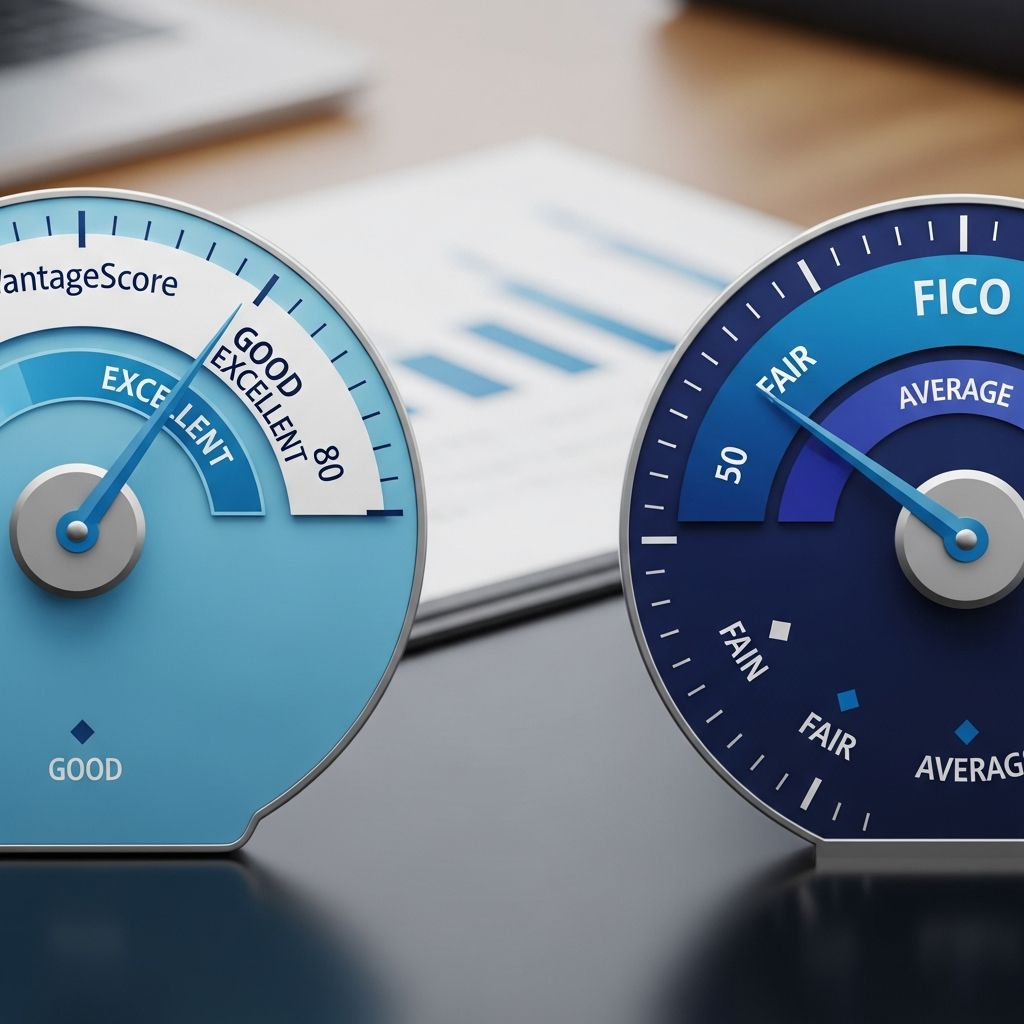
Credit scores from VantageScore and FICO often vary significantly for the same individual due to distinct calculation methods, data requirements, and factor emphases. VantageScore tends to produce lower scores in many cases because it applies stricter criteria to certain risk indicators or uses more recent behavioral data.
Understanding the Two Major Credit Scoring Systems
FICO, developed by Fair Isaac Corporation, has dominated lending decisions for decades as the industry standard. VantageScore, created by the three major credit bureaus—Equifax, Experian, and TransUnion—emerged in 2006 as a collaborative alternative to broaden access and incorporate modern data.
Both models range from 300 to 850, but a 700 FICO does not equate to a 700 VantageScore in terms of predicted risk levels. Lenders primarily use FICO for mortgages and auto loans, while VantageScore appears more in credit monitoring services.
Core Factors and Their Weighting Variations
Payment history dominates both models, but weights and sub-factor treatments differ. VantageScore 4.0 emphasizes recent trends, potentially penalizing inconsistent payers more harshly.
| Factor | VantageScore 3.0 | VantageScore 4.0 | FICO 8/9 |
|---|---|---|---|
| Payment History | 40% | 41% | 35% |
| Utilization/Owed | 20% | 20% | 30% |
| History Length | 21% | 20% | 15% |
| New Credit | 5% | 11% | 10% |
VantageScore assigns qualitative influence levels rather than fixed percentages in some descriptions, highlighting payment history as ‘extremely influential’ and recent behavior as ‘less influential’. FICO balances utilization higher, which may boost scores for low-debt users.
Minimum Data Requirements for Scoring
FICO requires at least six months of credit history on one account and recent activity within six months. VantageScore generates scores with just one month of history if reported within two years, aiding thinner files but sometimes resulting in lower initial scores due to limited data.
- FICO: 6+ months open account + 6 months recent activity.
- VantageScore: 1+ month open + 2 years recent report.
This accessibility means VantageScore scores new users sooner, but with potentially conservative estimates.
Treatment of Collections and Medical Debt
VantageScore 3.0 and 4.0 ignore all paid collections and exclude paid/unpaid medical collections entirely, reducing negative impacts. FICO weighs collections more heavily, though newer versions like FICO 9 soften medical debt effects.
| Model | Paid Collections | Medical Collections |
|---|---|---|
| VantageScore 3.0/4.0 | Ignored | Excluded (paid/unpaid) |
| FICO 8/9 | Factored | Weighted (less in 9) |
Individuals with resolved medical issues may see higher FICO scores relative to VantageScore.
Incorporation of Trended and Alternative Data
VantageScore 4.0 uniquely uses trended data—up to 24 months of payment and balance patterns from all bureaus—spotting improvements or risks better than snapshots. FICO 8/9 and VantageScore 3.0 use point-in-time data.
VantageScore 4.0 also integrates rent and utilities if reported, expanding scoring for non-traditional users. FICO rarely does this. Trended analysis can lower VantageScores for those with recent upticks in utilization.
Handling of Hard Inquiries
Rate shopping is protected differently: FICO bundles mortgage, auto, and student inquiries over 45 days as one. VantageScore uses 14 days and extends to credit cards. Shorter windows may penalize VantageScores more for spread-out applications.
Score Range Interpretations
Both use 300-850, but risk thresholds vary:
| Range | VantageScore 4.0 | FICO |
|---|---|---|
| Superprime | 781-850 | 800-850 (varies) |
| Prime | 661-780 | 740-799 |
| Near Prime | 601-660 | 670-739 |
| Subprime/Poor | 300-600 | 300-669 |
A ‘good’ score starts at 670 FICO or 700 VantageScore.
Why VantageScore Often Appears Lower
Several dynamics contribute:
- Stricter Recent Behavior Scrutiny: Higher weight on new credit (11% in 4.0) and trends penalizes fluctuations.
- Shorter History Penalty: Thin files get scored but conservatively.
- Utilization Trends: VantageScore 4.0 tracks patterns; minimum-payers score lower.
- Bureau Data Variations: Scores pull from Equifax, Experian, TransUnion differently.
Performance studies show VantageScore 4.0 outperforming older FICO on mortgages, suggesting better risk prediction despite lower averages.
Implications for Borrowers and Lenders
Lenders choose models: FICO for tradition, VantageScore for inclusivity. Check both via services like Credit Karma. A lower VantageScore doesn’t mean denial if FICO aligns with lender criteria.
Strategies to Align and Boost Both Scores
- Pay on time consistently—top factor universally.
- Keep utilization under 30%.
- Retain old accounts for history length.
- Limit new applications.
- Dispute errors across bureaus.
Monitor trended data by reviewing statements regularly.
Frequently Asked Questions
Which score do lenders use more?
FICO remains dominant, especially for mortgages (90%+ usage), but VantageScore grows in fintech.
Can I improve a low VantageScore quickly?
Yes, via payments and utilization drops, as it weights recent activity highly.
Do score differences affect approvals?
Potentially; know your lender’s model.
Is VantageScore 4.0 better than FICO?
It excels in prediction for some loans per studies, but FICO is standard.
How often are scores updated?
With bureau reports, typically monthly.
Key Takeaways for Credit Management
Differences stem from methodology, not superiority. Track both, focus on fundamentals: timely payments, low debt. This optimizes outcomes across models.
References
- VantageScore vs. FICO: Learn the Differences — Intuit Credit Karma. 2023. https://www.creditkarma.com/credit/i/vantagescore-vs-fico
- What Are the Differences Between VantageScore 4.0 vs. FICO® 10 — FHMTG. 2025-08-14. https://fhmtg.com/2025/08/14/what-are-the-differences-between-vantagescore-vs-fico-credit-scoring-models/
- Are FICO® Scores and VantageScore® Different? — Equifax. 2024. https://www.equifax.com/personal/education/credit/score/articles/-/learn/difference-between-fico-scores-vantagescore/
- The Difference Between VantageScore Credit Scores and FICO — Experian. 2024. https://www.experian.com/blogs/ask-experian/the-difference-between-vantage-scores-and-fico-scores/
- FICO Fact: Is a 700 FICO Score the Same as a 700 VantageScore? — FICO. 2023. https://www.fico.com/blogs/fico-fact-700-fico-score-same-700-vantagescore
- VantageScore 4.0 Beats FICO Classic for Mortgage Predictive Performance — VantageScore. 2023. https://vantagescore.com/resources/knowledge-center/press_releases/vantagescore-4-0-beats-fico-classic-for-mortgage-predictive-performance
Similar Articles








Read full bio of Sneha Tete