Understanding VantageScore 4.0: Credit Scoring Fundamentals
Learn how VantageScore 4.0 evaluates creditworthiness and impacts your financial opportunities
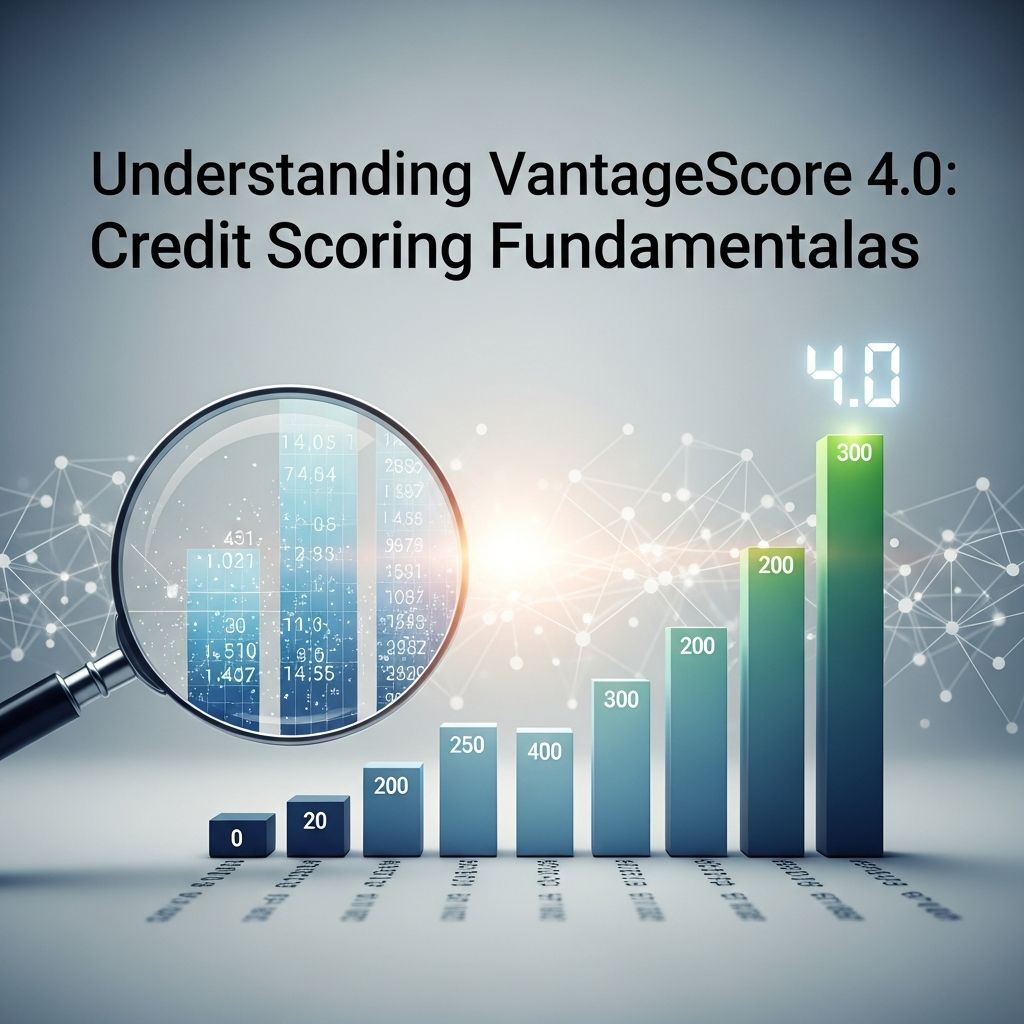
Your credit score is a numerical representation of your financial reliability. When you apply for credit—whether a mortgage, car loan, or credit card—lenders examine this three-digit number to determine whether you’re a trustworthy borrower. VantageScore 4.0 is one of the primary models used by financial institutions to make these critical lending decisions. Understanding how this scoring system works can empower you to make informed financial decisions and work toward improving your creditworthiness.
What VantageScore 4.0 Represents
VantageScore 4.0 is a credit evaluation model that operates on a scale from 300 to 850. Like other standardized credit scoring systems, a higher number indicates better creditworthiness and financial responsibility. This tri-bureau model draws information from all three major credit reporting agencies—Equifax, Experian, and TransUnion—to generate a comprehensive assessment of your credit behavior.
Introduced in 2017, VantageScore 4.0 represents an evolution in credit assessment technology. It incorporated trended data as a scoring consideration, meaning it evaluates patterns in your credit behavior over time rather than just taking a snapshot of your credit report at a single moment. This innovation allows the model to recognize positive trends, such as consistently paying more than your minimum balance, which can reflect well on your creditworthiness.
One of the defining characteristics of VantageScore 4.0 is its responsiveness to changes in your credit activity. Unlike some traditional scoring models, VantageScore 4.0 updates frequently, allowing positive actions—such as paying down debt—to boost your score relatively quickly. Conversely, negative behaviors like missed payments or increased balances can also impact your score more rapidly than with older models.
The Six Factors That Shape Your Score
VantageScore 4.0 evaluates your creditworthiness by analyzing six key dimensions of your credit behavior. Each factor carries a different weight in the overall calculation, reflecting its importance in predicting whether you’ll repay borrowed money:
| Credit Factor | Weight in VantageScore 4.0 | Change from VantageScore 3.0 |
|---|---|---|
| Payment History | 41% | +1% |
| Depth of Credit | 20% | -1% |
| Credit Utilization | 20% | No change |
| Balances | 6% | -5% |
| Recent Credit | 11% | +6% |
| Available Credit | 2% | -1% |
Payment History: The Foundation of Your Score
Payment history comprises 41% of your VantageScore 4.0, making it the single most influential factor. This metric answers a fundamental question lenders need answered: do you pay your bills on time? Your payment history demonstrates your reliability as a borrower by showing whether you’ve met payment deadlines on credit accounts over time.
Late payments, missed payments, and accounts sent to collections all damage this component of your score. Conversely, a consistent track record of on-time payments strengthens this crucial factor. Even a single late payment can create a noticeable dip in your score, while months of punctual payments help establish you as a dependable borrower in the eyes of lenders.
Depth of Credit: Your Credit Portfolio
Representing 20% of your VantageScore 4.0, depth of credit reflects both the longevity and diversity of your credit experience. This factor examines how long you’ve maintained active credit accounts and the variety of credit types you’ve successfully managed. Unlike some scoring models that separate “credit history” and “credit mix” into distinct categories, VantageScore 4.0 combines these concepts into a single dimension.
Having older credit accounts demonstrates a longer track record of creditworthiness. Additionally, lenders view borrowers who manage multiple types of credit—such as credit cards, installment loans, mortgages, and auto loans—more favorably. This variety suggests you can handle different lending structures responsibly.
Credit Utilization: How Much You’re Borrowing
Credit utilization accounts for 20% of your score and measures what percentage of your available credit you’re currently using. Also called your utilization ratio, this metric is calculated by dividing your total credit card balances by your total credit limits across all accounts. If you have a credit card with a $10,000 limit and a $3,000 balance, your utilization ratio on that card is 30%.
Financial experts generally recommend keeping your utilization below 30% to optimize this scoring factor. Lower utilization ratios signal to lenders that you’re not overly reliant on credit and can manage your borrowing responsibly. High utilization, conversely, may suggest financial stress or poor credit management.
Balances: Your Total Debt Level
VantageScore 4.0 gives less weight to balances than its predecessor, allocating just 6% of the score to this factor. Balances refer to the total amount of money you owe across all your credit accounts, including both current accounts and any past-due balances. This metric provides lenders with a sense of your overall debt burden.
High balances relative to your income or credit limits can negatively impact this component of your score. The VantageScore 4.0 model’s reduced emphasis on balances represents a shift toward focusing more on recent behavior and newer accounts, which may better reflect a borrower’s current financial situation.
Recent Credit Activity: Your Latest Borrowing Actions
Recent credit activity increased significantly in importance in VantageScore 4.0, rising from 5% to 11%. This component considers recently opened accounts and other recent credit activity, such as new credit inquiries from lenders. Opening multiple new credit accounts in a short timeframe can temporarily lower your score, as lenders interpret this as increased credit-seeking behavior.
However, recent positive activity matters too. Successfully managing new credit accounts and demonstrating responsible borrowing with recent accounts can enhance this portion of your score. The increased weighting reflects the recognition that recent behavior often provides better predictive value about future creditworthiness than older historical data.
Available Credit: Your Unused Resources
Available credit—the portion of your total credit limits that you haven’t used—comprises just 2% of your VantageScore 4.0. While this factor carries minimal weight, having higher available credit can still provide a modest boost to your score. Available credit is closely related to credit utilization, as increasing available credit through credit limit increases typically lowers your utilization ratio.
VantageScore 4.0 Rating Ranges Explained
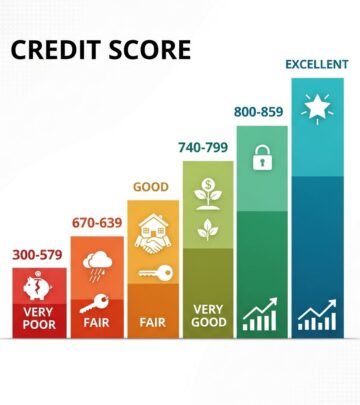
Your VantageScore 4.0 falls into one of five distinct ranges, each carrying different implications for credit access and lending terms:
- Excellent Credit (781-850): Represents the highest creditworthiness tier. Borrowers in this range typically qualify for the most favorable interest rates, highest credit limits, and best lending terms.
- Good Credit (661-780): Indicates solid creditworthiness. Borrowers can access competitive rates and reasonable credit terms from most lenders.
- Fair Credit (601-660): Suggests moderate creditworthiness with some credit concerns. Borrowers may face higher interest rates or more restrictive credit terms.
- Poor Credit (500-600): Indicates significant credit challenges. Access to credit is limited, interest rates are substantially higher, and approval is less certain.
- Very Poor Credit (300-499): Represents the lowest creditworthiness tier. Credit access is severely limited, with high rates or potential denial of credit applications.
Understanding which range you fall into helps you gauge your creditworthiness and anticipate the types of lending terms you’re likely to receive. Many products are marketed with specific credit requirements—”good credit” or “fair credit” cards, for example—and knowing your range helps you identify which products you’re likely to qualify for.
Key Differences Between VantageScore Models
VantageScore 4.0 introduced meaningful changes from its predecessor, VantageScore 3.0. While both models evaluate the same core factors, the weighting differs substantially:
The most significant changes were the increased emphasis on recent credit activity (from 5% to 11%) and reduced weight on balances (from 11% to 6%). These adjustments reflect a philosophical shift toward prioritizing recent behavior as a better predictor of future creditworthiness.
Another important enhancement in VantageScore 4.0 was the treatment of negative credit records. The model gives less weight to tax liens and public records compared to VantageScore 3.0, potentially benefiting borrowers who had historical collection issues but have since improved their credit behavior.
What Sets VantageScore 4.0 Apart
Several features distinguish VantageScore 4.0 from competing credit scoring models. The inclusion of trended data allows the algorithm to detect patterns and trends in your credit behavior rather than relying solely on point-in-time snapshots. For instance, it can identify whether you consistently pay more than the minimum on credit cards, which demonstrates financial responsibility.
The model also focuses on inclusivity. VantageScore 4.0 can generate credit scores for individuals with shorter credit histories or limited credit activity, expanding access to credit scoring for consumers who might not qualify under traditional FICO scoring methodologies. This inclusivity makes the model particularly valuable for young borrowers, recent immigrants, and others building credit for the first time.
Additionally, VantageScore 4.0’s frequent updates mean changes to your credit behavior are reflected more quickly. This responsiveness provides an incentive for positive credit behaviors—paying down balances, avoiding new accounts, or making on-time payments can show measurable improvement in your score relatively promptly.
Practical Strategies for Improving Your VantageScore 4.0
Understanding the scoring factors allows you to develop targeted strategies for improvement. Given payment history’s dominance at 41%, establishing a perfect payment record should be your primary focus. Set up automatic payments or calendar reminders to ensure you never miss a deadline.
Reducing credit utilization is another accessible improvement path. If you’re carrying high balances, paying them down—particularly on credit cards with the highest utilization ratios—can provide relatively quick score improvement. Even reducing utilization from 60% to 40% demonstrates responsible credit management.
Building depth of credit takes longer but matters significantly. Keep older credit accounts open, even if you’re not actively using them. The age of your oldest account and the average age of all accounts influence this factor. Responsibly managing different credit types—cards, installment loans, lines of credit—also strengthens this component.
Finally, be cautious about opening new accounts. While recent credit activity is weighted more heavily in VantageScore 4.0, the immediate impact of new account inquiries and recent account openings is typically negative. Space out new credit applications and only apply when necessary.
Frequently Asked Questions
How often does VantageScore 4.0 update?
VantageScore 4.0 updates more frequently than many alternative scoring models. Your score can change whenever information on your credit report changes, typically reflecting updates within days rather than weeks.
Can I improve my VantageScore 4.0 quickly?
The frequency of updates means positive changes can boost your score relatively rapidly. Paying down balances or resolving late payments can show meaningful improvement within weeks. However, rebuilding from poor scores typically requires several months of consistent positive behavior.
Does VantageScore 4.0 consider income or employment?
No, VantageScore 4.0 is based exclusively on information from your credit report. Income, employment status, and other non-credit factors are not considered in the calculation.
Is VantageScore 4.0 used by all lenders?
While VantageScore 4.0 is widely used, not all lenders employ it. Many major lenders still use FICO scores or may use both models. It’s wise to check with specific lenders about which scoring model they use.
How does a hard inquiry affect my VantageScore 4.0?
Hard inquiries from lenders when you apply for credit contribute to your “recent credit” factor and typically cause a small, temporary score dip. Multiple inquiries within a short timeframe (usually 45 days) for the same type of credit typically count as a single inquiry.
Conclusion
VantageScore 4.0 represents a modern approach to assessing creditworthiness, incorporating trended data and emphasizing recent behavior to provide lenders with improved predictive accuracy. By understanding the six factors that comprise your score and their respective weightings, you can develop targeted strategies to improve your creditworthiness. Whether you’re beginning your credit journey or working to rebuild damaged credit, focusing on payment history, managing utilization, and maintaining a diverse credit portfolio provides a clear path toward a higher VantageScore 4.0.
References
- The Complete Guide to Your VantageScore 4.0 Credit Score — VantageScore Solutions LLC. https://vantagescore.com/consumers/blog/the-complete-guide-to-your-vantagescore
- Scoring Models: How to Calculate VantageScore — Academy Bank. https://www.academybank.com/article/scoring-models-how-to-calculate-vantagescore
- What Is A VantageScore? — Bankrate. https://www.bankrate.com/credit-cards/advice/what-is-vantagescore/
- How VantageScores are Calculated — Armed Forces Bank. https://www.afbank.com/article/how-vantagescores-are-calculated
- What Is a VantageScore Credit Score? – Experian — Experian. https://www.experian.com/blogs/ask-experian/what-is-a-vantagescore-credit-score/
- What Is a VantageScore? How It Works vs. FICO — NerdWallet. https://www.nerdwallet.com/finance/learn/vantagescore-fico-score-the-difference
- What Is a VantageScore Credit Score? — Experian. https://www.experian.com/blogs/ask-experian/what-is-a-vantagescore-credit-score/
Similar Articles








Read full bio of Sneha Tete